Get quick appointment for technical support!

Westhomes Electric engineers specialized distribution and protection systems designed explicitly for distributed photovoltaic (PV) networks. As global solar capacity rapidly scales, grid operators face mounting technical hurdles, ranging from inverter voltage superposition to reverse power flow, commonly known as backfeeding, at the transformer level.
These specific challenges are addressed by delivering integrated protection hardware and intelligent communication architectures. The primary objective is to provide EPC contractors and utility managers with reliable, compliant, and highly controllable connection points. This systematic approach maximizes PV output while strictly maintaining the safety and stability of the 400V public grid.
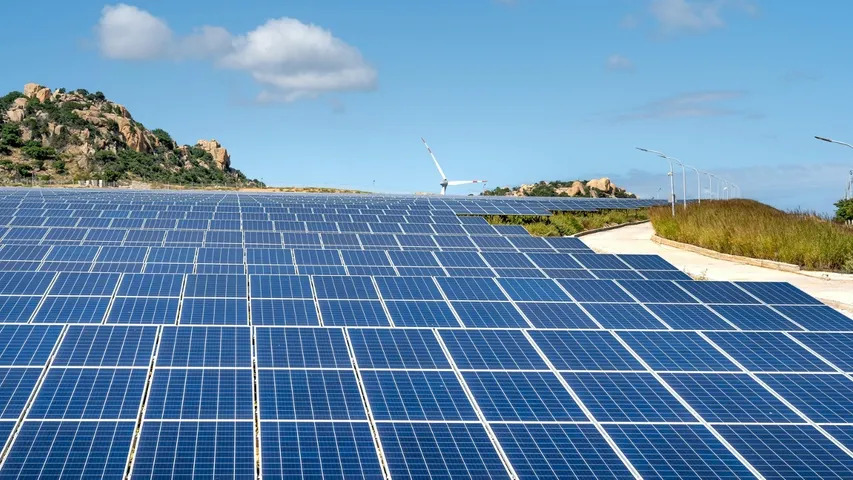
Addressing Core Grid Connection Challenges

Preventing PV Backfeeding
Precise monitoring is deployed at the grid connection point to prevent distributed PV capacity from exceeding local transformer limits. This mechanism effectively halts reverse overloading during peak generation periods.

Stabilizing Power Quality
Inverter voltage outputs are actively managed by the system. This mitigates the risks associated with voltage superposition, ensuring that the overall distribution voltage remains within strict safety parameters.

Mitigating Equipment Failure Risks
Inferior PV modules and direct low-voltage connections frequently cause anti-islanding malfunctions. Dedicated PV circuit breakers are installed to guarantee absolute isolation, protecting both the electrical grid and on-site personnel.

Full System Observability
Conventional, isolated PV installations are upgraded into fully integrated nodes. This transformation delivers comprehensive “observable, measurable, controllable, and adjustable” capabilities directly to grid operators.
The Multifunction Photovoltaic System
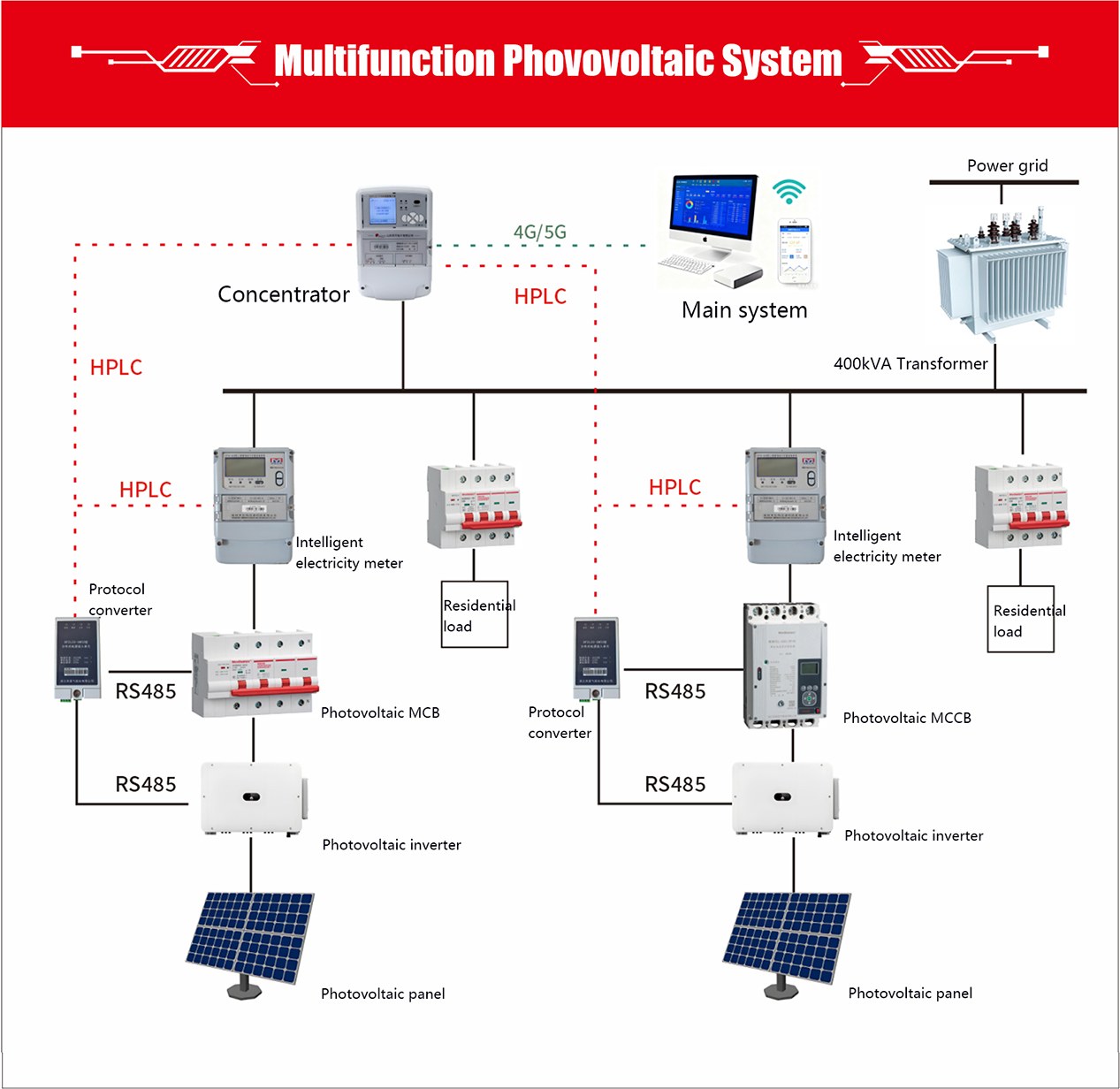
A robust, dual-layer communication topology designed to achieve rigid and flexible control over PV inverters and comprehensive power quality management.
- Data Aggregation (Uplink): Operational data is collected from Intelligent Electricity Meters via high-speed HPLC (High-Speed Power Line Communication) to the local Concentrator. This data is subsequently transmitted securely to the Main System using 4G/5G networks.
- Hardware Control (Downlink): A dedicated Protocol Converter is installed at the grid connection point to act as the crucial translation bridge. It utilizes RS-485 serial communication to transmit precise, real-time control commands directly to the Photovoltaic Circuit Breakers and Inverters.
- Active Load Management: This bidirectional data architecture enables grid managers to actively monitor residential loads against PV generation. Faults are instantly isolated, and inverter outputs are adjusted dynamically to prevent backfeeding.
Current Status of Distributed Photovoltaic
PV Backfeeding Issues
Distributed photovoltaic capacity exceeds transformer capacity, leading to reverse overloading of power plants during peak power generation periods in some areas, increasing pressure on the safe and stable operation of the power grid.
Power Quality Affected
Due to the technical challenge of inverter grid connection voltage superposition, to maximize power generation, the output voltage of customer-side inverters is generally higher, thus raising the voltage in the distribution area.
Emerging Safety Hazards
Low-voltage distributed photovoltaic systems typically use low-voltage cables to directly connect to the nearest 400V public line. The quality of photovoltaic modules installed on the customer side varies greatly. Over time, inferior modules may cause a significant decrease in power generation capacity, as well as problems such as protection equipment failure, anti-islanding device malfunction, and customer misoperation in power supply.
This not only results in a situation of “large scale but insufficient output,” posing hidden dangers to the operation of the low-voltage power grid, but may also endanger the personal safety of on-site personnel.
Distributed Photovoltaic Construction
A photovoltaic circuit breaker and protocol converter device is installed at the grid connection point, integrating the “observable, measurable, controllable, and adjustable” capabilities of photostatic.
Uplink communication is achieved with the concentrator via HPLC, and downlink communication is achieved with the four-way photovoltaic circuit breaker and photovoltaic inverter via RS-485. This enables rigid and flexible control of the photovoltaic inverter, achieving power quality management.
Built with Westhomes Core Hardware
The complete range of protective and communication hardware required to construct this resilient photovoltaic architecture is manufactured and supplied in-house.
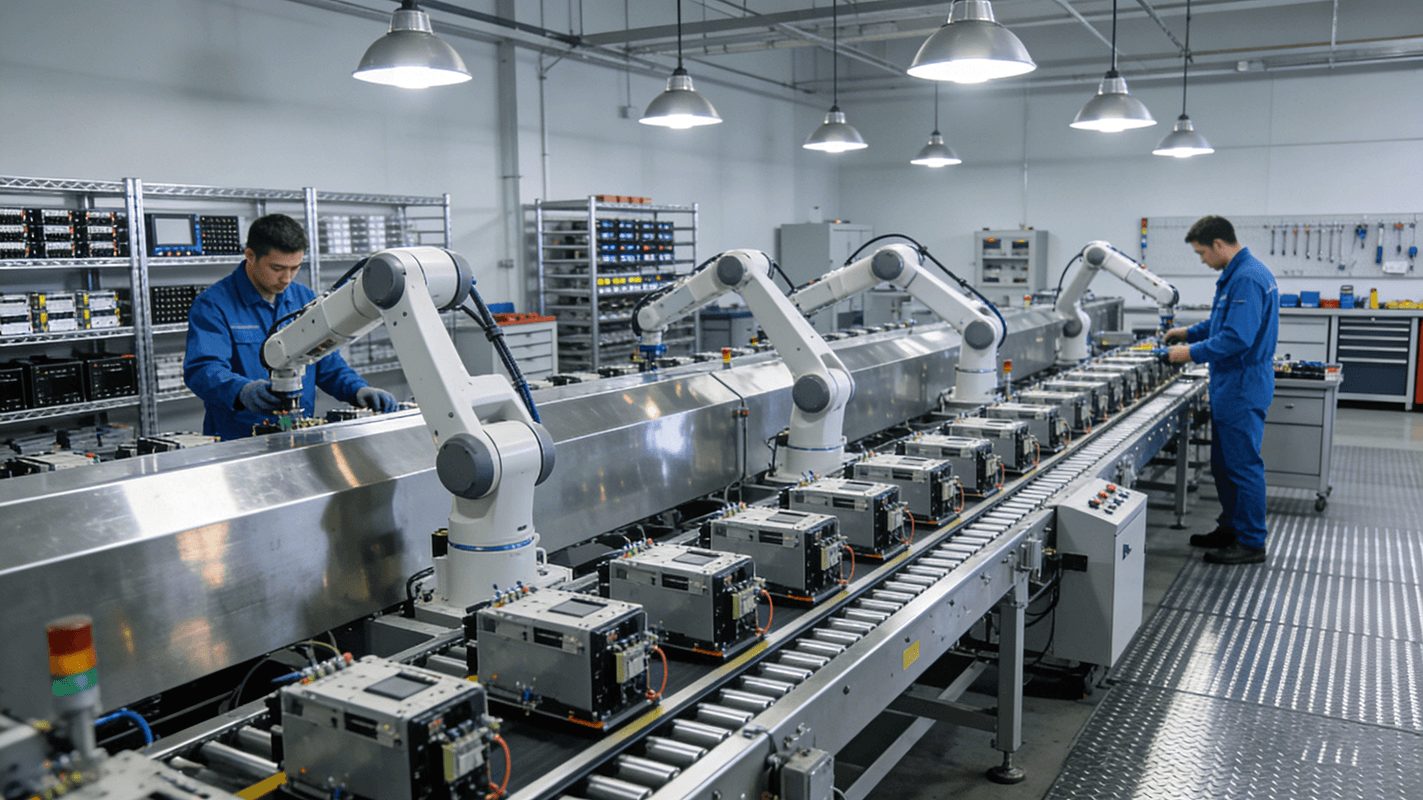
- Photovoltaic MCB & MCCB Dedicated direct current (DC) and alternating current (AC) circuit breakers engineered for secure, instantaneous fault isolation in demanding solar applications.
- Intelligent Electricity Meters High-precision metering devices deployed for the accurate, real-time monitoring of both solar power generation and residential power consumption.
- Protocol Converters & Concentrators Industrial-grade data logging and transmission units developed to ensure highly stable communication within harsh electrical environments.
FREQUENTLY ASKED QUESTION (FAQ)
What are the main electrical challenges in solar energy projects?
Solar energy projects face challenges such as protecting photovoltaic (PV) systems from lightning surges, managing DC and AC power distribution, ensuring equipment reliability, and maintaining safe operation under different environmental conditions.
Why is electrical protection important in solar power systems?
Electrical protection is essential in solar systems because PV equipment, inverters, and distribution components can be affected by overvoltage, short circuits, and lightning strikes. Proper protection devices help prevent equipment damage and improve system reliability.
What protection devices are commonly used in solar energy projects?
Solar energy systems commonly use DC surge protection devices (DC SPDs), AC SPDs, circuit breakers, isolator switches, and other low-voltage protection equipment to protect PV panels, inverters, and electrical distribution systems.
How do DC SPDs protect photovoltaic systems?
DC surge protection devices protect PV systems from transient overvoltages caused by lightning strikes and electrical disturbances. They help protect solar panels, DC cables, and inverters from surge damage.
How should circuit breakers be selected for solar applications?
Circuit breakers for solar applications should be selected according to system voltage, rated current, breaking capacity, DC or AC requirements, and installation conditions. Proper selection ensures safe isolation and reliable fault protection.
Why are isolator switches important in photovoltaic systems?
Isolator switches provide a safe way to disconnect PV equipment during installation, maintenance, or emergency situations. They allow technicians to safely isolate circuits before performing electrical work.
How can solar projects improve system reliability and efficiency?
Solar projects can improve reliability through proper system design, high-quality electrical components, effective protection solutions, regular maintenance, and optimized power distribution between PV modules, inverters, and loads.
What factors should be considered when designing a solar power electrical system?
Solar electrical system design should consider PV system capacity, DC and AC voltage levels, environmental conditions, protection requirements, inverter specifications, cable selection, and future expansion needs.
How can surge protection extend the lifespan of solar equipment?
Surge protection helps reduce the impact of lightning and transient voltage events on solar equipment. By limiting harmful voltage spikes, SPDs help improve inverter reliability and extend the service life of PV system components.
Why choose Westhomes Solar Energy Projects & Solutions?
Westhomes provides reliable low-voltage electrical solutions for solar applications, including DC and AC surge protection, circuit protection, isolating devices, and power distribution products. These solutions help improve PV system safety, reliability, and long-term performance.
Need Support From Us? Partner With Westhomes

Engineering Consultation
Discuss specific PV distribution requirements and request a customized technical quotation.

Technical Documentation
Access specification sheets, architecture diagrams, and comprehensive product catalogs for the PV protection range.

Proven Track Record
Explore how Westhomes hardware is successfully deployed across global solar and infrastructure projects.
