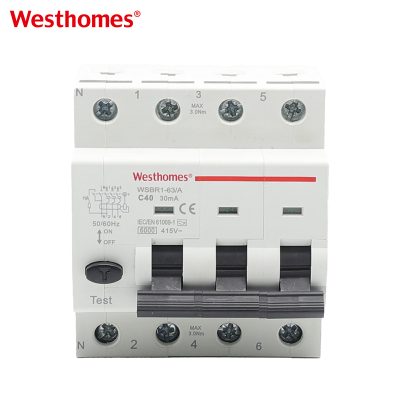
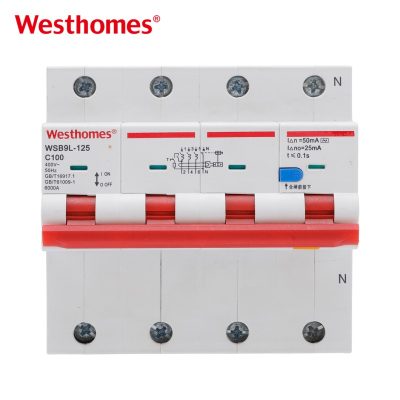
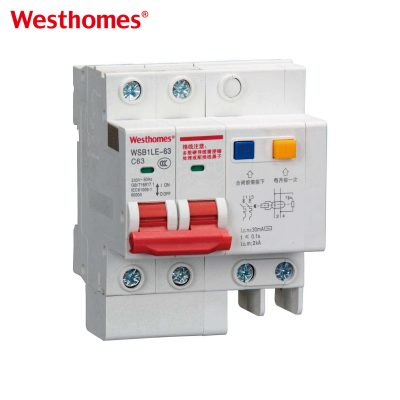
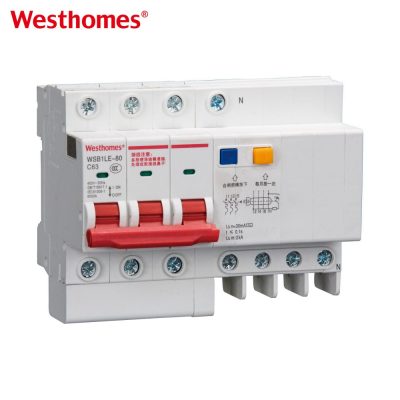
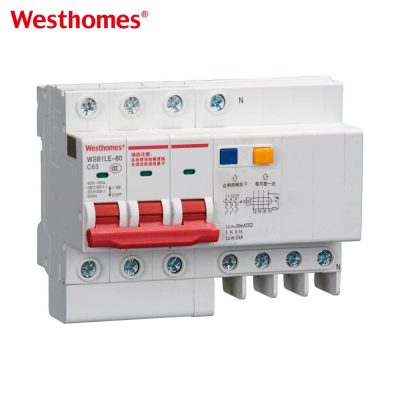
Industrial Grade WSB1LE-80 4P RCBO | 3-Phase 4-Wire System Protection
Four-pole RCBO for main distribution boards. 20-63A, 6kA breaking capacity & 30mA AC type leakage protection. DIN rail mountable.
Get quick appointment for technical support!

Four-pole RCBO for main distribution boards. 20-63A, 6kA breaking capacity & 30mA AC type leakage protection. DIN rail mountable.
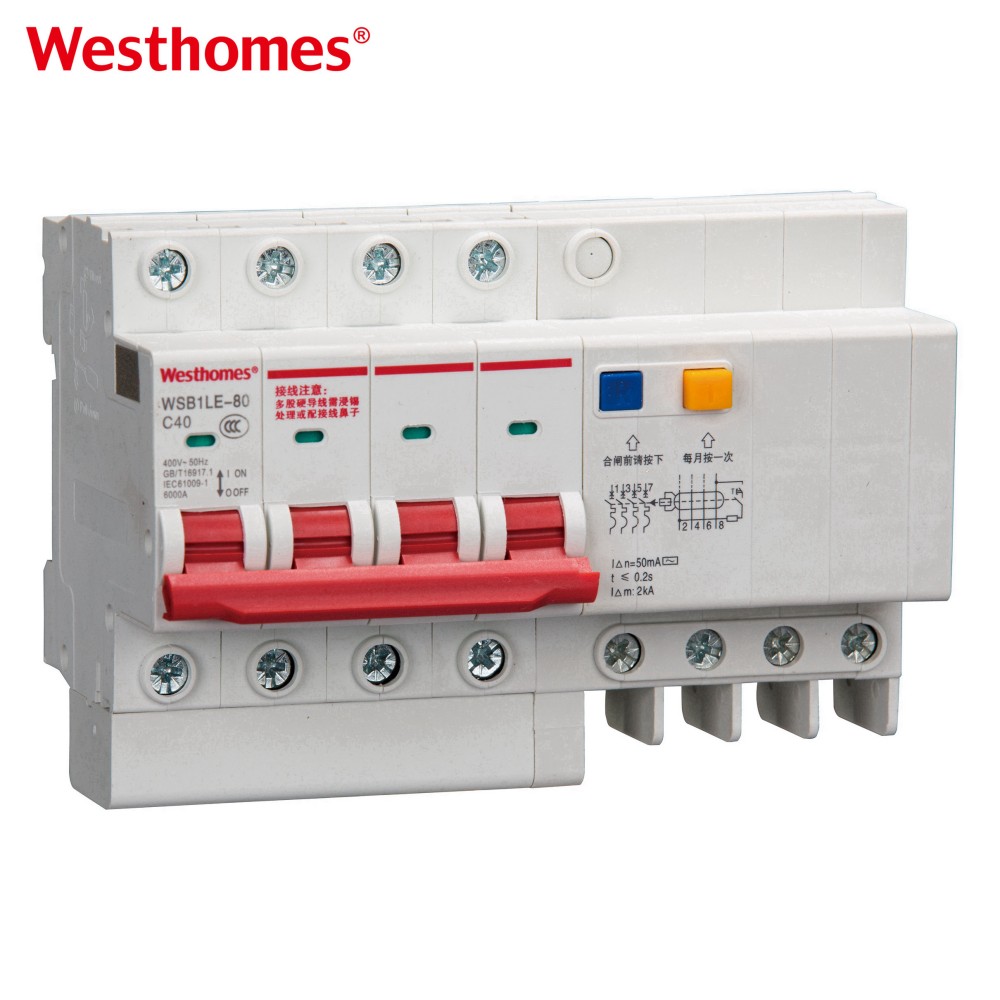
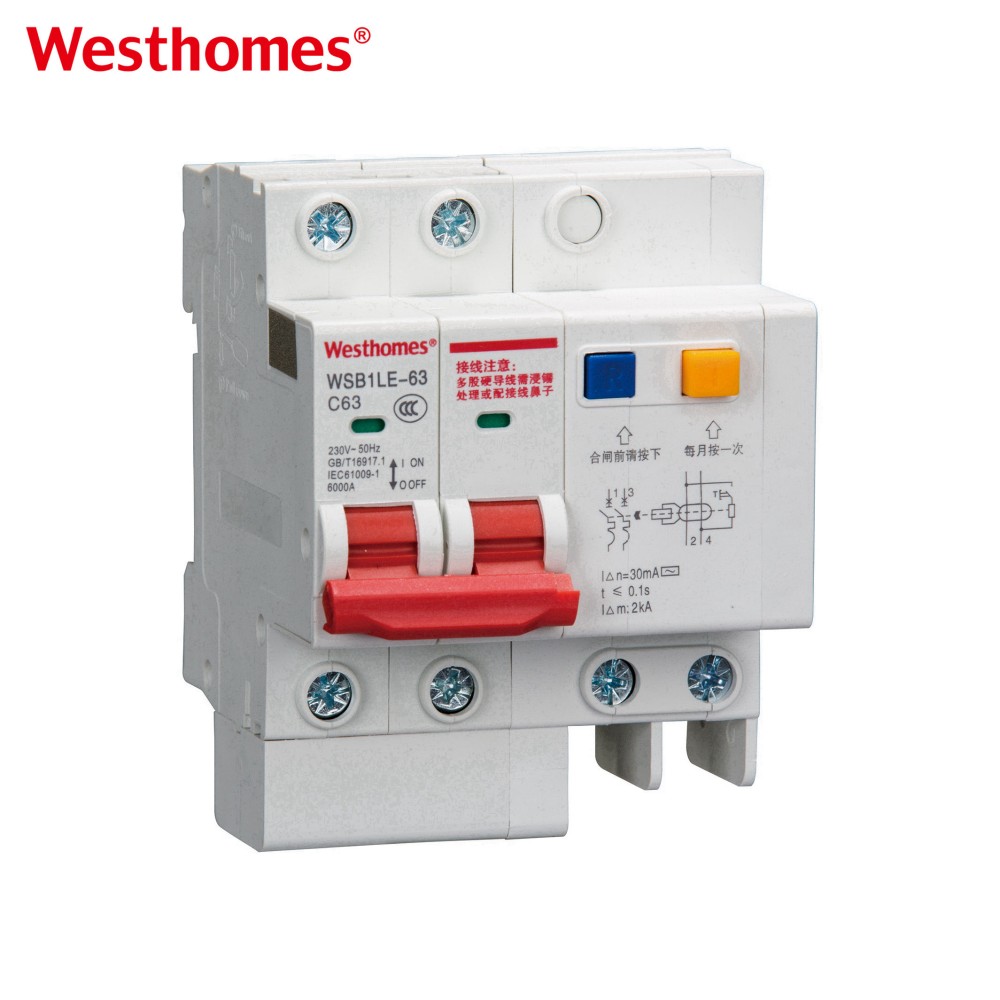
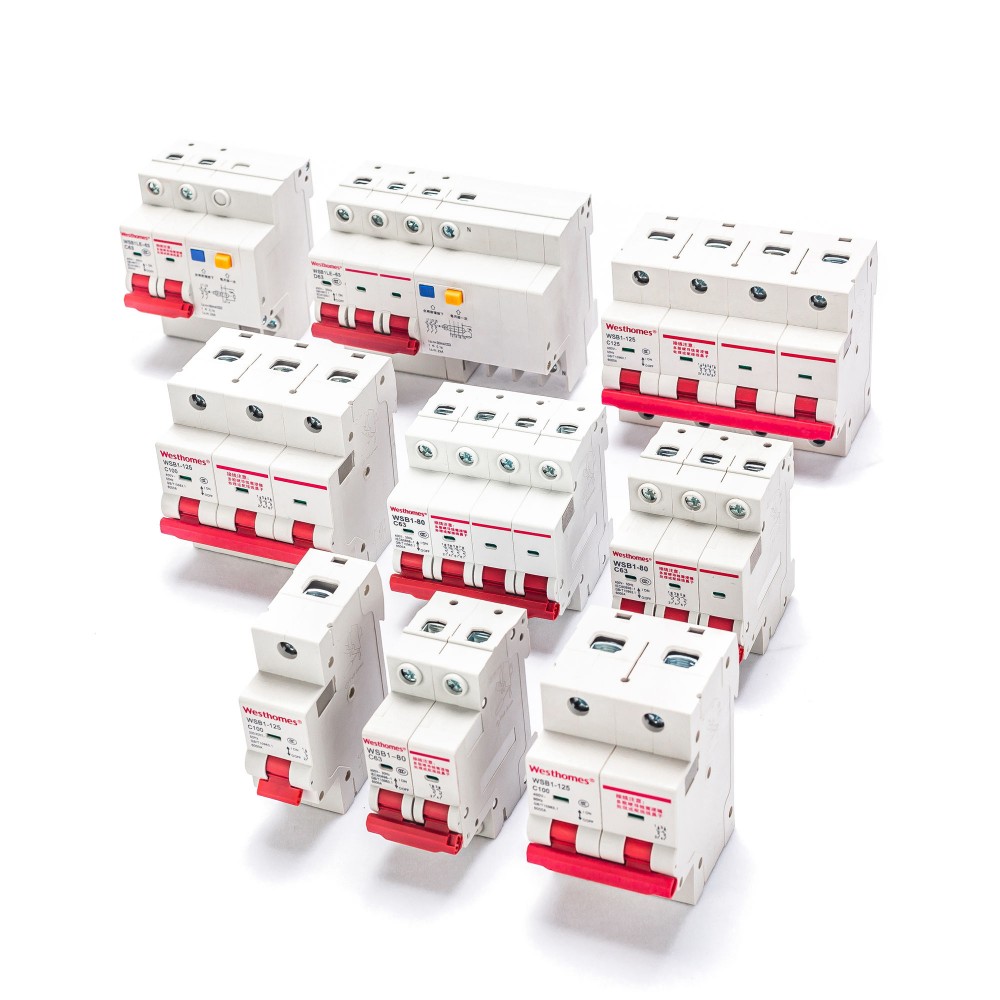


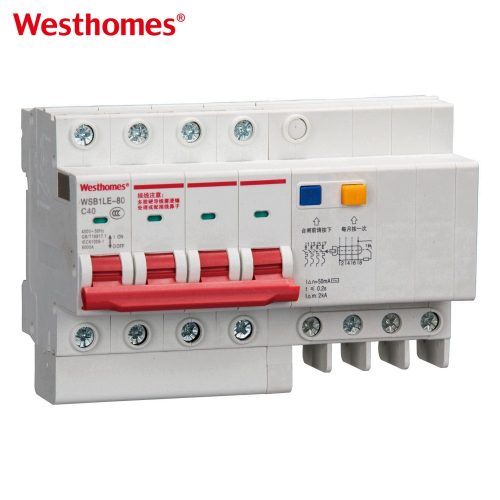
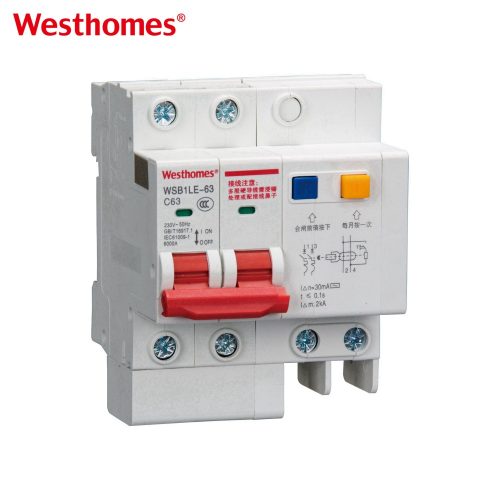
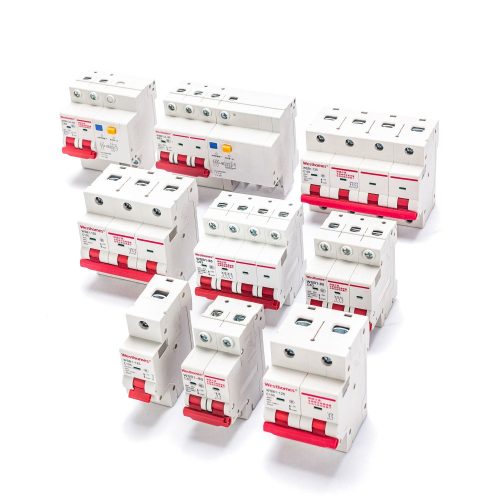


Four-pole RCBO for main distribution boards. 20-63A, 6kA breaking capacity & 30mA AC type leakage protection. DIN rail mountable.
The WSB1LE-80 4P RCBO represents the pinnacle of comprehensive circuit protection for three-phase, four-wire systems. This four-pole device simultaneously protects and switches all live conductors – three phases and neutral – providing complete isolation and protection for critical industrial and commercial applications.
Key Features:
Complete 4-Pole Protection: Switches and isolates all three phases and the neutral conductor, ensuring total circuit disconnection for maximum safety.
All-in-One Industrial Protection: Combines overload, short-circuit, and earth leakage protection in a single device, reducing panel complexity and wiring.
Versatile Current Options: Available in 20A, 32A, 40A, 50A, and 63A ratings to accommodate diverse industrial and commercial loads.
Space-Efficient Design: Occupies only four standard modules, offering significant space savings compared to separate protection devices.
Applications:
Marine & Offshore Applications
Renewable Energy Systems
Large Commercial Complexes
Critical Infrastructure
| Standard | IEC/EN61009-1 |
| Protection | Ground fault, Overcurrent and short circuit |
| Type of trip | Ground fault:Electronic/Magnetic |
| Overload and short circuit:Thermo-magnetic | |
| No.of poles | 1P+N,1 Module,Nline with disconnected |
| Type | AC,A |
| Rated current In | 6,10,16,20,25,32,40A |
| Rated sensitivity currents I△n | 10,30,100,300mA |
| Residual current off-time under l△n | ≤0.1s |
| Reted residual making and breaking capacity (I△m) | 500A(In≤50A) |
| Rated voltage Ue | 240V~ |
| Rated frequency | 50/60Hz |
| Rated breaking capacity | 6KA |
| Energy limiting class | 3 |
| Rated impulse withstand voltage(1.2/50)Uimp | 4,000V |
| Dielectric test voltage at ind.Freq.for 1min | 2kV |
| Thermal release characteristic | (1.13-1.45)x In |
| Magnetic release characteristic | B:(3-5)x In,C:(5-10)x In |
| Electrical life | 4,000 Cycles |
| Mechanical life | 10,000 Cycles |
| Contact position indicator | Yes |
| Protection degree | IP20 |
| Ambient temperature | -25℃~+40℃,Max.95%humidity |
| Terminal connection type | Cable/Pin-type busbar |
| Max.terminal size for cable | 16mm2 |
| Max.tightening torque | 2.5N.m |
| Installation | Mounting on 35mm DIN rail |
| Connection | From top and bottom |
| Selling Units | Single item |
| Quantity (pieces) | 1 – 1,000 | > 1,000 |
| Lead time (days) | 15 | To be negotiated |
| Type | MCB, AC MCB, RCBO |
| BCD Curve | B, C |
| Rated Frequency (Hz) | 50hz/60hz |
| Material | Copper |
| Application | Circuit-Breaking, Industrial, Households, Protection, Electric Power |
| Model Number | WRO1-63 |
| Rated Voltage | 220V/230V |
| Breaking Capacity | 6 kA |
| Mounting Type | Rail Mounting |
| Protection | LSI |
| Place of Origin | Zhejiang, China |
| Brand Name | Westhomes |
The Westhomes WSB1LE-80 4P RCBO is an industrial-grade residual current circuit breaker with overcurrent protection designed for three-phase electrical systems. It combines residual current protection, overload protection, and short-circuit protection in one device to provide comprehensive circuit safety.
The WSB1LE-80 4P RCBO provides protection against earth leakage faults, overload currents, and short circuits. It helps prevent electric shock hazards, equipment damage, and electrical system failures in industrial and commercial applications.
4P means the RCBO has four poles, including three phase poles and one neutral pole. This configuration allows complete isolation and protection of three-phase four-wire electrical systems, making it suitable for applications requiring neutral line protection.
The WSB1LE-80 4P RCBO is widely used in industrial plants, commercial buildings, distribution cabinets, workshops, machinery control systems, and other three-phase electrical installations requiring reliable protection.
A 3P+N RCBO and a 4P RCBO both provide protection for three-phase four-wire systems. The main difference is that a 4P RCBO provides switching and isolation for all four conductors, including the neutral pole, offering complete circuit disconnection during maintenance or fault conditions.
The WSB1LE-80 4P RCBO provides residual current protection for earth leakage faults, thermal protection for overload conditions, and magnetic protection for short-circuit faults, ensuring safer operation of electrical systems.
To select the correct WSB1LE-80 4P RCBO, consider the rated current, operating voltage, residual current sensitivity, breaking capacity, load type, and installation environment. The selected model should match the requirements of the electrical system.
Yes. The WSB1LE-80 4P RCBO can be used in industrial power distribution systems and equipment circuits where protection against leakage current, overload, and short circuits is required. For motor applications, additional motor protection devices may be considered depending on system requirements.
The WSB1LE-80 4P RCBO is designed for DIN rail mounting, making it suitable for installation in distribution boards, electrical cabinets, and industrial control panels. Proper wiring and installation should follow applicable electrical standards.
The Westhomes WSB1LE-80 4P RCBO combines multiple protection functions in a compact device, providing reliable leakage protection, overload protection, and short-circuit protection. Its industrial-grade design makes it suitable for demanding commercial and industrial electrical applications.
* indicates a required field


 155 MB