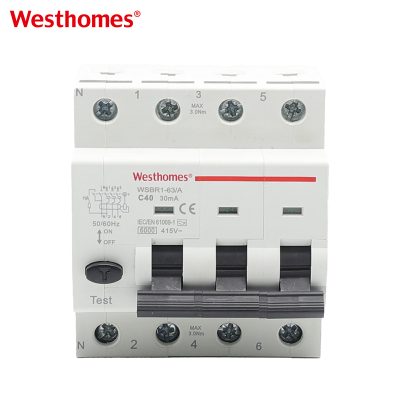
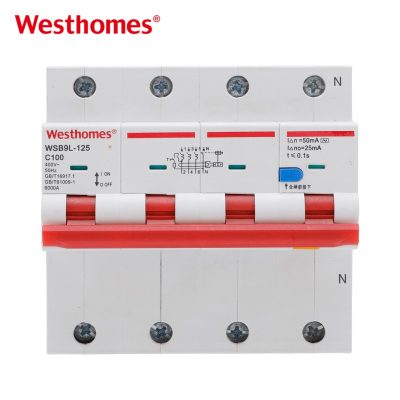
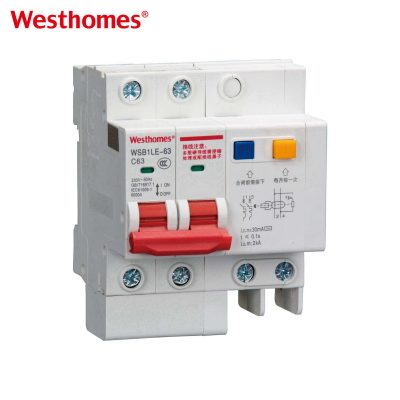
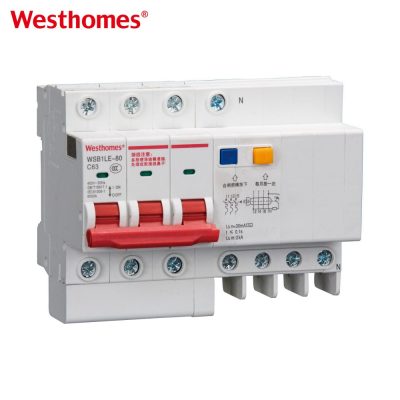
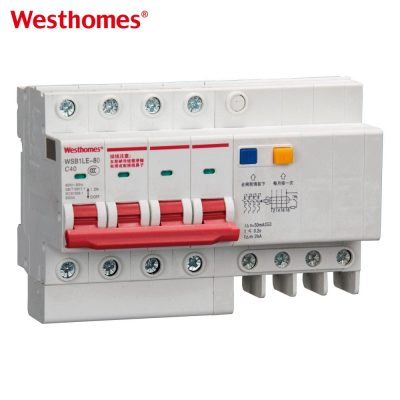
WSB1-63 Moulded case circuit breaker
WSB1-63 series MCB is one of updated type MCCBs researched and developed by the company by using advanced design and manufacture technology internationally.
Get quick appointment for technical support!

WSB1-63 series MCB is one of updated type MCCBs researched and developed by the company by using advanced design and manufacture technology internationally.



WSB1-63 series MCB is one of updated type MCCBs researched and developed by the company by using advanced design and manufacture technology internationally.
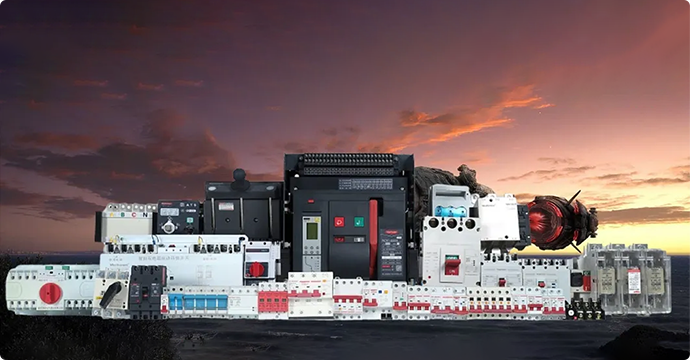
WSB1-63 series MCBs are mainly applied at lines of AC 50Hz or 60Hz, rated operation voltage AC230/400V, rated current upto 63A, for overload and short circuit protection to the lines, also for changeover of infrequent operation to the lines. The MCBs are used at places of commercial office building, residential and similar building etc.
The product meets standards of GB 10963.1 and IEC 60898-1, at international advanced level.

| Frequency | 50Hz/60Hz |
| Pole | 1, 2, 3, 4 |
| Voltage | AC230V/400V |
| kA | 6kA, 10kA |
| Amps | 6, 10, 16, 20, 25, 32, 40, 50, 63 |
| Width | 18, 36, 54, 72mm |
| Mounting | Din rail |
| Standard | IEC/EN 60898 |
| Item No. | WSB1-63 |
| Rated current In(A) | 6, 10, 16, 20, 25, 32, 40, 50, 63 |
| Pole number | 1P, 2P, 3P, 4P |
| Trip characteristics | C type(5-10In); D type(10-20In) |
| Rated insulating voltage Ui(V) | 690 |
| Rated operating voltage Ue(V) | AC230V/AC400V |
| Rated impulse voltage Uimp(kV) | 4 |
| Breaking capacity Icu(kA) | 6 |
| Mechanical life(times) | 20000 |
| Electrical life(times) | 4000 |
| No. | Rated current | Initial state | Test current | Time limit | Expected result |
| 1 | In≤63 | Cold state | 1.13In | t≤1h | Not tripping |
| In>63 | t≤2h | ||||
| 2 | In≤63 | Just followed the last test item | 1.45In | t<1h | Tripping |
| In>63 | t<2h | ||||
| 3 | In≤32 | Cold state | 2.55In | 1s | Tripping |
| In>32 | 1s | ||||
| 4 | Type C | Cold state | 5In | t≤0.1s | Not tripping |
| 10In | t<0.1s | Tripping |

The WSB1-63 uses a dual thermal-magnetic trip mechanism. A bimetallic strip heats up and bends under prolonged overload current (slow thermal trip, protecting cables from overheating), while a solenoid coil trips near-instantly on a large short-circuit current (fast magnetic trip). An internal arc chute extinguishes the resulting arc as the contacts open safely.
They are the maximum prospective short-circuit current the breaker can safely interrupt at 230V/400V without failing. A 6kA or 10kA rated MCB can clear a fault up to that level, which matters most at the origin of a supply or in dense commercial panels where fault currents are high. Select a breaking capacity at or above the calculated available short-circuit current at the installation point.
The WSB1-63 series covers rated currents from 6A up to 80A, so it can be matched to both light lighting circuits and heavier distribution or appliance branches. You choose the current rating (In) so it sits just above the normal load but below the ampacity of the cable it protects.
The CE mark shows the product conforms to the applicable European health, safety and environmental protection directives (typically covering the IEC 60898-1 standard harmonized for low-voltage switchgear). It is required to sell the device in the EEA market and signals it has passed the relevant type testing for breaking capacity, endurance and trip characteristics.
The curve letter sets the instantaneous magnetic trip band: B trips at 3–5×In, C at 5–10×In, and D at 10–20×In. Use B for resistive and lighting loads, C for general mixed loads (the most common residential/commercial choice), and D for motors, transformers or devices with high inrush current to avoid nuisance tripping.
Yes. It is rated for 230V/400V AC, which covers both single-phase 230V and three-phase 400V distribution, and it operates across the standard 50Hz/60Hz mains frequencies. This makes it compatible with most global low-voltage residential and commercial installations.
Yes, it snaps onto a standard 35mm DIN rail inside a distribution board, which is the universal format for modular MCBs. This allows quick installation, replacement and arrangement alongside other modular devices like RCDs and contactors without screws.
Size the breaker so In is greater than the design load current but not greater than the cable's continuous ampacity, and consider voltage drop and circuit length. As a rule of thumb a 6–16A breaker suits lighting on 1.5mm² cable, 20–32A suits sockets/appliances on 2.5–4mm², and 40–80A feeds larger loads on 6mm² or bigger. Always verify against local wiring regulations and the actual installation conditions.
Nuisance trips usually come from inrush currents (motor/transformer startup) on a B-curve breaker, a rating too low for the real load, simultaneous high loads on the circuit, or a device fault drawing slowly rising current. The fix is to move to a C or D curve, raise the rating with a matching cable, or split the circuit — rather than ignoring repeated trips, which indicates a real problem.
MCBs are largely maintenance-free, but they should be visually inspected for overheating, discoloration or loose terminations, and manually operated once a year or so to keep the mechanism free. If it trips repeatedly or contacts become hot, it should be replaced by a qualified electrician rather than left in service.
* indicates a required field


 2 MB