Get quick appointment for technical support!

Get in Touch

Can I Replace an MCB with an RCBO?

Mar 13, 2026

In electrical distribution systems, miniature circuit breakers are widely used to protect circuits from overloads and short circuits. As awareness of electrical safety continues to grow, RCBO devices that provide both overcurrent protection and residual current protection are receiving more attention.

This article explains the differences between MCB and RCBO and discusses situations in which replacement may be possible, while also describing factors that should be considered before making the change.

What Similarities Do MCB and RCBO Have?

MCB and RCBO share many similarities in structure and basic application. Both devices are protection devices used in low voltage distribution systems that are usually installed inside distribution boards to protect electrical circuits and equipment. In residential, commercial, and industrial environments, both devices are commonly used for final circuit protection.

Both MCB and RCBO provide overcurrent protection. When a circuit experiences overload or short circuit conditions, the device disconnects the power supply so that overheating of wires and damage to electrical equipment can be prevented.

Their external design and installation methods are also very similar because most products are mounted on standard DIN rails and include a lever mechanism that allows manual switching while enabling automatic tripping when faults occur. Because of these characteristics, MCB and RCBO are highly similar in structure, installation method, and basic protection capability.
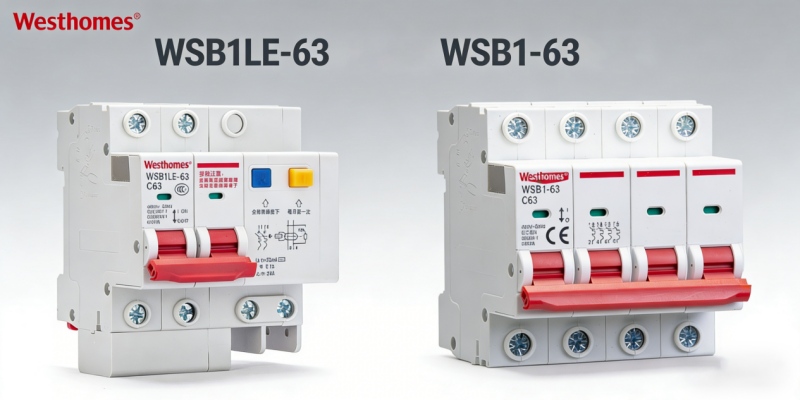
MCB and RCBO

What Are the Main Differences Between MCB and RCBO?

Protection Function

MCB provides protection against overload and short circuit conditions. When the current in a circuit exceeds the rated value or when a short circuit occurs, the MCB trips automatically so that the circuit is disconnected and electrical wiring and equipment are protected from excessive current.

RCBO provides the same overcurrent protection and also includes residual current protection. When leakage current or electric shock risk is detected, the RCBO disconnects the power supply quickly so that accidents caused by electric shock can be reduced.

Safety Protection Range

MCB protects circuits and electrical equipment by preventing overheating of wires, equipment damage, and potential fire risks that may result from excessive current. Since it cannot detect leakage current, its ability to protect people from electric shock is limited. RCBO protects electrical circuits and equipment while also responding to leakage current conditions, which allows it to provide protection for both equipment and personal safety.

Internal Structure

The internal structure of an MCB is relatively simple because it typically includes a thermal release mechanism and an electromagnetic release mechanism that respond to overload and short circuit conditions.

The internal structure of an RCBO is more complex because it includes overcurrent protection components along with residual current detection devices, differential transformers, and leakage tripping mechanisms that monitor the current balance in the circuit and trigger tripping when abnormal leakage current is detected.

Price and Cost

Since RCBO combines multiple protection functions, its design and manufacturing cost is higher than that of a standard MCB. RCBO products are therefore usually more expensive in the market. Even though the price is higher, RCBO provides broader protection and is widely used in circuits where a higher level of safety is desired.

Application Scenarios

MCB is commonly used for general circuit protection such as lighting circuits, standard appliance circuits, and basic protection for industrial equipment.

RCBO is more suitable for locations where safety requirements are higher such as socket circuits, kitchens, bathrooms, outdoor equipment, and circuits used for power tools where leakage risks may be more likely.

Aspect MCB RCBO
Protection Function Protects against overload and short circuit Protects against overload, short circuit, and leakage current
Safety Protection Range Protects wiring and electrical equipment Protects wiring, equipment, and people from electric shock
Internal Structure Simple structure with thermal and magnetic trip More complex with residual current detection components
Price and Cost Lower cost Higher cost due to additional protection
Application Scenarios Lighting circuits and general appliances Socket circuits, kitchens, bathrooms, and outdoor equipment

MCB and RCBO

What Are the Advantages and Disadvantages of MCB and RCBO

MCB

The main advantage of MCB is that its structure is simple, the cost is relatively low, and the device is reliable during operation. Since it mainly provides overload and short circuit protection, the internal design is straightforward, which allows maintenance and replacement to be easier.

The price of an MCB is usually lower than that of an RCBO, which allows installation costs to remain lower when multiple circuits require protection. The disadvantage is that leakage protection is not available. If leakage current or electric shock occurs in the circuit, the MCB usually will not trip, which limits its ability to provide personal safety protection.
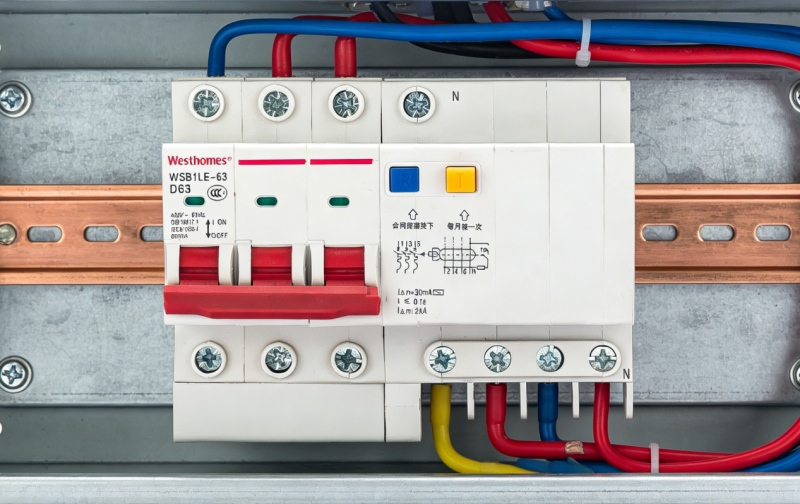
RCBO

The advantage of RCBO is that it offers broader protection functions. It provides overload protection and short circuit protection while also detecting leakage current and disconnecting the power supply when leakage occurs, which increases protection for both people and equipment.

RCBO is often used for socket circuits, humid environments, and locations where safety requirements are higher. The disadvantages include higher cost and a more complex internal structure.

Because the device is more sensitive, tripping may occur in certain situations such as temporary leakage from equipment or electromagnetic interference, which may need additional consideration in some industrial environments.

Can RCBO Replace MCB?

In many situations RCBO can replace MCB, although the suitability of replacement depends on electrical system design and application conditions.

RCBO includes overload protection and short circuit protection that are also provided by MCB, while it also adds leakage protection. When an MCB is replaced with an RCBO, the circuit continues to receive overcurrent protection while gaining additional leakage protection, which improves safety. This is one reason why many modern distribution systems use RCBO devices for final circuits such as socket circuits.

Before replacement, several factors should still be considered such as distribution board space, wiring configuration, rated current, breaking capacity, and overall cost. Some RCBO products may be larger than MCB devices or may have different wiring arrangements, which means compatibility with the existing distribution board should be checked. Since RCBO devices are usually more expensive, replacing multiple circuits can increase overall installation cost.

How to Choose a Suitable RCBO?

When choosing an RCBO device, circuit requirements, installation conditions, and electrical parameters should all be considered. The rated current should match the circuit load, with common ratings including 6A, 10A, 16A, and 32A, which allows the circuit to operate normally while enabling the device to trip when overload or short circuit conditions occur.

Attention should also be given to residual operating current. For residential environments and areas where people are frequently present, RCBO devices with 30mA sensitivity are often recommended because they disconnect power quickly when leakage or electric shock risk appears, which improves safety for users. In special environments or industrial settings, other sensitivity levels may be selected according to equipment requirements.

The number of poles and installation method should also be considered. Single phase circuits often use 1P plus N RCBO devices, while three phase circuits require multi pole versions. The RCBO should also be compatible with DIN rail installation and the available space inside the distribution board.

Product quality and manufacturer reliability should also be considered. Devices that comply with international standards such as IEC standards and that come from reliable manufacturers can provide better stability, longer service life, and reduced risk of unwanted tripping.

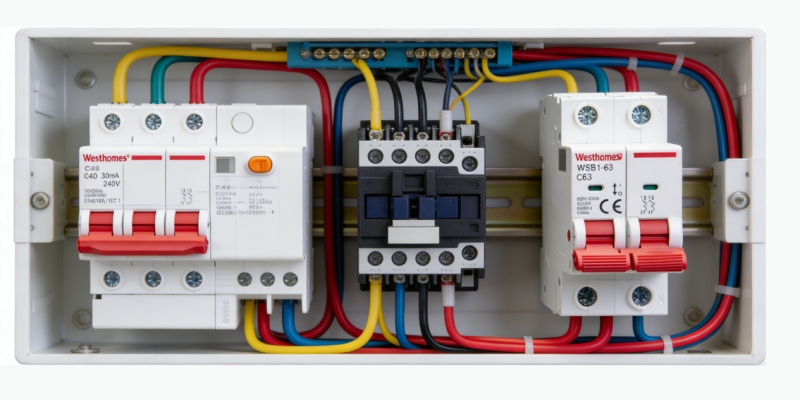
Suitable RCBO

How to Replace RCBO?

Before performing any electrical work, the main power supply should be turned off. The main switch or main breaker in the distribution board should be switched off, and a voltage tester should be used to confirm that the circuit is completely cut off electricity.

The existing breaker such as an MCB or an older RCBO should then be removed. After the distribution board cover is opened, the live wire and neutral wire connected to the breaker should be loosened, and the breaker should be removed from the DIN rail. The wire positions should be recorded or confirmed so that correct wiring can be completed later.

The new RCBO should then be installed. The device should be clipped onto the DIN rail and the wires should be connected according to the terminal markings. The live wire is usually connected to the input terminal of the RCBO and the neutral wire is connected to the corresponding terminal, while the output terminals connect to the circuit load. Terminal screws should be tightened so that loose connections and poor contact can be avoided.

After installation is complete, all wiring connections should be checked and the distribution board cover should be replaced. The main power supply can then be restored and the RCBO switched on. The test button on the RCBO should be pressed to confirm that the device trips correctly so that leakage protection can be verified.

Conclusion

MCB and RCBO both serve functions in circuit protection. RCBO can often be used as an upgraded replacement for MCB, although the selection and installation should be evaluated according to circuit requirements and distribution system conditions. When protection devices are chosen and installed appropriately, the safety and reliability of electrical systems can be improved.

Westhomes offers many RCBO models, and one of them may match your needs. You are welcome to visit our product page and explore available options.

FAQs

Q Is RCBO always better than MCB

Not always. RCBO provides broader protection including leakage protection, while the price is usually higher. When only overload and short circuit protection is required, MCB can still be a practical and economical option.

Q Can MCB be directly replaced with RCBO

In many cases it can, because RCBO includes the overcurrent protection function provided by MCB. Before replacement, rated current, wiring configuration, and distribution board space should be confirmed.

Q Does RCBO trip more easily

Since RCBO detects leakage current, tripping may occur when leakage, insulation problems, or electromagnetic interference appear in the circuit. This usually indicates that the protection mechanism is working.

Q Should all household circuits use RCBO

Not always. Many homes use RCBO devices for socket circuits or humid areas such as kitchens and bathrooms, while lighting circuits may still use MCB devices so that cost and safety can remain balanced.

Q Should RCBO installation be done by a professional electrician

If electrical installation experience is limited, installation by a professional electrician is recommended so that correct wiring and compliance with electrical safety regulations can be ensured.

--- END ---

In this blog

Get A Free Quote