Get quick appointment for technical support!

Can RCBO Work Without Neutral?
Mar 19, 2026
RCBO is widely used in modern electrical systems because it provides both residual current protection and protection against overload and short circuits. This article explains the working principle of RCBO, the function of the neutral wire in the system, and whether an RCBO can operate safely and correctly when a neutral wire is not present.
What Is the Working Principle of RCBO?
RCBO is a protective device that combines residual current protection, overload protection, and short circuit protection. When a circuit operates normally, the current in the live wire and the neutral wire remains balanced. When leakage occurs, the current becomes unbalanced, which causes the internal detection mechanism in the RCBO to trigger the tripping device so that the power supply is disconnected and electric shock accidents are prevented.
RCBO also provides overcurrent protection. When the current exceeds the rated value, the internal thermal or magnetic trip mechanism will operate so that the circuit is disconnected during overload or short circuit conditions. In this way the wiring and electrical equipment remain protected. Because of this function, RCBO combines the functions of a residual current device and a miniature circuit breaker, which leads to its wide use in modern electrical systems.
How Should RCBO Be Wired?
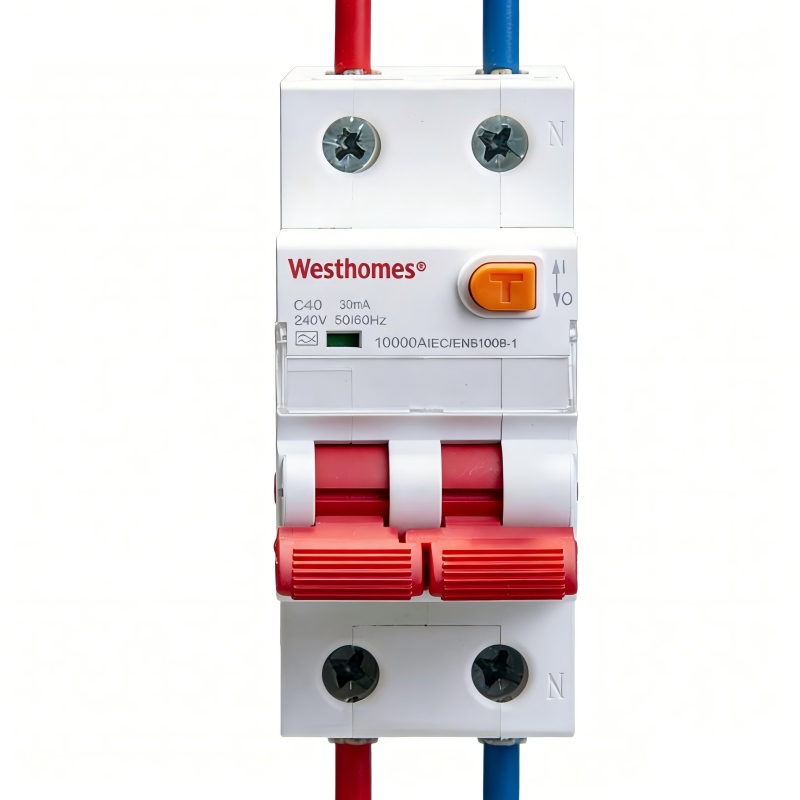
The wiring method of RCBO depends on the device type and the electrical system. In common single phase distribution systems, RCBO is usually connected to both the live wire and the neutral wire. The live wire and neutral wire from the power supply are connected to the input terminals of the RCBO, while the output terminals connect to the protected circuit or equipment. This arrangement allows the RCBO to monitor the current flowing through the live wire and the neutral wire at the same time so that leakage protection can be achieved.
During installation, attention should be given to the neutral wire of the protected circuit because it must return through the neutral output terminal of the RCBO rather than being shared with neutral wires from other circuits. When neutral wires from different circuits are mixed, the device may trip incorrectly or fail to detect leakage properly. The earth wire PE usually does not pass through the RCBO because it connects directly to the grounding bar in the distribution board so that safe grounding of equipment is maintained.
What Is the Function of the Earth Wire in an RCBO Circuit?
In a circuit protected by an RCBO, the earth wire PE provides a safe path for fault current. When insulation inside electrical equipment fails or leakage occurs, current may flow to the metal casing of the device. When the casing is connected to the earth wire, the leakage current flows to the ground instead of passing through the human body, which reduces the risk of electric shock.
When leakage current flows through the earth wire, an imbalance appears between the live wire current and the neutral wire current. The leakage detection mechanism in the RCBO senses this difference, and once the preset value is reached the device quickly disconnects the power supply. In this way the earth wire helps the RCBO detect faults and disconnect the circuit more quickly while improving safety in the electrical system.
What Happens If the Earth Wire Is Not Connected?
When the earth wire PE is not connected, leakage or insulation failure inside electrical equipment may cause the metal casing to become energized. Because there is no low resistance path that allows the fault current to flow to the ground, the casing may remain energized for a long time. If a person touches the energized surface, the current may pass through the body to the ground and this situation may lead to electric shock.
When the earth wire is missing, leakage current may be small or unstable, which means the RCBO may not immediately detect a clear current imbalance and power disconnection may be delayed. Although RCBO can still provide some level of leakage protection, the safety level of the electrical system becomes lower. Correct connection of the protective earth wire is usually required in electrical installations so that people and equipment remain safer.
Can RCBO Work Without Neutral?
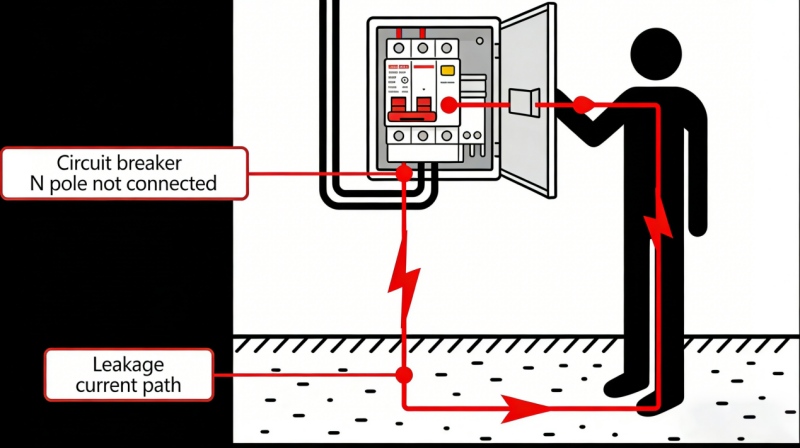
In most residential and commercial electrical systems, the commonly used type is the 1P plus N RCBO. This type requires both the live wire and the neutral wire because it detects leakage by comparing the current flowing through these two conductors. When the neutral wire is not connected, the device usually cannot operate correctly or detect leakage current properly, which means effective leakage protection cannot be provided.
In some special situations, certain types of RCBO or residual current device that are designed for particular industrial systems can monitor only the live conductor so that they can be used in circuits that do not include a neutral wire. Such situations are less common and require devices that are specifically designed for that application rather than simply omitting the neutral connection.
For most common 1P plus N RCBO devices, the neutral wire must be connected. When the neutral wire is absent, the RCBO normally cannot perform leakage detection correctly. During installation, the live wire and neutral wire should be connected according to the product instructions so that the device operates safely and reliably.
How Can You Test Whether an RCBO Works Properly?
Testing whether an RCBO works correctly can be done through the test button check and through an actual leakage test. Most RCBO devices include a TEST or T button. When this button is pressed, a small leakage current is simulated inside the device. If the RCBO works correctly, it should trip immediately and disconnect the power supply. This method is simple and is recommended by manufacturers for regular inspection, which is usually suggested at certain intervals.
In addition to the test button, a professional leakage tester can be used for a more accurate check. The tester applies a specified leakage current to the circuit such as 30 mA and measures the tripping time of the RCBO. When the device trips within the required time range, the leakage protection function works properly. When the device fails to trip or the tripping time becomes unusually long, a fault may exist and further inspection or replacement may be required.
How to Choose a Suitable RCBO?
Rated Current
The rated current should be selected according to the circuit load. For example, household lighting circuits often use 6 A or 10 A devices, standard socket circuits commonly use 16 A, and higher power equipment such as air conditioners or water heaters may require 25 A or 32 A. The rated current of the RCBO should match the circuit load and the capacity of the cable.
Residual Current Sensitivity
Residual current sensitivity is commonly 10 mA, 30 mA, 100 mA, or 300 mA. In residential environments, 30 mA is commonly selected because it provides protection against electric shock. Higher values are often used in industrial environments where the focus is on fire protection.
Trip Curve Type
Different RCBO types respond differently to overload and short circuit currents. Type B is commonly used in residential and lighting circuits. Type C is suitable for equipment that has motors or higher starting currents. Type D is often used in industrial equipment.
Poles
The number of poles determines how many conductors the RCBO can monitor and disconnect at the same time, which means the correct type should be chosen according to the electrical system. In single phase circuits, 1P plus N RCBO is commonly used because it monitors the current in the live wire and neutral wire so that leakage detection can be performed and the circuit can be disconnected during faults.
Conclusion
RCBO is a device that combines residual current protection with overload and short circuit protection so that electrical safety can be improved. Most commonly used RCBO devices require a neutral wire connection so that leakage detection can function correctly. During installation, correct wiring practices and proper product selection should be followed so that the electrical system operates safely and reliably.
Westhomes offers many RCBO models, and one of them will suit your needs. You are welcome to visit our product page and choose the model that fits your application.
FAQs
Q What is the difference between RCBO and RCD?
RCBO provides residual current protection together with overcurrent protection including overload and short circuit protection, while RCD only provides residual current protection.
Q Does RCBO always require a neutral wire?
Most common 1P plus N RCBO devices require a neutral wire connection in order to detect leakage current. When the neutral wire is not connected, the device may not operate correctly or provide effective leakage protection.
Q Should RCBO be tested regularly?
Yes. Pressing the TEST button on the RCBO at regular intervals is recommended so that it can be confirmed that the device trips properly when leakage occurs.
Q Can the RCBO be switched on again immediately after it trips?
When an RCBO trips, the circuit should first be checked for leakage, overload, or short circuit conditions. After confirming that the circuit is safe, the device can be switched on again to restore power.
Q What mA rating is commonly used for residential RCBO?
In most residential environments, 30 mA RCBO is commonly selected because it provides protection against electric shock.
--- END ---
In this blog
Featured Articles
Get A Free Quote
