Get quick appointment for technical support!

Do I Need RCD if I Use RCBO?
Mar 21, 2026
In electrical distribution systems, RCD and RCBO are common safety protection devices. Because RCBO provides leakage protection, overload protection, and short circuit protection at the same time, many people are unsure whether an additional RCD is still required.
What Are the Similarities Between RCD and RCBO?
Provide leakage protection
RCD and RCBO can detect residual current in a circuit. When leakage occurs, for example when current flows through a person or through the outer casing of equipment to the ground, both devices will disconnect the power supply within a very short time so that the risk of electric shock can be reduced.
Improve electrical safety
Both devices are designed to increase the safety of electrical systems. They can reduce the risk of electric shock that is caused by leakage and can also lower the possibility of equipment damage or electrical fires, which is why they are widely used in residential, commercial, and industrial electrical systems.
They operate on similar principles
RCD and RCBO operate based on a similar detection principle, which compares the current flowing through the live wire and the neutral wire. When the current becomes unbalanced and exceeds the preset leakage threshold, for example 30mA, the device will immediately disconnect the circuit.
Installed in distribution systems
Both devices are usually installed in distribution boards or electrical panels where they protect circuits. Whether in residential electrical systems or in commercial buildings, RCD or RCBO can often be found in the distribution system.
Comply with electrical safety standards
In many countries and regions, electrical regulations require the use of leakage protection devices. Under these standards, RCD and RCBO are widely applied so that electrical environments can be safer and more reliable.
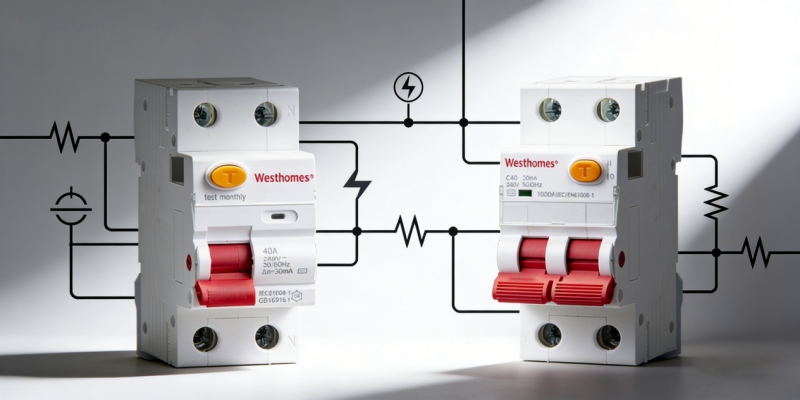
What Are the Main Differences Between RCD and RCBO?
Protection functions
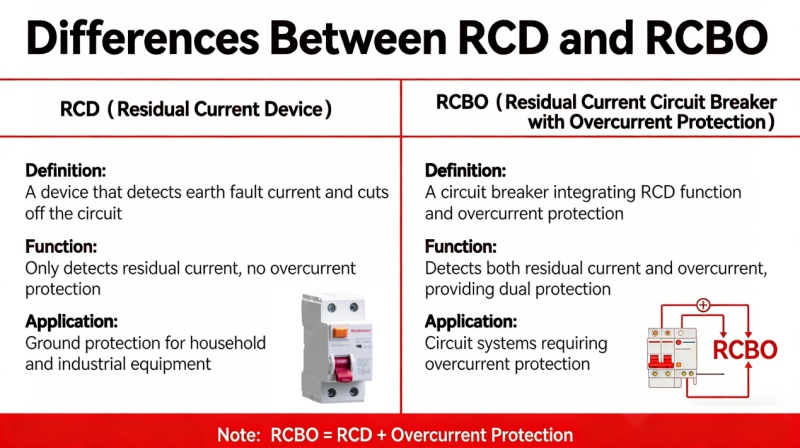
RCD provides leakage protection, which means that it disconnects the power supply when current leakage is detected, although it cannot protect against overload or short circuit. RCBO combines the functions of RCD and a miniature circuit breaker, which means that it provides leakage protection while also providing overload and short circuit protection.
Protection scope
RCD is often used to protect several circuits at the same time, which means that a single RCD can protect multiple circuits in a distribution board. RCBO usually protects one circuit independently, which means that each circuit has its own protection device.
Impact of faults
When RCD is used, if leakage occurs in one circuit, several circuits may lose power at the same time. When RCBO is used, only the circuit that has the fault will be disconnected while other circuits can continue to operate normally.
Installation methods
When RCD is used, it is usually installed together with a miniature circuit breaker so that full circuit protection can be achieved. RCBO is an integrated device that already includes leakage protection and overcurrent protection, which means that an additional breaker is not required.
Cost and application scenarios
RCD is generally less expensive, which means that it is often used in traditional distribution systems or in projects where the budget is limited. RCBO integrates multiple protection functions, so the price is usually higher, although it provides more precise circuit protection and better fault isolation.
Do I Need RCD if I Use RCBO?
If RCBO is used, in most cases an additional RCD is not required. This is because RCBO integrates several protection functions, which include leakage protection, overload protection, and short circuit protection. In other words, RCBO combines the functions that RCD and a miniature circuit breaker provide, so a circuit can receive more complete protection.
RCD mainly detects leakage and disconnects the power supply when a dangerous situation occurs, although it cannot provide overload or short circuit protection, which means that it is usually used together with a miniature circuit breaker. RCBO integrates these functions into one device so that each circuit can receive independent protection while fault detection becomes easier.
In some electrical systems, RCD may still be used. In certain distribution systems, one RCD may be used to protect several circuits so that the design can be simplified and costs can be reduced. In addition, some older distribution systems or specific electrical standards may still require RCD.
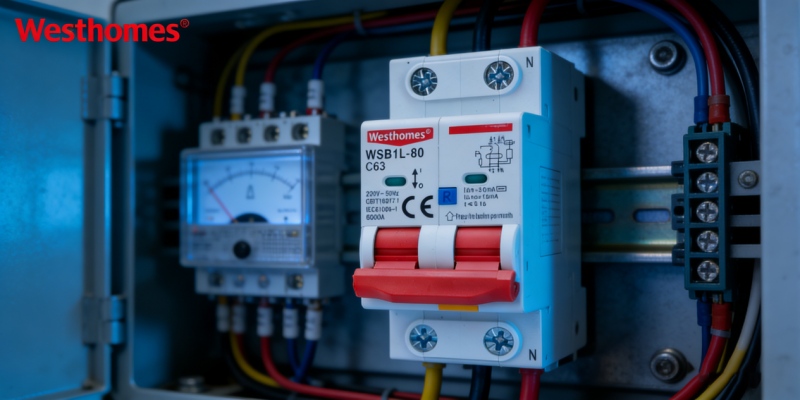
Advantages of Using RCBO Instead of RCD
More comprehensive protection
RCBO integrates leakage protection, overload protection, and short circuit protection. One RCBO can provide the combined functions that RCD and a miniature circuit breaker provide, which means that the circuit can receive more complete safety protection. RCD only detects leakage and disconnects the circuit, so it cannot prevent accidents that are caused by excessive current or short circuits.
Independent protection for each circuit
RCBO is usually used to protect individual circuits, which means that each circuit has its own protection device. If leakage, overload, or short circuit occurs in one circuit, only that circuit will be disconnected while other circuits can continue operating normally.
Reduced possibility of multiple circuits tripping
When RCD is used, one device often protects several circuits. If leakage occurs in one circuit, several circuits may lose power at the same time, which can cause unnecessary outages. RCBO disconnects only the circuit that has the fault, which means that unnecessary power interruptions can be reduced.
Easier fault identification
Because each circuit has its own RCBO, when tripping occurs it is easier to identify which circuit has the problem. Electricians or users can check the corresponding circuit so that the fault can be found more quickly, which saves maintenance time and improves efficiency.
Improved power stability and reliability
In homes, commercial buildings, and industrial environments where many electrical devices are used, RCBO ensures that only the circuit that has a problem will be affected. Other circuits can continue to operate normally, which helps maintain power stability across the system.
When Should You Choose RCD Instead of RCBO?
When the budget is limited, RCD may be a more economical option. Because RCD is usually less expensive than RCBO, one RCD together with several miniature circuit breakers can reduce the overall installation cost when several circuits require leakage protection. This configuration is still common in some residential or simple electrical systems.
When several circuits need to be protected at the same time, RCD may be suitable. In some distribution systems, one RCD can provide unified leakage protection for several circuits, which can simplify the structure of the distribution board and reduce the number of devices that must be installed. This approach is common in traditional distribution systems.
When older electrical systems are upgraded, RCD may be easier to install. Some older distribution boards do not provide enough space for RCBO to be installed on every circuit. In such cases, one RCD together with several miniature circuit breakers can be a more convenient solution that avoids major modifications to the system.
In certain engineering designs or under specific electrical regulations, RCD may still be selected. Some installations still use RCD to protect several circuits, which is widely accepted under certain standards. Therefore, the choice of protection device should also consider local electrical regulations and the actual application requirements.
Conclusion
RCD and RCBO are both electrical safety protection devices. If each circuit is equipped with RCBO, an additional RCD is usually not required. In situations where the budget is limited or several circuits need to be protected together, RCD is still a common and effective option. The final choice should depend on distribution system design, cost considerations, and applicable electrical standards.
Westhomes offers many models of RCBO and RCD, and you can find a suitable option among them. You are welcome to visit our product page to explore our products.
FAQs
Q Can RCBO completely replace RCD?
In most situations, yes. RCBO provides leakage, overload, and short circuit protection, which means it combines the functions of RCD and a miniature circuit breaker.
Q Is RCBO safer than RCD?
RCBO is often considered safer because each circuit has its own protection, which helps reduce large area power interruptions.
Q Why is RCBO more expensive than RCD?
RCBO integrates several protection functions and is designed for individual circuit protection, which results in higher manufacturing costs.
Q Should a home distribution board choose RCD or RCBO?
RCBO is suitable when independent circuit protection is preferred. RCD can be used when the budget is limited or when the system is simple.
--- END ---
In this blog
Featured Articles
Get A Free Quote
