Get quick appointment for technical support!

Should I Use ELCB Or RCCB?
Mar 01, 2026
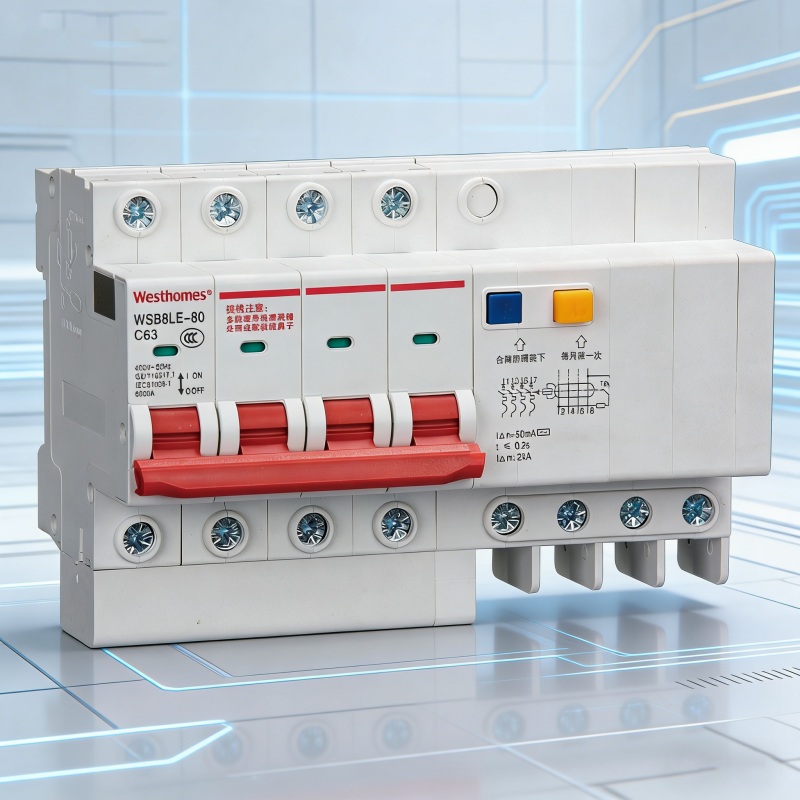
What Is ELCB?
ELCB, which stands for Earth Leakage Circuit Breaker, is a device that detects leakage current to earth and automatically disconnects the power supply when a dangerous condition occurs.
It is designed to reduce the risk of electric shock and electrical fire that may happen when insulation fails or when equipment faults occur. ELCB was widely used in earlier electrical installations, although it is still found in some older electrical systems today.
The working principle of an ELCB is based on detecting voltage changes in the earth wire. When electrical equipment leaks current, the current flows through the grounding conductor into the earth, which creates a voltage in the earth wire.
When this voltage exceeds the preset threshold of the device, the internal detection mechanism is activated, which triggers the tripping mechanism and disconnects the power supply. Because this type of ELCB relies on a proper grounding system, the device may fail to detect leakage if the grounding connection is faulty.
ELCB is used in residential installations, industrial equipment, and earlier electrical systems where basic earth leakage protection is required. In locations where electrical safety standards were already considered during early installations, such as factories and distribution systems, ELCB devices were also installed in order to reduce the risk of equipment damage or electric shock.
As electrical technology has developed, RCCB devices have gradually replaced ELCB because they provide more reliable protection, which means that ELCB is now mostly found in older systems or specific applications.
What Is RCCB?
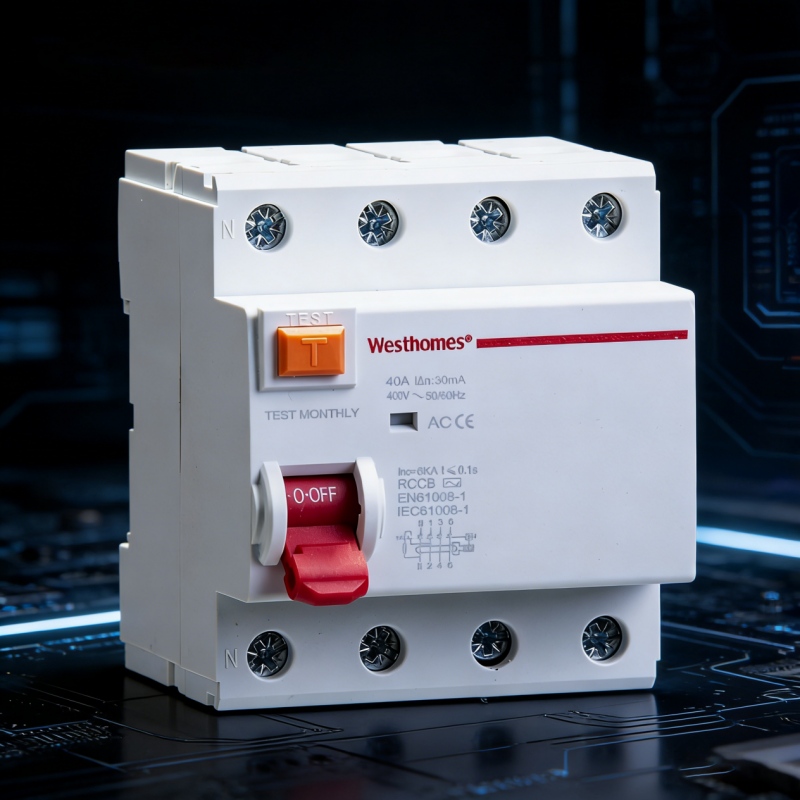
RCCB, which stands for Residual Current Circuit Breaker, is a safety device that disconnects a circuit when an imbalance between currents is detected. It helps reduce the risk of electric shock and electrical fires, which is why it is widely used in modern electrical systems. Because RCCB provides higher sensitivity and more reliable protection than traditional ELCB devices, it is commonly used in residential buildings, commercial installations, and industrial power systems.
The working principle of an RCCB is based on detecting the difference between the current in the phase conductor and the current in the neutral conductor. Under normal conditions, the current flowing into the circuit should be equal to the current flowing out.
When leakage occurs, part of the current flows through the human body or other unintended paths to earth, which creates a current imbalance between the phase and neutral conductors. The current transformer inside the RCCB detects this difference, and when the imbalance exceeds the preset threshold such as 30mA or 100mA, the tripping mechanism is activated so that the power supply is disconnected quickly.
RCCB devices are widely used in residential distribution boards, commercial buildings, electrical equipment protection, and industrial power systems where leakage protection is required. In homes, RCCB is typically installed in the distribution board so that socket circuits, lighting circuits, and household appliances can be protected.
In commercial and industrial environments, RCCB is also used to protect large equipment, power tools, and complex electrical systems, which improves overall electrical safety. Because the device operates with high reliability and fast response, RCCB has become a widely used leakage protection device in modern electrical systems.
Types Of ELCB
Voltage ELCB
Voltage operated ELCB devices were used in earlier electrical systems. These devices detect voltage that appears on the earth conductor when leakage current flows to ground. When this voltage exceeds the preset level, the ELCB disconnects the circuit so that hazardous conditions are avoided. Because these devices depend on a stable grounding system, their detection capability may be affected when grounding conditions are poor or when additional grounding paths exist, which is why they are rarely used today.
Current ELCB
Current operated ELCB devices detect leakage current within a circuit. A current transformer monitors whether the incoming and outgoing currents are balanced, and the device disconnects the power supply when leakage current exceeds the preset level. Because the working principle is similar to that of RCCB, current operated ELCB devices are now commonly referred to as RCCB devices in modern electrical systems.
Types Of RCCB
AC Type RCCB
AC type RCCB devices detect sinusoidal alternating leakage current. When such leakage current exceeds the preset value, the device disconnects the circuit. AC type RCCB is commonly used in conventional electrical installations such as lighting circuits and heating equipment where current waveforms remain simple.
Type A RCCB
Type A RCCB devices detect both alternating leakage current and pulsating direct current leakage. Because modern electrical appliances such as washing machines, air conditioners, and power supply units contain electronic circuits, this type of RCCB is used more widely in residential and commercial electrical systems.
Type F RCCB
Type F RCCB devices detect alternating leakage current, pulsating direct current, and leakage currents within a certain frequency range. Because these devices also provide improved resistance to electrical interference, they are commonly used with equipment that uses variable frequency control such as inverter air conditioners, washing machines, and motor drive systems.
Type B RCCB
Type B RCCB devices detect alternating leakage current, pulsating direct current leakage, and smooth direct current leakage. This type of RCCB is commonly installed in specialized electrical installations such as electric vehicle charging stations, photovoltaic systems, industrial automation equipment, and medical equipment where complex leakage current waveforms may appear.
Differences Between RCCB And ELCB
Working Principle
ELCB and RCCB differ in the method used to detect leakage. Traditional ELCB devices detect voltage that appears on the earth conductor when leakage occurs, which means that proper grounding conditions must exist for correct operation. RCCB devices detect the difference between phase and neutral currents, which allows leakage to be identified when current imbalance appears. Because this method does not rely on the grounding conductor, detection is generally more reliable.
Safety And Sensitivity
RCCB devices operate with higher sensitivity, which allows them to disconnect circuits when small leakage currents such as 30mA appear. This level of protection reduces the risk of electric shock to the human body. ELCB devices rely on voltage detection in the grounding system, which means that leakage may not always be detected under certain conditions.
Installation Conditions
ELCB devices require an independent and stable grounding system so that proper operation can be achieved. When grounding connections are poor or when multiple grounding paths exist, leakage detection may become inaccurate. RCCB devices detect current imbalance instead of grounding voltage, which allows them to be installed more easily in various electrical systems.
Application And Development Trend
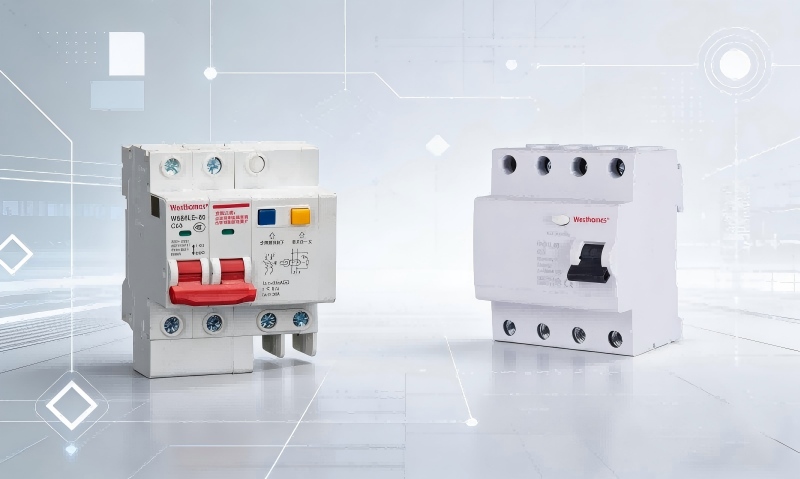
ELCB devices belong to an earlier stage of electrical protection technology and are now mainly found in older electrical installations. As electrical protection technology has evolved, RCCB devices have gradually replaced ELCB in residential buildings, commercial facilities, and industrial power distribution systems.
| Comparison Aspect | ELCB | RCCB |
| Working Principle | Detects leakage voltage on the earth conductor | Detects current imbalance between phase and neutral |
| Grounding Dependence | Highly dependent, needs good grounding to work | No reliance on grounding system |
| Safety & Sensitivity | Low sensitivity, poor detection reliability | High sensitivity (trips at 30mA), safer for shock prevention |
| Installation | Requires stable independent grounding | Simple installation, wide adaptability |
| Application & Trend | Outdated technology, only for old installations | Modern mainstream, widely used in residential and industrial fields |
Why Modern Electrical Safety Prefers RCCB?
More Reliable Leakage Detection
RCCB devices detect the difference between phase and neutral currents so that leakage can be identified even when grounding conditions are not ideal. Because the detection method does not depend on the grounding conductor, leakage faults can be identified more accurately.
Higher Protection Sensitivity
RCCB devices operate at small leakage current levels such as 30mA, which allows electric shock risks to be reduced significantly. When current imbalance exceeds the preset value, the circuit is disconnected quickly so that electrical hazards are minimized.
Compatibility With Modern Electrical Equipment
Modern electrical systems contain electronic devices, inverter equipment, and smart appliances that produce complex current waveforms. Because RCCB devices are available in AC, A, F, and B types, leakage detection can be achieved under different electrical conditions.
Easier Installation And Wider Application
RCCB devices are installed more easily because they do not rely on grounding voltage detection. As a result, they are widely used in residential buildings, commercial facilities, and industrial power systems.
Compliance With Modern Electrical Standards
Electrical regulations in many countries recommend or require the use of RCCB or RCD devices so that electrical safety levels can be improved. Because of these standards, RCCB devices are widely adopted in modern electrical installations.
How To Choose The Right RCCB Or ELCB?
When a suitable RCCB or ELCB is selected, electrical safety requirements, load conditions, and application environments should all be considered. In modern electrical installations, RCCB devices are usually preferred because leakage is detected through current imbalance between phase and neutral conductors, which provides more reliable detection. Traditional ELCB devices rely on voltage detection in the grounding system, which means they are mainly found in older installations.
The rated current of the device should also match the circuit load. Common ratings include 25A, 40A, and 63A so that the device can support normal electrical load conditions.
Residual current sensitivity should also be selected according to the application. Devices rated at 30mA are commonly used in residential systems where protection against electric shock is required, while devices rated at 100mA or 300mA are often used where equipment protection or fire prevention is required.
When RCCB devices are used, the correct type should also be selected according to the equipment used in the electrical system. AC type devices are suitable for conventional electrical loads, while A type devices are suitable for appliances that contain electronic circuits.
F type and B type devices are used in installations where inverter equipment, electric vehicle charging systems, or industrial equipment are present. When these factors are considered together and products that follow recognized safety standards are selected, electrical systems can operate with improved safety and reliability.
Conclusion
In most modern electrical installations, RCCB is the better choice when it is compared with ELCB. RCCB devices provide more reliable protection against earth leakage and electric shock, while ELCB devices are considered outdated and less effective. For improved safety and compliance with modern electrical standards, RCCB installation is generally recommended in residential and commercial electrical systems.
FAQs
Q Are ELCB and RCCB the same device?No. They both protect against leakage but work differently: ELCB detects earth voltage, RCCB detects phase-neutral current imbalance.
Q Can ELCB replace RCCB?
Not recommended. ELCB relies on grounding and is less reliable. RCCB is more sensitive and stable for modern use.
Q Can RCCB protect against short circuit or overload?
No. RCCB only guards against electric shock and leakage. It must be used with MCB for overload/short-circuit protection.
Q What RCCB rating is suitable for residential use?
30mA sensitivity is standard for homes. Rated current is usually 40A or 63A, based on household load.
Q Does RCCB require regular testing?
Yes. Use the test button regularly to check function. Replace it if it does not trip.
--- END ---
In this blog
Featured Articles
Get A Free Quote
