Get quick appointment for technical support!

MCB Trip Curves Explained: How to Select B, C, or D Curve
Dec 12, 2025
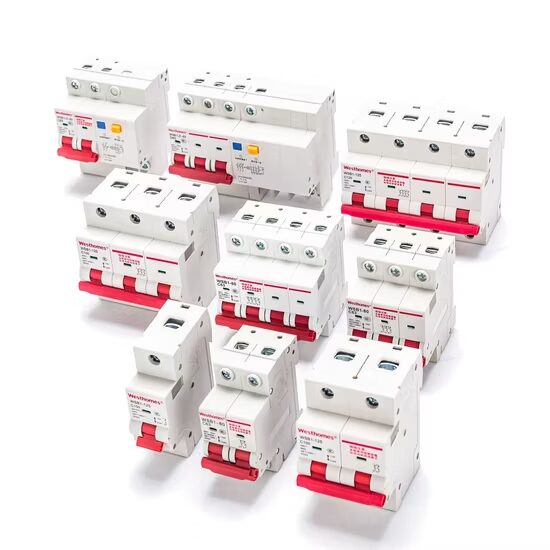
Miniature Circuit Breakers (MCBs) act as protective devices that interrupt electric current when abnormal conditions occur. One key aspect of MCB selection that often causes confusion is the trip curve. Trip curves define how quickly a circuit breaker reacts when current exceeds its rating.
Different curve types, commonly labeled B, C, and D, suit various applications and load characteristics. This guide explores what trip curves mean, how they differ and what factors influence selection.
What Is an MCB Trip Curve?
A trip curve describes the relationship between the current flowing through a circuit breaker and the time it takes to open the breaker. MCBs have two main mechanisms that respond to overcurrent.
A thermal element reacts to prolonged overload conditions, while a magnetic element responds to short-term high current surges. Trip curves combine these responses into a characteristic graph showing how a breaker behaves over time under varying currents.
For example, if a circuit carries slightly more current than its rating for a long period, the thermal mechanism will heat up and eventually trip. If a sudden current surge occurs, such as during motor start, the magnetic part of the MCB trips quickly based on the curve type. Different curve classifications adjust the breakpoint and speed of this magnetic response.
Understanding B, C, and D Curves
MCB trip curves are typically categorized into three groups. Each group defines a range of current multiples at which the breaker will trip within a specific timeframe.
B Curve
B curve MCBs are designed to respond quickly to overcurrent. They typically trip between 3 and 5 times the rated current. This makes them suitable for general-purpose circuits with primarily resistive loads.
Lighting circuits, heaters, and power outlets are common examples. Because these applications usually do not produce large inrush currents, a faster trip response helps protect wiring and devices from sustained overload.
C Curve
C curve MCBs trip between 5 and 10 times the rated current. This wider range allows for moderate inrush currents without nuisance tripping. Loads such as small motors, transformers, fluorescent lighting and electronic ballasts generate temporary surges when starting up. The C curve’s delay for inrush allows these loads to start normally while still offering protection against sustained overloads.
D Curve
D curve MCBs respond between 10 and 20 times the rated current. This range is suitable for circuits with heavier inductive loads that produce significant inrush current.
Large motors, welding machines, transformers, and other power conversion equipment create high starting currents that require a wider trip threshold. A D curve avoids nuisance trips while still protecting against prolonged faults.
Each curve type balances responsiveness against the nature of the connected load. Choosing the wrong trip curve can lead to frequent nuisance trips or inadequate protection.
How Trip Curves Affect System Performance
Selecting an appropriate trip curve influences system behavior in the event of overload or fault. The thermal component addresses slow heating over time, while the magnetic component handles rapid increases.
If a breaker trips too quickly for a given load, it may interrupt normal operation without real danger. This is called nuisance tripping. On the other hand, if the breaker takes too long to react, equipment and wiring may experience excessive stress, leading to insulation damage or fire risk.
Factors That Guide Trip Curve Selection
Load Type
Resistive loads, such as incandescent lighting and heaters, do not produce high inrush current. In such circuits, a B curve breaker provides reliable protection with minimal nuisance trips.
Inductive loads, such as motors and transformers, create higher initial currents. C and D curve breakers are more appropriate because they allow temporary surges.
Starting Characteristics
Equipment with soft start or electronic speed control may produce different current profiles during startup. In such cases, observing manufacturer data and testing can help determine whether a C or D curve offers the best performance.
Cable and Conductor Size
Cable ratings and breaker settings should align. A breaker with a trip curve must protect conductors from overheating without nuisance tripping. The right curve ensures that cable insulation and connector ratings remain secure under expected load conditions.
Environmental Conditions
Ambient temperature affects thermal components. In warmer areas, a circuit may carry more current before the thermal element trips. Pay attention to installation location and environment.
Coordination with Other Protective Devices
Discrimination between upstream and downstream protective devices prevents unnecessary shutdown of larger sections of the system. Matching trip curves ensures that only the nearest protective device operates under fault conditions.
These considerations help clarify which curve type aligns with specific electrical environments.
Practical Applications for B, C, and D Curves
B Curve Use Cases
- Simple lighting distribution
- Residential branch circuits
- General use outlets
- Power circuits with resistive loads
B curve breakers offer high sensitivity and work well where inrush current is limited.
C Curve Use Cases
- Small motor circuits
- Fluorescent or LED lighting with drivers
- General commercial power circuits
- HVAC auxiliary circuits
C curve breakers suit situations where moderate inrush occurs regularly.
D Curve Use Cases
- Large industrial motors
- Transformers with heavy initial magnetizing current
- Welding equipment
- Variable frequency drives (VFD) and other power conversion devices
D curve breakers help avoid nuisance trips while protecting against continued overload.
Each application reveals how trip curve behavior aligns with the profile of the load. Matching the curve to the load type helps maintain both continuity and safety.
Coordination and Selectivity in Protection Design
In systems with multiple protective devices, coordinating trip characteristics improves selectivity. This means that a breaker closest to a fault will operate first, leaving other parts of the system energized. Coordination reduces unnecessary outages and supports predictable performance.
Achieving selectivity often involves choosing trip curves with appropriate time and current relationships. For example, a downstream device with a sensitive curve can clear minor faults, while an upstream device with a broader curve responds only to larger issues.
Designers review current levels, fault characteristics and device ratings when planning coordination. Tools such as time-current characteristic charts help visualize how breakers behave under various conditions.
Testing and Verification Practices
After installation, circuits should undergo testing to verify that protective devices operate as expected. Testing involves applying controlled overload conditions and observing trip responses. This helps confirm that the selected trip curve performs as anticipated in the real environment.
Record keeping during commissioning supports future maintenance and system upgrades. Documenting the trip curve selections and test results helps technicians understand historical performance and make informed decisions during service activities.
Conclusion
Understanding MCB trip curves and how B, C, and D curves differ allows engineers and electricians to tailor protection to the specific needs of their systems.
If you are planning a new electrical installation or reviewing your current setup, West Homes’ specialist team can assist with tailored guidance and detailed product recommendations. Contact us today to discuss your project needs and explore solutions that match your system performance objectives.
--- END ---
In this blog
Featured Articles
Get A Free Quote
