
In modern electrical systems, residual current protection devices help reduce the risk of electric shock and electrical fires. RCCB and RCBO are two common electrical protection devices. Although both can detect leakage current and provide safety protection, their protection functions and application ranges are different.
This article explains the differences between RCCB and RCBO so that readers can better understand their characteristics and typical applications.
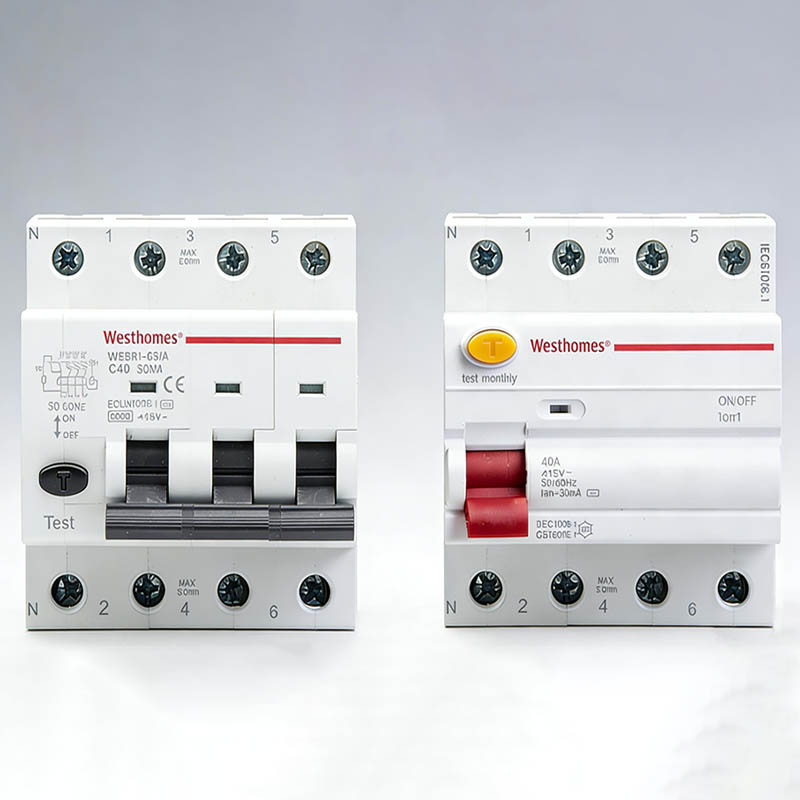
What is RCCB?
RCCB, which stands for Residual Current Circuit Breaker, is a device that detects leakage current in a circuit and disconnects the power supply when leakage occurs. It is widely used in residential, commercial, and industrial power distribution systems to prevent electric shock accidents and electrical fires that may occur because of leakage current.
The working principle of an RCCB is based on detecting whether the current between the phase line and the neutral line is balanced. When the circuit operates normally, the current flowing in and out remains equal.
When leakage occurs, part of the current flows through another path such as the human body or the ground, which causes a current imbalance. When the difference exceeds the rated residual operating current, the RCCB trips and disconnects the circuit.
The main functions of an RCCB include leakage protection and personal safety protection. When leakage current is detected, the device disconnects the circuit quickly, which helps reduce the risk of electric shock and electrical fires. However, an RCCB only provides leakage protection and does not provide overload or short circuit protection, so it is usually used together with circuit breakers or fuses.
What is RCBO?
RCBO stands for Residual Current Breaker with Overcurrent Protection. It is an electrical protection device that combines leakage protection with overcurrent protection. It can detect leakage current in the circuit and also provide protection against overload and short circuit, which allows the distribution system to obtain more comprehensive circuit protection.
The working principle of an RCBO combines a leakage detection mechanism with an overcurrent protection mechanism. On one hand, the device detects the current difference between the phase line and the neutral line so that leakage can be identified, and it disconnects the power supply when the leakage current exceeds the set value.
On the other hand, when overload or short circuit current occurs in the circuit, the internal thermal magnetic tripping mechanism operates and disconnects the circuit, which helps prevent equipment damage and electrical accidents.
The main functions of an RCBO include leakage protection, overload protection, and short circuit protection. Since several protection functions are integrated into one device, an RCBO can provide complete circuit protection without relying on multiple protection devices.
Because of this feature, it is widely used in modern power distribution systems, household distribution boards, and circuits that require independent protection.
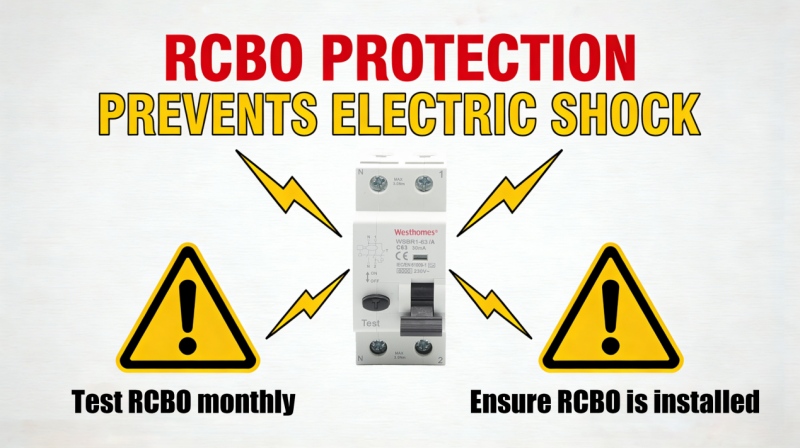
Applications of RCBO and RCCB
RCCB
RCCB devices are mainly used to provide leakage protection. They are usually installed in the main circuit or branch circuits of a distribution system and are used together with MCB.
They are widely used in residential distribution boards, commercial buildings, electrical equipment distribution systems, and industrial environments so that electric shock accidents and electrical fires caused by leakage can be reduced. For example, RCCB devices are commonly used in household lighting circuits, socket circuits, and distribution systems in public buildings.
RCBO
RCBO devices provide leakage protection together with overload and short circuit protection, which makes them suitable for circuits that require independent protection. They are commonly used in individual circuits in residential distribution boards such as air conditioners, kitchen appliances, and washing machines.
They are also used in commercial and industrial environments where higher safety requirements exist for electrical equipment circuits. When RCBO devices are used, the number of protection devices can be reduced while system reliability can be improved.
