Get quick appointment for technical support!

Understanding the Electrical Arc
Jan 13, 2026
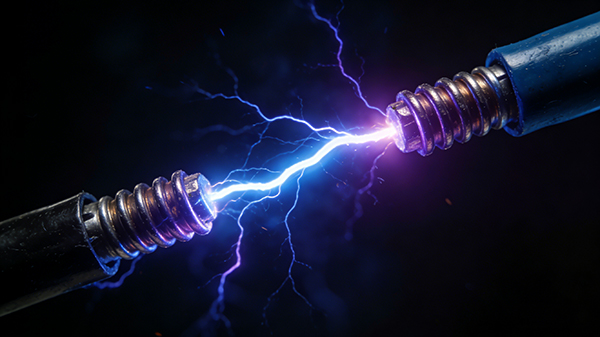
When the contacts of a circuit breaker separate during a fault or manual operation, the current does not stop instantly. Instead, the air between the opening contacts becomes ionized, creating a conductive path known as an electrical arc. This arc is a stream of plasma that can reach temperatures high enough to melt metal and cause fires if it is not extinguished immediately.
The main difference between various types of circuit protection lies in how they handle this dangerous discharge of energy.
The AC Arc Extinguishing Process
In Alternating Current systems, the task of stopping an arc is made easier by the nature of the current itself.
- Natural Zero Crossing: AC current reverses its direction constantly, which means the voltage and current drop to zero at regular intervals.
- De-ionization: When the current reaches this zero point, the arc naturally loses its energy and begins to dissipate.
- Arc Chutes: AC MCBs use a series of metal plates called arc chutes to split the arc into smaller segments. This increases the resistance and cools the plasma, ensuring it does not re-ignite when the voltage rises again.
The DC Arc Extinguishing Process
Direct Current presents a much greater challenge because it lacks a zero crossing. The current is constant and flows in a single direction, meaning the arc will continue to burn indefinitely unless the breaker creates an artificial break.
Magnetic Blowout: DC MCBs are equipped with permanent magnets located near the contacts. These magnets create a magnetic field that exerts a force on the arc.
Arc Stretching: The magnetic force pushes the arc away from the contacts and deep into the arc chute. By stretching the arc over a longer distance, the device increases the electrical resistance until the voltage is no longer high enough to maintain the plasma stream.
Polarity Dependence: Because this mechanism relies on magnets, the direction of the current is important. If a polarized DC breaker is wired incorrectly, the magnets may pull the arc toward the internal mechanism instead of pushing it into the cooling chamber, which can lead to device failure.
Why Isolators Lack This Mechanism
It is important to note that standard Isolator Switches do not have these advanced arc quenching features.
- Manual Separation: An isolator is designed to disconnect a circuit that is already in a no-load state.
- Safety Risk: If an isolator is opened while a heavy current is flowing, the resulting arc has no path to be extinguished. This can cause the arc to jump between the contacts or to the metal casing, posing a severe risk to the operator.
Key Components of Arc Extinction
| Component | Description | Role in Safety |
| Arc Chute | A stack of insulated metal plates. | Splits and cools the arc to increase resistance. |
| Permanent Magnets | Found specifically in DC MCBs. | Forces the arc to move into the quenching area. |
| Bimetallic Strip | A component for thermal sensing. | Initiates the contact separation during an overload. |
| Trip Coil | An electromagnetic solenoid. | Provides the rapid separation needed to start the quenching process during a short circuit. |
Conclusion
The ability to extinguish an arc is the primary factor that separates a high-quality circuit breaker from a simple switch. Without these mechanisms, electrical faults would result in permanent damage to equipment and hazardous environments for users.
To learn more about the specific hardware required for your power system, visit Westhomes Product to find the right protection for your AC or DC installation.
--- END ---
In this blog
Featured Articles
Get A Free Quote
