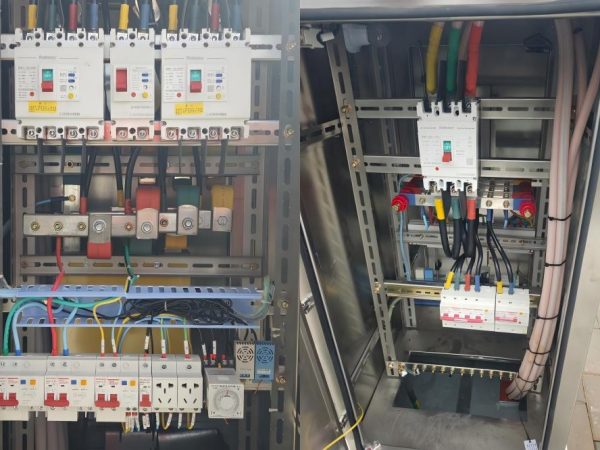
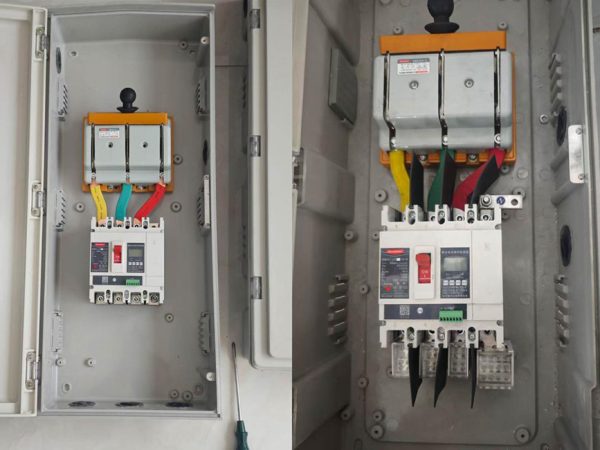
WCU8 Moulded case circuit breaker
WCU8 is one of updated type MCCBs researched and developed by the company by using advanced design and manufacture technology internationally.
Get quick appointment for technical support!

WCU8 is one of updated type MCCBs researched and developed by the company by using advanced design and manufacture technology internationally.


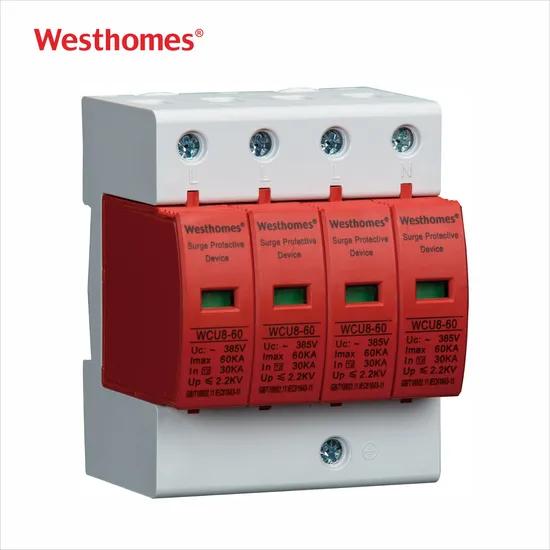
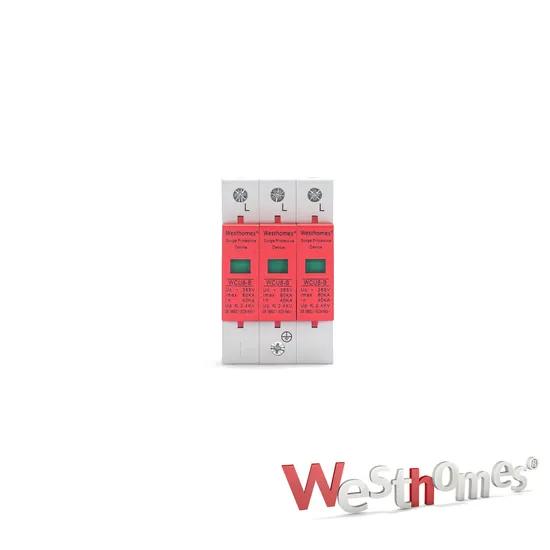
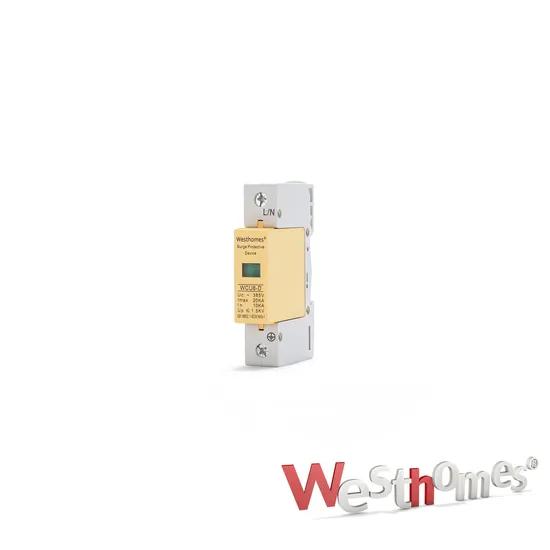
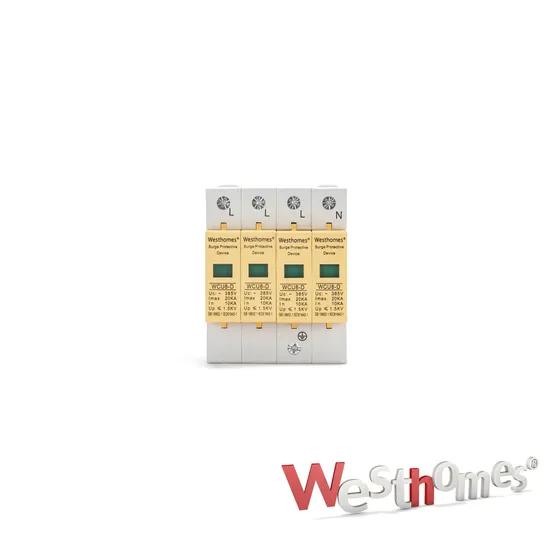
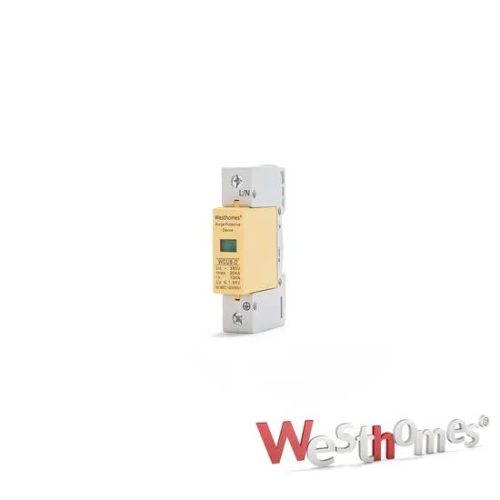
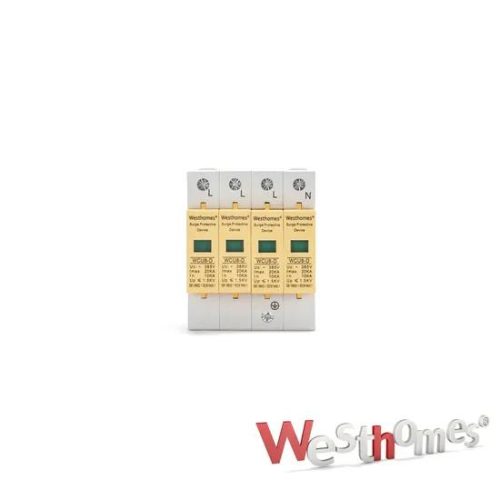
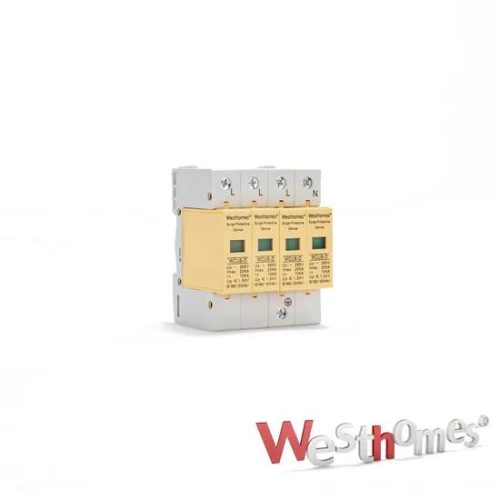
WCU8 is one of updated type MCCBs researched and developed by the company by using advanced design and manufacture technology internationally.
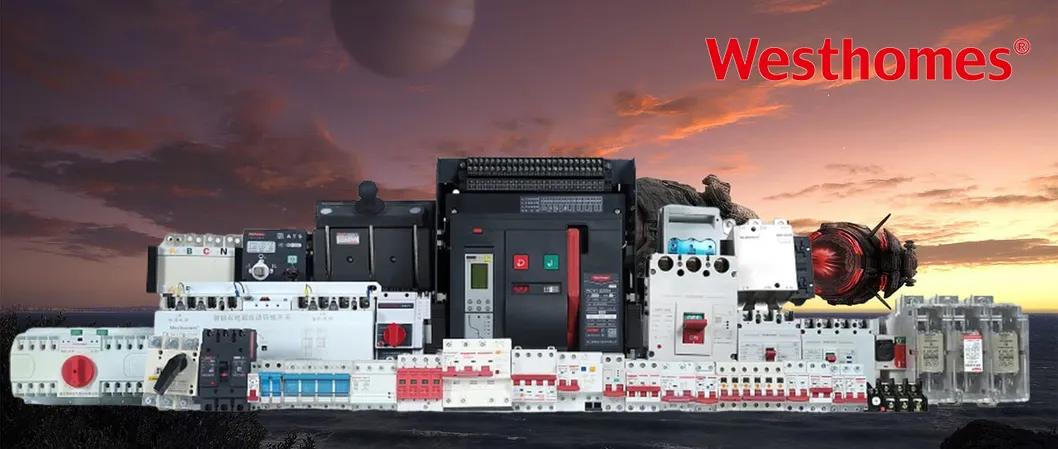
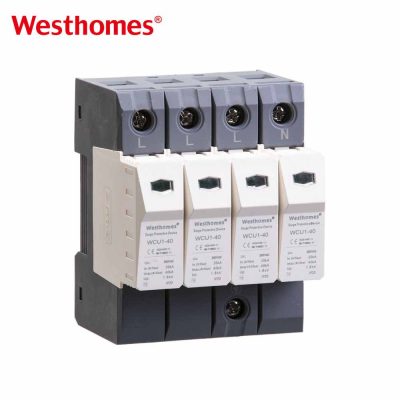
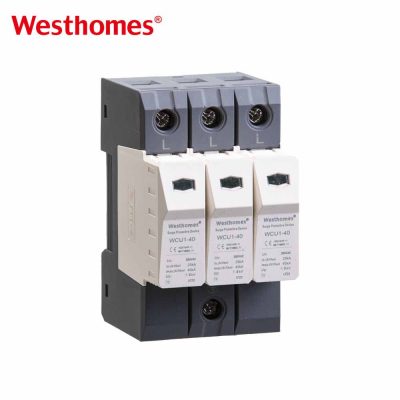
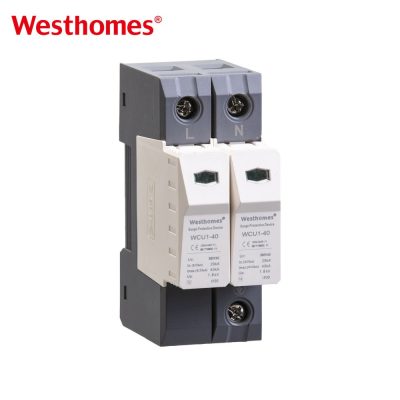
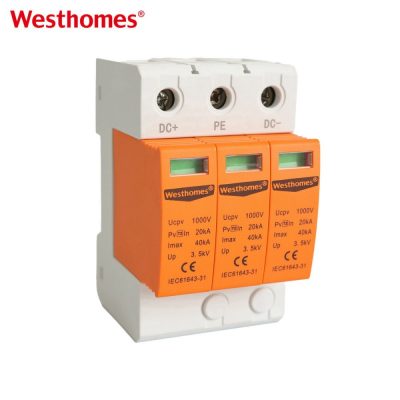
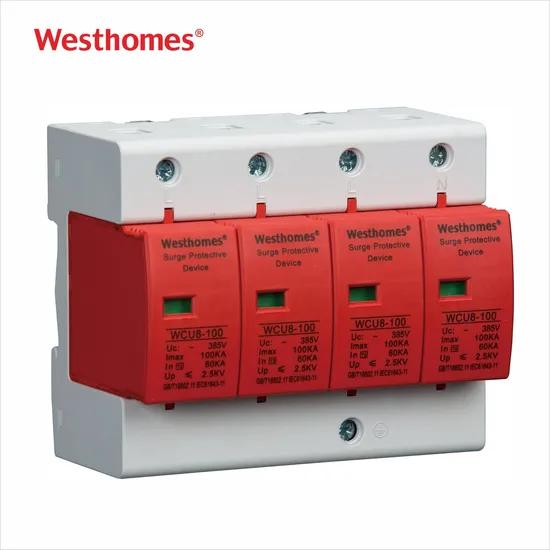
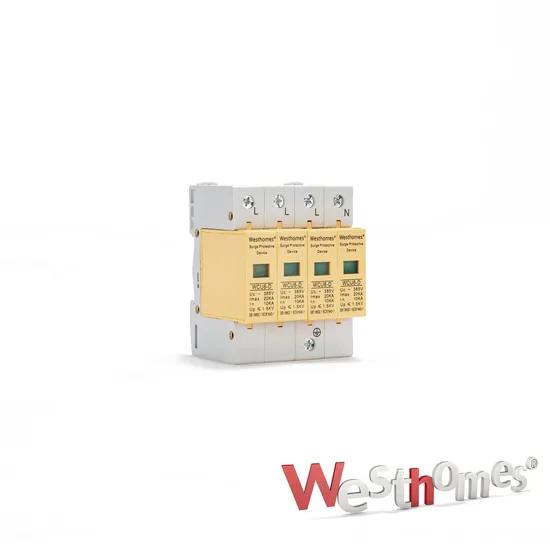
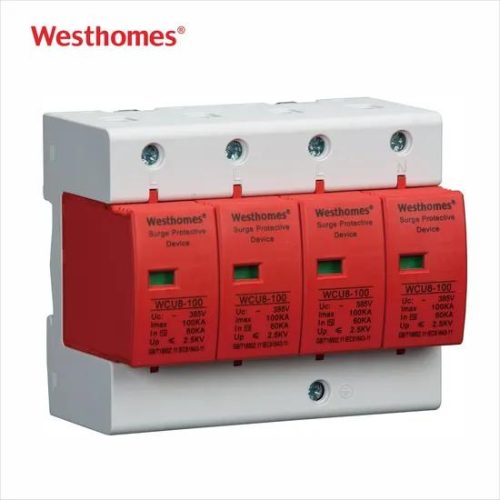
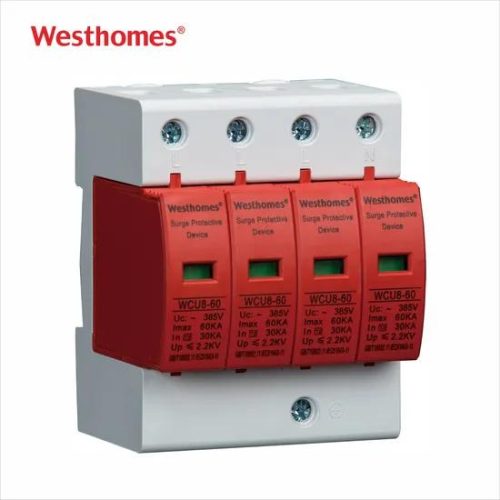
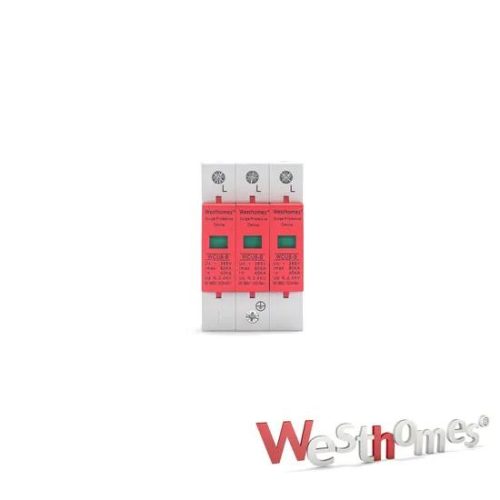
WCU8 series surge arrester mainly applies at power line of AC 50Hz/60Hz, rated operational voltage 230V and 400V to limit instantaneous over-voltage (lightning induction and switching over-voltage). It makes the protected electrical device and parts lower one level at occasion of higher over- voltage category, and lower down the voltage further when appled at terminal to protect devices like TV set, high fidelity sound, air conditioner and computer. It can also matched with other modular and digital electrics to form combination one of lightning proof inductive.
| Pole | 1P, 2P, 3P, 4P |
| Voltage | AC 110/230V/400V |
| kA | 10, 20, 30, 40, 60, 80, 100 |
| Width | 18, 36, 54, 72mm |
| kV | Up≤1.5V–2.5KV |
| Model | WCU8-D10 | WCU8-D20 | WCU8-C30 | WCU8-C40 | WCU8-C60 | WCU8-B80 | WCU8-B100 |
| Rated operation voltage Uo | 230V/400V | 230V/400V | 110V/230V/400V | 230V/400V | 230V/400V | 230V/400V | 230V/400V |
| Max continuous operation voltage Ue | 275V/385V | 320V/385V | 320V, 400V, 420V, 440V | 140V, 320V, 400V, 420V, 440V | 320V, 385V, 420V | 320V, 385V, 420V | 320V, 385V, 420V, 440V |
| Holding level Up | 0.7/1.0kV | 1.2/1.5kV | 1.4/1.8kV | 1.4/2.0kV | 1.5/2.0kV | 2.0/2.4kV | 2.2/2.8kV |
| Max discharge current Imax | 10kA | 20kA | 30kA | 40kA | 60kA | 80kA | 100kA |
| Nominal discharge current | 5kA | 10kA | 15kA | 20kA | 30kA | 40kA | 60kA |
| Response time S | <25 | ||||||
| Operation environment | -40ºC~+85ºC | ||||||
| Selection area of enter wire | 6mm2 | 6mm2 | 10mm2 | 10mm2, 16mm2 | 10mm2, 16mm2 | 10mm2, 16mm2 | 16mm2, 25mm2 |
| Section area of enter ground lead mm2 | 10mm2 | 10mm2 | 16mm2 | 10mm2, 25mm2 | 16mm2, 25mm2 | 25mm2 | 25mm2, 35mm2 |
| Type selection of fuse, circuit breaker | 10A, 16A | 16A, 25A | 25A, 32A | 32A | 32A, 63A | 63A | 63A |
| Miniature Circuit Breaker (MCB) | Upto 125A, 10kA, Curve type: A, B, C, D, 1P, 2P, 3P, 4P |
| Miniature Earth Leakage Circuit Breaker (MCB) (RCBO) | Upto 125A, 10kA, 0.3mA, Curve type: A, B, C, D, 1P, 2P, 3P, 4P |
| Moulded Case Circuit Breaker (MCCB) | Upto 2000A (adjustable), 100kA, 1P, 2P, 3P, 4P |
| Moulded Case Earth Leakage Circuit Breaker (ELCB) (RCCB) | Upto 2000A (adjustable), 100kA, 1000mA, 1P, 2P, 3P, 4P |
| Universal Circuit Breaker (ACB) | Upto 6300A, 100kA, |
| Switch Disconnector | Upto 125A, 1P, 2P, 3P, 4P |
| Surge Arrestor | Up 2.2/2.8kV, 100kA |
| Double Power Supplies Automatic Changeover Switch | Upto 2000A, 7.5kA, 1P, 2P, 3P, 4P |
| Load Switch Disconnector | Upto 3200A, 10kA, 70kA, |
| Distribution Box / Enclosure | Plastic / Metal |
| Spare Parts |

An SPD is a protective device that diverts transient over-voltages—surges caused by lightning strikes or switching events—away from sensitive equipment by clamping the voltage to a safe level. Inside, a metal-oxide varistor (MOV) or spark-gap element switches from a high-impedance state to a low-impedance state when the voltage exceeds its threshold, shunting the surge current to earth. It protects the wiring and loads but does not interrupt normal mains current the way a circuit breaker does.
Lightning does not need to strike a building directly to cause damage; the electromagnetic field from a nearby strike induces dangerous voltage spikes into power and data cables. "Anti-lightning induction" means the SPD is designed to absorb these induced surges—typically 8/20 µs current waves from indirect lightning and switching transients—before they reach appliances. It works together with the external lightning protection system (air terminals and down conductors) rather than replacing it.
The 230V/400V indicates it is intended for low-voltage mains systems—230V phase-to-neutral in single-phase, and 400V phase-to-phase in three-phase installations. The 50/60Hz rating means it operates correctly on either mains frequency, which is important for export products that may be used in regions using 50Hz (e.g., Europe, Asia) or 60Hz (e.g., North America). The continuous operating voltage (Uc) must be higher than the maximum expected system voltage to avoid false conduction.
Type 1 SPDs handle direct lightning current (10/350 µs wave) at the service entrance; Type 2 SPDs suppress induced and switching surges (8/20 µs wave) at distribution boards; Type 3 SPDs provide final, localized protection close to sensitive loads. A coordinated installation often combines a Type 1 or Type 2 at the main board with Type 3 at the equipment. The classification is defined by the impulse current and discharge current tests in IEC 61643-11.
In (nominal discharge current, 8/20 µs) is the surge current the SPD can withstand multiple times, while Imax (maximum discharge current) is the highest single 8/20 µs surge it can survive without destruction. Up (voltage protection level) is the residual voltage clamped across the SPD during a surge; the lower the Up, the better the downstream equipment is protected. When selecting an SPD, Up must be below the impulse withstand voltage of the equipment being protected.
A 4P SPD connects L1, L2, L3, and N to the four line terminals, with a separate earth (PE) conductor to the grounding system. In common-mode protection each phase and the neutral is diverted to PE; in some configurations a dedicated N-PE module is included. The connecting leads should be as short as possible (ideally under 0.5 m) because lead inductance adds to the residual voltage and weakens protection.
It mounts on a standard 35mm DIN rail inside a distribution board or cabinet, typically after the main breaker and a dedicated SPD back-up disconnector (fuse or circuit breaker). Line conductors feed the SPD terminals and the earth conductor runs to the busbar. Adequate clearance and ventilation should be maintained, and the device should be installed by a qualified electrician who verifies the system earthing arrangement (TT, TN-S, TN-C-S).
Most SPDs include a visual status window that shows green when healthy and red when the internal MOV has degraded or failed short-circuit. Because SPDs age with every surge they absorb, the window gives a quick, at-a-glance health check without opening the panel. Many models also offer a remote signalling contact that can feed a building-management or alarm system.
An MCB protects against overload and short-circuit current, an RCD protects against earth-leakage (shock) current, and an SPD protects against fast microsecond voltage transients—none of the three replaces the others. An SPD does not trip on normal over-current, so it must be backed up by its own over-current protective device to clear the fault if the SPD fails short. A complete installation uses all three working together.
It is designed to IEC 61643-11, the product standard for low-voltage surge protective devices connected to low-voltage power systems. Typical applications include whole-building service entrances, distribution panels, industrial switchboards, and protection of sensitive loads such as PLCs, servers, and HVAC controls. Routine maintenance consists of checking the status window annually and after major thunderstorms, and replacing the module when it shows red.
* indicates a required field

 2 MB
2 MB