Get quick appointment for technical support!

Get in Touch

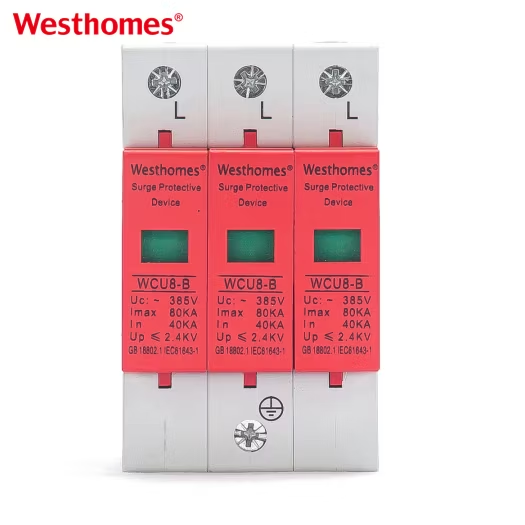
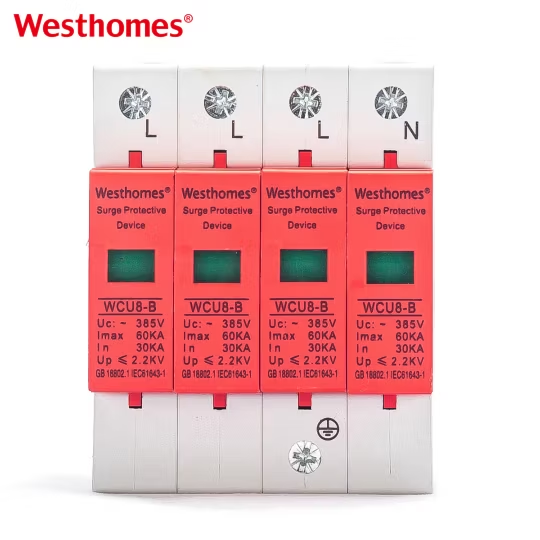
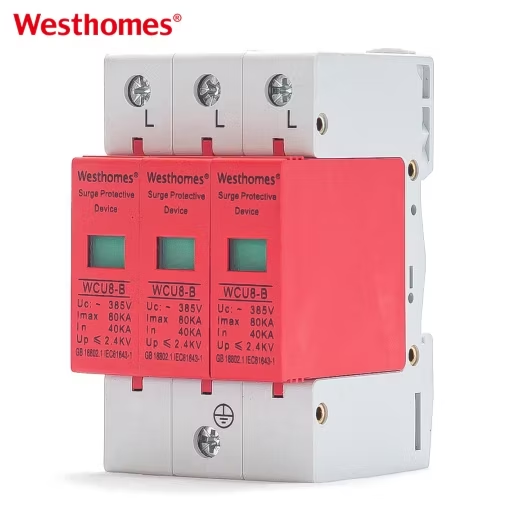
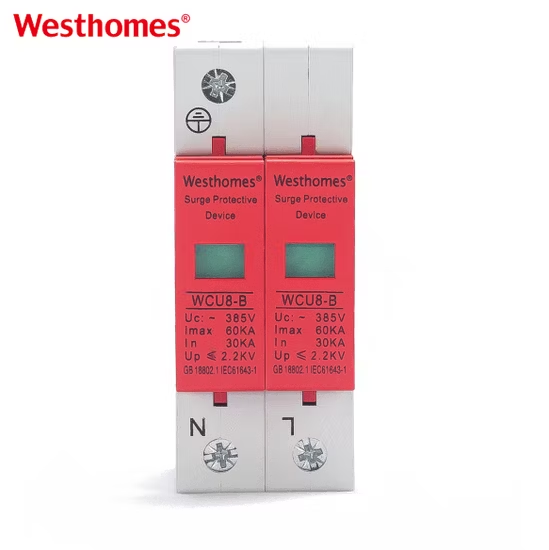
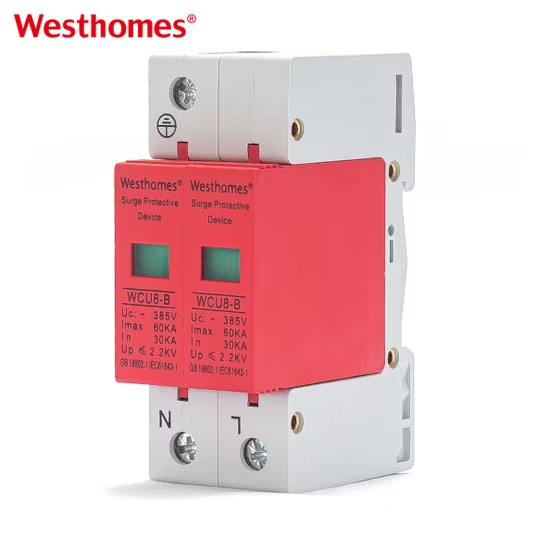
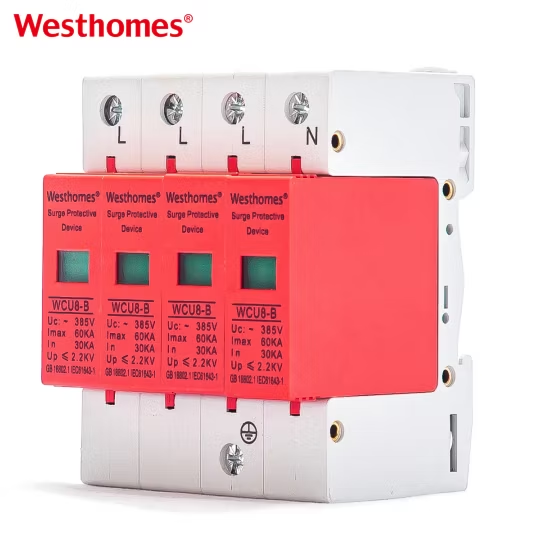
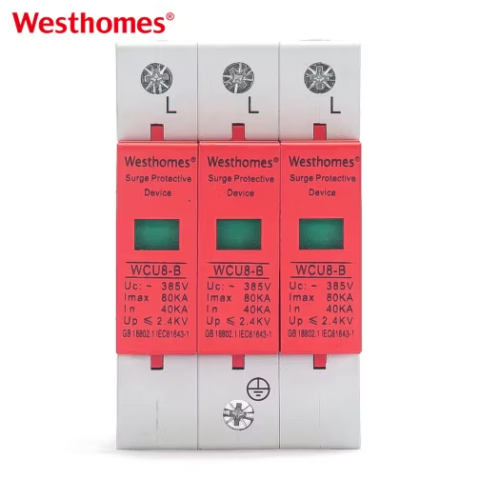
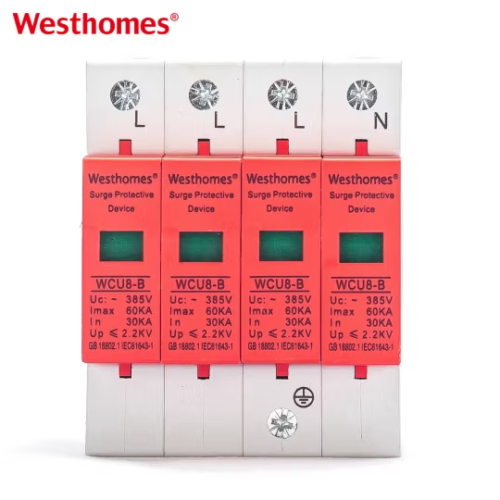
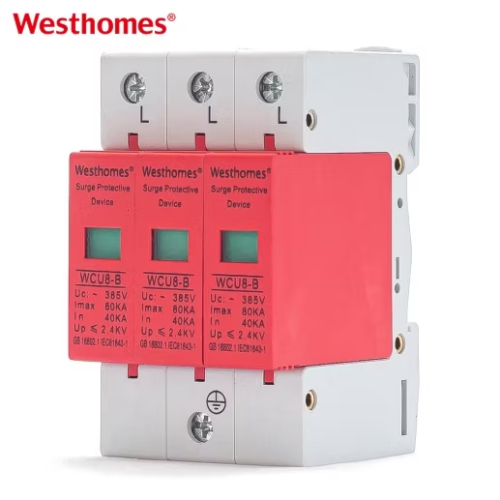
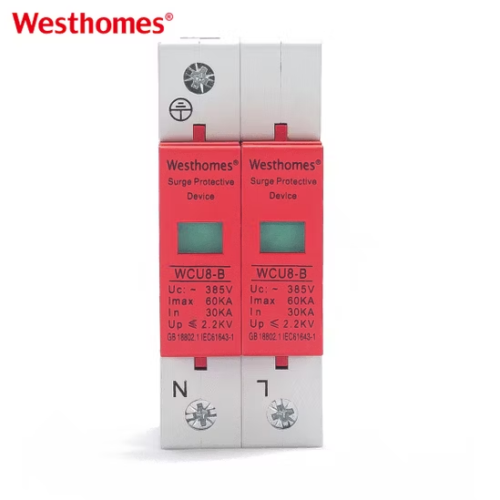
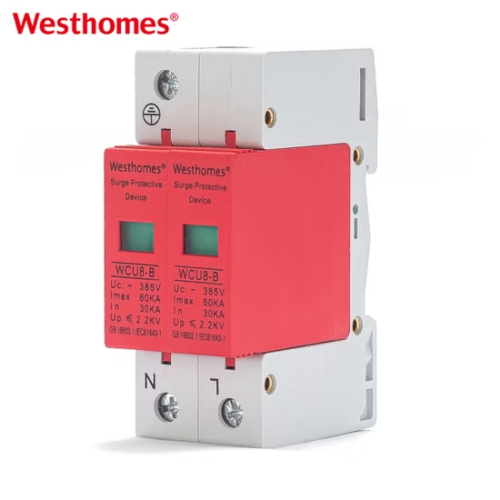
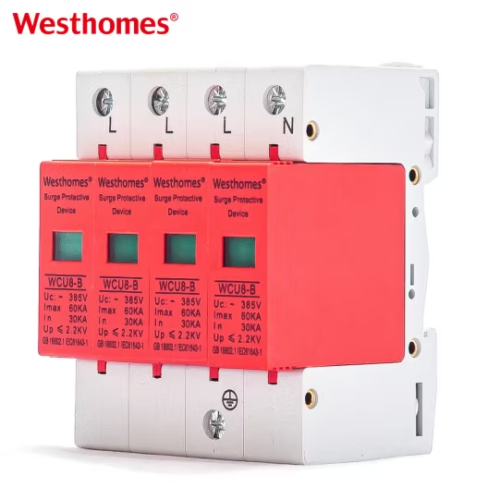
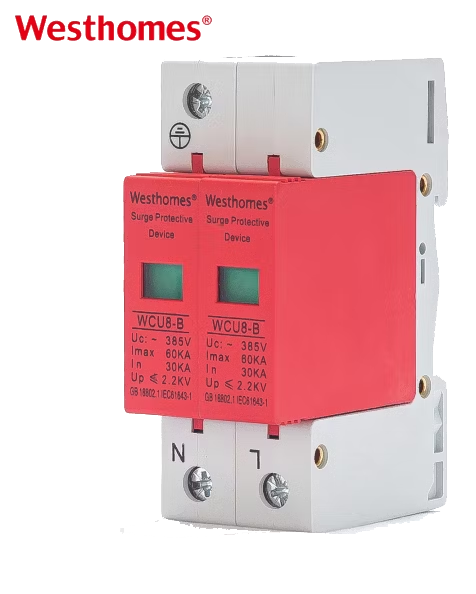
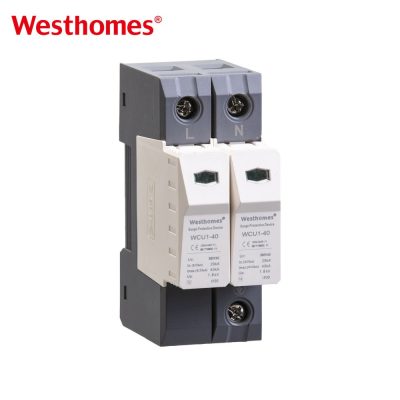
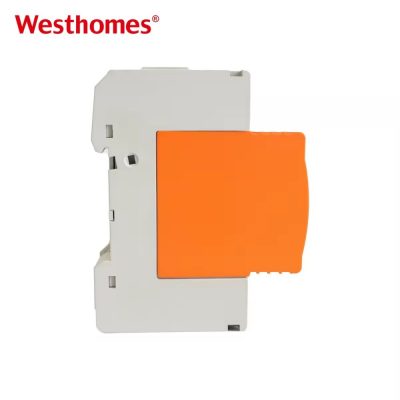
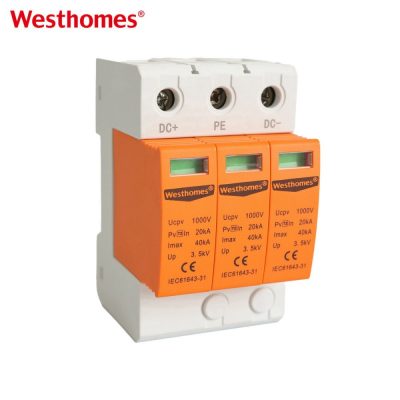
Westhomes WCU8-B 3P 60kA Surge Protection Device for 230V/400V AC Systems

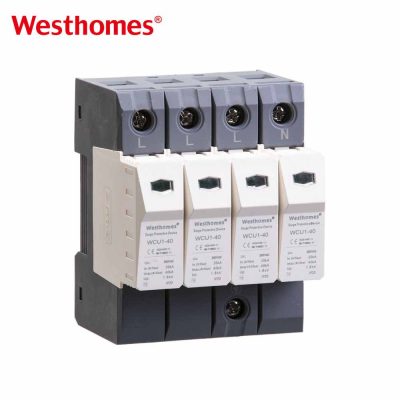
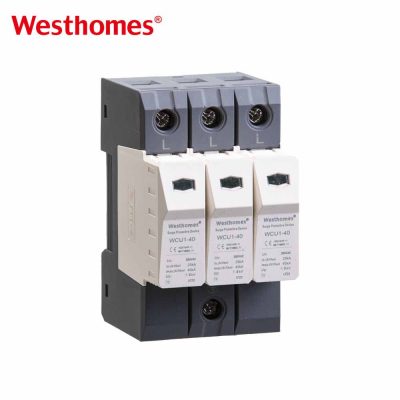
The Westhomes WCU8-B Surge Protection Device is a high-performance 3-pole (3P) SPD engineered to protect power systems operating at AC 50Hz/60Hz with rated voltages of 230V and 400V.

Social focus:

Westhomes WCU8-B 3P 60kA Surge Protection Device for 230V/400V AC Systems

Designed to suppress transient over-voltages from lightning strikes and electrical switching surges, WCU8-B 3P 60kA Surge Protection Device for residential, commercial, and industrial applications.

WCU8-B

Westhomes WCU8-B 3P 60kA Surge Protection Device for AC 230V/400V Power Systems

With a maximum discharge current (Imax) of 60kA, the WCU8-B ensures efficient voltage clamping, safeguarding your electrical network and connected devices from damaging surges.

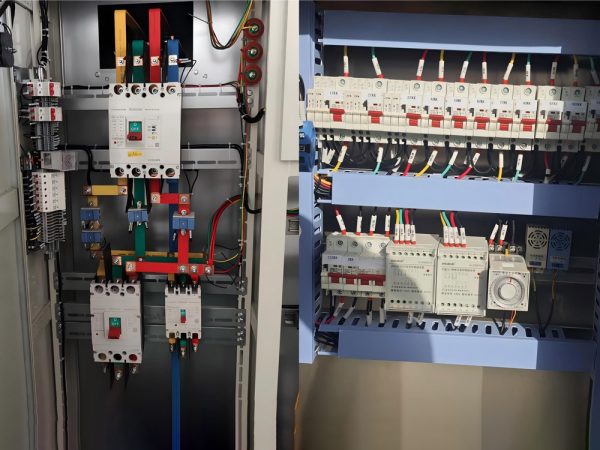
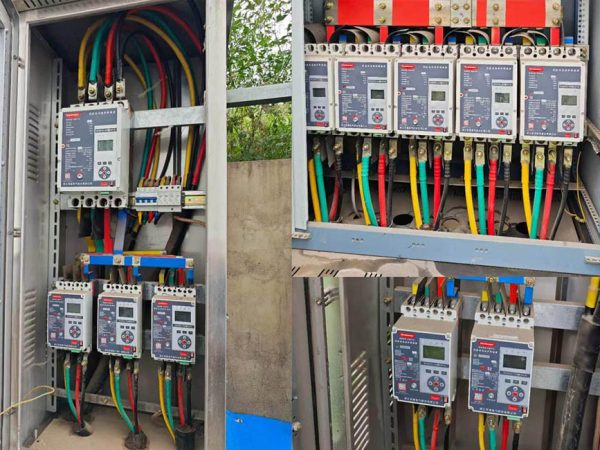
When installed at terminal points, it effectively reduces residual voltage, offering secondary protection for high-value electronics such as TVS, air conditioners, audio equipment, and computers.

The WCU8-B is suitable for environments requiring a higher over-voltage category, acting as a step-down protection layer in power distribution systems.

It can also be integrated with other modular or digital protective devices, forming a complete and adaptive surge protection solution.

Delivering reliable surge suppression and improved equipment longevity, the Westhomes WCU8-B 3P 60kA SPD is the smart choice for enhanced power safety in multi-phase systems.

Application: Power line surge protection against lightning and switching over-voltage

Protection for: Televisions, high-fidelity audio systems, HVAC units, computers, and more

Modular Design: Compatible with digital and modular protective components

Installation: Ideal for main power distribution panels and terminal protection

KEY INFORMATION

Model WCU8-D10 WCU8-D20 WCU8-C30 WCU8-C40 WCU8-C60 WCU8-B80 WCU8-B100
Rated operation voltage Uo 230V/400V 230V/400V 110V/230V/400V 230V/400V 230V/400V 230V/400V 230V/400V
Max continuous operation voltage Ue 275V/385V 320V/385V 320V, 400V, 420V, 440V 140V, 320V, 400V, 420V, 440V 320V, 385V, 420V 320V, 385V, 420V 320V, 385V, 420V, 440V
Holding level Up 0.7/1.0kV 1.2/1.5kV 1.4/1.8kV 1.4/2.0kV 1.5/2.0kV 2.0/2.4kV 2.2/2.8kV
Max discharge current Imax 10kA 20kA 30kA 40kA 60kA 80kA 100kA
Nominal discharge current 5kA 10kA 15kA 20kA 30kA 40kA 60kA
Response time S <25
Operation environment -40ºC~+85ºC
Selection area of enter wire 6mm2 6mm2 10mm2 10mm2, 16mm2 10mm2, 16mm2 10mm2, 16mm2 16mm2, 25mm2
Section area of enter ground lead mm2 10mm2 10mm2 16mm2 10mm2, 25mm2 16mm2, 25mm2 25mm2 25mm2, 35mm2
Type selection of fuse, circuit breaker 10A, 16A 16A, 25A 25A, 32A 32A 32A, 63A 63A 63A

Basic Info.

Model NO. WCU8-B
Arc-extinguishing Medium Air
Structure SPD
Type Circuit Breaker
Certification ISO9001-2000, CE, CB, CCC
Ka 60kA
Production Line 100% Automatic
Payment L/C, T/T, D/P, Western Union, Paypal, Money Gram
Transport Package Paper Box
Origin Prc
Production Capacity 15, 000, 000
Speed Normal Type Circuit Breaker
Installation DIN Rail
Poles Number 3p
Function Conventional Circuit Breaker,
Circuit-Breaker Failure Protection,
Overcurrent Protection,
OVP(Overvoltage Protection)
Voltage AC230V/400V
AMPS 6, 10, 16, 20, 25, 32, 40, 50, 63, 80, 100, 125
Factory Own
Cooperation Type ODM/OEM
Trademark Westhomes
HS Code 8536200000

FREQUENTLY ASKED QUESTION (FAQ)

What is a Surge Protection Device (SPD) and what does the WCU8-B 3P actually do? plus-square Created with Sketch Beta. minus-square Created with Sketch Beta.

An SPD is a parallel-connected protective device that diverts transient overvoltage pulses — from direct lightning strikes, nearby switching operations, or grid disturbances — to earth, clamping the voltage to a safe level before it reaches sensitive equipment. The WCU8-B 3P is installed in series with the mains but acts in parallel across the three phases, absorbing surge energy and protecting downstream loads such as PLCs, inverters, servers, and industrial control cabinets.

What do "Type 1 / Type 2 / Type 3" mean, and which class is the WCU8-B? plus-square Created with Sketch Beta. minus-square Created with Sketch Beta.

Per IEC 61643-11, Type 1 SPDs handle direct lightning current flashes (10/350 µs waveform) at the service entrance, Type 2 SPDs absorb induced switching and lightning surges (8/20 µs waveform) in distribution boards, and Type 3 SPDs provide fine, final protection close to sensitive loads. The WCU8-B 60kA series is designed as a Type 1/2 combined SPD suitable for both main distribution boards and sub-distribution boards where lightning and switching transients must be suppressed.

What does the "60kA" Imax rating mean on the nameplate? plus-square Created with Sketch Beta. minus-square Created with Sketch Beta.

Imax (maximum discharge current, Imax) is the peak 8/20 µs surge current the SPD can withstand once before failing. A 60kA rating means the device can safely absorb a single 8/20 µs pulse of up to 60 kA peak without catastrophic failure. It should not be confused with In (nominal discharge current), which is the 8/20 µs current the SPD can survive 15 times in sequence; Imax is always higher than In.

What is the difference between In and Imax, and why does it matter? plus-square Created with Sketch Beta. minus-square Created with Sketch Beta.

In is the nominal discharge current (typically 20 kA for a 60 kA SPD class) that the device can repetitively absorb during its service life, while Imax is the single-pulse extreme limit. Selecting an SPD with Imax 60 kA gives a safety margin above the repeated In duty, which is important in industrial installations where multiple surge events can occur per year.

What is Up (voltage protection level) and how low should it be? plus-square Created with Sketch Beta. minus-square Created with Sketch Beta.

Up is the residual clamping voltage the SPD lets through to the protected equipment when a surge is applied — the lower it is, the better the protection. For WCU8-B 60kA units, Up is typically in the 1.5–2.5 kA range depending on pole configuration. It must be lower than the impulse withstand voltage (Uw) of the downstream equipment, usually by a safe margin, to ensure equipment survives the surge.

Why is this SPD available in 3P, and what does 230V/400V mean for wiring? plus-square Created with Sketch Beta. minus-square Created with Sketch Beta.

The WCU8-B 3P version is intended for three-phase AC 230V phase-to-neutral / 400V phase-to-phase TN-S, TN-C-S, or TT systems. It connects across L1-L2, L2-L3, L3-L1 and from each phase to the neutral/earth bar, providing protection between every phase pair and between phases and protective earth in a three-wire or four-wire distribution board.

How is the WCU8-B installed, and can it be DIN rail mounted? plus-square Created with Sketch Beta. minus-square Created with Sketch Beta.

The WCU8-B snaps onto a standard 35 mm DIN rail inside the distribution board. The three phase terminals (L1, L2, L3) and the N/PE terminal are connected upstream from the main MCB or fuse, and a backup overcurrent device (gG or aM fuse / upstream MCB) should always be installed in series to clear the circuit if the SPD fails short-circuit.

How do I know when the SPD has failed and needs replacement? plus-square Created with Sketch Beta. minus-square Created with Sketch Beta.

The WCU8-B is fitted with a mechanical status indicator window on the front face. A green (or white) indicator means normal operation; a red indicator (or window turning red) means the internal varistor/arrester has degraded or short-circuited and the SPD must be replaced promptly. Many models also provide remote contact contacts for signalling to a building management system.

What is the difference between an SPD and an MCB or RCD? plus-square Created with Sketch Beta. minus-square Created with Sketch Beta.

An MCB provides overcurrent and short-circuit protection at power-frequency currents (amps to kiloamps over milliseconds), while an RCD/RCCB/RBCO detects residual earth-leakage current at tens of milliamps. An SPD is completely different: it responds to microsecond-range nanosecond transient overvoltage pulses of hundreds/thousands of amps and normally carries no power-frequency current. They are complementary devices, not substitutes for one another.

Does the WCU8-B replace a full lightning protection system (LPS)? plus-square Created with Sketch Beta. minus-square Created with Sketch Beta.

No. An SPD suppresses surge currents that enter the installation through the power line after direct or indirect lightning events; it does not by itself provide air-termination, down-conductor, or earth-termination protection for a building. A proper external lightning protection system (LPS, IEC 62305) plus coordinated SPDs at the service entrance and sub-boards together give the recommended protection.

RELATED PROJECTS

REQUEST
YOUR FREE QUOTE

* indicates a required field