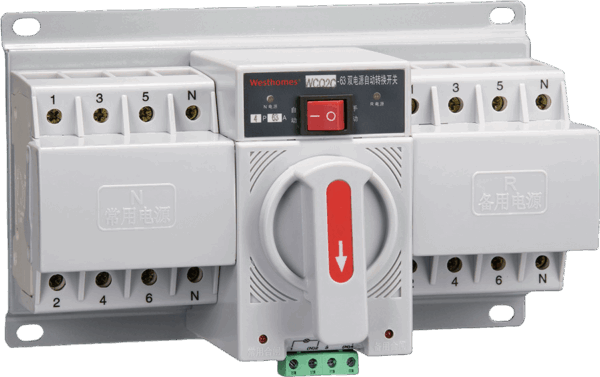
What Is an Automatic Transfer Switch?
An Automatic Transfer Switch is an intelligent switching device that monitors electrical power and automatically transfers a circuit to an alternate power source when the primary source becomes unavailable or unstable. Once the main power source returns to normal, the ATS switches the load back to it safely and smoothly.
Typical backup sources include:
- Diesel or gas generators
- UPS (Uninterruptible Power Supply) systems
- Battery storage systems
- Alternate utility feeders
Because the transition occurs automatically and within a controlled time window, ATS devices greatly reduce downtime and protect sensitive equipment.
How an Automatic Transfer Switch Operates During Power Changes
The operation of an ATS follows a sequence designed to maintain smooth transitions. First, the device observes the main source.
When a problem is detected, the ATS initiates a signal that starts the generator or activates another available supply. The controller examines the backup source until voltage and frequency stabilize according to the programmed values.
When the alternate supply is ready, load transfer takes place and the system continues functioning under the new supply.
When the main source returns to normal, the ATS observes it for a short period to confirm that it remains stable. After this verification, the load shifts back to the original source. This method protects equipment from sudden changes and ensures predictable operation.
Types of Automatic Transfer Switch
ATS units can be categorized in multiple ways depending on their mode of operation, switching method and power system configuration.
1. Based on Operation Mode
Automatic ATS
Transfers power automatically without human intervention. Used in critical infrastructure where downtime is unacceptable.
Manual ATS
Requires manual operation. Typically used in smaller installations or applications where uninterrupted power is less critical.
2. Based on Transfer Mechanism
Open Transition (Break-Before-Make)
The load is disconnected from one source before connecting to the next. There is a brief interruption during the transfer, suitable for most general loads.
Closed Transition (Make-Before-Break)
Both power sources overlap momentarily to ensure no interruption. This requires synchronization and is used in mission-critical facilities.
Delayed Transition
Used when loads require a pause before connecting to another source, such as motor loads that need time to decelerate.
3. Based on System Configuration
Single-Phase ATS
Common in residential and small commercial systems.
Three-Phase ATS
Ideal for industrial facilities, large commercial complexes and high-power applications.
Applications of Automatic Transfer Switches
ATS devices are essential across many sectors where uninterrupted power is crucial.
1. Industrial Facilities
Manufacturing plants depend on continuous operation, and even brief outages can result in equipment damage or production loss. ATS ensures smooth transitions to backup power during outages.
2. Commercial Buildings
Office buildings, shopping centers and public facilities rely on ATS for uninterrupted lighting, security systems, elevators and essential services.
3. Data Centers
A few milliseconds of power loss can lead to data corruption or operational downtime. ATS and UPS systems together provide seamless protection.
4. Healthcare
Hospitals and clinics require absolute power reliability for life-support equipment, operating rooms and emergency systems.
5. Telecommunications
Base stations and network hubs rely on ATS systems to ensure stable power for communication services.
6. Residential Use
Homeowners with generators or solar hybrid systems use ATS for automatic backup power activation.

How to Select an ATS
Selecting an ATS involves reviewing several aspects of the electrical installation. The rated voltage and current must match the needs of the system. If the installation requires frequent switching or handles heavy equipment, choosing a model with a strong mechanical structure and durable internal components becomes beneficial.
Transfer time
Some devices tolerate momentary interruptions while others do not. Understanding how the load responds to power changes helps determine the most suitable design.
Type of load
Equipment with motors or sensitive electronics may respond better to specific transfer sequences. Reviewing technical requirements before installation improves long term performance.
ATS controllers
Modern ATS controllers often include features such as event logs, remote monitoring, adjustable delays and diagnostic functions. These features allow facility managers to observe power events, restore normal conditions quickly and keep accurate operational records.
Compliance and performance standards
Compliance with safety and performance standards is another priority. Many ATS products follow national and international standards. Installation teams and project managers usually confirm these requirements early in the design stage.
Installation Considerations
- Position the ATS close to the main distribution panel for reduced wiring complexity.
- Ensure adequate ventilation and protection from dust, moisture or corrosive environments.
- Use proper grounding practices and mechanical interlocks.
- Confirm compatibility with generators or alternate power sources.
- Perform pre-commissioning tests to verify transfer sequences and interlocks.
Maintenance Best Practices
To ensure long-term reliability, regular maintenance should include:
- Visual inspection of wiring and connections
- Testing transfer function under controlled conditions
- Cleaning and lubrication of mechanical components
- Verifying controller settings and backup battery status
- Recording performance data and tracking abnormal conditions
Preventive maintenance reduces the risk of failure during actual power outages.
Benefits of Using an ATS
- Continuous power without manual intervention
- Improved safety and reduced risk of human error
- Enhanced operational stability for critical applications
- Protection for sensitive equipment
- Reduced downtime and operational losses
- Increased system automation and reliability
Conclusion
An Automatic Transfer Switch maintains an uninterrupted power supply across many industries. By monitoring changes in power conditions and transferring loads to alternative sources as needed, an ATS ensures safe and stable operation for a wide range of facilities. With proper selection and installation, an ATS provides long-term value and supports daily operations with confidence.
If you are planning a new project or upgrading your electrical system, we welcome you to contact our team for product information and customized solutions.
Our specialists are ready to help you choose the ATS that best fits your application and performance needs.