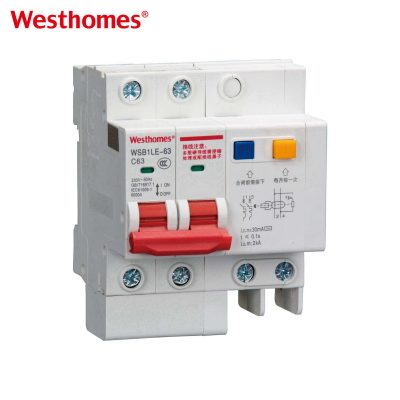
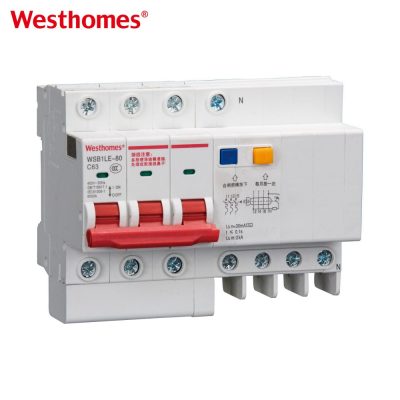
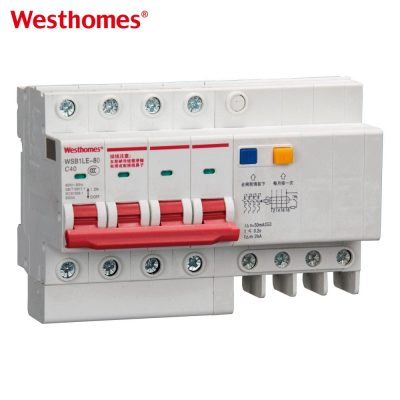
WSB1-63 Moulded case circuit breaker
WSB1-63 series MCB is one of updated type MCCBs researched and developed by the company by using advanced design and manufacture technology internationally.
Get quick appointment for technical support!

WSB1-63 series MCB is one of updated type MCCBs researched and developed by the company by using advanced design and manufacture technology internationally.



WSB1-63 series MCB is one of updated type MCCBs researched and developed by the company by using advanced design and manufacture technology internationally.
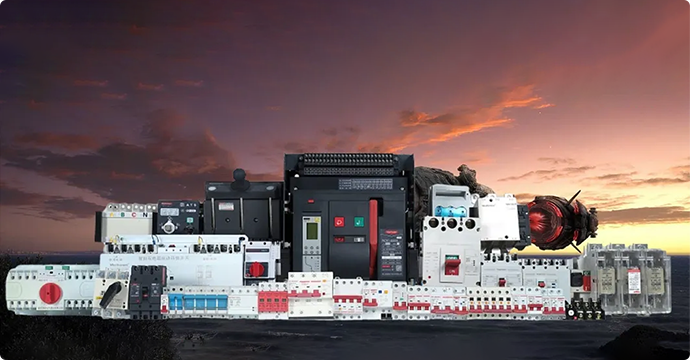
WSB1-63 series MCBs are mainly applied at lines of AC 50Hz or 60Hz, rated operation voltage AC230/400V, rated current upto 63A, for overload and short circuit protection to the lines, also for changeover of infrequent operation to the lines. The MCBs are used at places of commercial office building, residential and similar building etc.
The product meets standards of GB 10963.1 and IEC 60898-1, at international advanced level.

| Frequency | 50Hz/60Hz |
| Pole | 1, 2, 3, 4 |
| Voltage | AC230V/400V |
| kA | 6kA, 10kA |
| Amps | 6, 10, 16, 20, 25, 32, 40, 50, 63 |
| Width | 18, 36, 54, 72mm |
| Mounting | Din rail |
| Standard | IEC/EN 60898 |
| Item No. | WSB1-63 |
| Rated current In(A) | 6, 10, 16, 20, 25, 32, 40, 50, 63 |
| Pole number | 1P, 2P, 3P, 4P |
| Trip characteristics | C type(5-10In); D type(10-20In) |
| Rated insulating voltage Ui(V) | 690 |
| Rated operating voltage Ue(V) | AC230V/AC400V |
| Rated impulse voltage Uimp(kV) | 4 |
| Breaking capacity Icu(kA) | 6 |
| Mechanical life(times) | 20000 |
| Electrical life(times) | 4000 |
| No. | Rated current | Initial state | Test current | Time limit | Expected result |
| 1 | In≤63 | Cold state | 1.13In | t≤1h | Not tripping |
| In>63 | t≤2h | ||||
| 2 | In≤63 | Just followed the last test item | 1.45In | t<1h | Tripping |
| In>63 | t<2h | ||||
| 3 | In≤32 | Cold state | 2.55In | 1s | Tripping |
| In>32 | 1s | ||||
| 4 | Type C | Cold state | 5In | t≤0.1s | Not tripping |
| 10In | t<0.1s | Tripping |

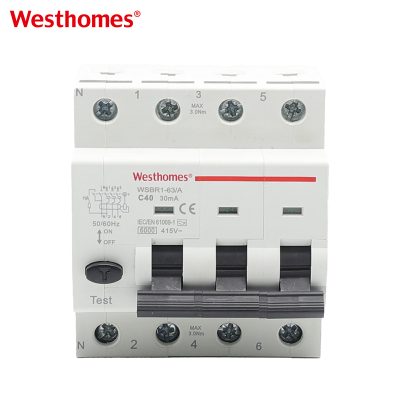
It refers to a modern, compact modular design that matches the universal 35mm DIN-rail mounting format, with a slim width, visible ON/OFF indicator, clear terminal markings and a standardized handle operation. This makes it interchangeable with most competing mini MCBs on the market and easy to retrofit into existing distribution boards.
It is widely used for residential branch circuits (lighting, sockets, water heaters, air-conditioner splits), as well as commercial and light-commercial panels, office fit-outs, and equipment sub-circuits. The 2P format is especially popular for dedicated loads where double-pole isolation is wanted.
The mini MCB keeps a narrow, standardized module width per pole, so you can pack more circuits into the same DIN rail space. A slim 2P unit leaves room for RCDs, surge protection and neutral links in a consumer unit, which is a key reason the form factor is so popular in modern boards.
The bimetal strip provides time-delayed (thermal) protection against overloads that heat the cable, while the electromagnetic solenoid provides instantaneous (magnetic) tripping for short circuits. The arc chute between the contacts safely extinguishes the arc each time it trips, preserving contact life and safety.
Type C is the most popular general-purpose choice because it tolerates the mild inrush of everyday appliances and small motors while still protecting wiring. Type B is common for purely resistive lighting, and Type D is selected only when heavy inrush loads such as transformers or large motors are present.
Yes. Typical refinements include clearly marked line/load terminals, a large, tactile toggle, a DIN-rail latch that clips on without tools, and often a shutter or touch-safe terminal cover. These reduce wiring errors and speed up both first install and later maintenance or retrofits.
Because it follows the standard DIN-rail form factor and IEC 60898-1 ratings, it is generally physically and electrically compatible with other standard modular breakers on the same rail. However, always verify the rated voltage, breaking capacity and trip curve match the circuit design, and coordinate selectivity with upstream protection rather than relying on physical fit alone.
Choose In so that the load current < In < cable ampacity, and check voltage drop over the cable length. A 10–16A B/C curve suits 1.5mm² lighting, 20–32A suits 2.5–4mm² socket circuits, and higher ratings need proportionally larger copper conductors. When in doubt, work from the cable's current-carrying capacity in the applicable wiring standard.
Repeated trips are usually a real sign of overload, a developing short circuit, or the wrong trip curve for inrush — not usually a worn breaker. Investigate the load first; only if the mechanism feels loose, contacts are visibly burnt or the unit trips at low current should the MCB itself be replaced by a qualified electrician.
A credible version of this design is built to IEC 60898-1 and carries CE marking, often supported by a CB test certificate that facilitates acceptance in destination markets. Request the certificates and type-test data (breaking capacity, endurance, trip limits) before selecting it for a project, especially for export.
* indicates a required field

 2 MB