Get quick appointment for technical support!

How to Test an MCB for Proper Functioning?
May 15, 2026
Introduction
Most people only think about an MCB when the power suddenly cuts off. You open the distribution panel, reset the breaker, and everything works again. But an MCB is much more than a simple switch. It is a key safety device that protects wiring, appliances, and electrical systems from overloads and short circuits.
Like any mechanical protection device, an MCB can gradually lose performance over time. Frequent tripping, dust, humidity, loose connections, or long-term operation may affect how quickly and accurately it responds during a fault. Sometimes, a breaker may look completely normal on the outside while its internal protection mechanism has already weakened.
That’s why regular testing is important. Proper testing helps ensure the MCB can still react correctly during electrical faults, improving safety, reducing downtime, and helping prevent unexpected equipment damage.
Why Testing MCBs Is Important
MCBs are designed to automatically disconnect electrical circuits when abnormal current conditions occur. Their job is simple in theory, but extremely important in practice. If the breaker fails to trip during a fault, wires may overheat, equipment can become damaged, and serious fire risks may appear.
Key Reasons to Test MCBs
Safety Protection
The most important purpose of testing an MCB is safety. During overloads or short circuits, the breaker must trip quickly enough to disconnect the faulty circuit before wires overheat or equipment becomes damaged. Regular testing helps confirm that the protection mechanism is still operating correctly and can respond when needed.
System Reliability
A properly functioning MCB helps maintain stable operation across the entire electrical system. In factories, offices, or commercial buildings, a failed breaker can cause unexpected downtime and interrupt normal operations. Regular inspection and testing improve overall system reliability and reduce the risk of sudden power issues.
Early Fault Detection
Many breaker problems develop gradually over time. Internal wear, overheating, loose terminals, or weakened trip mechanisms may not be obvious during normal operation. Testing allows these hidden issues to be discovered early before they turn into serious electrical failures.
Lower Maintenance Costs
Preventive maintenance is usually much cheaper than emergency repairs after a failure occurs. Identifying weak or damaged breakers early helps avoid equipment damage, production downtime, and expensive repair work. In the long run, regular testing can save both time and operating costs.
What Can Happen If an MCB Fails?
- Wiring insulation may overheat or melt
- Sensitive equipment may become damaged
- Power outages may occur more frequently
- Electrical fire risks can increase significantly
- Production downtime may affect business operations
Common Signs an MCB May Need Testing
Before an MCB completely fails, it usually gives several warning signs first. Many electrical problems do not happen suddenly — they develop gradually over time due to aging components, overheating, poor connections, dust, moisture, or repeated overloads. Paying attention to these early symptoms can help prevent equipment damage, unexpected downtime, or even electrical fires.
Frequent Tripping
If the breaker trips repeatedly even under normal operating conditions, it may indicate that the internal thermal or magnetic mechanism is becoming unstable. In some cases, the problem may also come from overloaded circuits or hidden wiring faults.
Common situations include:
- The breaker trips when several appliances run at the same time
- The breaker trips randomly without obvious overload
- The breaker becomes more sensitive than before
Frequent tripping should never be ignored because repeated overheating can gradually damage both the breaker and the wiring system.
Breaker Feels Hot
A slightly warm breaker can be normal during operation, especially under heavy load. However, excessive heat around the breaker or distribution panel may indicate serious problems such as overload, loose terminal connections, or internal contact wear.
Warning signs may include:
- The panel surface feels unusually hot to touch
- Terminal areas show heat discoloration
- Heat increases even under moderate load
Long-term overheating can reduce breaker lifespan and increase fire risks inside the electrical panel.
Burn Marks or Discoloration
Visible burn marks, melted plastic, or discoloration are often clear indicators of internal overheating or arcing problems. Even if the breaker still operates normally, these signs usually mean the internal contacts may already be damaged.
Pay attention to:
- Black marks around terminals
- Melted insulation or plastic housing
- Yellowing or darkening near connection points
In many cases, a breaker showing burn damage should be replaced immediately rather than reused.
Loose or Stiff Handle
The ON/OFF handle of an MCB should move smoothly and firmly. If the handle feels loose, stuck, unusually tight, or difficult to reset, the internal mechanical mechanism may already be worn or damaged.
Possible symptoms include:
- Handle cannot stay firmly in ON position
- Reset operation feels abnormal
- Breaker trips immediately after resetting
Mechanical issues inside the breaker can affect its ability to disconnect faults properly during emergencies.
Buzzing Sound or Burnt Smell
Unusual buzzing sounds, crackling noises, or burnt odors near the distribution panel may indicate loose connections, internal arcing, or overheating components. These symptoms should always be treated seriously.
Possible causes may include:
- Loose terminal screws
- Damaged internal contacts
- Overloaded circuits generating excessive heat
If these symptoms appear, power should be disconnected and the breaker inspected as soon as possible to avoid larger electrical failures.
How to Test an MCB Step by Step
Step 1: Visual Inspection
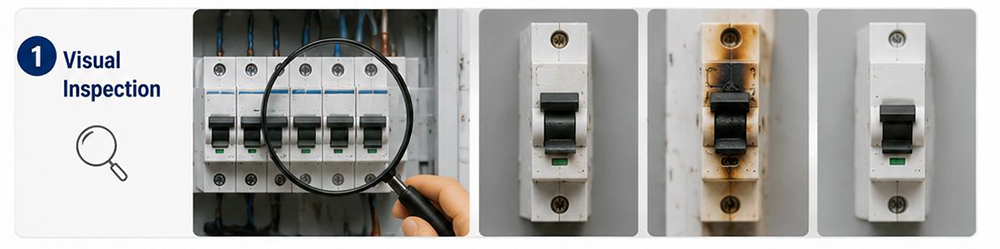
Start with a careful visual inspection. Check the MCB for physical damage, cracks, discoloration, or burnt marks. Make sure the breaker is firmly installed and the handle moves smoothly between ON and OFF positions.
Also inspect the surrounding environment. Excessive dust, moisture, rust, or oil contamination may affect long-term breaker performance.
Step 2: Functional Testing
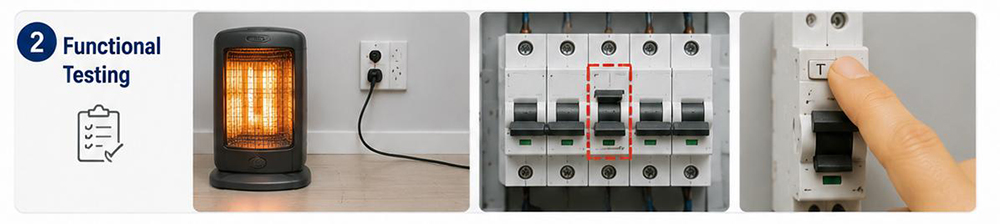
The next step is checking whether the breaker can actually trip correctly under abnormal conditions.
Simulate an Overload
Apply a load close to the breaker’s rated current. If the current exceeds the rated value, the breaker should trip within the expected time.
Use the Test Button
Some MCBs include a built-in test button. Pressing it should immediately trigger the breaker.
Observe Reset Performance
After tripping, reset the breaker and verify that it can return to normal operation smoothly.
Step 3: Electrical Measurements
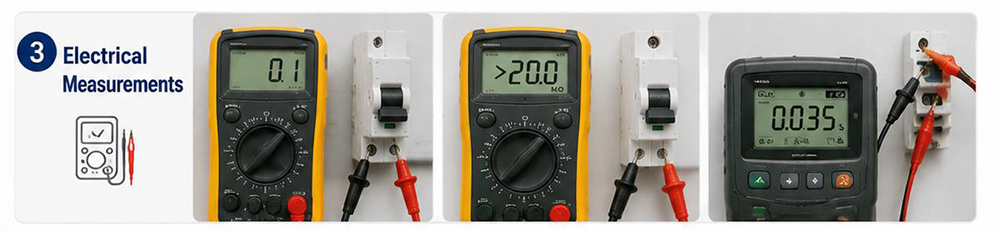
For deeper inspection, electrical testing tools such as a multimeter or dedicated breaker tester may be used.
Continuity Test
Check whether current flows correctly when the breaker is ON and fully disconnects when OFF.
Insulation Resistance Test
Measure insulation resistance between terminals and ground to ensure insulation integrity.
Trip Time Testing
Advanced testers can measure how quickly the breaker trips during simulated fault conditions.
Step 4: Safety Precautions

Testing electrical equipment always involves some level of risk, so safety procedures should never be ignored.
- Disconnect power before opening the panel
- Wear insulated gloves and eye protection
- Never bypass the breaker during testing
- Use testing equipment within safe operating limits
- Avoid touching exposed conductors directly
Step 5: Record and Maintain
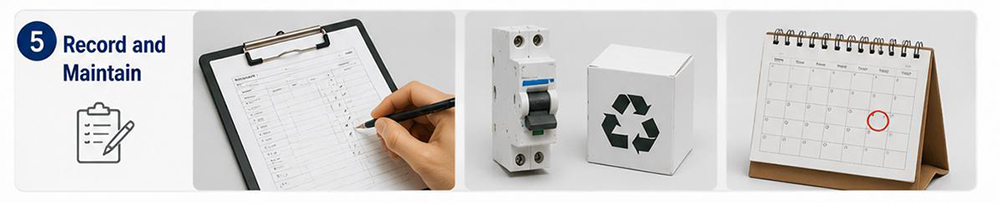
Testing is only useful if results are properly documented and followed by maintenance when necessary.
- Record all test results and abnormalities
- Replace damaged or weakened breakers immediately
- Tighten loose terminals regularly
- Schedule periodic inspections
Daily Maintenance Tips for MCBs
Testing an MCB periodically is important, but maintenance is equally critical. Proper care helps extend the life of the breaker, ensures reliable performance, and prevents unexpected faults or downtime. Small daily habits can make a big difference in keeping your electrical system safe and stable.
Keep the Panel Clean
Dust, dirt, and debris can accumulate inside the distribution panel over time. This buildup can interfere with heat dissipation and lead to insulation degradation or overheating. Regular cleaning ensures the breaker operates efficiently and reduces the risk of electrical faults.
Check Terminal Tightness
Loose or corroded terminals can create poor electrical contact, leading to overheating, arcing, or intermittent operation. Regularly inspecting and tightening terminal screws helps maintain stable connections and ensures the breaker functions correctly during faults.
Avoid Frequent Manual Switching
MCBs are designed primarily for protection, not for constant on/off switching. Using them as regular switches may wear out the mechanical parts, reduce their tripping accuracy, and shorten lifespan.
Monitor Environmental Conditions
Excessive humidity, vibrations, high temperatures, and corrosive environments can all degrade breaker performance over time. Installing the panel in a suitable location and monitoring environmental conditions helps prevent premature failure.
Replace Aging Breakers on Time
Even if an old breaker still appears to work, internal components such as the bimetallic strip and contacts may have weakened. Timely replacement ensures that the MCB continues to provide reliable protection and reduces the risk of electrical faults.
Additional Tips for Long-Term Reliability
- Schedule routine inspections and functional testing at least once a year.
- Keep records of all maintenance activities to track performance over time.
- Avoid exposing the panel to water or corrosive chemicals.
- Educate staff or household members on proper MCB operation to prevent misuse.
Mistakes People Commonly Make During MCB Testing
Testing an MCB may seem straightforward, but even small mistakes can lead to serious safety issues, equipment damage, or false readings. Awareness of common errors can help ensure that testing is done safely and effectively.
Repeatedly Resetting a Tripped Breaker
If a breaker keeps tripping, forcing it back on repeatedly can worsen the underlying fault, overheat wiring, or damage connected devices. Many people make the mistake of assuming the breaker is “stuck” rather than checking the cause first.
Tips to avoid this mistake:
- Always investigate why the breaker tripped before attempting to reset it.
- Check for overloaded circuits, short circuits, or faulty appliances.
- Only reset once the issue has been addressed.
Ignoring Heat or Burn Smells
Heat around the breaker or burnt odors coming from the panel are often early warning signs of internal damage or loose connections. Ignoring these signals can lead to electrical fires or permanent damage to the breaker.
Recommended actions:
- Immediately disconnect power before inspection.
- Inspect wiring connections and terminal screws for looseness.
- Replace any breaker showing signs of overheating or burning.
Using Oversized Replacement Breakers
Replacing a breaker with a higher current rating just to prevent nuisance tripping is extremely risky. Oversized breakers may not trip during genuine overloads, leaving wiring and devices unprotected.
Best practices:
- Always replace the breaker with the same rated current as specified for the circuit.
- Verify the cause of nuisance trips before deciding on replacement.
- Consider upgrading wiring or redistributing loads if trips are frequent.
Other Common Mistakes
- Skipping safety gear such as insulated gloves or goggles.
- Testing under live power without proper precautions.
- Using improper tools for testing, such as non-rated testers.
- Failing to document test results or irregularities for maintenance records.
Adding awareness of these mistakes can help prevent accidents, maintain breaker reliability, and extend the lifespan of your electrical system.
Frequently Asked Questions (FAQ)
Q1: How often should I test an MCB?
For residential systems, once a year is usually sufficient. Industrial systems with heavy loads may require testing every 6 months.
Q2: Can I test an MCB without turning off the power?
No. Always disconnect the main power before opening the panel to avoid electrical shock.
Q3: What tools are commonly used for MCB testing?
Common tools include multimeters, insulation testers, clamp meters, and breaker testing equipment.
Q4: Why does an MCB trip repeatedly?
Possible causes include overloads, short circuits, loose wiring, faulty appliances, or aging breakers.
Q5: Can an old MCB still work properly?
Sometimes yes, but aging internal components may reduce protection reliability even if the breaker still operates normally.
Conclusion
An MCB may seem like a small component inside a distribution panel, but it plays a major role in electrical safety. Regular testing helps confirm that the breaker can still react properly during overloads and short circuits, protecting both equipment and people from potential hazards.
By combining visual inspection, functional testing, electrical measurements, and routine maintenance, it becomes much easier to identify hidden problems before they lead to serious failures. In the long run, proper MCB testing not only improves system reliability, but also reduces downtime, maintenance costs, and unexpected electrical risks.

--- END ---
In this blog
Featured Articles
Get A Free Quote
