Get quick appointment for technical support!

Type 1 vs Type 2 vs Type 3 SPD: A Comprehensive Guide to Surge Protection Selection
Apr 26, 2026
Introduction
Transient overvoltages constantly threaten electrical networks. These surges originate from two main sources. External threats include direct or induced lightning strikes. Internal threats occur daily from switching operations, sudden load changes, or heavy motor startups.
Because surges vary greatly in source and magnitude, a single protective device cannot handle every risk.
Securing your network requires a coordinated multi-level approach. This strategy mitigates surges progressively at different points to enhance overall system safety. The absolute core of this defense is the Surge Protective Device (SPD). According to IEC 61643-11, an SPD is specifically designed to limit overvoltage and divert destructive surge currents.
Understanding Test Waveforms and Thier Core Technical Differences
Engineers evaluate SPDs using distinct simulated waveforms. These waveforms define the exact energy and duration of the power surge. They determine which category a protective device belongs to.
| Waveform | Characteristics | Simulated Source | SPD Type |
| 10/350 µs | High-energy, long-duration impulse | Direct lightning strike | Type 1 |
| 8/20 µs | Medium-energy, short-duration impulse | Induced lightning, switching surge | Type 2 & Type 3 |
Essential Performance Parameters
Selecting the right surge protection requires understanding three critical technical ratings.
- Impulse Current (Iimp): This measures the maximum current a device can handle from a direct lightning hit. This metric applies exclusively to Type 1 SPDs.
- Nominal Discharge Current (In): This indicates the surge current a device can repeatedly divert without suffering damage. It is the primary rating used for Type 2 SPDs.
- Voltage Protection Level (Up): This is the residual voltage left in the electrical line after the SPD operates. A lower value indicates better protection. This number directly determines the ultimate safety of your sensitive downstream equipment.
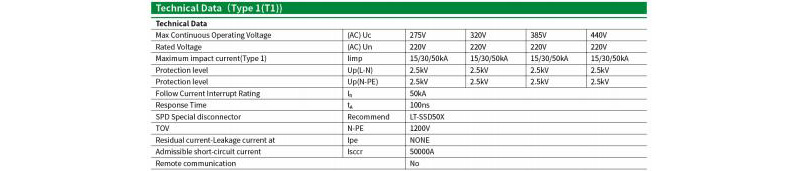
(Impulse Current)
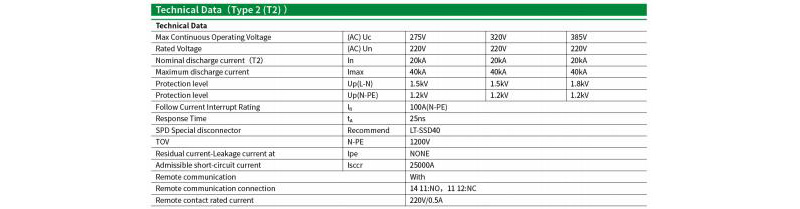
(Nominal Discharge Current)
The Lightning Protection Zone (LPZ) Concept
The Lightning Protection Zone (LPZ) concept divides a structure and its electrical system into different zones based on the severity of lightning electromagnetic effects, guiding the proper arrangement of surge protection measures.
A robust surge defense relies heavily on the LPZ framework. This concept divides your facility into specific zones based on the severity of potential electromagnetic exposure. It guides the precise arrangement of your protective measures.
| Zone | Description |
| LPZ 0 | Direct exposure to lightning electromagnetic fields, no protection (e.g. outdoor areas) |
| LPZ 1 | Partially protected by external lightning protection systems, with reduced surge energy |
| LPZ 2 | Further reduced surge energy, typically within internal distribution systems |
| LPZ 3 | Zone for sensitive equipment, where surges are tightly controlled |
Deep Dive: Types of Surge Protective Devices
1. Type 1 SPD: The First Line of Defense
Type 1 surge protective devices are designed to withstand direct lightning strikes and high-energy surge currents, serving as the first line of defense in a lightning protection system. They feature very high discharge capacity to handle extreme surge energy and typically use spark gap technology or high-power MOVs. Tested with the 10/350 µs waveform, they comply with Type 1 SPD requirements. These devices are usually installed at the main distribution board or service entrance, located at the boundary between LPZ 0 and LPZ 1, providing primary surge diversion and protection.
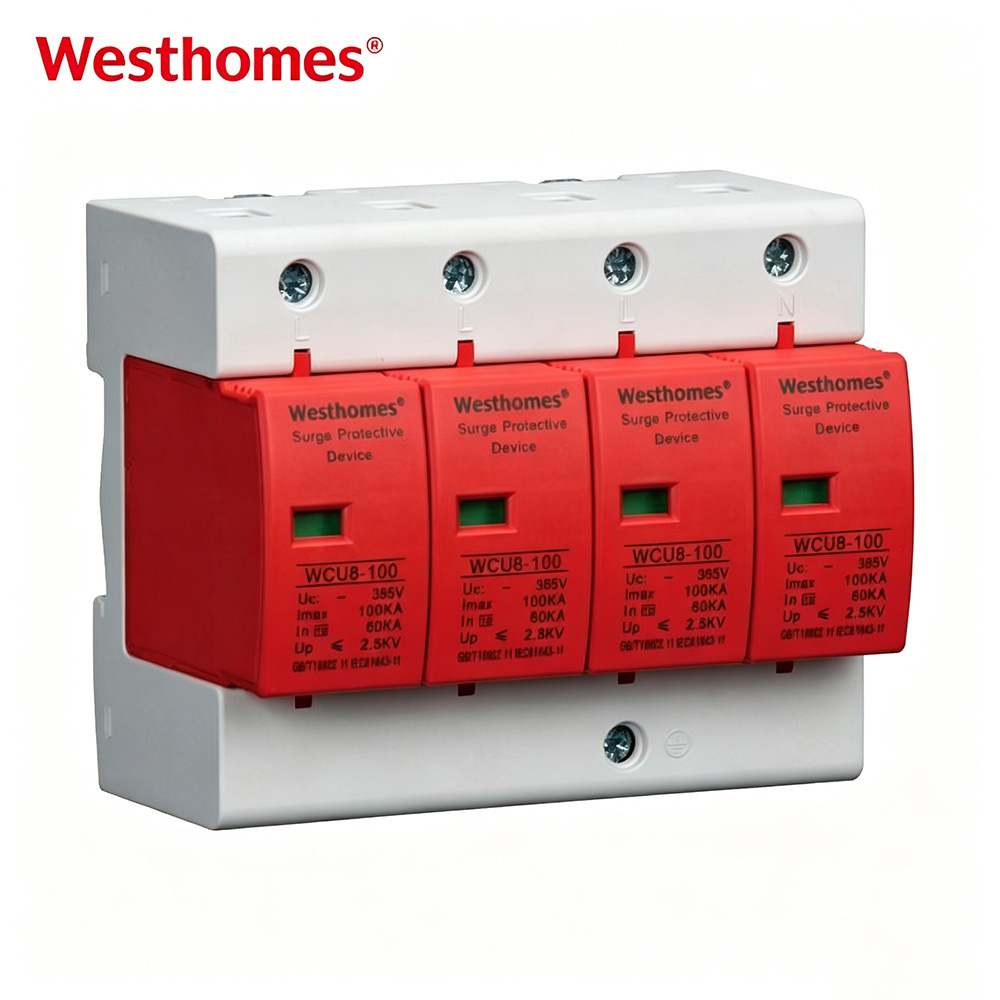
The WESTHOMES WCU8-I surge protective device is specifically designed for building electrical systems exposed to lightning-induced overvoltages, delivering reliable Type 1 (T1) protection. As a primary protection device installed in the main distribution system, the WCU8-I effectively withstands high-energy surge currents caused by direct lightning strikes and ensures rapid discharge of surge energy, thereby reducing the risk of damage to electrical systems and critical equipment. In addition, it integrates seamlessly into a coordinated protection scheme, working in conjunction with downstream Type 2 and Type 3 SPDs to form a complete and efficient surge protection solution.
2. Type 2 SPD: The Main Protection
Type 2 surge protective devices are primarily used to reduce the residual voltage from Type 1 SPDs and to protect against induced surges caused by lightning and switching operations. As a critical component in most electrical systems, they are typically based on high-performance MOV technology, offering fast response and effective energy absorption. These devices are installed in sub-distribution boards, located between LPZ 1 and LPZ 2, providing further attenuation of surge energy and system-level protection.
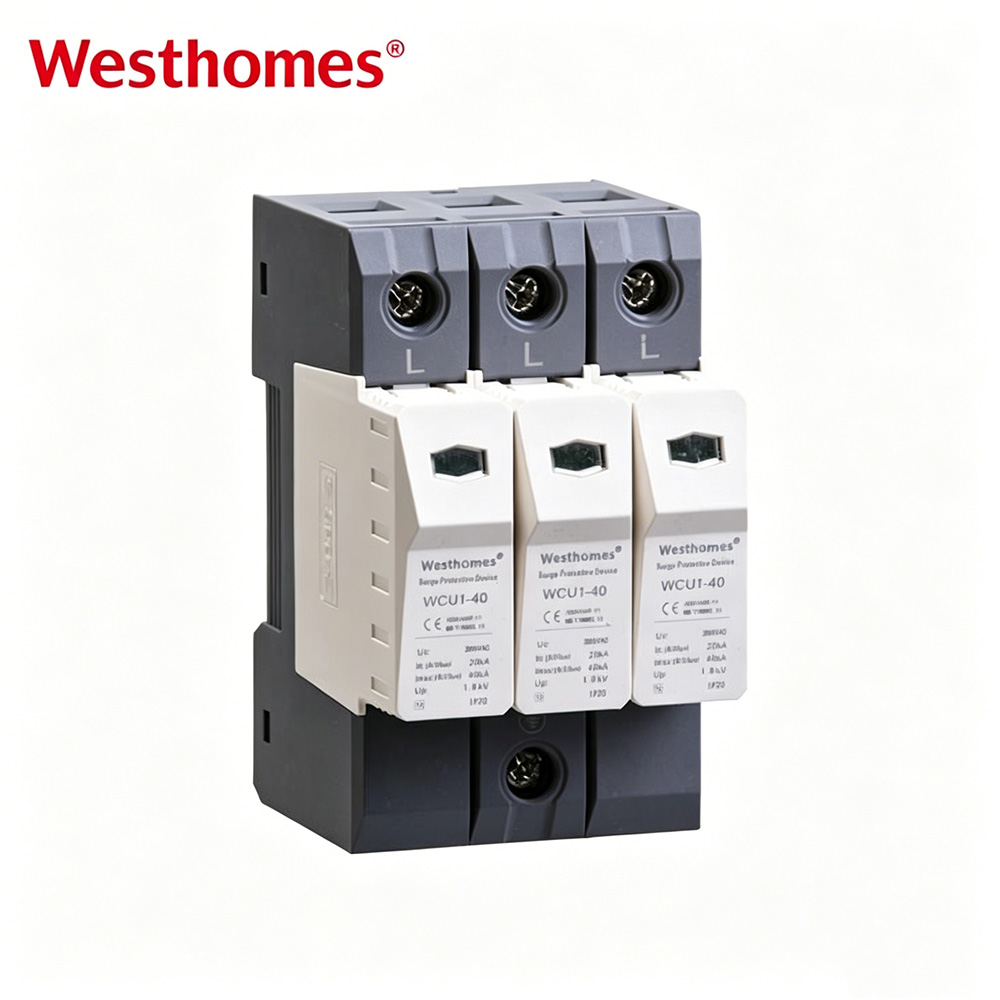
The WESTHOMES WCU8-B/C/D series surge protective devices are specifically designed for secondary protection in sub-distribution systems, suitable for AC 50/60Hz applications with rated voltage up to 380V, including IT, TT, TN-C, TN-S, and TN-C-S power supply systems. These devices effectively protect against surges caused by indirect lightning, direct lightning effects, and various transient overvoltages, and are designed in accordance with GB18802.1 and IEC 61643-1 standards to ensure reliable and stable performance. Within a coordinated protection scheme, the WCU8-B/C/D series works seamlessly with upstream Type 1 and downstream Type 3 SPDs to progressively attenuate surge energy, forming a complete and efficient protection system.
3. Type 3 SPD: Point-of-Use Protection
Type 3 surge protective devices are designed to provide precise protection for sensitive electronic equipment such as medical devices, IT systems, and laboratory instruments. They feature low discharge capacity with fast response time and are typically used in coordination with Type 2 SPDs to achieve fine-level end-use protection. These devices are installed close to the final equipment, such as sockets or terminal distribution boxes, providing further attenuation of residual surge energy and ensuring the safe operation of critical loads.
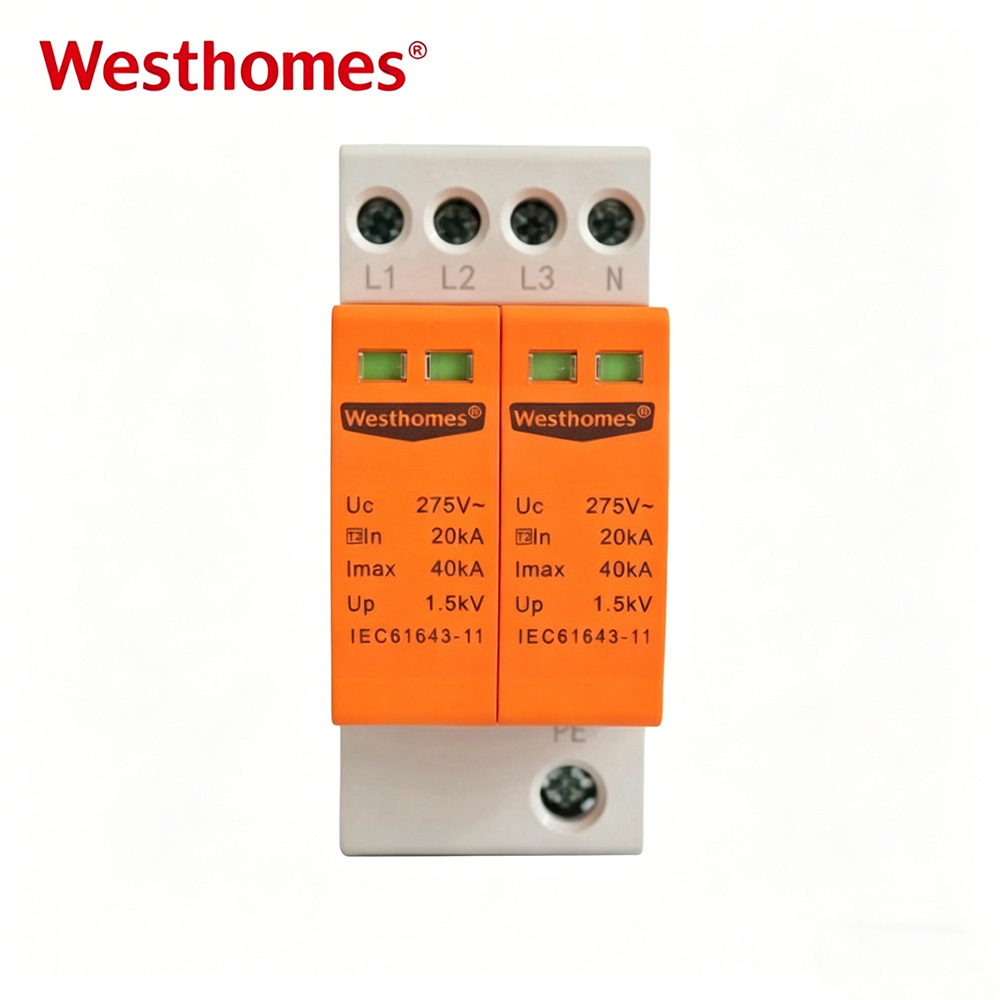
The WESTHOMES WCU8-T series surge protective devices are integrated T1+T2+T3 AC power surge protectors, installed between the power supply network and end-use equipment. They effectively suppress and reduce overcurrent and overvoltage caused by induced lightning or power grid disturbances, thereby minimizing damage to electrical equipment. Combining multi-level protection in a single device, the WCU8-T series not only delivers point-of-use protection but also enhances overall surge mitigation performance, making it especially suitable for critical applications requiring high power quality and reliable protection of sensitive equipment.
4. Type 1+2 Combined SPD: The Compact Solution
A Type 1+2 combined surge protective device is an integrated solution that complies with both Type 1 and Type 2 test requirements within a single unit. It combines primary and secondary protection functions, capable of withstanding direct lightning surge currents while also effectively suppressing induced surges and residual overvoltage. In practical applications, it significantly saves installation space and simplifies system design, while eliminating the need for decoupling inductors or separation distance between Type 1 and Type 2 devices. This solution is particularly suitable for compact systems where multi-stage distribution boards are not feasible, especially in space-limited installations or retrofit projects.
Selection Strategy: How to Choose the Right SPD
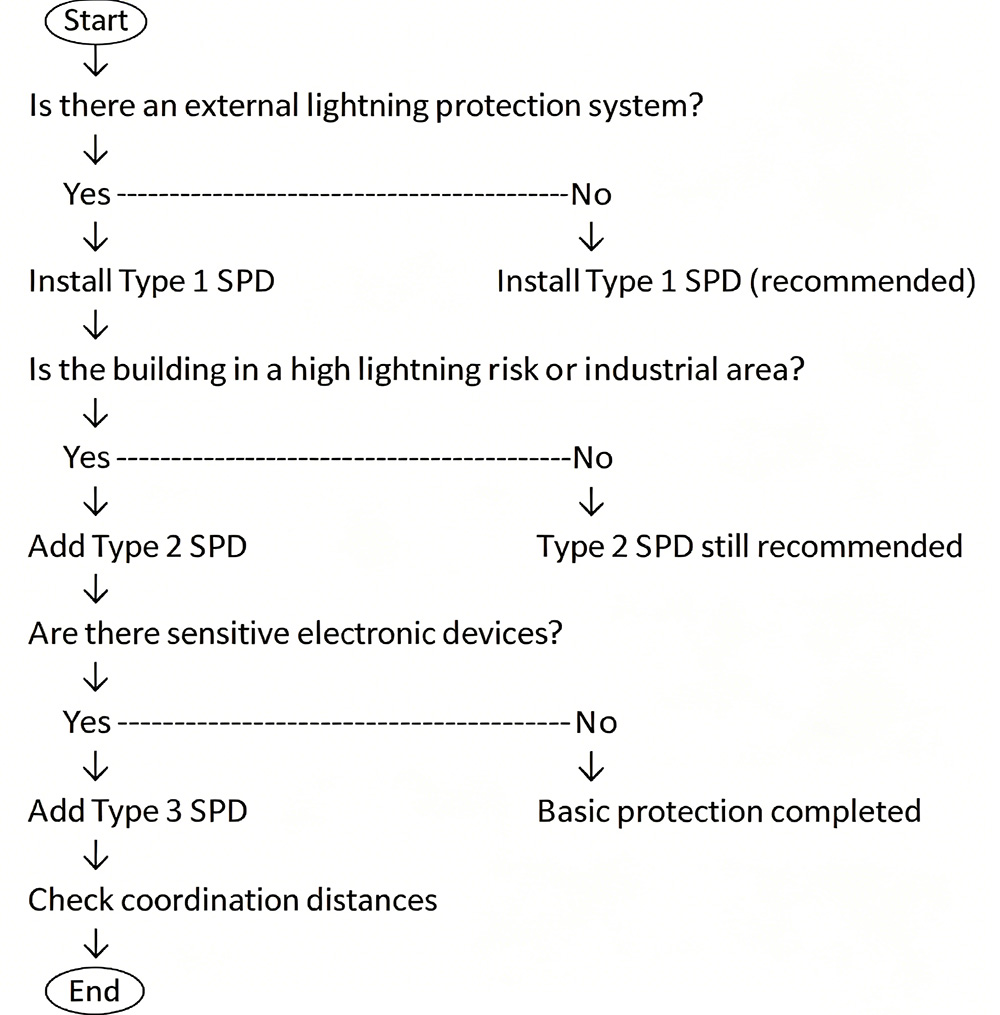
First, check whether the building has an external lightning protection system. Regardless of the result, installing a Type 1 SPD is recommended to handle potential lightning surge risks.
Second, assess whether the building is located in a high lightning risk area or an industrial environment with strong electrical disturbances. If yes, a Type 2 SPD should be added for enhanced secondary protection; even if not, Type 2 SPD is still recommended as the core protection level.
Third, determine whether sensitive electronic equipment such as servers, medical devices, or laboratory instruments is present. If yes, a Type 3 SPD should be installed to provide precise point-of-use protection; if not, the basic protection system is considered complete.
Finally, verify the coordination and installation distances between SPD stages to ensure proper energy distribution and complete the overall surge protection design.
Installation Best Practices
The SPD adopts a parallel connection configuration. Before installation, the upstream power supply should be disconnected to ensure the system is fully isolated. The SPD should then be installed inside the distribution board, typically downstream of the incoming circuit breaker and as close as possible to the power entry point, in order to minimize the impact of lead length.
During wiring, L1, L2, L3 (and N for 4P systems) should be connected in parallel to the corresponding SPD terminals, ensuring that all conductors are kept as short and straight as possible to reduce inductive effects and minimize residual voltage. At the same time, the SPD grounding terminal (PE) must be securely connected to the earth busbar, with the grounding conductor kept as short, thick, and direct as possible to ensure surge energy can be discharged efficiently to earth.
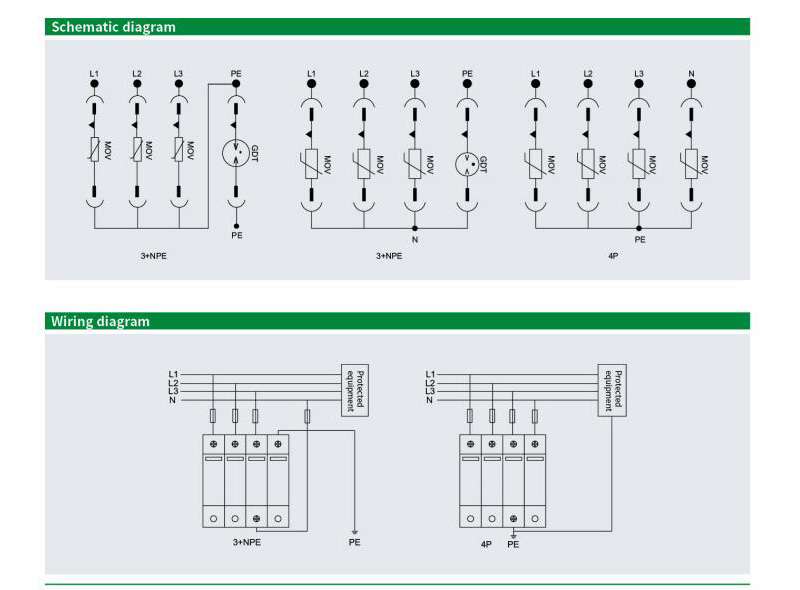
A fuse or circuit breaker should be installed upstream of the SPD as back-up protection to provide short-circuit protection and fault isolation under abnormal conditions. After completing all wiring connections, all terminals should be checked for secure fastening, correct wiring, and compliance with installation requirements. Finally, restore power and verify that the SPD status indicator shows normal operation to confirm the system is functioning properly.
Conclusion
Surge protection is not about selecting a single device, but a complete system engineering approach. It requires coordinated protection (Type 1 / Type 2 / Type 3), LPZ zoning, and proper installation design to achieve effective system-wide protection.
Proper selection and coordination of SPDs not only protect equipment effectively but also significantly reduce indirect costs such as equipment damage, downtime, and production interruption caused by lightning or surges, thereby improving overall cost efficiency.
In conclusion, Westhomes SPDs deliver reliable, high-performance surge protection for all types of electrical installations. By combining advanced technology, precise engineering, and international quality standards, Westhomes ensures that every installation is safe, resilient, and future-proof. Electrical precision is not just a requirement—it is the ultimate protection for people, equipment, and operational continuity.

--- END ---
In this blog
Featured Articles
Get A Free Quote
