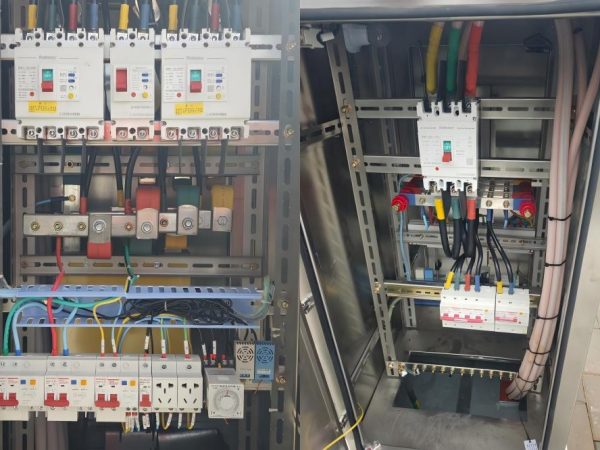
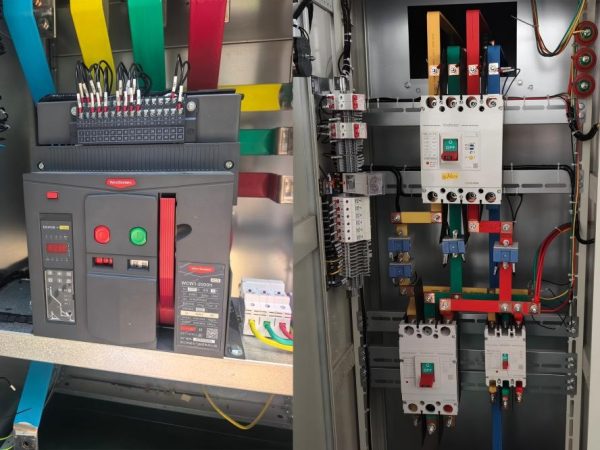
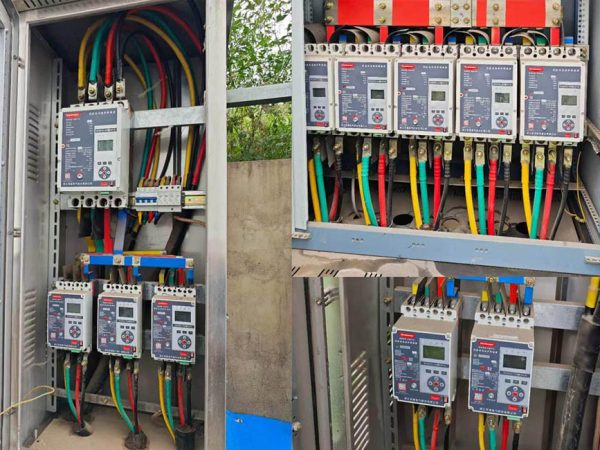
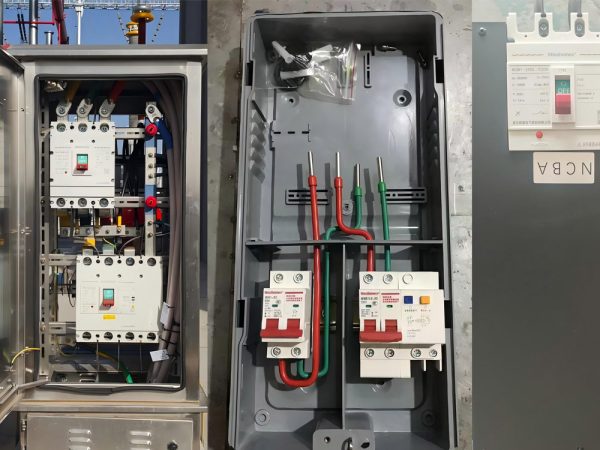
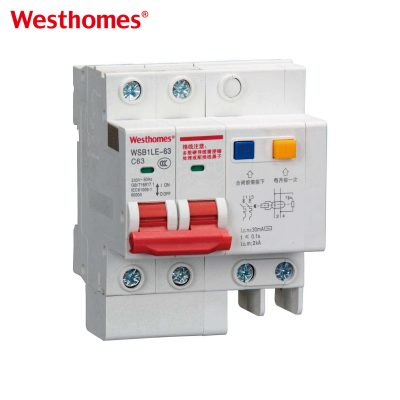
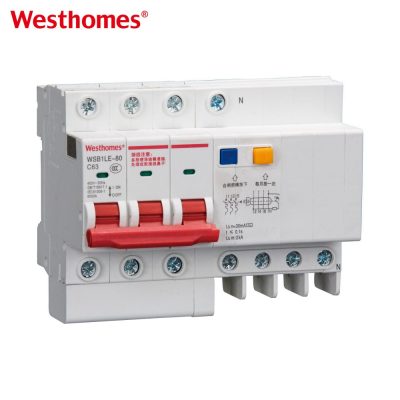
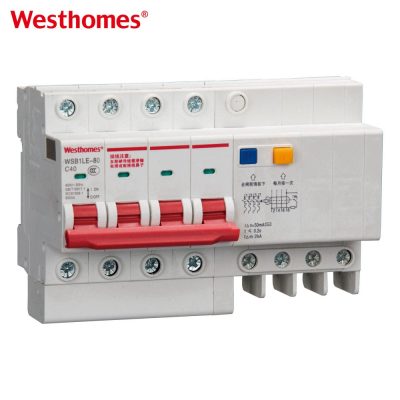
WSB1-125 Moulded case circuit breaker
WSB1-125 series MCB is one of updated type MCCBs researched and developed by the company by using advanced design and manufacture technology internationally.
Get quick appointment for technical support!

WSB1-125 series MCB is one of updated type MCCBs researched and developed by the company by using advanced design and manufacture technology internationally.

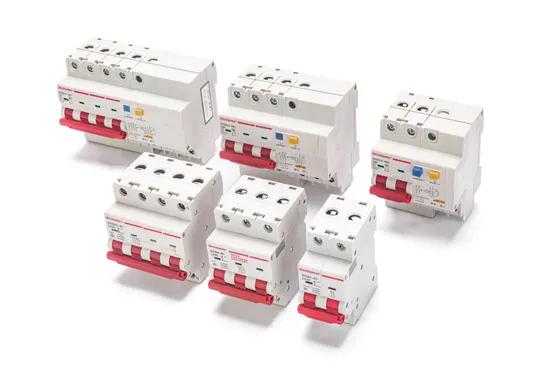
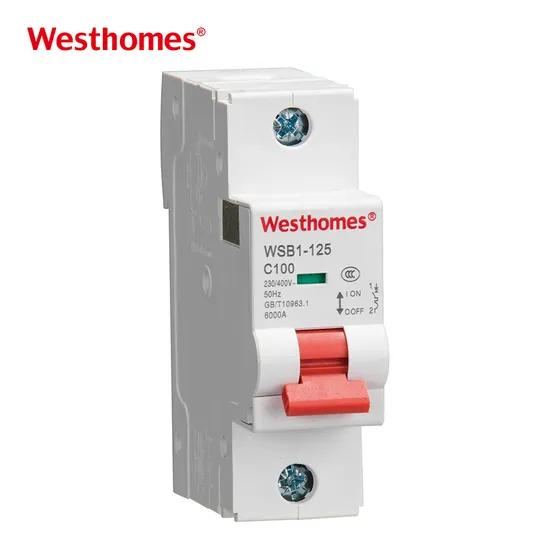
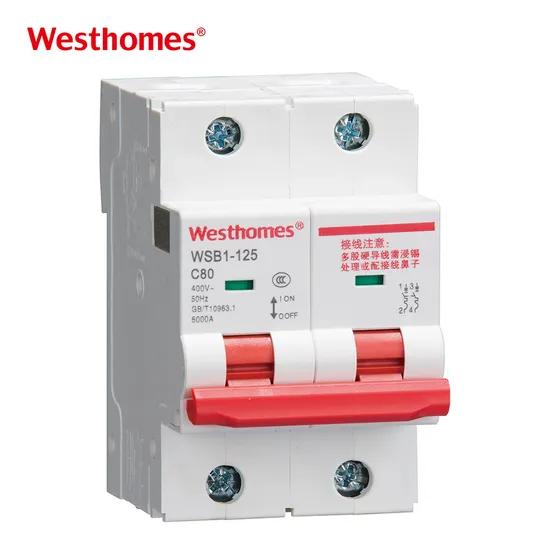
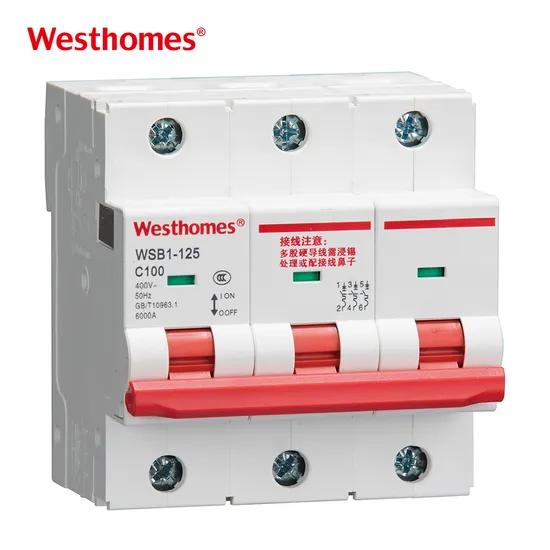
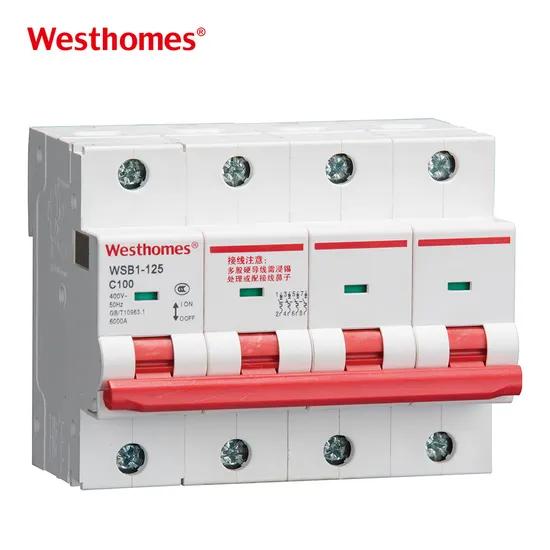
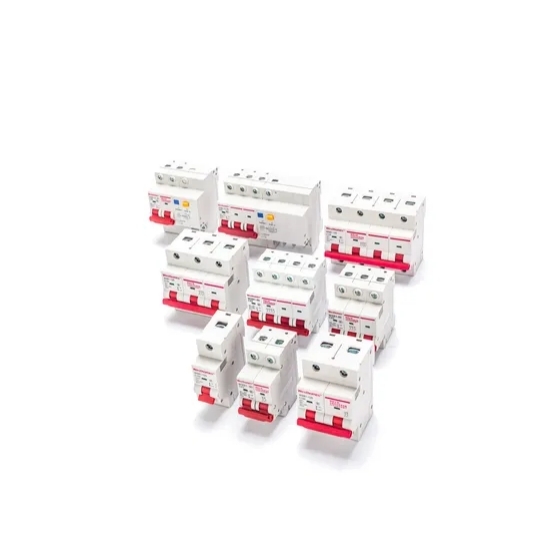
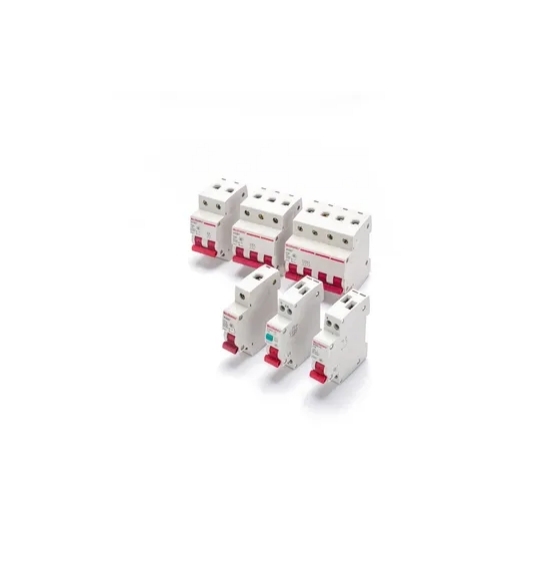
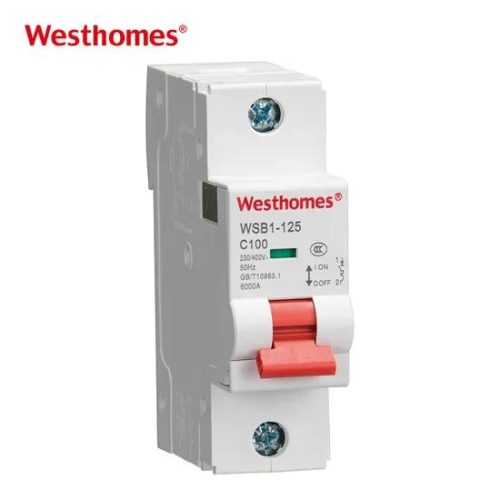
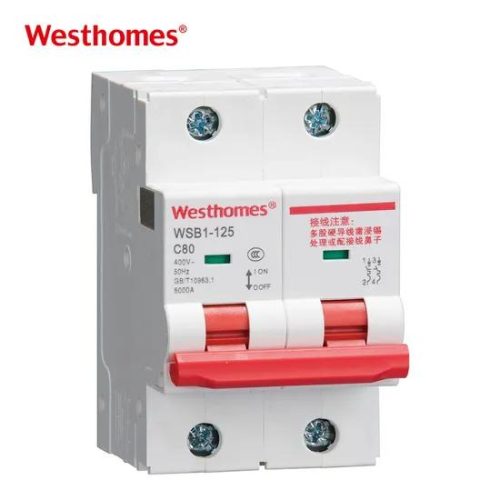
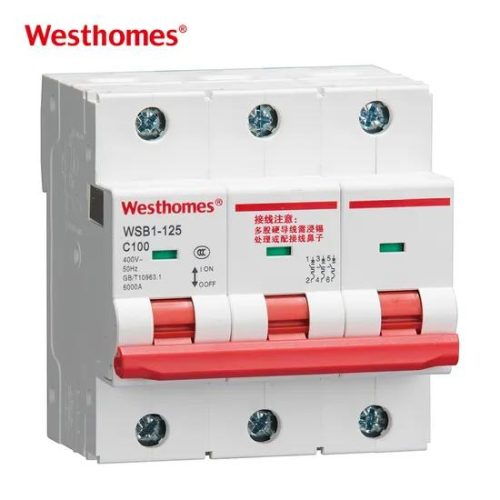
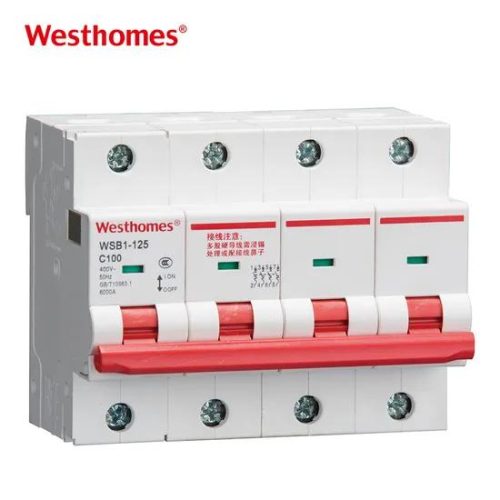
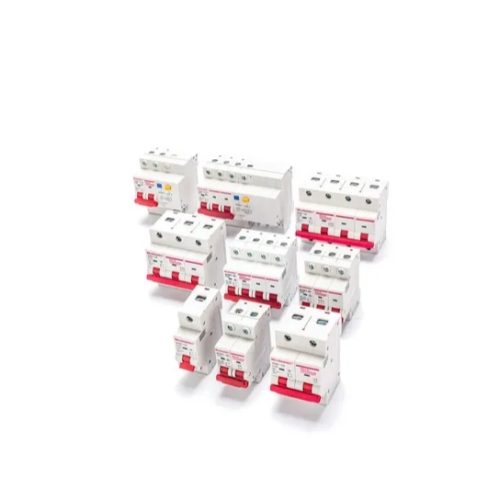
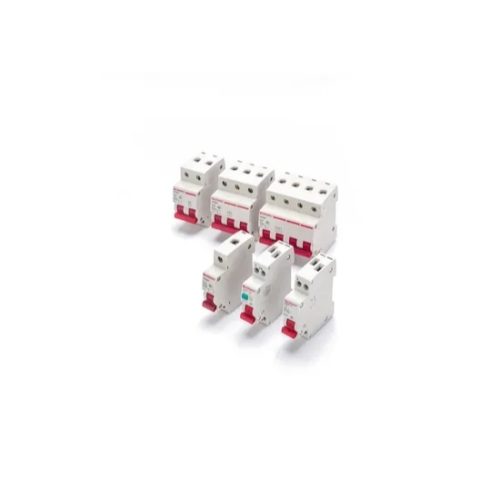
WSB1-125 series MCB is one of updated type MCCBs researched and developed by the company by using advanced design and manufacture technology internationally.
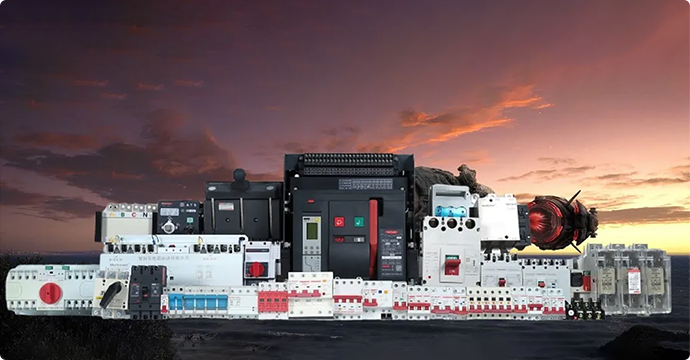
WSB1-125 series miniature circuit breaker has advantage of fine and small in size, light in weight, reliable performance, big breaking capacity, fast release, rail installation, with high flame retardant and impact resistance plastic for frame and parts, and long service life. It mainly applies in lines of AC 50Hz or 60Hz, single pole 230V, 400V for double, three and four poles, for overloading and short circuit protection, meanwhile in lighting lines and infrequent on-off electrical equipments under normal circumstance.
The product meets standards of IEC/EN60947-2, GB14048.2 at international level.
| Pole | 1P, 2P, 3P, 4P |
| Voltage | AC230V/400V |
| kA | 6kA, 10kA |
| Amps | 63, 80, 100, 125 |
| Width | 27, 54, 81, 108mm |
| Model | Pole (P) | Rated frequency (Hz) | Rated current frame level (A) | Rated voltage (V) | Rated Current (A) | Rated short circuit breaking capacity (kA) | Power frequency withstand voltage | Mechanical and electrical operation performance |
| WSB1-125 | 1P, 2P, 3P, 4P | 50 / 60 | 125 | 230 / 400 | 63, 80, 100, 125 | 6 / 10 | Circuit breaker can satisfy AC 50Hz, 2500V lasting 1min voltage withstand test with no flashover or breakdown | The operation cycle number of the circuit breaker is 10000 times, including loading one 1500 times, and no loading one 8500 times. |
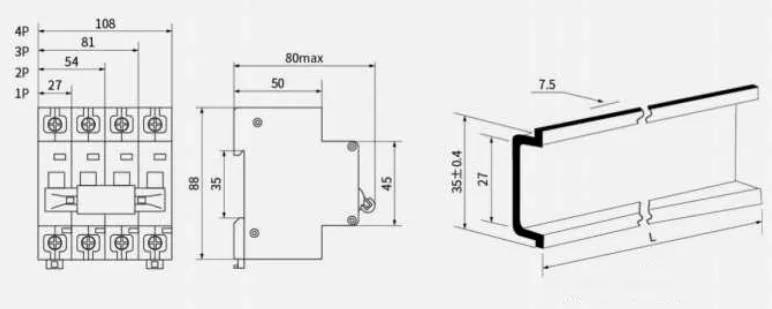
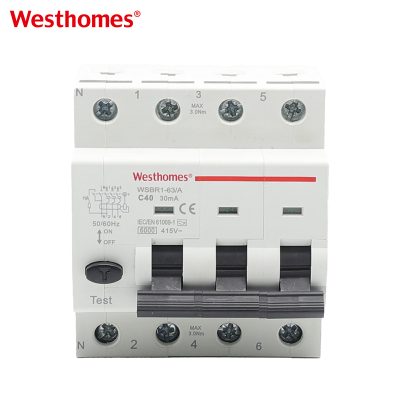
The WSB1-125 3P is a three-pole, high-current miniature circuit breaker that protects three-phase loads and three-phase distribution circuits from 63 A up to 125 A. Typical uses include protecting three-phase sub-main distribution circuits, three-phase socket racks, three-phase air-conditioning units, small motor control panels, and as the branch protection feeding a three-phase sub-board. It switches and protects all three phase conductors together.
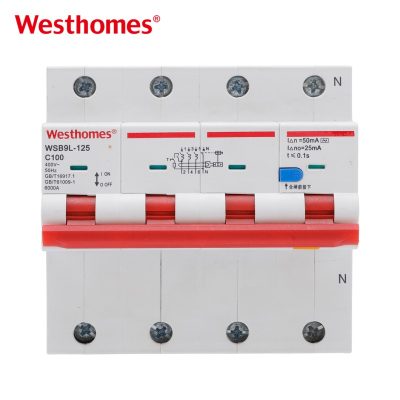
The 3P version switches and protects L1, L2 and L3 only; the neutral conductor bypasses the breaker and stays connected to the neutral bar. The 4P version adds a fourth pole that switches the neutral as well, which is required where all-pole isolation of the neutral is mandatory. For most three-phase industrial and commercial panels with a solidly earthed neutral, the 3P WSB1-125 is the standard choice; choose the 4P where the installation rules demand it.
It means the breaker is calibrated for 50 Hz or 60 Hz alternating-current systems, which is the global low-voltage grid standard. The thermal trip responds to RMS current and the magnetic trip to peak current, so both frequencies lie within the design tolerance; the same 3P WSB1-125 can therefore be exported to 50 Hz Europe/Asia and 60 Hz Americas without modification. It is not rated for DC or for frequencies outside 50/60 Hz.
It is rated for a rated operational voltage Ue of up to 400 V AC between phases, which covers all standard three-phase low-voltage systems (380 V / 400 V). The phase-to-neutral voltage is 230 V in those systems. Do not use it on circuits above 400 V AC, and do not use it on DC circuits without a DC-rated variant, because the arc-quenching design is optimised for AC zero-crossing.
The WSB1-125 3P is rated at 6 kA short-circuit breaking capacity at 400 V AC, which is sufficient for the majority of commercial and light-industrial distribution boards. Whether it is "enough" depends on the transformer impedance and the cable length upstream: ask your engineer to calculate the prospective short-circuit current (PSCC) at the board. If the PSCC exceeds 6 kA, select a higher-rated variant or add upstream discrimination.
The breaker rating In must not exceed the current-carrying capacity Iz of the cable. As a three-phase rule of thumb, 10 mm² copper is typically protected up to about 50–63 A, 16 mm² up to about 80 A, 25 mm² up to about 100 A, and 35 mm² up to about 125 A — but these figures must be corrected for cable grouping, insulation type and ambient temperature. Always use the local wiring-regulation ampacity table (e.g. IEC 60364 / BS 7671) and verify that the breaker also provides adequate short-circuit protection for the cable's adiabatic withstand.
It can provide short-circuit and back-up protection for a three-phase motor feeder, but it is not a full motor-starter protective device. For direct-on-line motor protection you still need a motor-protective circuit-breaker (MPCB) or an overload relay in the contactor that gives Class 10/20 motor-specific thermal protection. A D-curve WSB1-125 upstream of a motor starter panel is a common way to ride through the motor's locked-rotor starting current.
This is almost always a trip-curve mismatch: a C-curve breaker (5–10 × In) trips on the high inrush current of a direct-on-line motor. Switch to a D-curve WSB1-125 (10–20 × In) or verify that the motor's locked-rotor current is below the magnetic threshold. Other causes include an undersized breaker for the running load, a partial short-circuit in the cable, or a defective contactor that draws extra current on closing.
Yes, on the AC side. The WSB1-125 3P is a standard AC MCB for the inverter-to-distribution connection and for the AC side of commercial PV strings up to 125 A. It is not a DC breaker, so it must not be placed on the DC side between the PV array and the inverter; there you must use a DC-rated PV-specific breaker. Always confirm with the inverter manufacturer that the MCB's breaking capacity and trip curve are acceptable for the inverter's fault contribution.
Clip it onto a standard 35 mm DIN rail inside an enclosure with adequate ventilation, strip the cable ends correctly and use ferrules on stranded conductors, then tighten each terminal to the torque value on the nameplate. Keep the clearances required by IEC 60364 and do not block the operating handle. Routine maintenance is limited to an annual visual inspection, a manual trip/reset exercise and re-torqueing the terminals after the first year; never dismantle the breaker, as it is factory-sealed and not user-repairable.
* indicates a required field

 2 MB
2 MB