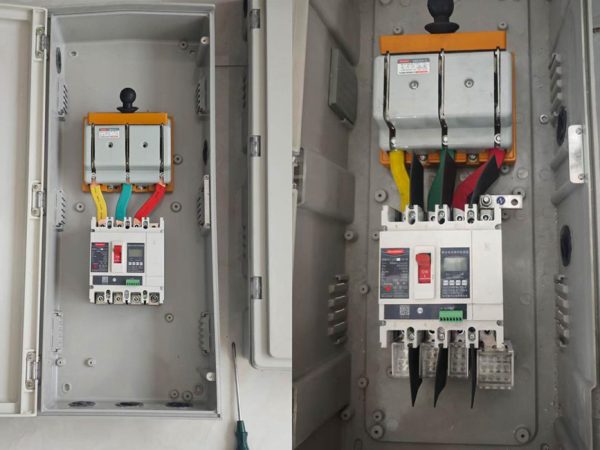
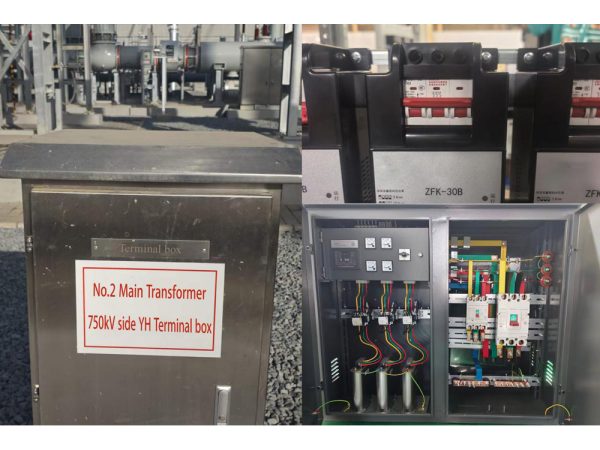
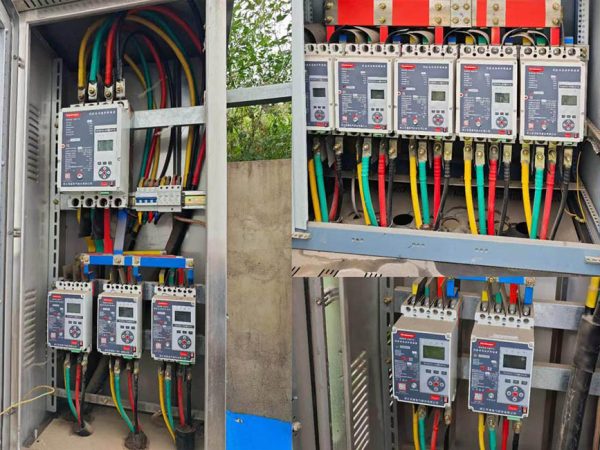
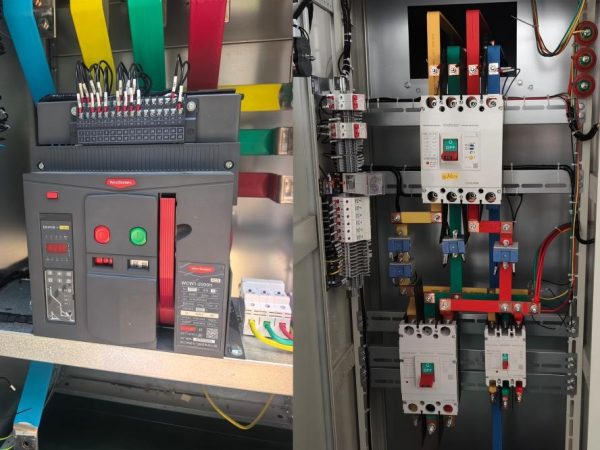
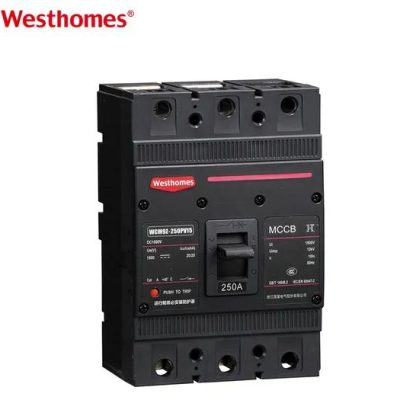
WCM9Z Moulded case circuit breaker
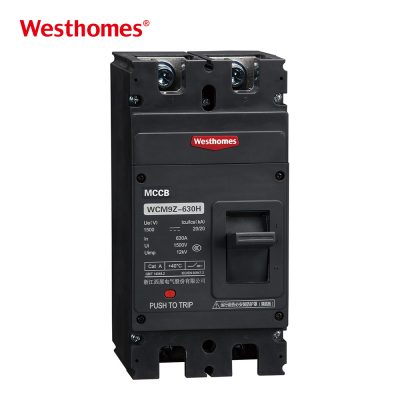
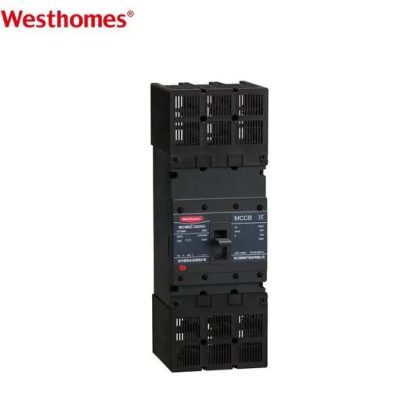
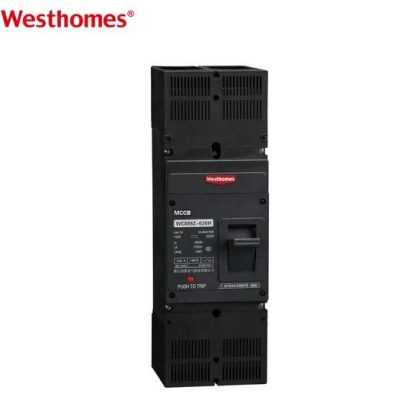
WCM9Z is one of updated type MCCBs researched and developed by the company by using advanced design and manufacture technology internationally.
Get quick appointment for technical support!

WCM9Z series MCB is one of updated type MCCBs researched and developed by the company by using advanced design and manufacture technology internationally.


WCM9Z is one of updated type MCCBs researched and developed by the company by using advanced design and manufacture technology internationally.
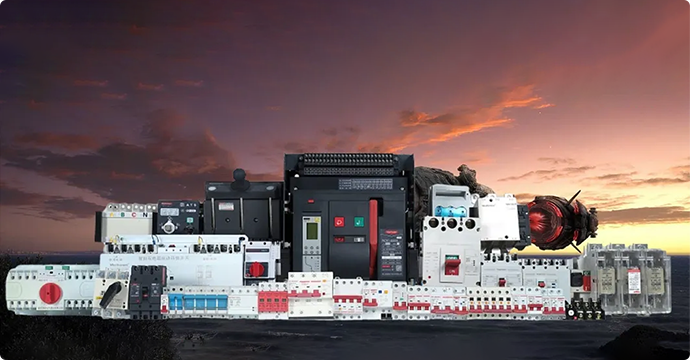
WCM6 sereis moulded case circuit breaker (MCCB for short) is the new type of product with top current limiting principal and manufacture technology in design, is tight in structure, total molularized, high breaking capacity, zero flashover. It applies at AC50Hz, rated operation voltage 690V and below, rated operation current upto 1250A for infrequent switch of line and infrequent start of motor. MCCB has overload, short circuit and under voltage protection device, to protect line and power evice from demage.
| Pole | 2P, 3P |
| Voltage | DC 1000V/1250V/1500V |
| kA | Ue1000v 20kA, Ue1500v 15kA |
| Inm(A) | 250A, 630A |
| In(A) | 100/125/140/160/180/200/225/250/320/350/400/500/630A |
| Model | WCM9Z | WCM9Z | WCM9Z | |
| Rated operating voltage(Ue) | DC1000V | DC1250V DC1500V | DC1000V DC1250V DC1500V | |
| Rated insulation voltage (Ui) | 1500V | 1500V | 1500V | |
| Rated impulse voltage (Uimp) | 12kV | 12kV | 12kV | |
| Number of poles | 2 | 3 | 4 | |
| Trip unit type | Thermomagnetic type (thermal magnet is not adjustable) TMD Fixed | |||
| Frame rated current (Inm) | 250A | 630A | ||
| Rated operating current (In) | 100/125/140/160/180/200/225/250A | 320/350/400/500/630A | ||
| Rated ultimate short circuit breaking capacity (lcu) | Ue1000v 20kA | Ue1500v 15kA, Ue1250v 20kA | Ue1250/1500v 15kA, Ue1000v 20kA | |
| Operational breaking capacity (Ics) | 75%ICU | Ue1500v 15kA, Ue1250v 20kA | Ue1250/1500v 15kA, Ue1000v 20kA | |
| Protective function | Long time delay protection (Ir) | 1In | ||
| Instant protection (li) | 6In(Min1000A) | |||
| Service life | Mechanical | 10000times | 5000times | |
| Electrical | 1000times | 500times | ||
| Installation type | Fixed | Fixed | Fixed | |
| Protection level | Wiring port: IP20/All sides: IP40 | |||
| Operating temperature | -40ºC~+75ºC | |||
| Operating Instructions | ON/OFF instruction | |||
| Is the release adjustable? | NO | |||
| Isolation function | YES | |||
A manual MCCB is a molded case circuit breaker that trips purely through mechanical and thermal principles, with no microprocessor, display, or communication interface. A bimetallic strip bends under sustained overcurrent (thermal element) to provide inverse-time overload protection, while a magnetic coil armature trips instantly on severe short-circuit currents. It is operated by a physical toggle handle and requires no external power to function, making it a simple, highly reliable protective device.
The "thermal" part is a bimetal strip that heats up as current passes through it; the more the current exceeds the rated value, the faster it bends and releases the trip mechanism. The "magnetic" part is a solenoid coil that produces a strong magnetic field during a short circuit, pulling an armature to release the mechanism almost instantaneously. This combination provides both time-delayed overload protection and fast short-circuit protection using no electronics.
The 250A and 630A are the frame sizes (maximum frame current) of the WCM9Z manual series. Within each frame the breaker can be ordered with a specific rated current (In), such as 160A, 200A, or 250A on the 250A frame, and 400A, 500A, or 630A on the 630A frame. The frame size determines the physical case dimensions, terminal capacity, and maximum breaking capacity, while In determines the actual trip threshold.
No. The thermal-magnetic WCM9Z is entirely self-powered by the fault current itself: the bimetal and magnetic coil operate on the energy of the current flowing through the circuit. This is a key advantage in remote sites, generator sets, or battery-backed systems where control power may be unavailable. The breaker will still protect the circuit and trip safely even if all auxiliary or control power is lost.
Depending on the exact configuration, the WCM9Z manual model may offer an adjustable thermal (long-time) trip setting via a front dial, typically covering 0.8–1.0 × In, while the magnetic (instantaneous) short-circuit threshold is often factory-fixed at a multiple of In (e.g., 5–10 × In). Some variants also allow short-time delay adjustment. Because there is no display or keypad, settings are set mechanically at the factory or by a qualified electrician on site.
The WCM9Z manual series is available in 3-pole and 4-pole configurations, with the 4-pole version offering either a protected or switched-only neutral pole. Breaking capacity (Icu) varies by frame and voltage, typically ranging from 25 kA to 50 kA at 415 V AC, with service short-circuit breaking capacity (Ics) commonly rated at 50–100% of Icu. You select the breaking capacity based on the calculated prospective short-circuit current at the installation point plus a safety margin.
Yes, the WCM9Z series is designed and type-tested in accordance with IEC 60947-2, the international standard for low-voltage circuit breakers. This standard defines requirements for trip characteristics, dielectric withstand, short-circuit rating (Icu/Ics), endurance, isolation capability, and temperature rise. Certification to IEC 60947-2 ensures the breaker can be used in international industrial and commercial distribution installations.
The manual WCM9Z is simpler and more mechanically robust, with no electronics to fail, no firmware to update, and a lower purchase cost. It lacks the digital display, energy metering, Modbus communication, adjustable LSI curves, and event logging of the intelligent version. The manual type is best for standard feeders where protection coordination does not require remote monitoring, while the intelligent version is preferred for smart grids, data centers, and plants that demand advanced selectivity and data visibility.
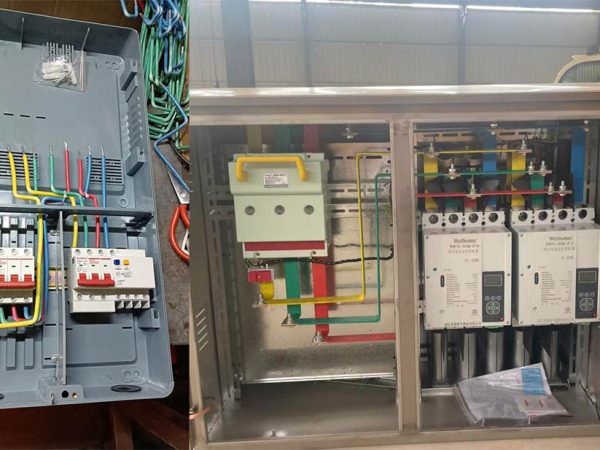
The manual WCM9Z is widely used in standard industrial power distribution panels, motor control centers, lighting and power distribution boards, compressor and pump feeder protection, and commercial building switchboards. It is also commonly applied as the main or feeder breaker in OEM control panels, machine tools, and packaging equipment where a simple, reliable, no-nonsense protective device is required. Its self-powered trip means it works well in generator backup circuits and remote substations.
Routine maintenance includes an annual visual inspection for dust, discoloration, or loose terminals, a thermographic check under load, and manual exercise of the operating handle to keep the mechanism free. Every 3–5 years, a primary current injection test should verify that the thermal and magnetic trip elements still operate within tolerance, as bimetal units can drift slightly over time. After any short-circuit clearing event, inspect the arc chute and contacts, and replace the breaker if the fault was near its Icu rating or if case damage is visible.
* indicates a required field

 2 MB