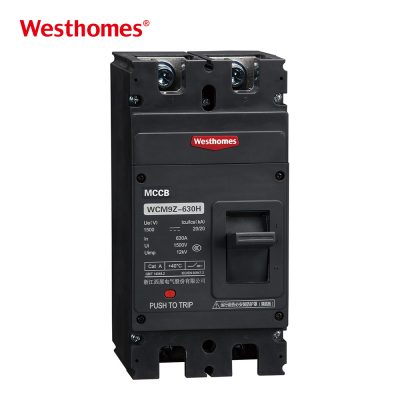
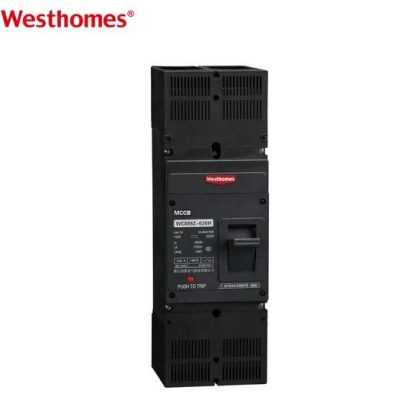
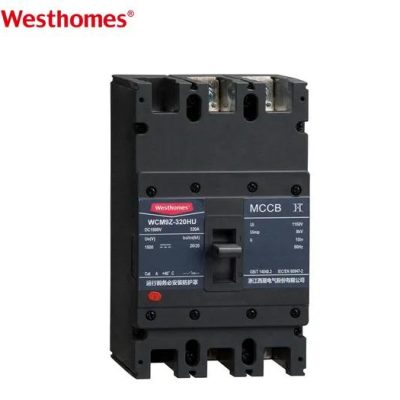
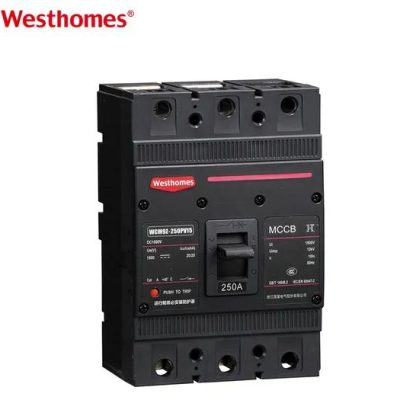
WCM9Z Moulded case circuit breaker
WCM9Z is one of updated type MCCBs researched and developed by the company by using advanced design and manufacture technology internationally.
Get quick appointment for technical support!

WCM9Z series MCB is one of updated type MCCBs researched and developed by the company by using advanced design and manufacture technology internationally.


WCM9Z is one of updated type MCCBs researched and developed by the company by using advanced design and manufacture technology internationally.
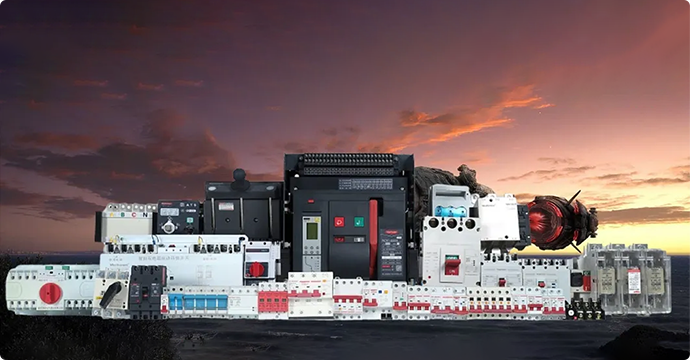
WCM6 sereis moulded case circuit breaker (MCCB for short) is the new type of product with top current limiting principal and manufacture technology in design, is tight in structure, total molularized, high breaking capacity, zero flashover. It applies at AC50Hz, rated operation voltage 690V and below, rated operation current upto 1250A for infrequent switch of line and infrequent start of motor. MCCB has overload, short circuit and under voltage protection device, to protect line and power evice from demage.
| Pole | 2P, 3P |
| Voltage | DC 1000V/1250V/1500V |
| kA | Ue1000v 20kA, Ue1500v 15kA |
| Inm(A) | 250A, 630A |
| In(A) | 100/125/140/160/180/200/225/250/320/350/400/500/630A |
| Model | WCM9Z | WCM9Z | WCM9Z | |
| Rated operating voltage(Ue) | DC1000V | DC1250V DC1500V | DC1000V DC1250V DC1500V | |
| Rated insulation voltage (Ui) | 1500V | 1500V | 1500V | |
| Rated impulse voltage (Uimp) | 12kV | 12kV | 12kV | |
| Number of poles | 2 | 3 | 4 | |
| Trip unit type | Thermomagnetic type (thermal magnet is not adjustable) TMD Fixed | |||
| Frame rated current (Inm) | 250A | 630A | ||
| Rated operating current (In) | 100/125/140/160/180/200/225/250A | 320/350/400/500/630A | ||
| Rated ultimate short circuit breaking capacity (lcu) | Ue1000v 20kA | Ue1500v 15kA, Ue1250v 20kA | Ue1250/1500v 15kA, Ue1000v 20kA | |
| Operational breaking capacity (Ics) | 75%ICU | Ue1500v 15kA, Ue1250v 20kA | Ue1250/1500v 15kA, Ue1000v 20kA | |
| Protective function | Long time delay protection (Ir) | 1In | ||
| Instant protection (li) | 6In(Min1000A) | |||
| Service life | Mechanical | 10000times | 5000times | |
| Electrical | 1000times | 500times | ||
| Installation type | Fixed | Fixed | Fixed | |
| Protection level | Wiring port: IP20/All sides: IP40 | |||
| Operating temperature | -40ºC~+75ºC | |||
| Operating Instructions | ON/OFF instruction | |||
| Is the release adjustable? | NO | |||
| Isolation function | YES | |||
A high-speed circuit breaker is a specialized protection device designed to open and interrupt a short-circuit fault in a fraction of the time of a conventional MCCB or ACB — typically within a few milliseconds to a half-cycle (8–10 ms at 50/60 Hz). It achieves this through an optimized fast operating mechanism (often spring-loaded or electromagnetic repulsion drive) and specialized arc extinguishing. Its purpose is to limit the fault current before it reaches its peak, thereby dramatically reducing mechanical and thermal stress on cables, busbars, and connected equipment.
The WCM9Z uses a high-performance, spring-loaded, quick-break mechanism with a toggle linkage designed for minimal overtravel and direct contact separation on trip. When the trip unit detects a fault, the stored spring energy drives the contacts apart almost instantly, and the arc is rapidly swept into a dedicated arc chute. Total clearing time is far below that of a standard molded-case breaker, limiting the peak let-through current and I²t energy delivered to the system.
The WCM9Z is available in frame current ratings from 100A up to 630A, meaning it can protect circuits carrying continuous currents in that range. This covers medium-sized motor feeds, main feeder circuits, capacitor bank switching, and DC distribution panels. Within each frame size, rated current (In) can be adjusted via plug-in or interchangeable trip units to match the actual load, allowing one frame size to cover multiple current ratings.
"Manual type" means the breaker is operated locally by a manual toggle or push-button handle — it does not include a motor charging mechanism or electric closing release as standard. Closing and opening are performed by a person at the panel. Tripping itself remains automatic under fault conditions (thermal or magnetic release); the "manual" description refers to normal on/off operation, not fault tripping. Shunt releases or undervoltage releases can be added for remote trip if required.
A standard MCCB typically clears a short circuit in 1.5–2 cycles (30–40 ms at 50/60 Hz), while a high-speed breaker like the WCM9Z clears in under one quarter to one half cycle (5–10 ms). This means the WCM9Z limits the fault current to a small fraction of its prospective peak, drastically reducing stress on the installation. Standard MCCBs are cheaper and more widely available; the WCM9Z is chosen specifically for applications where equipment protection, voltage-dip reduction, or fault-energy limitation is paramount.
The WCM9Z is commonly used in: capacitor bank switching (where fast interruption prevents restrike and inrush damage), DC systems including battery banks and DC distribution in substations, welding equipment and rectifier circuits, semiconductor fab and DC plant supplies, traction power, and any installation where very fast fault clearing protects expensive equipment or limits fire/arc-flash risk. It is also used in places requiring current-limiting performance to lower system short-circuit duties.
As a high-speed breaker, the WCM9Z is designed with a high breaking capacity suitable for the 100A–630A frame range, optimized for current-limiting performance. Because it trips so quickly, the actual peak fault current it sees is far lower than the prospective rms fault current — this is the essence of current-limiting design. Refer to the datasheet for the exact Icu (ultimate breaking capacity) at the rated voltage for the specific frame size and trip unit configuration.
The WCM9Z is typically panel-mounted via bolted terminals or busbar connections, matching conventional MCCB installation practices. Line and load conductors are connected to the labeled terminals at the correct torque. Because it is a current-limiting high-speed device, ensure downstream busbars and cables are sized for the magnetic forces of the prospective fault current even though the breaker limits duration. Refer to the installation manual for clearances, creepage distances, and terminal lug options.
Yes, the WCM9Z is designed and type-tested to IEC 60947-2, which covers low-voltage AC and DC circuit-breakers up to 1000V AC and 1500V DC. Its fast operating characteristics and high current-limiting performance are achieved within the framework of this standard, including verified breaking capacity, short-time withstand, endurance, and marking requirements. Compliance allows it to be specified for international industrial and infrastructure projects.
The WCM9Z requires minimal maintenance due to its simple manual mechanism. Periodically (every 1–2 years under normal conditions), inspect terminal tightness, check that the handle operates smoothly, and wipe dust or contamination from the housing. After a major fault interruption, inspect the contacts and arc chute (if accessible) or consider replacing the breaker depending on fault magnitude and manufacturer guidance. Electronic trip units (if fitted) should be current-injection tested every 3–5 years to confirm calibration.
* indicates a required field

 2 MB