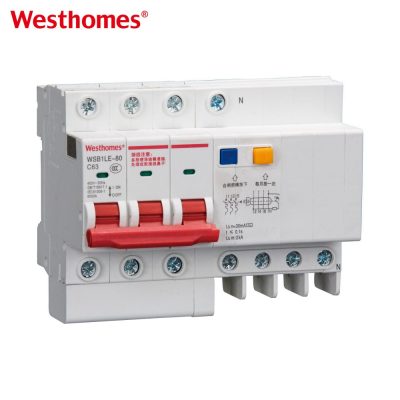
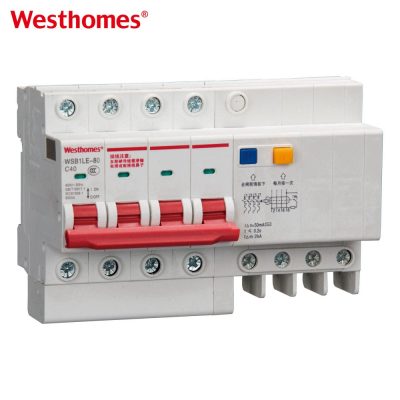
WSB7-63 Moulded case circuit breaker
WSB7-63 is one of updated type MCCBs researched and developed by the company by using advanced design and manufacture technology internationally.
Get quick appointment for technical support!

WSB7-63 series MCB is one of updated type MCCBs researched and developed by the company by using advanced design and manufacture technology internationally.
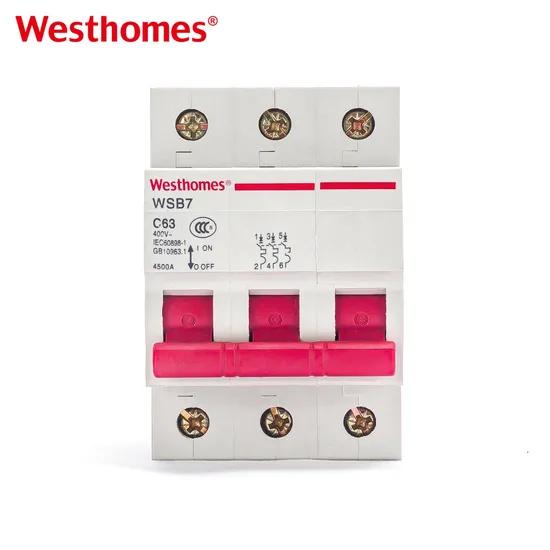
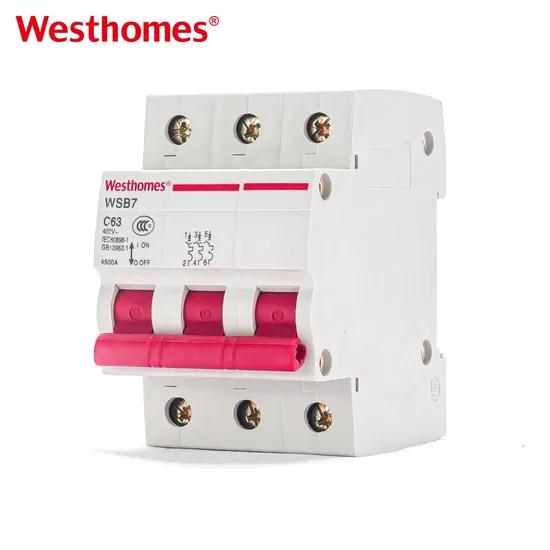
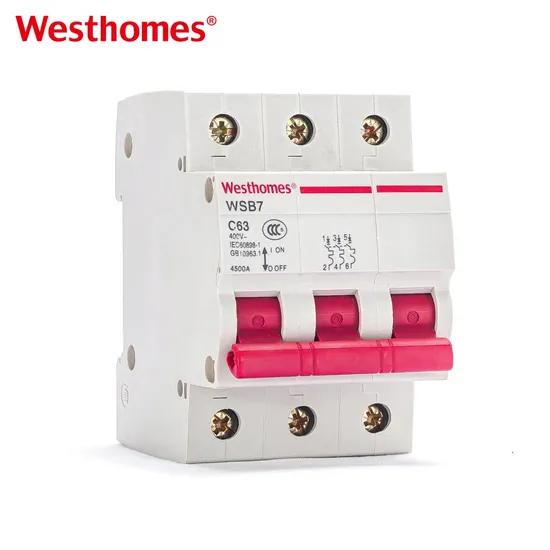
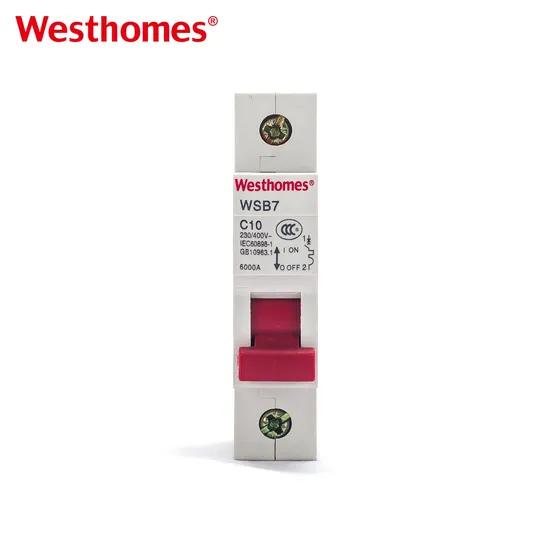
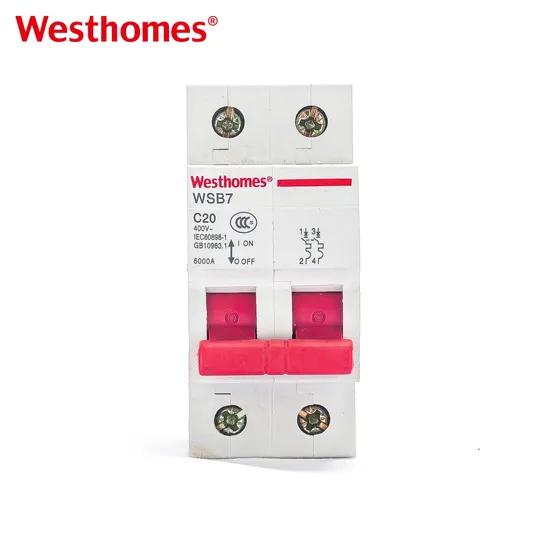
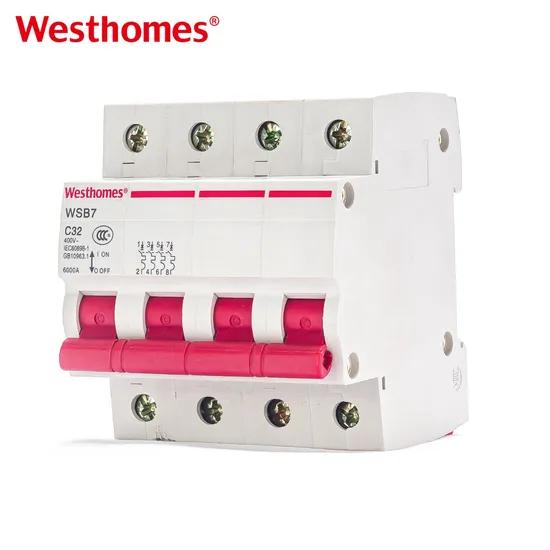
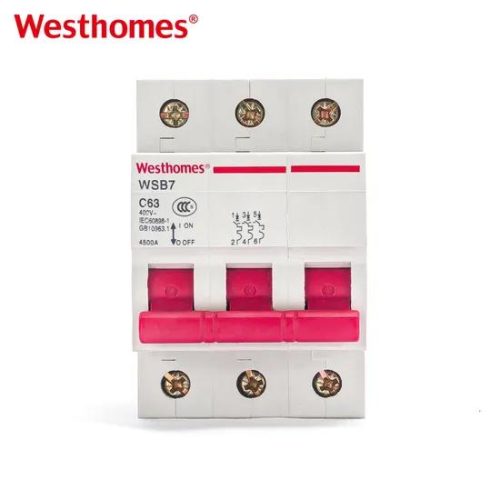
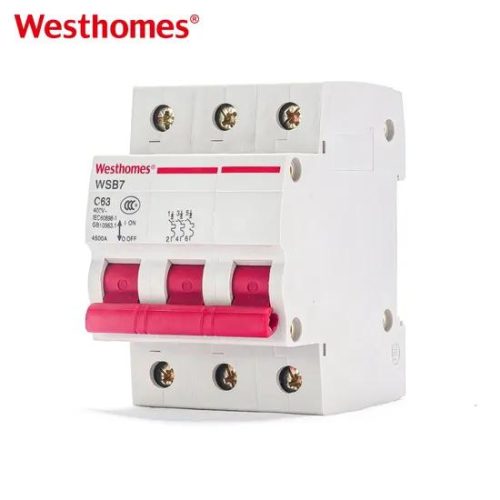
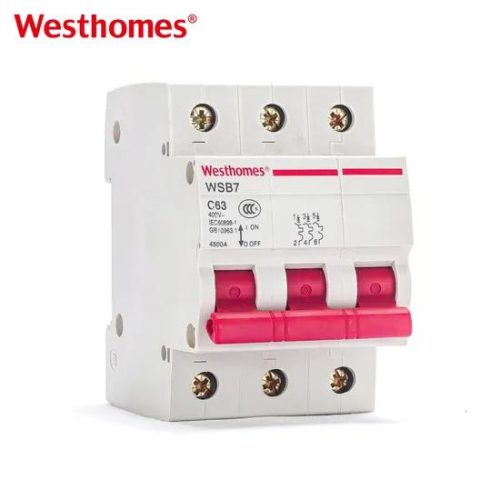
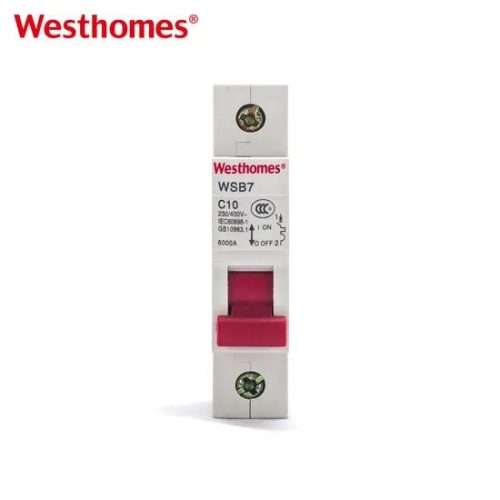
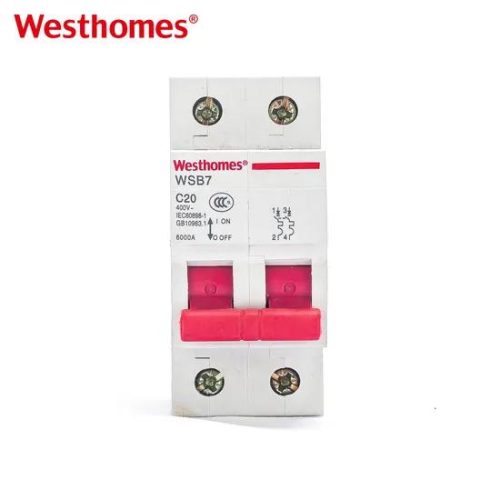
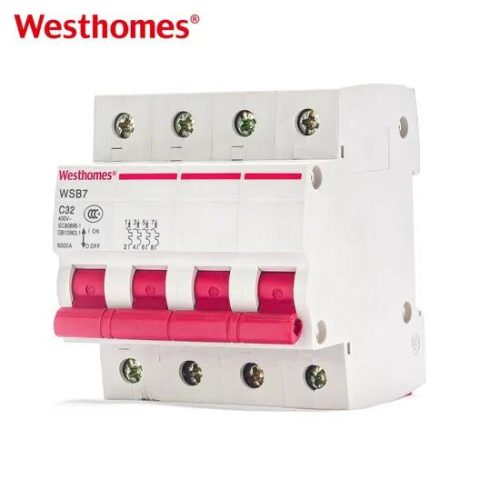
WSB7-63 is one of updated type MCCBs researched and developed by the company by using advanced design and manufacture technology internationally.
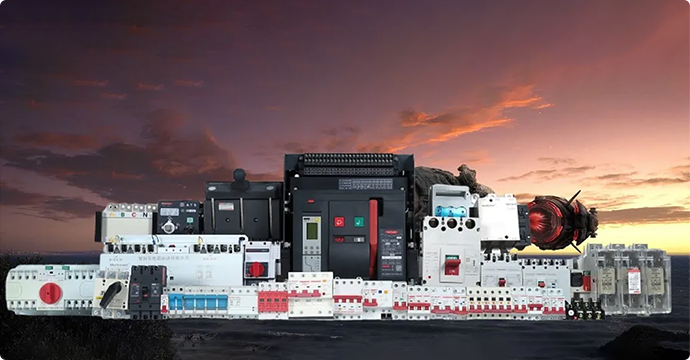
WSB7-63 series high breaking miniature circuit breaker is applied in line of AC 50/60Hz, rated voltage 230/400V and rated current up to 63A for overload and short circuit protection, also for usage of infrequent operation switching of line under nomal circumstance. It is used at places of industrial, commercial, high-rise and residula buildings, meets standards IEC/EN60898-1 and GB10963.1.
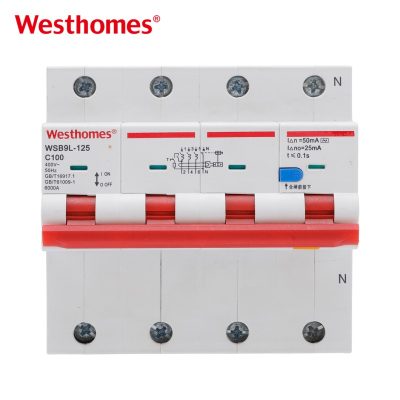
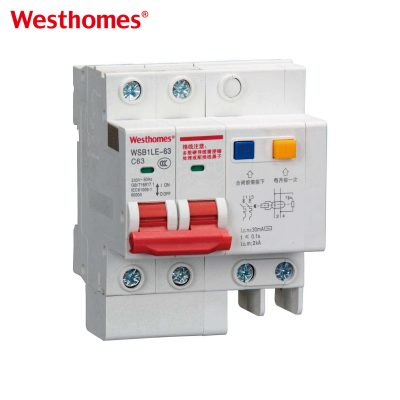
WSB7LE-63 series redisual current operation circuit breaker (with over-current protection) is applied in line of AC 50/60Hz, rated voltage 240/400V and rated current up to 63A. The residual current operation circuit breaker can cut fault current in a very short time period when personal touching or current leakage of the net exceeding the specified value. It can also for usage of overload, short circuit, infrequent switching of the line, and infrequent starting of the motor. The product is used at place of industrial, commercial, high-rise and residential building, meets standards of IEC 61009-1 and GB 16971.1
| Pole | 1P, 2P, 3P, 4P |
| Voltage | AC230V/400V |
| kA | 4.5kA, 6kA |
| Amps | 6, 10, 16, 20, 25, 32,40, 50, 63 |
| Width | 18, 36, 54, 72mm |
| Pole | 1P+N |
| Voltage | AC230V |
| kA | 6kA (6-40A); 4.5kA (50-63A) |
| Amps | 6, 10, 16, 20, 25, 32,40, 50, 63 |
| Width | 36mm |
| Current rating (A) | 6, 10, 16, 20, 25, 32, 40, 50, 63 | ||
| Type of instantaneous tripper | Type B (3-5)In; Type C (5-10)In; Type D (10-20)In | ||
| Pole (P) | 1P, 2P, 3P, 4P | ||
| Rated short circuit breaking capacity | Current rating (A) | 1-63A | |
| Pole (P) | 1P, 2P | 3P, 4P | |
| Rated voltage (V) | 230 / 400 | 400 | |
| Rated short circuit breaking current (A) | 6000 (6-40A); 4500 (50-63A) | ||
| Power factor COSΦ | 0.7 | ||
| Mechanical electrical life | Current rating (A) | 1-32A | 40-63A |
| Electrical life (times) | 4000 | ||
| Mechanical life (times) | 20000 | ||
| Operation frequency (times / hour) | 240 | 120 | |
| Current rating (A) | 6, 10, 16, 20, 25, 32, 40, 50, 63 | ||||||||||
| Rated residual action current I△n (mA) | 30 | ||||||||||
| Rated residual non-action current I△no (mA) | 15 | ||||||||||
| Rated voltage (V) | 230 | ||||||||||
| Max breaking time (s) | I△n | 0.2 | |||||||||
| 2I△n | 0.1 | ||||||||||
| 5I△n | 0.04 | ||||||||||
| Rated short circuit breaking capacity (kA) | 6 | 4.5 | |||||||||
| Type of instantaneous releaser | Type C | Type D | |||||||||
| Test current | 1.13In | 1.45In | 2.55In | C | D | ||||||
| 5In | 10In | 10In | 20In | ||||||||
| Initial state | Cold | Thermal | Cold | Cold | Cold | Cold | Cold | ||||
| Test time (L) | t≥1h | t<1h | 1s | 1s | t≥0.1s | t<0.1s | t≥0.1s | t<0.1s | |||
| Current rating (A) | 6, 10, 16, 20, 25, 32, 40, 50, 63 | ||
| Residual operation current rating (A) | 0.03, 0.1, 0.3 | ||
| Pole (P) | 1P+N, 2P, 3P, 3P+N, 4P | ||
| Rated ultimate short circuit breaking capacity Icn | 6000 A | ||
| Rated operation short circuit breaking capacity Ics | 6000 A | ||
| Rated residual non-action current I△no | 0.5I△n | ||
| Breaking time of residual current action | In (A) | 6, 10, 16, 20, 25, 32, 40, 50, 63 | |
| I△n (A) | 0.03, 0.1, 0.3 | ||
| Residual current (I△) | I△n | 0.1 | |
| 2I△n | 0.06 | ||
| 5I△n | 0.04 | ||
| Breaking time when equals value is below (s) | 500A | 0.04 maximum breaking time | |
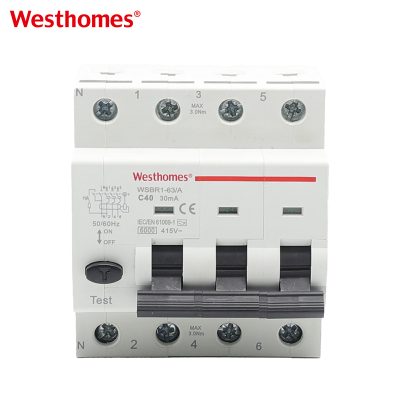
The "high breaking" designation means this 3-pole version is rated to safely interrupt a larger prospective short-circuit current than a standard-duty MCB. It uses optimized arc-splitting chambers, robust contact materials and a stronger operating mechanism to clear high-magnitude faults quickly, making it suitable for feeders close to a transformer or high-capacity supply.
A 3-pole MCB protects and switches the three phase conductors (L1, L2, L3) of a three-phase three-wire circuit, with no neutral pole. All three poles open simultaneously so that a fault on any phase disconnects the whole load. It is wired into a three-phase distribution board with the three phases on the input terminals and the three phase outputs going to the three-phase load.
Three-phase motors, pumps, compressors, heaters and balanced commercial loads must be switched together to avoid single-phasing, where losing one phase forces the motor to overheat. A 3P MCB trips all poles on an overload or short circuit, providing coordinated phase protection and safer isolation than three independent single-pole breakers.
Size the breaker to the full-load current of the three-phase load, using the formula I = P / (√3 × U × cosφ) to estimate the rated current, then choose the nearest standard WSB7-63 rating (up to 63 A) above that value. The breaker should trip before the cables overheat, so cable cross-section must also be matched to the breaker rating.
Most three-phase motor and compressor loads use a C curve (magnetic trip at 5–10 In), which tolerates normal motor starting current but still trips on short circuit. Heavy inrush loads such as transformers, welding sets or large motors may require a D curve (10–20 In), while purely resistive three-phase heating can use B or C depending on inrush.
The thermal trip uses a bimetal that heats and bends under sustained overload, giving an inverse-time delay so that small overcurrents ride through for a defined time before tripping. The magnetic trip is an electromagnet that releases instantly when current reaches the curve threshold, clearing short circuits within milliseconds. Together they provide overload and short-circuit protection in one device.
WSB7-63 breakers are assembled and tested on automated production lines that perform 100% electrical and mechanical checks, including contact resistance, tripping current calibration and mechanical endurance. Automated assembly reduces human variation and ensures consistent breaking capacity, tripping curve accuracy and batch-to-batch reliability.
Yes. The WSB7-63 series is manufactured to IEC 60898-1 for AC miniature circuit breakers and carries CE marking, demonstrating compliance with relevant European health, safety and environmental protection directives. Type tests cover tripping limits, short-circuit endurance, impulse voltage and abnormal heat.
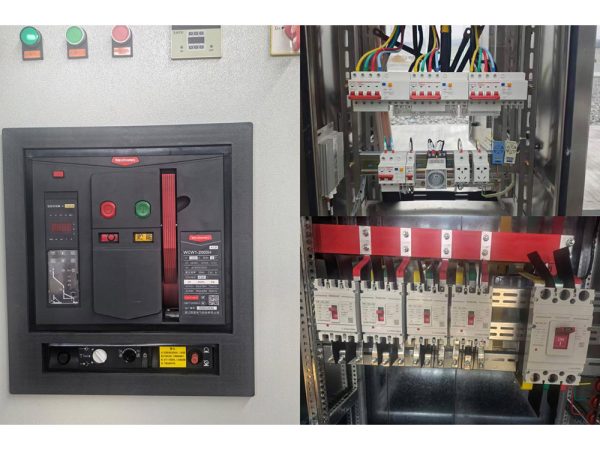
Typical uses include three-phase motor branch protection, commercial air-conditioning and chiller feeds, three-phase distribution sub-mains, machine tool control panels, and incoming protection for small three-phase commercial panels where the available short-circuit level is high. Its 35 mm DIN-rail form factor lets it fit standard modular distribution boards.
First check whether it trips immediately on switch-on (suggesting a short circuit or earth fault downstream) or after running for a while (suggesting overload). Inspect the load current with a clamp meter, verify the cable size, look for a failed motor or locked rotor, and confirm the tripping curve matches the load. If the breaker trips correctly but the load is genuinely overloaded, reduce the load or upsize the circuit and cables together.
* indicates a required field


 2 MB
2 MB