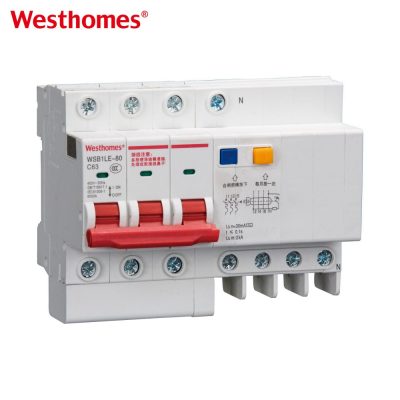
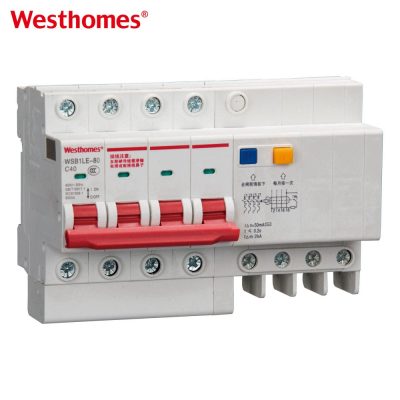
WSB7-63 Moulded case circuit breaker
WSB7-63 is one of updated type MCCBs researched and developed by the company by using advanced design and manufacture technology internationally.
Get quick appointment for technical support!

WSB7-63 series MCB is one of updated type MCCBs researched and developed by the company by using advanced design and manufacture technology internationally.

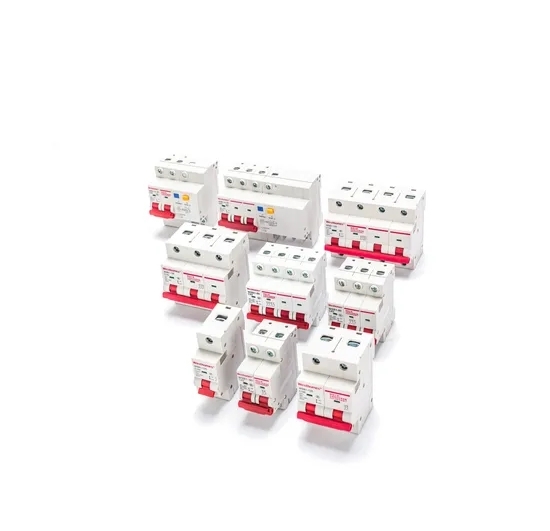
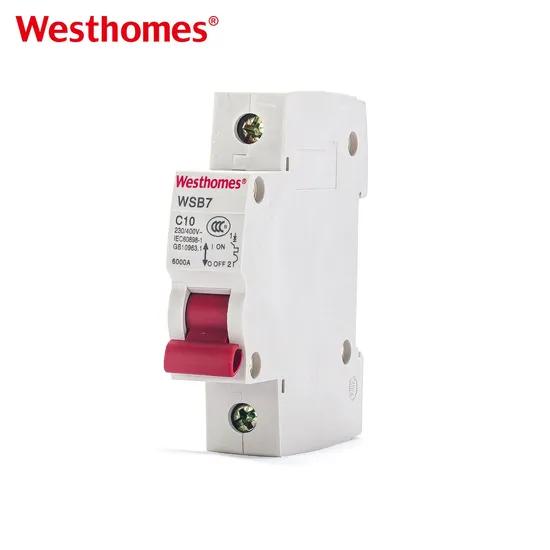
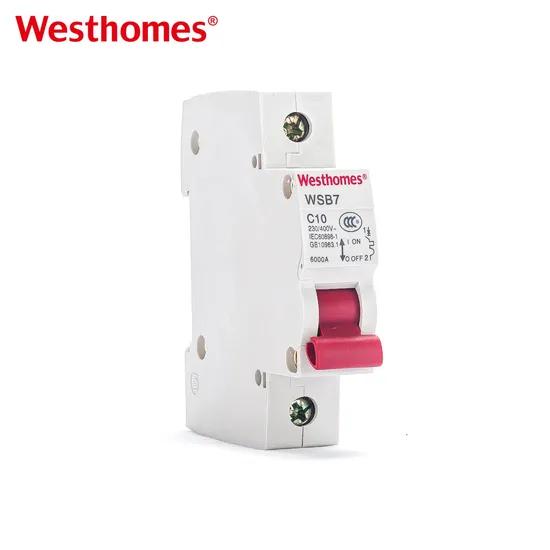
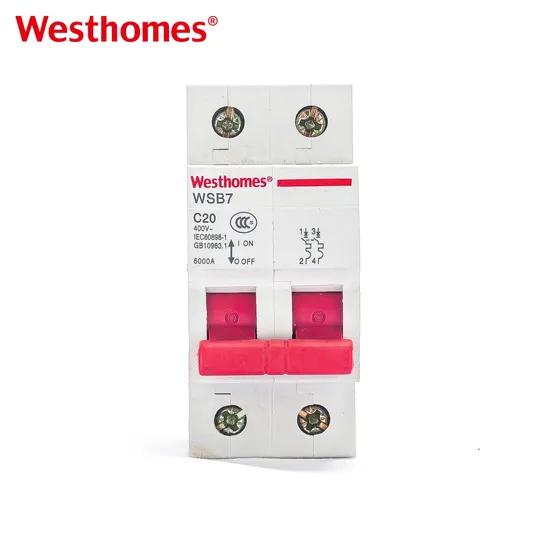
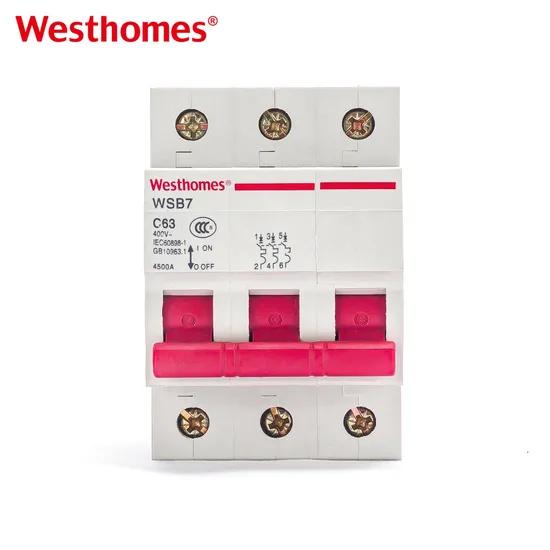
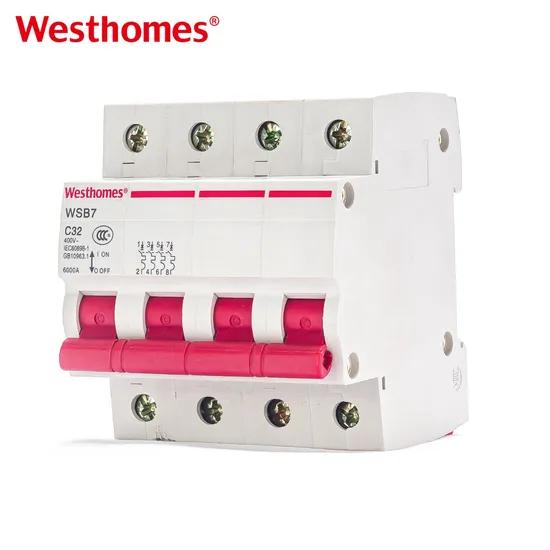
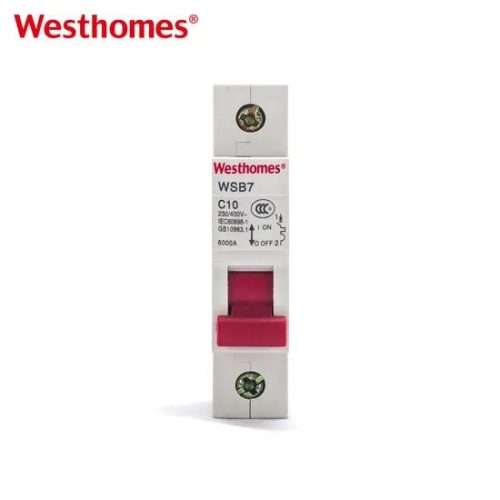
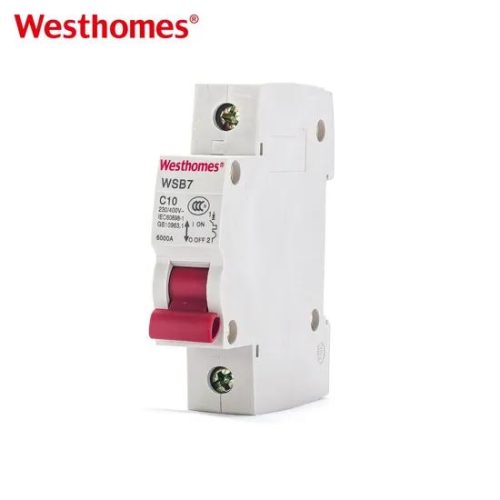
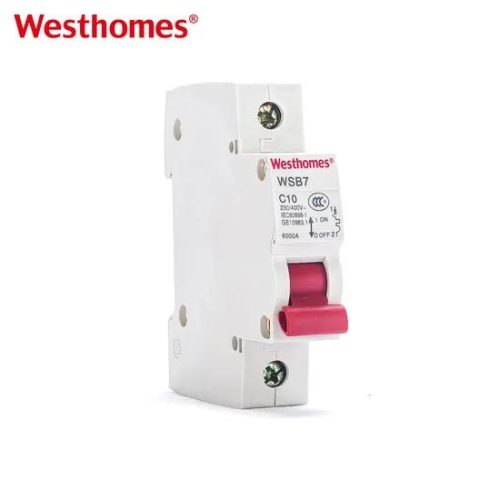
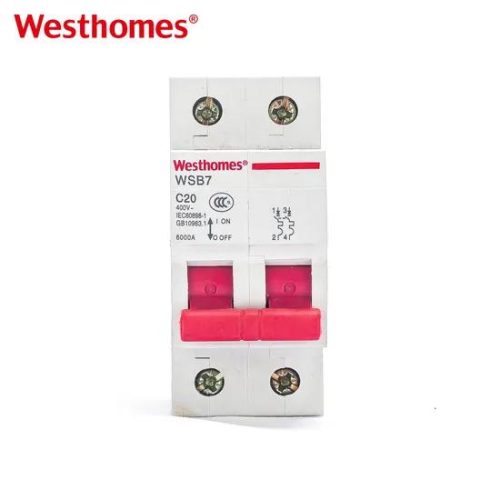
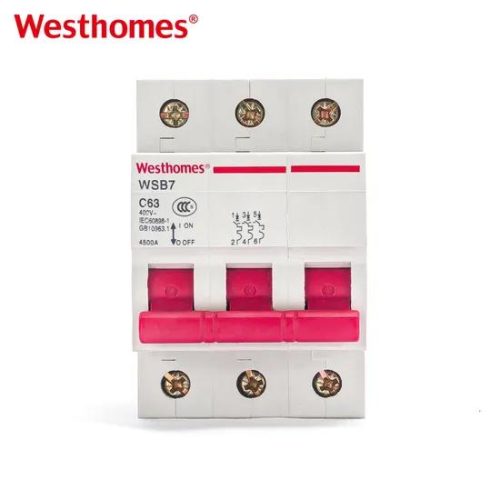
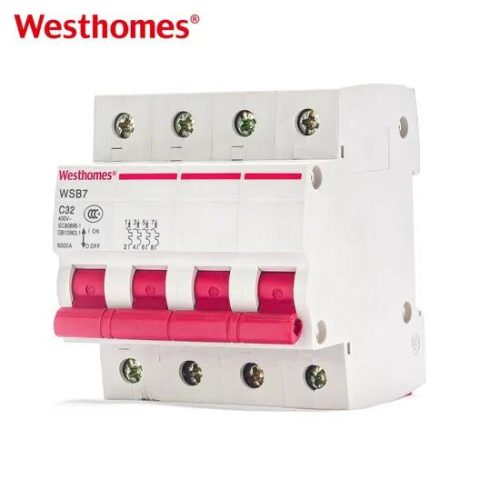
WSB7-63 is one of updated type MCCBs researched and developed by the company by using advanced design and manufacture technology internationally.
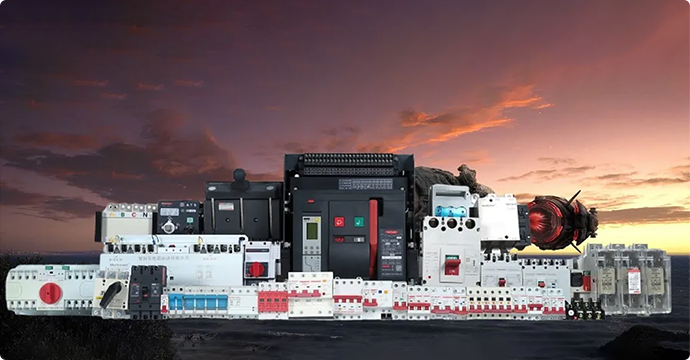
WSB7-63 series high breaking miniature circuit breaker is applied in line of AC 50/60Hz, rated voltage 230/400V and rated current up to 63A for overload and short circuit protection, also for usage of infrequent operation switching of line under nomal circumstance. It is used at places of industrial, commercial, high-rise and residula buildings, meets standards IEC/EN60898-1 and GB10963.1.
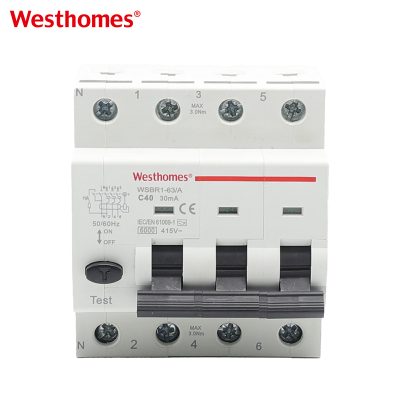
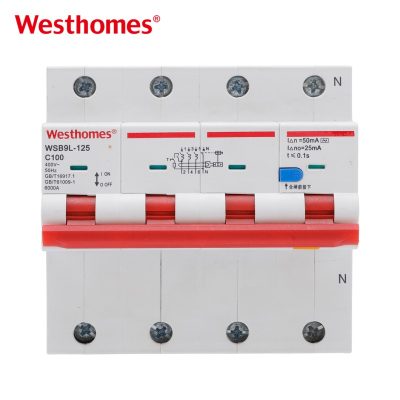
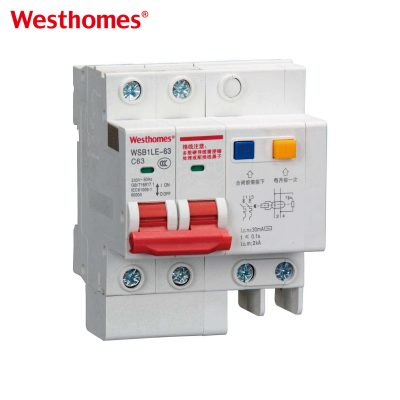
WSB7LE-63 series redisual current operation circuit breaker (with over-current protection) is applied in line of AC 50/60Hz, rated voltage 240/400V and rated current up to 63A. The residual current operation circuit breaker can cut fault current in a very short time period when personal touching or current leakage of the net exceeding the specified value. It can also for usage of overload, short circuit, infrequent switching of the line, and infrequent starting of the motor. The product is used at place of industrial, commercial, high-rise and residential building, meets standards of IEC 61009-1 and GB 16971.1
| Pole | 1P, 2P, 3P, 4P |
| Voltage | AC230V/400V |
| kA | 4.5kA, 6kA |
| Amps | 6, 10, 16, 20, 25, 32,40, 50, 63 |
| Width | 18, 36, 54, 72mm |
| Pole | 1P+N |
| Voltage | AC230V |
| kA | 6kA (6-40A); 4.5kA (50-63A) |
| Amps | 6, 10, 16, 20, 25, 32,40, 50, 63 |
| Width | 36mm |
| Current rating (A) | 6, 10, 16, 20, 25, 32, 40, 50, 63 | ||
| Type of instantaneous tripper | Type B (3-5)In; Type C (5-10)In; Type D (10-20)In | ||
| Pole (P) | 1P, 2P, 3P, 4P | ||
| Rated short circuit breaking capacity | Current rating (A) | 1-63A | |
| Pole (P) | 1P, 2P | 3P, 4P | |
| Rated voltage (V) | 230 / 400 | 400 | |
| Rated short circuit breaking current (A) | 6000 (6-40A); 4500 (50-63A) | ||
| Power factor COSΦ | 0.7 | ||
| Mechanical electrical life | Current rating (A) | 1-32A | 40-63A |
| Electrical life (times) | 4000 | ||
| Mechanical life (times) | 20000 | ||
| Operation frequency (times / hour) | 240 | 120 | |
| Current rating (A) | 6, 10, 16, 20, 25, 32, 40, 50, 63 | ||||||||||
| Rated residual action current I△n (mA) | 30 | ||||||||||
| Rated residual non-action current I△no (mA) | 15 | ||||||||||
| Rated voltage (V) | 230 | ||||||||||
| Max breaking time (s) | I△n | 0.2 | |||||||||
| 2I△n | 0.1 | ||||||||||
| 5I△n | 0.04 | ||||||||||
| Rated short circuit breaking capacity (kA) | 6 | 4.5 | |||||||||
| Type of instantaneous releaser | Type C | Type D | |||||||||
| Test current | 1.13In | 1.45In | 2.55In | C | D | ||||||
| 5In | 10In | 10In | 20In | ||||||||
| Initial state | Cold | Thermal | Cold | Cold | Cold | Cold | Cold | ||||
| Test time (L) | t≥1h | t<1h | 1s | 1s | t≥0.1s | t<0.1s | t≥0.1s | t<0.1s | |||
| Current rating (A) | 6, 10, 16, 20, 25, 32, 40, 50, 63 | ||
| Residual operation current rating (A) | 0.03, 0.1, 0.3 | ||
| Pole (P) | 1P+N, 2P, 3P, 3P+N, 4P | ||
| Rated ultimate short circuit breaking capacity Icn | 6000 A | ||
| Rated operation short circuit breaking capacity Ics | 6000 A | ||
| Rated residual non-action current I△no | 0.5I△n | ||
| Breaking time of residual current action | In (A) | 6, 10, 16, 20, 25, 32, 40, 50, 63 | |
| I△n (A) | 0.03, 0.1, 0.3 | ||
| Residual current (I△) | I△n | 0.1 | |
| 2I△n | 0.06 | ||
| 5I△n | 0.04 | ||
| Breaking time when equals value is below (s) | 500A | 0.04 maximum breaking time | |
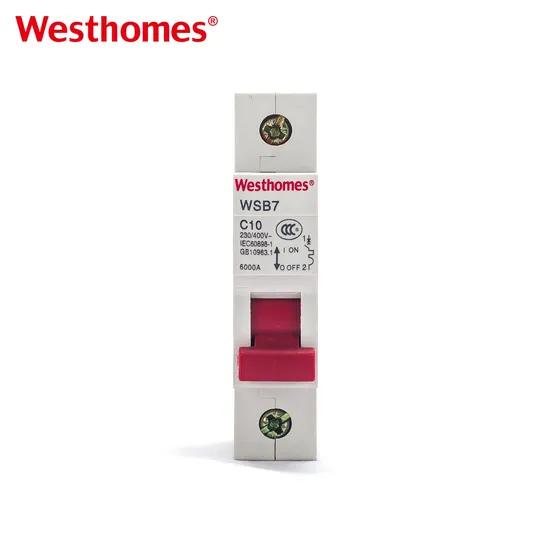
The new-design WSB7-63 1P keeps the proven WSB7-63 thermal-magnetic platform but uses an optimized modular housing, refined arc-quenching chamber and ergonomic toggle for easier installation and clearer visual trip indication. It maintains the same DIN-rail footprint and IEC 60898-1 compliance while improving thermal management and contact life.
A 1-pole MCB switches and protects only the phase conductor of a single-phase circuit; the neutral is carried through a common neutral bar in the distribution board. The incoming phase connects to the top terminal and the protected circuit wire to the bottom terminal, while the neutral remains continuously connected on the neutral bar.
Use a 1P MCB for individual branch circuits in a multi-way consumer unit where neutral isolation is provided by a main switch or linked neutral bar. It is smaller and more economical than 2P, leaving more rail space for additional breakers. Choose 2P only when you need simultaneous phase and neutral isolation on that branch.
Current flows through a bimetal and a magnetic coil. Under a modest overload the bimetal heats and bends, releasing the latch after an inverse-time delay; under a severe short circuit the magnetic coil pulls the latch instantly. Both actions spring the contacts apart and stretch the arc through splitter plates that cool and extinguish it.
The 1P version covers the same WSB7-63 frame ratings from 6 A to 63 A in standard values (6, 10, 16, 20, 25, 32, 40, 50, 63 A). Branch lighting circuits commonly use 6–16 A, socket circuits 16–20 A, and heavier single-point loads such as showers or heaters 25–40 A.
Curve B is typical for domestic lighting and resistive circuits where inrush is low; curve C is the default for general socket outlets and small motors; curve D is reserved for high inrush loads such as transformers, discharge lighting and certain power supplies. Matching the curve prevents nuisance trips while still protecting the cable.
Hook the top edge onto the 35 mm rail and push the breaker downward until the bottom clip clicks home; the integrated rail latch holds it securely. To remove, insert a screwdriver into the release slot and pull the clip down while lifting the unit off the rail. The compact width maximizes circuits per enclosure.
The WSB7-63 1P uses an enhanced arc-quenching design that provides a high breaking capacity relative to its frame size, allowing it to clear high fault currents that can occur near the supply transformer. Refer to the nameplate for the exact rated breaking capacity and confirm it exceeds the prospective short-circuit current at the installation point.
Yes. The new-design series continues to be manufactured and type-tested to IEC 60898-1 and carries CE marking, so its B/C/D tripping bands, thermal endurance and short-circuit ratings are guaranteed within the standard's limits for household and similar low-voltage installations.
The 1P WSB7-63 is widely used for lighting, socket outlets, small appliances, HVAC control circuits and supplementary protection in residential, commercial and light industrial panels. Maintain it by keeping terminals tight, avoiding ambient temperatures above the rating, and never bridging the breaker to stop a trip — investigate the fault first.
* indicates a required field

 2 MB
2 MB