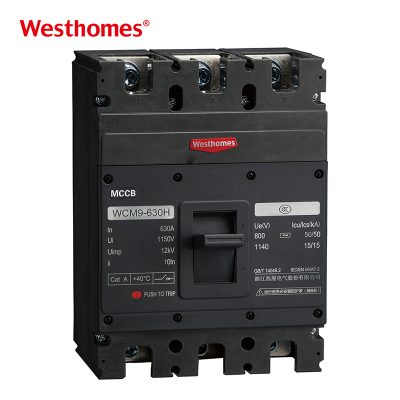
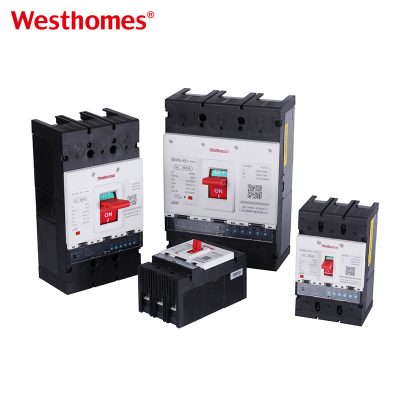
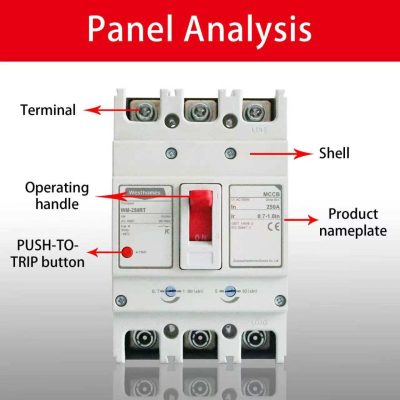
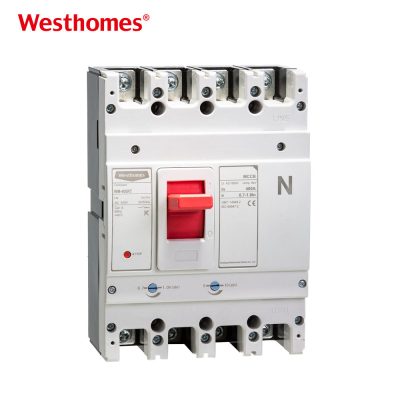
WCM6 Moulded case circuit breaker
WCM6 is one of updated type MCCBs researched and developed by the company by using advanced design and manufacture technology internationally.
Get quick appointment for technical support!

WCM6 series MCB is one of updated type MCCBs researched and developed by the company by using advanced design and manufacture technology internationally.



WCM6 is one of updated type MCCBs researched and developed by the company by using advanced design and manufacture technology internationally.
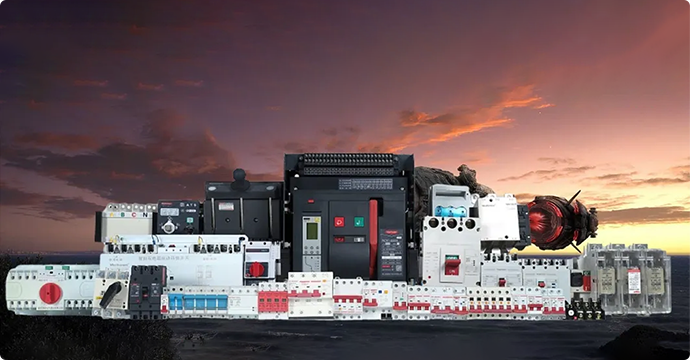
WCM6 sereis moulded case circuit breaker (MCCB for short) is the new type of product with top current limiting principal and manufacture technology in design, is tight in structure, total molularized, high breaking capacity, zero flashover. It applies at AC50Hz, rated operation voltage 690V and below, rated operation current upto 1250A for infrequent switch of line and infrequent start of motor. MCCB has overload, short circuit and under voltage protection device, to protect line and power evice from demage.

| Pole | 3P,4P |
| Voltage | AC400V |
| kA | 22KA-50KA |
| In(A) | 16-600A |
| Item No. | In(A) | Ue(V) | Ui(V) | Uimp(kV) | Frequency(Hz) | Cat | Ics(kA) | Icu(kA) |
| WCM6-100S/3300 | 100 | AC 400 | 1000 | 8 | 50 | B | 22 | 35 |
| WCM6-250S/3300 | 250 | AC 400 | 1000 | 8 | 50 | B | 25 | 50 |
| WCM6-400S/3300 | 400 | AC 400 | 1000 | 12 | 50 | B | 35 | 50 |
| WCM6-630S/3300 | 600 | AC 400 | 1000 | 12 | 50 | B | 35 | 50 |


The Westhomes WCM6(E)L is a purpose-engineered series built to IEC 60947-2 and GB 14048.2, with consistent materials, automated calibration, and full type-test documentation. Unlike unbranded clones, Westhomes provides datasheets, dimension drawings, trip-curve charts, and long-term spare-parts support. It is manufactured on automated lines that ensure every unit meets its rated 22kA–50kA breaking capacity and 3P/4P pole configuration.
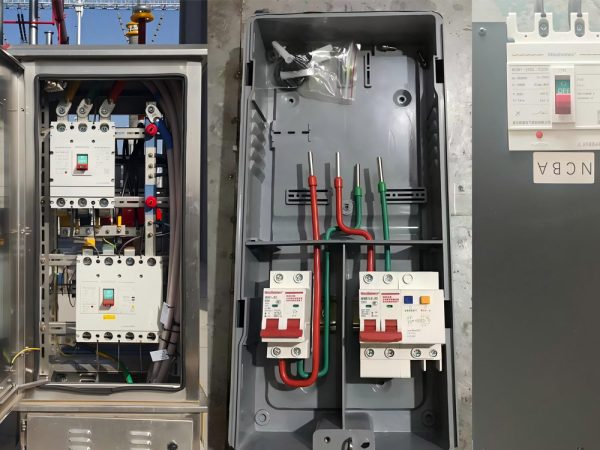
Connect the supply to the line terminals marked "1/3/5" (and "N" for 4P) and the load to the load terminals marked "2/4/6" (and "N"). Use copper lugs or busbars sized to the rated current, torque them to the value stated on the nameplate (typically 5–12 N·m depending on frame size), and maintain the recommended minimum phase-to-phase and phase-to-earth clearances. Never reverse line and load, as this can upset the trip-unit and arc-chute performance.
The WCM6(E)L can be fixed-mounted by screws to a mounting plate, clipped onto a DIN rail (smaller frame sizes), or supplied as a plug-in / withdrawable unit in larger switchgear. Rear-connection terminals are available for high-current busbar applications. When building a tiered distribution, coordinate the WCM6(E)L downstream of an upstream ACB or larger MCCB so that selectivity (discrimination) is maintained.
Inspect every 6–12 months: check for dust and corrosion, retorque terminals, operate the manual open/close handle several times to check mechanical freedom, and verify that the trip-unit settings have not been tampered with. For electronic versions, perform an annual secondary-injection trip test to confirm Ir, Isd, and Ii operation. Megger (insulation-resistance) testing between poles and earth should be done while the breaker is open and disconnected from electronics.
Under rated conditions, the WCM6(E)L typically offers a mechanical life of around 8,000–20,000 operations (depending on frame size) and an electrical life of around 1,500–10,000 operations at rated current. Actual life is reduced by frequent fault interruptions, so the rated short-circuit making/breaking operations should be considered when planning maintenance.
Yes. When selected with a suitable magnetic trip threshold (typically 8–12 × In to allow for motor starting current), the WCM6 can protect motor circuits against short circuits, while a separate overload relay or contactor handles the thermal overload. For electronic versions, the short-time delay can be tuned to ride through DOL (direct-on-line) or star-delta starting without nuisance tripping.
Yes. Westhomes offers ODM/OEM services including custom logo and laser marking, customer-specific packaging, configurable auxiliary/shunt options, and tailored trip curves for special applications. For volume tenders, the company can provide private-label units with buyer-supplied artwork. Minimum order quantities and lead times are agreed per project.
Icu (ultimate short-circuit breaking capacity) is the maximum fault current the breaker can clear once, after which it may be damaged and must be replaced. Ics (service short-circuit breaking capacity) is the fault current it can clear repeatedly while remaining serviceable. The WCM6(E)L is typically rated with Ics of 50–75% of Icu. For critical feeders, choose a breaker where Ics is comfortably above the site's calculated fault level.
Calculate the prospective short-circuit current at the installation point using the transformer kVA, impedance, cable length, and upstream protection. Then select the WCM6(E)L frame whose Icu (and Ics) rating exceeds that value with a safety margin. A 22kA version suits smaller transformers and long cable runs; 35kA suits general industrial distribution; 50kA suits large transformers, low-impedance networks, and main feeders.
First determine whether it tripped on overload (thermal) or short circuit (magnetic/instantaneous). Check the load current with a clamp meter against the Ir setting, inspect for cable damage or a failed downstream device, and look for signs of arc damage inside the breaker. After a short-circuit trip, the breaker should be inspected (and replaced if it has interrupted near its Icu rating) before re-closing. Never force the handle closed if it feels mechanically locked in the trip position.
* indicates a required field

 2 MB