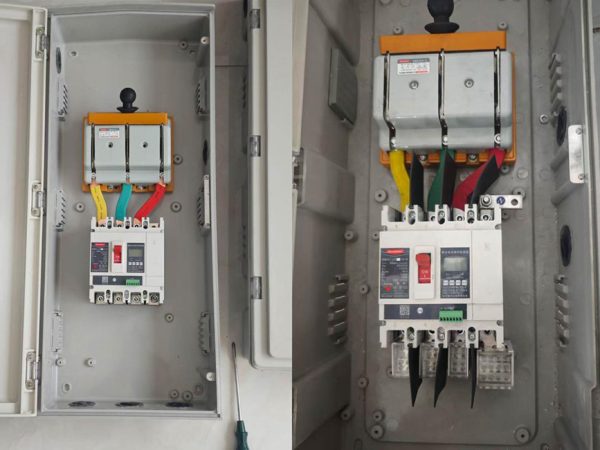
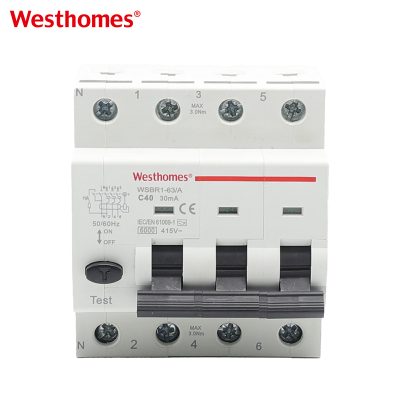
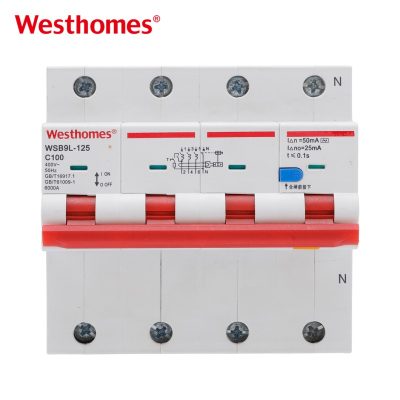
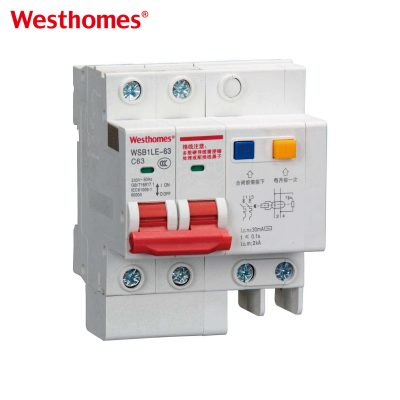
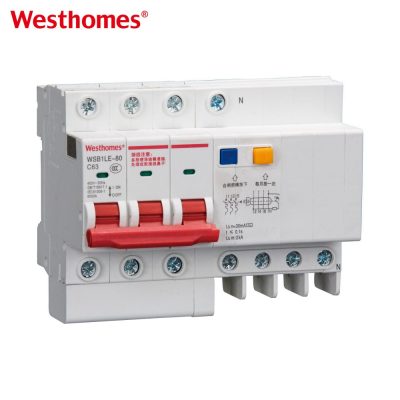
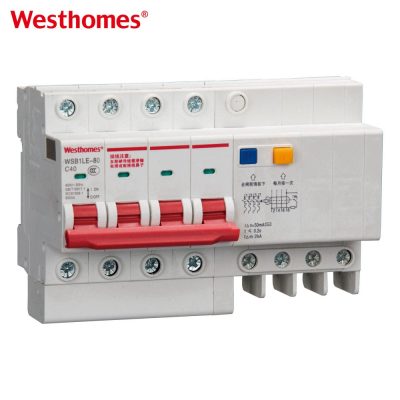
WSB9-80 Moulded case circuit breaker
WSB9-80 is one of updated type MCCBs researched and developed by the company by using advanced design and manufacture technology internationally.
Get quick appointment for technical support!

WSB9-80 series MCB is one of updated type MCCBs researched and developed by the company by using advanced design and manufacture technology internationally.

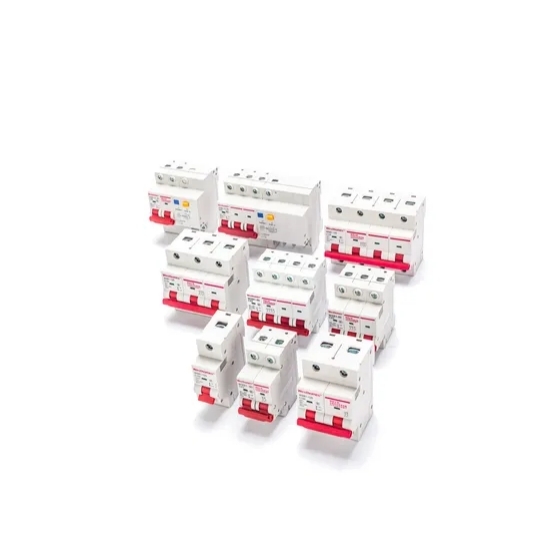
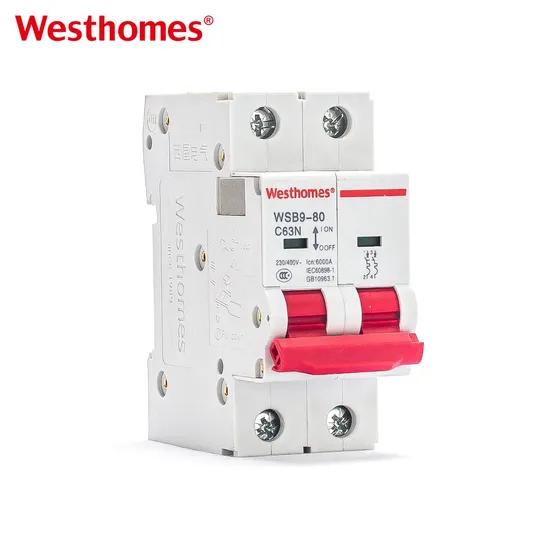
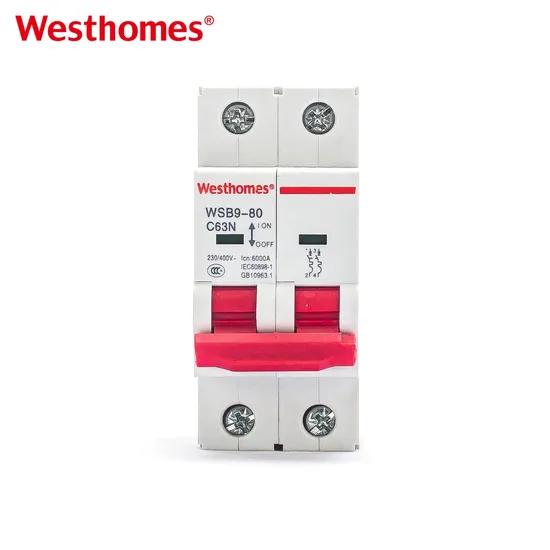
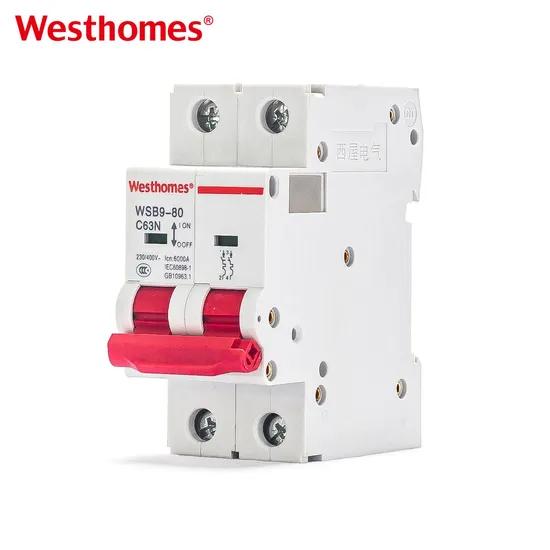
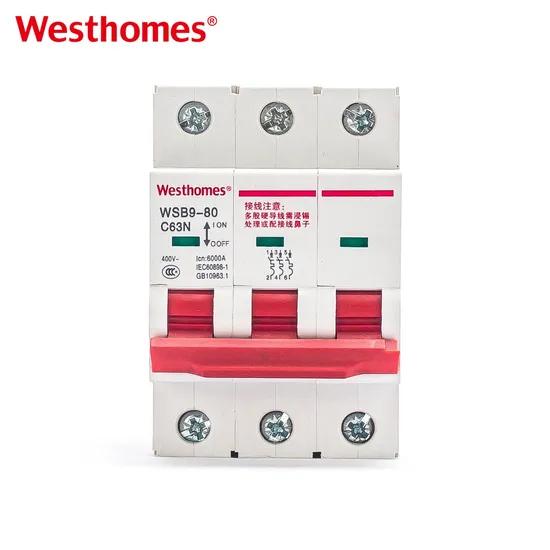
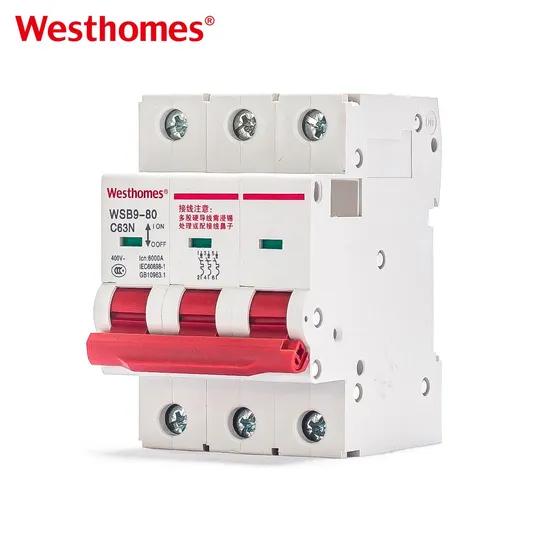
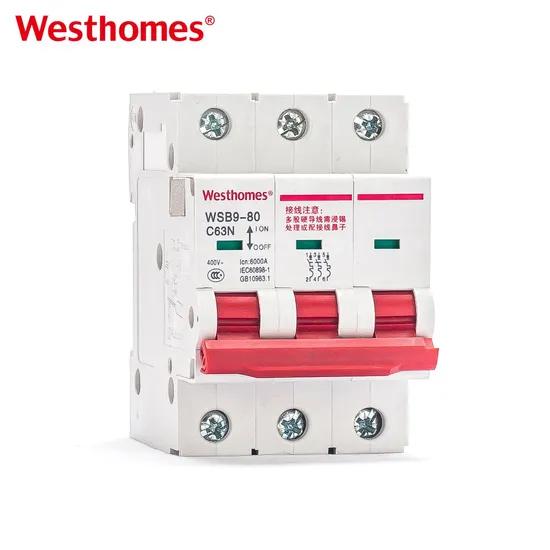
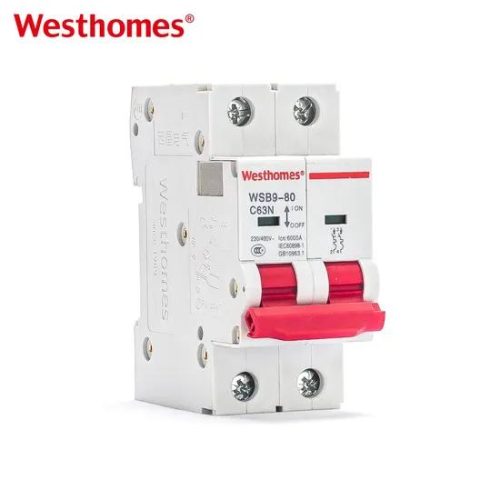
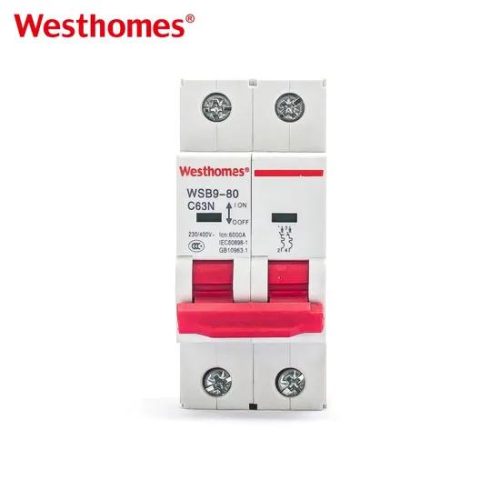
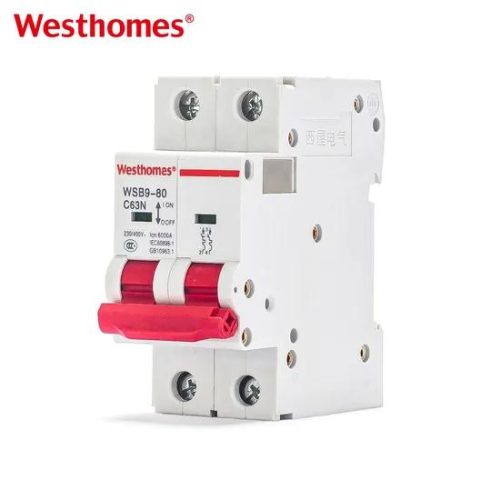
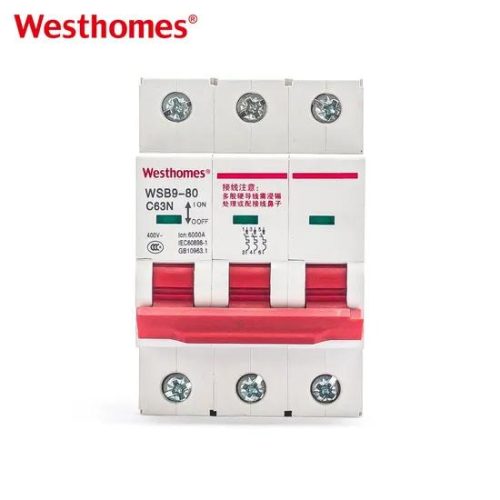
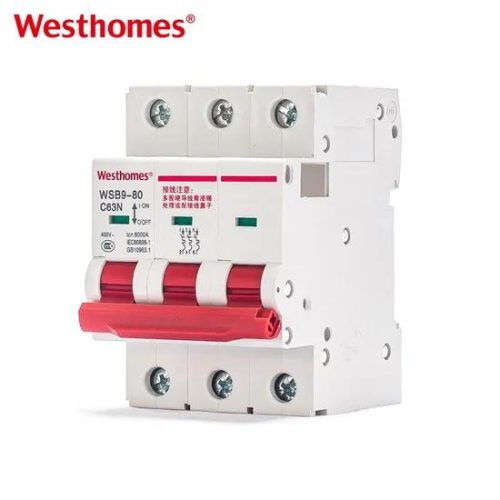
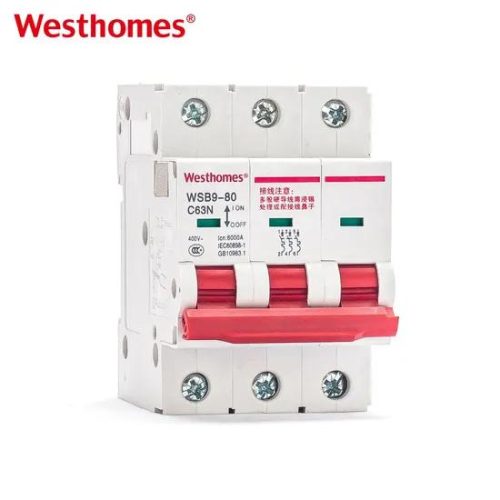
WSB9-80 is one of updated type MCCBs researched and developed by the company by using advanced design and manufacture technology internationally.
WSB9 series Miniature circuit breakers (hereinafter referred to as circuit breakers) are suitable for AC 50Hz or 60Hz, rated working voltage AC230V/400V, rated current up to 80A lines, for overload and short circuit protection of the lines, and can also be used for infrequent operation conversion of the lines. The circuit breaker is suitable for commercial office buildings, residential buildings and similar buildings. This product complies with GB10963.1 and IEC60898-1 standards.
| Frequency | 50Hz/60Hz |
| Pole | 1, 2, 3, 4 |
| Voltage | AC230V/400V |
| kA | 6kA, 10kA |
| Amps | 6, 10, 16, 20, 25, 32, 40, 50, 63, 80 |
| Width | 18, 36, 54, 72mm |
| Mounting | Din rail |
| Model | Pole | Rated voltage | Rated current | Breaking capacity | Types of instantaneous | Current range of instantaneous protection |
| WSB9-63 | 1P, 2P, 3P, 4P | AC230/400V | 6, 10, 16, 20, 25, 32, 40, 50, 63, 80A | N: 6kA(6-63A) H: 10kA(6-63A) |
B | 3In<I≤5In |
| C | 5In<I≤10In | |||||
| D | 10In<I≤50In |
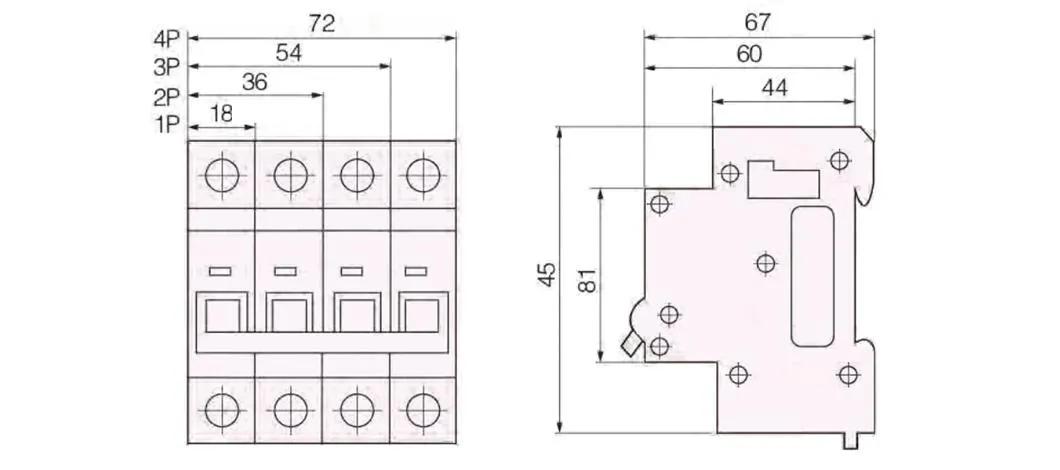
"Factory" indicates that Westhomes produces this 3P MCB directly from its own manufacturing facility, rather than trading through a distributor. This typically means more competitive pricing, shorter lead times, direct factory support for technical and OEM questions, and the ability to order in bulk for panel builders, EPC contractors, and project tenders. The product itself is a standard 3-pole AC miniature circuit breaker rated at 230V/400V and 50Hz/60Hz.
In a three-phase four-wire (TN-S or TN-C-S) system, the voltage between any phase and neutral is 230V, and between any two phases is 400V. A 3P MCB rated 230/400V can be used on three-phase circuits where the line-to-line voltage is 400V; the "230V" on the label simply confirms that each pole is also rated for line-to-neutral voltage. This dual marking is standard on IEC-compliant MCBs used on 230/400V three-phase systems.
The MCB is designed to operate on both 50Hz and 60Hz AC supplies. Because its trip mechanism responds to RMS current and thermal heating rather than frequency, its tripping characteristics remain valid across the 50–60Hz range. This lets Westhomes sell the same 3P MCB into 50Hz markets (Europe, China, India, Middle East, Africa, Australia) and 60Hz markets (North/Central America, Taiwan, South Korea) without a separate product line.
Common applications include three-phase induction motors (via a contactor or direct-on-line starter), three-phase air-conditioning units, three-phase distribution boards, three-phase heaters, pumps, compressors, CNC machines, and commercial kitchen equipment. Because all three poles trip together, a fault on any phase disconnects the entire three-phase load — preventing single-phasing damage to motors, which can occur if only one phase is interrupted.
It can be used for short-circuit protection of a motor branch circuit, but for proper motor overload protection a separate thermal overload relay in the motor starter is recommended. A B- or C-curve MCB may nuisance-trip on the high starting inrush (typically 5–7 times full-load current for a few seconds), so a D-curve version (10–20 In) is preferred when the MCB is used as the sole protective device on a direct-on-line motor. For serious motor circuits, a dedicated motor protection circuit breaker (MPCB) offers calibrated overload settings.
Connect the three incoming phase conductors (L1, L2, L3) to the top terminals, and the three outgoing phase conductors to the bottom terminals, maintaining phase order. The neutral conductor is connected to the neutral busbar and does not pass through the 3P breaker. Always tighten each terminal to the torque specified in the installation manual (typically 2.4–3.5 N·m for small ratings), and use ferrule or bootlace terminals on stranded copper to avoid strand damage. Maintain phase sequence matching the load's nameplate.
In IEC terminology, "low voltage" covers systems up to 1000V AC or 1500V DC. A 230/400V MCB is therefore a low-voltage device used in final distribution — home, office, shop, factory panelboards — not in high-voltage transmission. This category defines which standard applies (IEC 60898-1 for MCBs, IEC 60947-2 for larger circuit breakers), what insulation and clearance levels are required, and who is permitted to install it (qualified electricians).
Yes. Each pole has its own bimetal and solenoid, but the poles are mechanically linked so that any single pole's trip — whether thermal (overload) or magnetic (short-circuit) — opens all three contacts simultaneously. This is essential for three-phase loads: an overload on one phase or a short-circuit between any two phases will isolate the entire load, preventing single-phasing of motors and maintaining balance.
At minimum, CE marking plus a Declaration of Conformity to IEC 60898-1. For tenders, ask for type-test certificates from an accredited laboratory such as KEMA, CESI, or Intertek; for CB member markets, a CB Certificate simplifies local certification. Some Middle East, African, and Asian tenders additionally require SASO, COC, or local partner certification. Westhomes as a factory supplier can typically provide the certificate file pack required for tender submission.
Factory-direct MCBs typically carry a significantly lower unit price than equivalent name-brand products of similar IEC rating, while meeting the same IEC 60898-1 safety and performance standards. Lead times for standard ratings are short from stock, and bulk project orders can be scheduled to construction milestones. The trade-off is that the buyer should verify certifications, inspect production samples, and agree on quality acceptance criteria (e.g., AQL level) before large-scale deployment, rather than relying solely on brand reputation.
* indicates a required field

 2 MB
2 MB