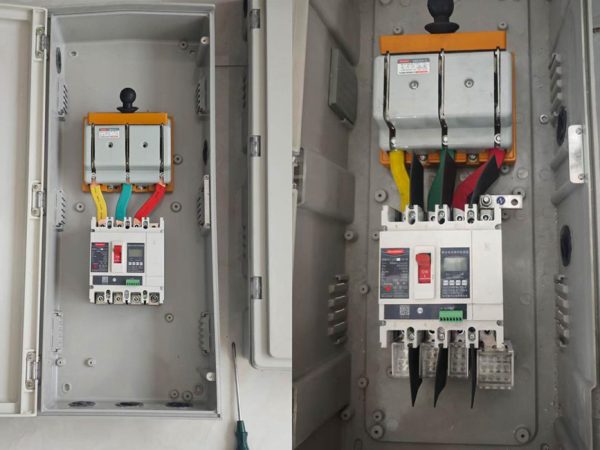
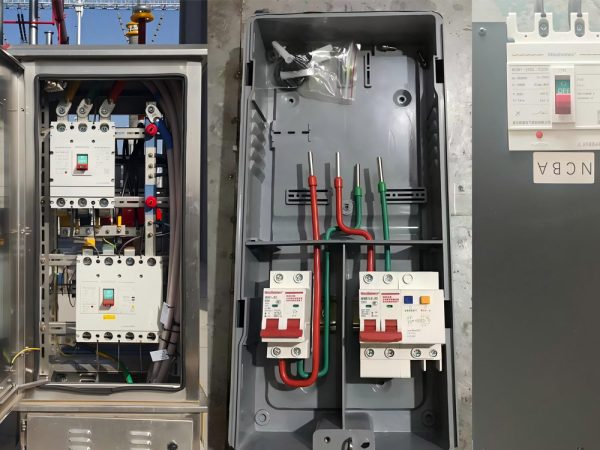
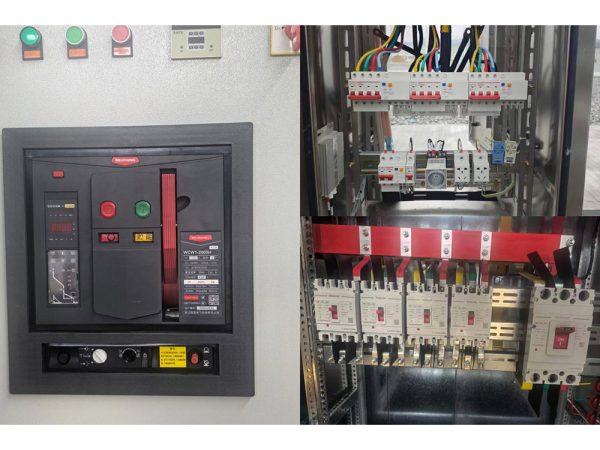
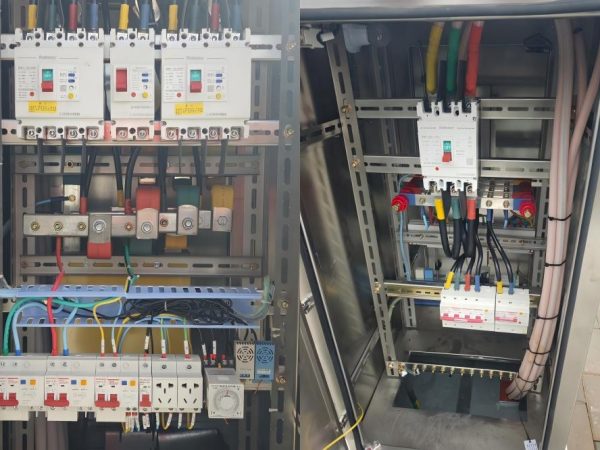
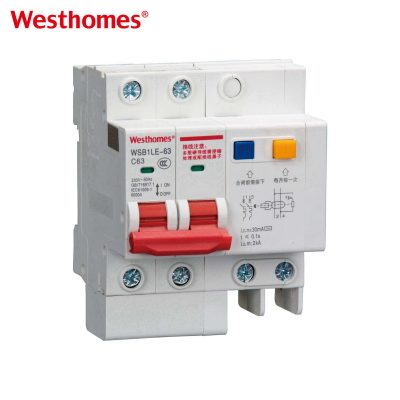
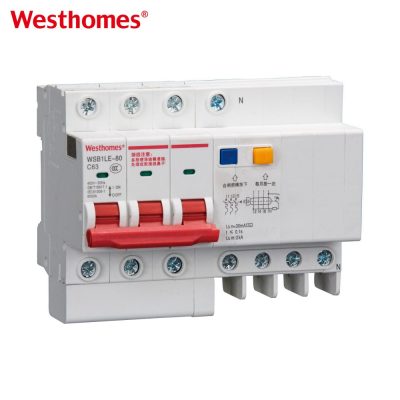
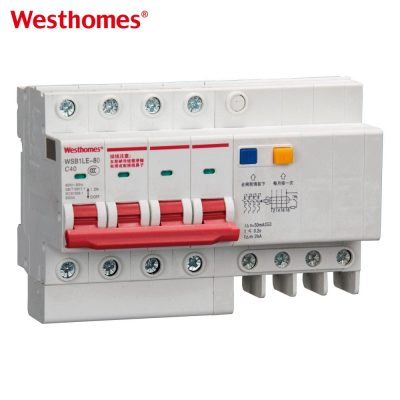
WSB9-80 Moulded case circuit breaker
WSB9-80 is one of updated type MCCBs researched and developed by the company by using advanced design and manufacture technology internationally.
Get quick appointment for technical support!

WSB9-80 series MCB is one of updated type MCCBs researched and developed by the company by using advanced design and manufacture technology internationally.


WSB9-80 is one of updated type MCCBs researched and developed by the company by using advanced design and manufacture technology internationally.
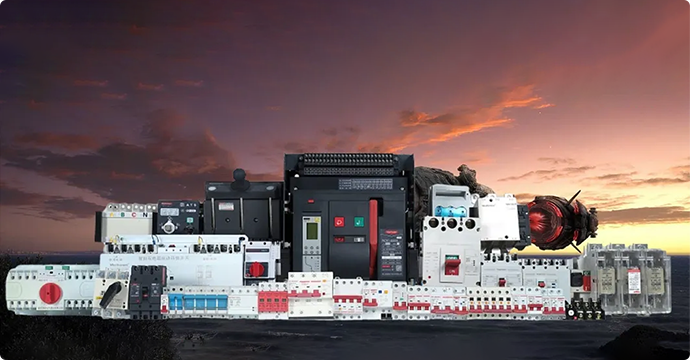
WSB9 series Miniature circuit breakers (hereinafter referred to as circuit breakers) are suitable for AC 50Hz or 60Hz, rated working voltage AC230V/400V, rated current up to 80A lines, for overload and short circuit protection of the lines, and can also be used for infrequent operation conversion of the lines. The circuit breaker is suitable for commercial office buildings, residential buildings and similar buildings. This product complies with GB10963.1 and IEC60898-1 standards.


| Frequency | 50Hz/60Hz |
| Pole | 1, 2, 3, 4 |
| Voltage | AC230V/400V |
| kA | 6kA, 10kA |
| Amps | 6, 10, 16, 20, 25, 32, 40, 50, 63, 80 |
| Width | 18, 36, 54, 72mm |
| Mounting | Din rail |
| Model | Pole | Rated voltage | Rated current | Breaking capacity | Types of instantaneous | Current range of instantaneous protection |
| WSB9-63 | 1P, 2P, 3P, 4P | AC230/400V | 6, 10, 16, 20, 25, 32, 40, 50, 63, 80A | N: 6kA(6-63A) H: 10kA(6-63A) |
B | 3In<I≤5In |
| C | 5In<I≤10In | |||||
| D | 10In<I≤50In |
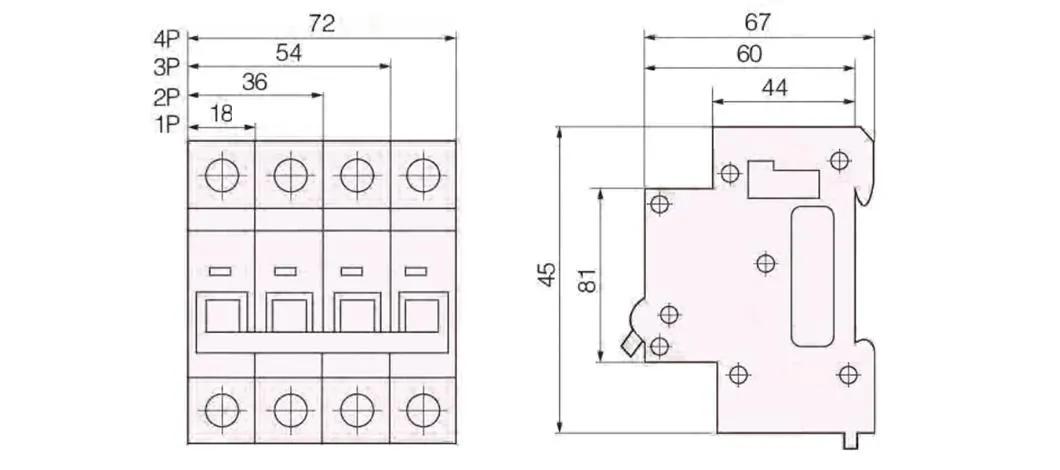
The WSB9-80 series is offered in two breaking-capacity variants: 6kA and 10kA. The number (kiloamps) is the maximum prospective short-circuit current the breaker can safely interrupt at its rated voltage. The 6kA version suits residential and light commercial installations where the available fault current at the breaker position is below 6,000A; the 10kA version is chosen where the supply transformer is larger or closer, or where local regulations require a higher fault-withstand margin.
Calculate the prospective short-circuit current (PSCC) at the breaker position using the supply transformer kVA and impedance, the length and cross-section of the supply cables, and any upstream impedance. As a rough rule, a typical residential service in a city fed by a small local transformer may present 3–6kA at the origin, while an industrial or commercial installation near a large transformer can present 10kA or more. Choose a breaker whose rated breaking capacity (Icn) is equal to or greater than the calculated PSCC — never smaller.
A 6kA MCB is adequate for most domestic final circuits in homes, apartments, and small offices where the supply impedance limits fault current. A 10kA MCB is required for main switches, commercial distribution boards, factory sub-mains, or installations served by a large transformer or a private generator. The 10kA version uses a larger arc chute, stronger contact system, and often a slightly longer housing to quench the bigger arc energy; physically both fit on the same DIN rail.
Icn is the rated ultimate short-circuit breaking capacity — the maximum fault current the breaker can interrupt once without requiring replacement. Ics is the rated service short-circuit breaking capacity — the fraction of Icn (commonly 50% or 100%) at which the breaker can interrupt a fault and continue normal service. IEC 60898-1 MCBs typically have Icn equal to the marked value (4.5kA, 6kA, 10kA) and Ics of 100% Icn. Always select Icn above the calculated PSCC, not Ics alone.
As the name suggests, the WSB9-80 frame is rated up to 80A continuous current. It is available in a range of lower ratings (commonly 6A, 10A, 16A, 20A, 25A, 32A, 40A, 50A, 63A, and 80A) in single-pole, double-pole, triple-pole, and four-pole configurations. The 80A rating positions it between a standard 63A domestic MCB and a 100A+ high-current MCB, making it useful for large radial circuits, sub-mains, and commercial feeders.
If your circuit needs to carry more than 63A continuously — for example, a cooker or shower circuit feeding multiple appliances, a small sub-main to an outbuilding, or a commercial equipment feeder — a standard 63A MCB will trip on overload or overheat. The WSB9-80's larger bimetal and contacts are sized for 80A, while still fitting on a DIN rail and offering B/C/D curve options. Its 6kA/10kA breaking rating also matches the higher fault levels often found on heavier feeders.
Yes. Like all Westhomes AC MCBs, the WSB9-80 is designed and type-tested to IEC 60898-1, the product standard for miniature circuit breakers for household and similar overcurrent protection. The standard covers trip characteristics, temperature rise, short-time and short-circuit performance, mechanical endurance, and the marking and information required on the rating plate. CE marking indicates compliance with the EU Low Voltage Directive.
Achieving 10kA in a DIN-rail MCB relies on fast contact opening, a multi-plate arc chute that splits and cools the arc, pressure-driven arc runners that force the arc into the chute, and a designed "energy-limiting" behavior that interrupts the fault current before it reaches its peak (let-through current). This is why 10kA MCBs are often physically a little longer or wider than their 6kA equivalents of the same current rating — the extra volume is occupied by the arc-extinguishing system.
Yes, as long as the electrical rating (voltage, poles, current, and tripping curve) matches. A 10kA breaker can always be used where a 6kA breaker was originally installed, because a higher breaking capacity is always acceptable. The reverse is not true: do not downgrade to a 6kA breaker if the installation fault current may exceed 6kA. Also check physical dimensions, since some 10kA models are slightly deeper and may reduce wiring space.
Start with a short-circuit study or the utility's declaration of available fault current at the metering position. If the PSCC at the MCB is below 6kA, a 6kA WSB9-80 is sufficient and more economical. If the PSCC falls between 6kA and 10kA, use the 10kA version. For main switchboards, it is common practice to over-specify by one step (e.g., install 10kA even if the calculation gives 5.5kA) to allow for future grid reinforcement or the addition of on-site generation such as solar PV, which can raise the fault level.
* indicates a required field

 2 MB