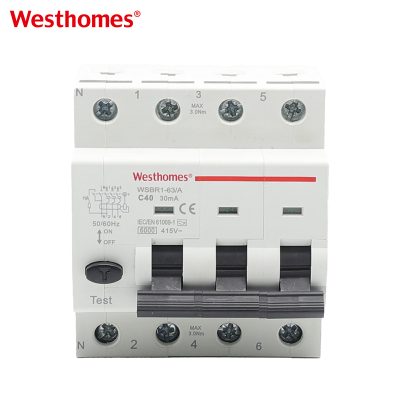
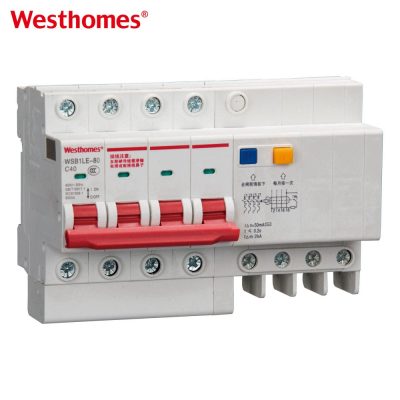
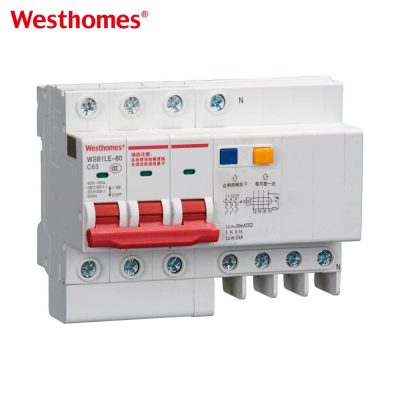
Three-Phase WSB1LE-80 3P RCBO | No Neutral Required
Protect three-phase equipment with WSB1LE-80 3P RCBO. 10-63A, 6kA, 30mA AC type earth leakage protection. Ideal for motors & industrial machinery.
Get quick appointment for technical support!

Protect three-phase equipment with WSB1LE-80 3P RCBO. 10-63A, 6kA, 30mA AC type earth leakage protection. Ideal for motors & industrial machinery.
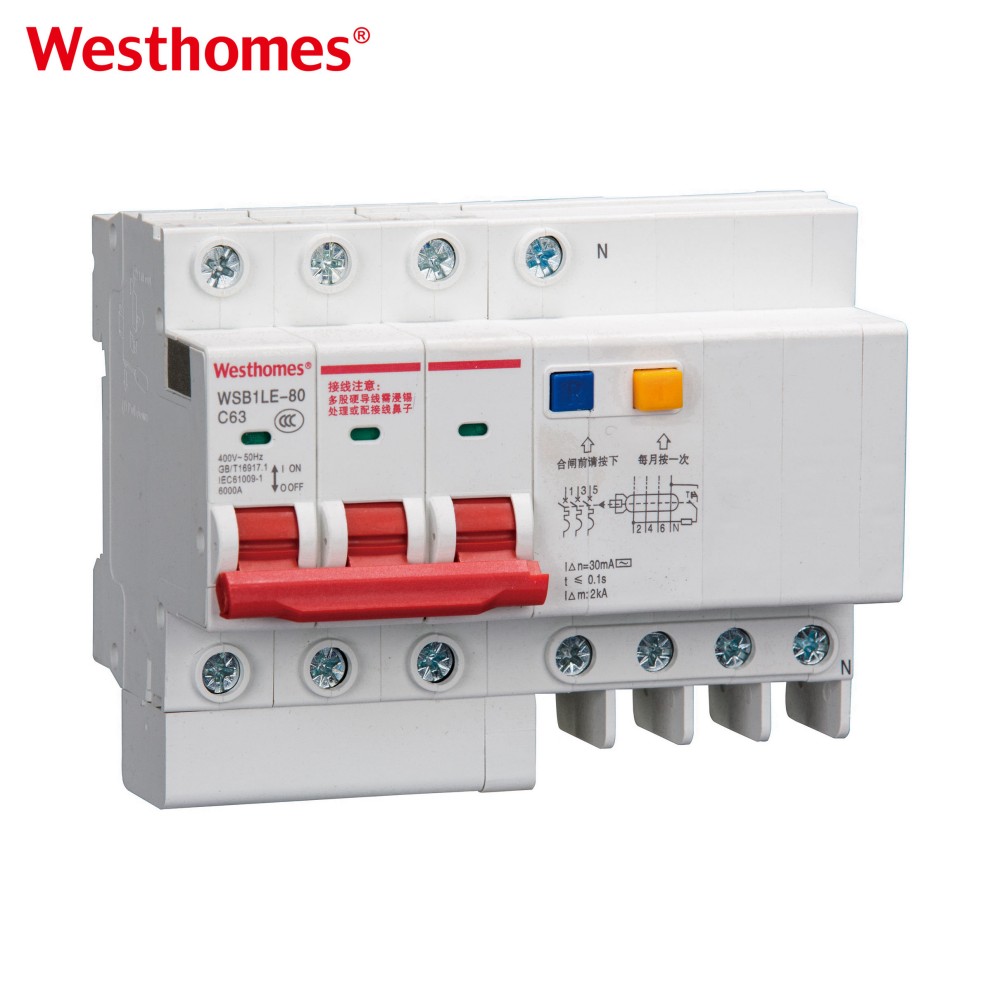
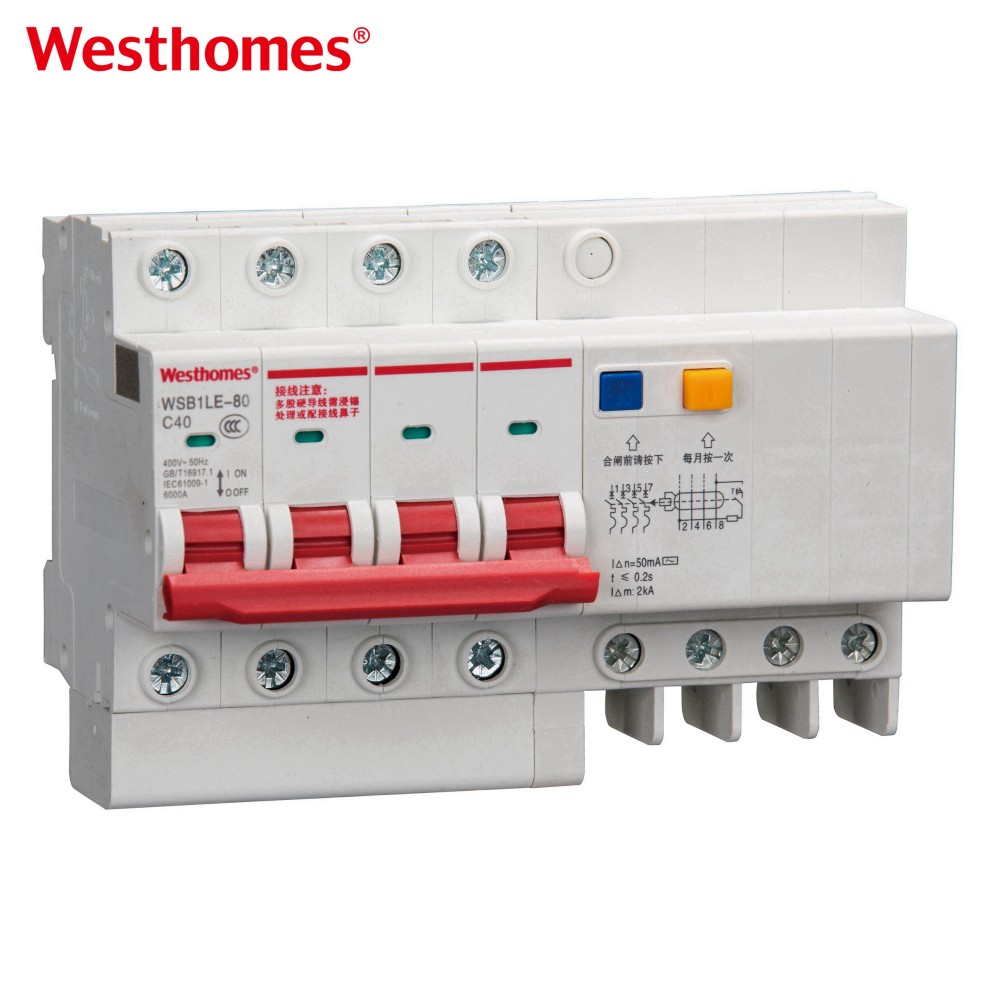
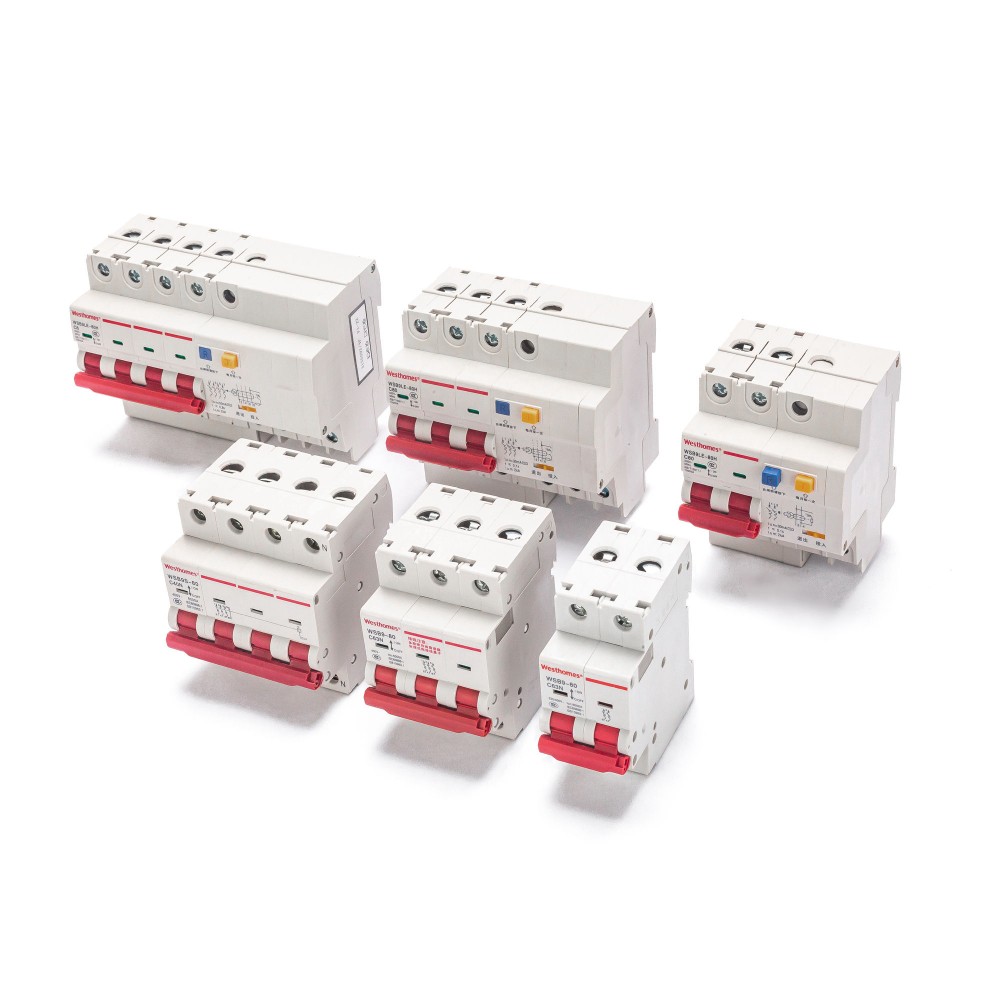



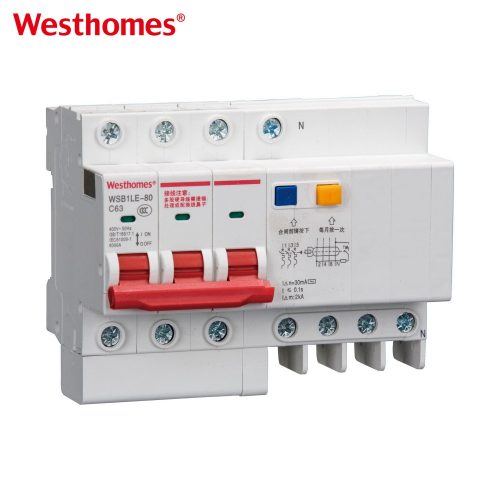
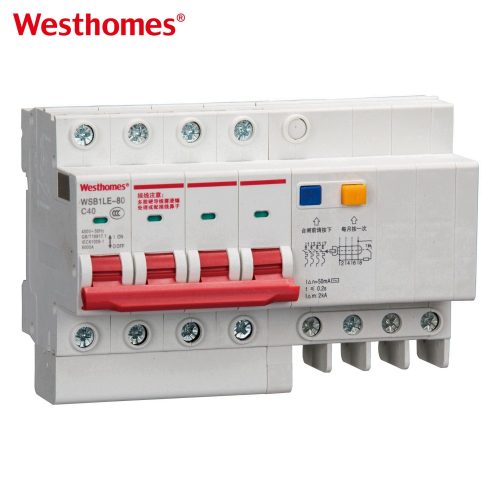



Protect three-phase equipment with WSB1LE-80 3P RCBO. 10-63A, 6kA, 30mA AC type earth leakage protection. Ideal for motors & industrial machinery.
The WSB1LE-80 3P RCBO is a high-performance residual current breaker designed for three-phase, three-wire systems (without neutral). It provides comprehensive protection for industrial machinery and commercial equipment by combining overload, short-circuit, and earth leakage detection in a single, compact unit.
Key Features:
Dedicated 3-Pole Design: Specifically designed for three-phase loads where a neutral conductor is not required, such as motors and pumps.
Triple Protection Function: Combines thermal (overload), magnetic (short-circuit), and residual current (earth leakage) protection in one device.
Wide Industrial Current Range: Available in 10A, 25A, 32A, 50A, and 63A ratings to accommodate various industrial equipment sizes.
30mA Leakage Sensitivity: Provides personnel protection in industrial environments where direct contact with live parts is possible.
Applications:
Industrial Motor Protection
HVAC Systems
Manufacturing Machinery
Agricultural Equipment
| Standard | IEC/EN61009-1 |
| Protection | Ground fault, Overcurrent and short circuit |
| Type of trip | Ground fault:Electronic/Magnetic |
| Overload and short circuit:Thermo-magnetic | |
| No.of poles | 1P+N,1 Module,Nline with disconnected |
| Type | AC,A |
| Rated current In | 6,10,16,20,25,32,40A |
| Rated sensitivity currents I△n | 10,30,100,300mA |
| Residual current off-time under l△n | ≤0.1s |
| Reted residual making and breaking capacity (I△m) | 500A(In≤50A) |
| Rated voltage Ue | 240V~ |
| Rated frequency | 50/60Hz |
| Rated breaking capacity | 6KA |
| Energy limiting class | 3 |
| Rated impulse withstand voltage(1.2/50)Uimp | 4,000V |
| Dielectric test voltage at ind.Freq.for 1min | 2kV |
| Thermal release characteristic | (1.13-1.45)x In |
| Magnetic release characteristic | B:(3-5)x In,C:(5-10)x In |
| Electrical life | 4,000 Cycles |
| Mechanical life | 10,000 Cycles |
| Contact position indicator | Yes |
| Protection degree | IP20 |
| Ambient temperature | -25℃~+40℃,Max.95%humidity |
| Terminal connection type | Cable/Pin-type busbar |
| Max.terminal size for cable | 16mm2 |
| Max.tightening torque | 2.5N.m |
| Installation | Mounting on 35mm DIN rail |
| Connection | From top and bottom |
| Selling Units | Single item |
| Quantity (pieces) | 1 – 1,000 | > 1,000 |
| Lead time (days) | 15 | To be negotiated |
| Type | MCB, AC MCB, RCBO |
| BCD Curve | B, C |
| Rated Frequency (Hz) | 50hz/60hz |
| Material | Copper |
| Application | Circuit-Breaking, Industrial, Households, Protection, Electric Power |
| Model Number | WRO1-63 |
| Rated Voltage | 220V/230V |
| Breaking Capacity | 6 kA |
| Mounting Type | Rail Mounting |
| Protection | LSI |
| Place of Origin | Zhejiang, China |
| Brand Name | Westhomes |
Here Type B/C refer to overcurrent trip curve types. The two have exactly the same leakage protection function, and the difference only lies in overcurrent trip characteristics:
The core difference lies in pole protection capability and breaking range:
The mainstream classification dimensions in the industry are as follows:
The mainstream rated current specifications for civil and commercial scenarios are: 6A, 10A, 16A, 20A, 25A, 32A, 40A, 50A, 63A, 80A, 100A, 125A. Among them, 16A, 20A and 32A are the most commonly used specifications for terminal sockets and lighting circuits, and 63A and above are mostly used for incoming main switches.
It can be identified through three dimensions (note the distinction between “Type B trip curve” and “Type B leakage type”):
There is no absolute superiority between the two, and adapting to the scenario is the core of selection:
1P+N RCBO is a residual current breaker with overcurrent with single-pole plus neutral structure. Structurally, only the live pole is equipped with a complete thermal-magnetic trip mechanism to undertake overload and short-circuit protection; the neutral pole has no protection function and only breaks synchronously. It also integrates a zero-sequence leakage detection module inside to realize leakage protection function. Compared with 2P products, it is smaller in size and lower in cost, and is widely used in single-phase terminal distribution circuits.
It can be used for emergency replacement, but is not recommended as a conventional solution:
Only use two of the poles to connect to the circuit and leave the idle pole unconnected. Core parameters such as rated current and breaking capacity must meet circuit requirements;
3-pole breakers are larger in size, so confirm whether the installation space in the distribution cabinet is sufficient;
It is strictly forbidden to connect two poles in parallel to increase rated current, which will cause trip failure due to uneven current distribution.
From the perspective of cost and installation compliance, breakers with corresponding pole number are preferred.
There is no absolute superiority, select according to circuit protection requirements:
The number of types varies by different classification dimensions:
* indicates a required field


 155 MB