Get quick appointment for technical support!

What Is an Isolation Switch?
Apr 08, 2026
In power systems and industrial distribution, safety is always a top priority. During equipment maintenance and system servicing, a device is required that can reliably isolate the power supply so that personnel and equipment can operate safely. An isolation switch is widely used to meet this demand. This article will help you gain a comprehensive understanding of isolation switches.
What Is an Isolation Switch?
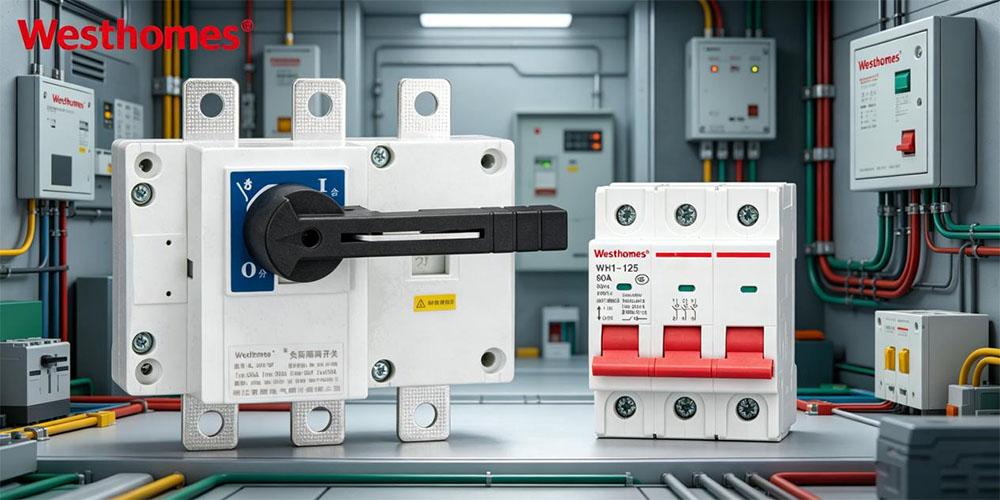
An isolation switch is an electrical device that is used to create a visible disconnection point in a circuit, and it is mainly used to isolate the power supply so that safety can be ensured during maintenance and inspection. It is typically operated under no load conditions and does not have arc extinguishing capability. It is widely used in power systems for equipment maintenance, circuit segmentation, and safe isolation, so that safe electrical operation can be ensured.
How Does an Isolation Switch Work?
It operates by using a mechanical mechanism that drives the opening and closing of contacts, so that the circuit can be connected or disconnected. When the handle or motorized mechanism is operated, the moving contact separates from the fixed contact, which creates a visible disconnection point and achieves electrical isolation.
It should be noted that since the isolation switch does not have arc extinguishing capability, it can only be operated when there is no load or when the current is very small. Its function is not to interrupt working current, but to provide a clear and reliable isolation state for maintenance, so that accidental energization can be prevented.
What Are the Applications of Isolation Switches?
Power systems
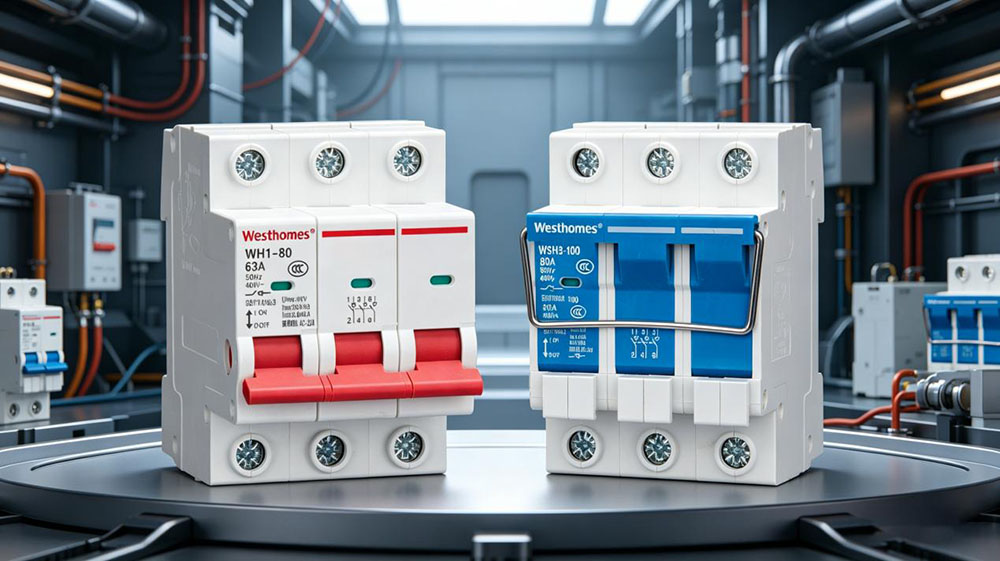
In power plants, substations, and transmission and distribution systems, isolation switches are used to disconnect equipment during maintenance, so that a visible disconnection point can be formed. They are usually used together with circuit breakers, so that after the circuit breaker interrupts the current, the isolation switch can be operated to achieve electrical isolation and ensure the safety of maintenance personnel.
Industrial power distribution systems
In factories and large scale power consumption environments, isolation switches are commonly used in distribution cabinets or distribution lines for equipment shutdown maintenance or circuit segmentation. A part of the system can be isolated from the grid so that the operation of other equipment is not affected.
Equipment maintenance and servicing
During routine maintenance of electrical equipment, isolation switches provide a reliable disconnection environment. Since a visible disconnection point is formed, operators can clearly confirm that the circuit has been disconnected, which reduces the risk of misoperation and electric shock.
Line segmentation and system switching
In complex power networks or multi circuit systems, isolation switches can be used for line segmentation or power source switching. With proper configuration, switching between different power sources can be achieved, so that flexibility and reliability of power supply are improved.
Components of an Isolation Switch
- Contact system which includes moving and fixed contacts so that the circuit can be connected and disconnected while a visible disconnection point is formed
- Operating mechanism which drives the contact movement and can be manual, electric, or pneumatic so that operation remains flexible and reliable
- Insulation part which is usually composed of insulators so that live parts are supported and isolated from ground while safe operation is maintained
- Conductive circuit which includes conductive rods and terminals so that current can be transmitted with good conductivity and low contact resistance
- Supporting structure which includes the base and frame so that all components are fixed and mechanical strength and stability are maintained
What Precautions Should Be Taken When Using an Isolation Switch?
Do not operate under load
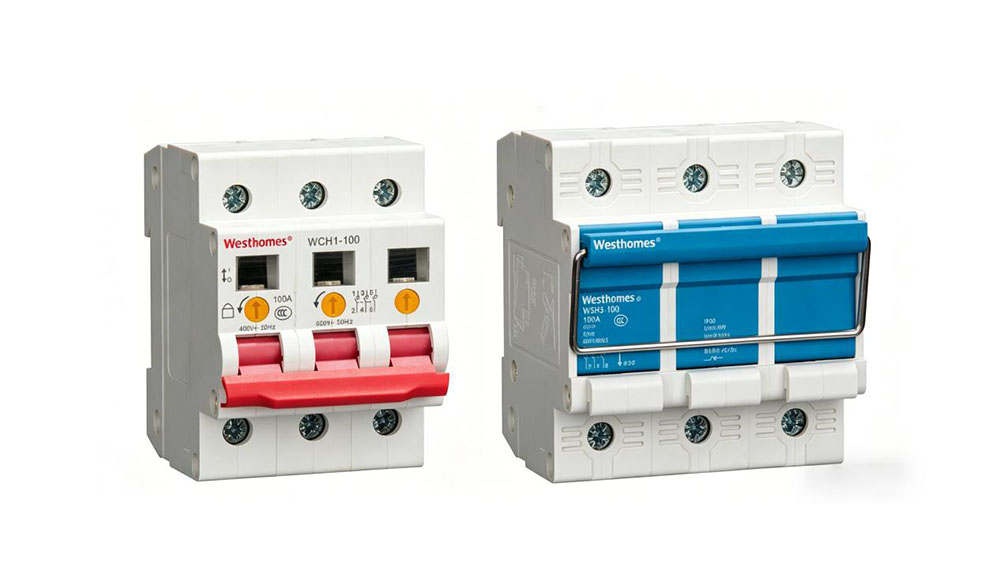
Since the isolation switch does not have arc extinguishing capability, it cannot interrupt load current or fault current, otherwise arcs may be generated and equipment damage or safety incidents may occur. The circuit breaker or load switch must be opened first so that the circuit is in a no current or very low current state before operation.
Follow the correct operating sequence
In power systems, the operating sequence must be followed carefully. The common practice is that the circuit breaker is opened before the isolation switch, and the isolation switch is closed before the circuit breaker, so that arcs and equipment impact can be avoided while system safety and reliability are improved.
Ensure the disconnection is clearly visible
After operation, it should be checked that the contacts are fully separated so that a clear visible disconnection point is formed. This feature allows maintenance personnel to confirm that the circuit is safely disconnected.
Prevent misoperation and unintended energization
Mechanical or electrical interlocking devices should be used so that incorrect operations can be avoided. During maintenance, warning signs or locking measures should be applied so that unintended closing actions do not occur.
How to Choose a Suitable Isolation Switch?
Select based on rated voltage and current
The isolation switch should be selected according to the rated voltage and operating current of the system so that its parameters meet or exceed actual requirements and stable operation can be ensured.
Select based on the operating environment
Different environments require different specifications. Indoor applications should use compact indoor types, while outdoor environments require products that have resistance to water, dust, and corrosion.
Select based on installation method
According to site conditions, horizontal, vertical, or side mounted structures can be selected. Sufficient operating space should also be considered so that operation and maintenance can be carried out conveniently.
Consider the operating method
Manual, electric, or remote control operation can be selected based on actual needs. For applications that require frequent operation or higher automation, electric or remote operation is more suitable.
Consider safety and interlocking functions
Products that include mechanical or electrical interlocking functions should be preferred so that misoperation can be reduced and overall system safety can be improved, especially in complex systems.
Conclusion
Although the isolation switch has a simple structure, it provides a reliable means of electrical isolation in power systems. When its working principle, applications, and operating requirements are clearly understood and appropriate selection is made, stable and safe system operation can be maintained.
WESTHOMES offers a wide range of isolation switches that can meet different application needs. You can visit the product page to find a suitable solution.
FAQs
Q: Can an isolation switch be operated under load?
No. Since it does not have arc extinguishing capability, operating under load may generate arcs, which can damage equipment and cause safety incidents.
Q: What is the difference between an isolation switch and a circuit breaker?
A circuit breaker can interrupt load current and fault current and has arc extinguishing capability, while an isolation switch is used to create a visible disconnection point for electrical isolation and cannot be operated under load.
Q: Why should the circuit breaker be opened before operating the isolation switch?
This is done so that the isolation switch is not operated when current is flowing, which prevents arc generation and improves safety for both equipment and personnel.
Q: How can it be confirmed that the isolation switch is fully open?
It can be confirmed by observing whether the contacts are completely separated and whether a clear visible disconnection point is formed, and indication devices can also be used if needed.
Q: Does an isolation switch require regular maintenance?
Yes. Contacts, insulators, and the operating mechanism should be inspected regularly, and dirt should be cleaned or faults should be handled in time so that safe and reliable operation can be maintained over the long term.

--- END ---
In this blog
Featured Articles
Get A Free Quote
