Introduction
The National Electrical Code (NEC), also known as NFPA 70, is one of the most widely recognized electrical installation standards in North America. It provides requirements for the safe design, installation, and maintenance of electrical systems, reduce electrical hazards such as fire, electric shock, and equipment damage.
Updated every three years by the National Fire Protection Association (NFPA), the NEC continuously evolves to address changes in electrical technology, new energy applications, and increasing safety expectations. With the rapid development of renewable energy systems, electric vehicle charging infrastructure, smart buildings, and sensitive electronic equipment, modern electrical systems require more advanced protection strategies than traditional installations.
The NEC 2026 edition introduces several updates that directly influence electrical protection design and equipment selection. These changes focus on improving workplace safety, strengthening fault protection, and maintaining electrical systems can safely support modern loads.
For circuit protection manufacturers, electrical engineers, contractors, and system integrators, understanding these updates is relevant for selecting suitable protective devices and designing systems that meet current safety expectations.
This article explores the key NEC 2026 changes related to circuit protection, including arc flash protection, surge protection, ground fault protection, arc fault detection, and the impact these requirements may have on low-voltage electrical system design.
What Is NEC 2026 and Why Does It Matter?
The National Electrical Code is not a product standard but an installation safety standard that defines minimum requirements for electrical systems. It covers a wide range of topics, including wiring methods, overcurrent protection, grounding, equipment installation, and electrical safety practices.
The purpose of NEC is to reduce electrical risks by maintaining that electrical installations are designed and installed according to recognized safety principles.
For low-voltage electrical systems, NEC plays an relevant role in determining how circuit protection devices should be selected, installed, and coordinated.
Why NEC Updates Are relevant for Circuit Protection
Electrical systems are changing rapidly. Traditional electrical loads such as lighting and motors are now being combined with advanced electronic equipment, energy storage systems, and renewable energy sources.
These modern applications create new challenges:
- Higher system complexity;
- More sensitive electrical equipment;
- Increased demand for continuous power availability;
- Greater requirements for fault detection and protection.
As a result, circuit protection devices must provide more than basic overload and short-circuit protection.
How NEC 2026 Influences Circuit Protection Strategies
The latest NEC updates continue to emphasize a more comprehensive protection approach. Instead of relying on a single protective device, modern electrical systems increasingly require multiple layers of protection.
For example:
- Circuit breakers protect against overloads and short circuits;
- Ground fault devices protect against leakage currents;
- Arc fault protection devices detect dangerous arcing conditions;
For low-voltage applications, this means engineers need to consider the complete protection system rather than selecting devices based only on rated current.
relevant factors include:
- Rated voltage;
- Rated current;
- Breaking capacity;
- Protection characteristics;
- Coordination between devices;
- Installation environment.
The Growing Importance of Modern Protection Devices
With NEC requirements becoming more focused on electrical safety, advanced protection devices are becoming increasingly relevant in residential, commercial, and industrial applications.
Common protection solutions include:
| Device | Main Protection Function |
|---|---|
| MCB | Overload and short-circuit protection |
| MCCB | Higher current and industrial protection |
| RCBO | Residual current and overcurrent protection |
| AFDD | Arc fault detection |
| SPD | Transient surge protection |
Understanding NEC 2026 changes allows electrical professionals to make better decisions when designing new installations or upgrading existing systems. By combining appropriate protective devices with correct installation practices, electrical systems can achieve higher safety, reliability, and long-term performance.
Expanded Arc Flash Hazard Warning Requirements

Need pricing? Click here to get a quote
Understanding Arc Flash Hazards in Electrical Systems
Arc flash is one of the most serious hazards in electrical installations. It occurs when electrical current flows through an unintended path between conductors or between a conductor and ground, creating a high-energy electrical arc.
Unlike a normal short circuit, an arc fault does not always produce extremely high current levels. In some cases, the fault current may be low enough that traditional overcurrent protection devices do not trip immediately, allowing the arc to continue and generate intense heat, pressure, light, and hazardous energy.
Arc flash incidents can cause severe injuries to electrical workers, including burns, hearing damage, eye injuries, and pressure-related trauma. In addition to personal safety risks, arc flash events may also damage switchgear, circuit breakers, cables, and other electrical equipment.
Because of these risks, modern electrical standards increasingly emphasize arc flash
NEC 2026 and Arc Flash Labeling Requirements
One of the relevant areas affected by NEC updates is electrical hazard identification. NEC Article 110.16 requires electrical equipment that may require examination, adjustment, servicing, or maintenance while energized to be marked with appropriate warning labels.
The purpose of these labels is to inform qualified personnel about potential arc flash hazards before they interact with energized equipment.
Arc flash labels typically include relevant safety information such as:
- Arc flash hazard warning;
- Available incident energy level;
- Arc flash boundary;
- Required personal protective equipment (PPE);
- Equipment identification information.
Why Arc Flash Labels Are Becoming More relevant
Modern electrical systems operate at higher power levels and contain more complex equipment than traditional installations. Distribution systems in factories, commercial buildings, data centers, and renewable energy facilities may contain significant stored electrical energy.
Without identification, workers may underestimate the potential hazard during maintenance activities.
Relationship Between NEC 2026 and NFPA 70E
Although NEC and NFPA 70E are closely related, they serve different purposes.
The NEC mainly focuses on electrical installation requirements, while NFPA 70E focuses on electrical safety practices for workers, including arc flash risk assessment, safe working distances, and PPE requirements.
Together, these standards create a more complete electrical safety approach:
- NEC ensures electrical systems are designed and installed correctly.
- NFPA 70E workers operate and maintain equipment safely.
Impact on Circuit Protection Device Selection
Arc flash risk is not determined only by labeling requirements. The selection and coordination of protective devices also directly influence the severity of an arc flash event.
A selected circuit breaker can reduce incident energy by disconnecting
relevant Circuit Breaker Factors for Arc Flash Reduction
1. Breaking Capacity
Circuit breakers must have sufficient interrupting capacity to safely clear available fault currents. If the breaking capacity is insufficient, the device may fail to interrupt the fault safely.
2. Trip Characteristics
The trip curve of a circuit breaker determines how quickly it responds to different fault conditions. Faster protection operation can reduce the duration of an arc fault and minimize released energy.
3. Protection Coordination
coordination between upstream and downstream protective devices prevents delays and improves system reliability. Poor coordination may cause upstream devices to trip slowly, increasing arc flash exposure time.
Role of MCCB in Arc Flash Protection
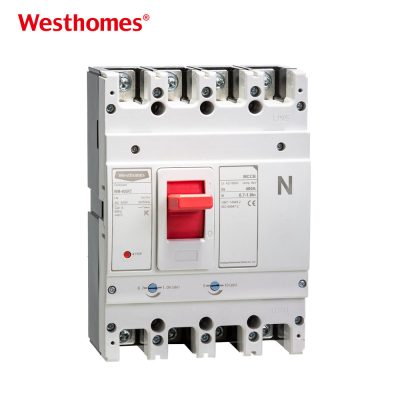
Molded Case Circuit Breakers (MCCBs) are widely used in commercial and industrial electrical systems where higher fault currents are expected.
Modern MCCBs may include:
- Adjustable thermal protection;
- Magnetic short-circuit protection;
- Electronic trip units;
- Selective coordination functions.
By selecting the correct MCCB settings and coordinating protection devices , engineers can reduce fault clearing time and improve electrical safety.
This is especially relevant in:
- Industrial plants;
- Large commercial buildings;
- Data centers;
- Renewable energy systems.
Practical Recommendations for NEC 2026 Compliance
To improve arc flash safety and meet updated requirements, electrical professionals should consider:
- Perform arc flash studies where required
- Install hazard labels
- Select suitable circuit protection devices
- Verify breaker settings and coordination
- Follow NFPA 70E safety procedures
Increased Importance of Surge Protection Devices (SPD)
Understanding the Role of Surge Protection in Modern Electrical Systems
Modern electrical systems contain an increasing number of sensitive electronic devices. Unlike traditional electrical loads such as motors and resistive heating equipment, modern electronic equipment often contains microprocessors, communication modules, and control circuits that can be easily damaged by transient overvoltage.
Surges caused by lightning strikes, utility switching operations, or internal electrical equipment can introduce sudden voltage spikes into electrical systems. Although these events usually last only a very short time, the energy they carry can damage components, shorten equipment lifespan, or cause unexpected system downtime.
As electrical installations become more dependent on digital control and automation, surge protection is no longer considered an optional accessory. It has become an relevant part of a complete electrical protection strategy.
NEC 2026 continues to emphasize the importance of protecting electrical systems against transient events, especially as buildings integrate more electronic equipment, renewable energy systems, and advanced electrical infrastructure.
NEC 2026 and Surge Protection Requirements
Surge protection requirements have become an increasingly relevant topic in NEC updates. One of the key areas is Article 230.67, which addresses surge protection requirements for certain dwelling unit services.
The purpose of these requirements is to reduce damage caused by transient voltage events entering electrical systems through service equipment.
Although surge protection requirements may vary depending on application and installation conditions, the overall direction of NEC updates is clear: electrical systems require stronger protection against transient overvoltage.
For engineers and contractors, this means surge protection should be considered during system design rather than added only after equipment failure occurs.
Why Surge Protection Is relevant for Circuit Protection Systems
Traditional circuit breakers are designed primarily for abnormal current conditions, such as:
- Overload;
- Short circuit;
- Excessive current flow.
However, circuit breakers cannot effectively protect equipment from fast transient voltage spikes.
A surge event is different from a current fault. It can occur even when the electrical current is within normal operating conditions.
For example: A lightning-induced surge may create a very high voltage spike without creating enough current to immediately trip a breaker.
Therefore, a complete protection system requires both:
- Overcurrent protection devices;
- Surge protective devices.
Types of Surge Protective Devices
Different SPD types are designed for different installation locations and protection levels.
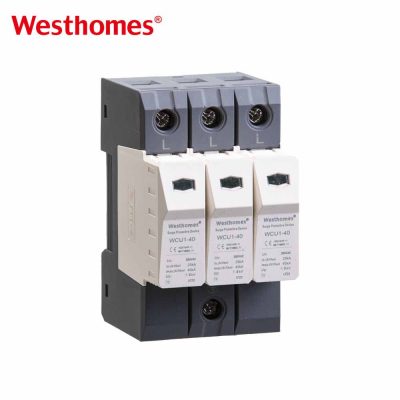
Type 1 SPD – Service Entrance Protection
Type 1 SPDs are typically installed at the service entrance and are designed to handle high-energy surge events, including partial lightning currents. They are commonly used in:
- Main distribution systems;
- Industrial facilities;
- Buildings with external lightning protection systems.
Type 2 SPD – Distribution Level Protection
Type 2 SPDs are commonly installed inside distribution panels and are widely used in commercial and industrial electrical systems. They protect downstream equipment from:
- Switching surges;
- Residual lightning effects;
- Internal electrical disturbances.
Type 3 SPD – Equipment-Level Protection
Type 3 SPDs are installed close to sensitive equipment and provide additional protection for electronic devices. Typical applications:
- Computers;
- Control systems;
- Communication equipment.
Key Parameters for SPD Selection
Selecting the correct SPD requires more than choosing a device based on voltage rating. Engineers should consider several relevant parameters.
| Parameter | Description |
|---|---|
| Maximum Continuous Operating Voltage (Uc) | Maximum voltage the SPD can withstand continuously |
| Voltage Protection Level (Up) | Residual voltage after surge discharge |
| Nominal Discharge Current (In) | Standard surge current capability |
| Maximum Discharge Current (Imax) | Maximum surge current the SPD can handle |
| Installation Location | Service entrance, distribution panel, or equipment level |
Coordination Between SPD and Circuit Breakers
SPD and circuit breakers serve different protection purposes but work together as part of a complete electrical safety system.
The circuit breaker protects against excessive current, while the SPD limits transient voltage.
coordination between SPD and upstream protection devices is relevant to provide reliable operation. relevant considerations include:
- Correct backup protection selection;
- Appropriate installation position;
- Short connection length;
- grounding arrangement.
Applications Where SPD Protection Is Critical
Residential Buildings
Modern homes contain more electronic devices than ever before: Smart appliances, Home automation systems, Charging equipment. SPD protect household electrical equipment from unexpected voltage surges.
Commercial Buildings
Office buildings often contain: Computer systems, Security systems, Communication networks. A surge event can cause significant equipment damage and business interruption.
Industrial Facilities
Industrial environments contain motors, automation systems, and control equipment that require reliable protection. SPD improve system availability and reduce unexpected downtime.
Renewable Energy Systems
Solar PV systems contain sensitive power electronics such as: Inverters, Monitoring systems, Control modules. SPD installation is relevant for protecting these components from lightning and switching surges.
WESTHOMES SPD Protection Solutions
WESTHOMES provides reliable surge protection solutions designed for modern low-voltage electrical systems. Our SPD products are designed to protect electrical equipment against transient overvoltage caused by lightning and switching operations.
Key features include:
- Multiple protection types available;
- Suitable for residential, commercial, and industrial applications;
- Reliable surge discharge performance;
- Compatible with modern low-voltage distribution systems.
Updates Affecting Ground-Fault Protection and Arc Fault Protection Requirements
Understanding Ground-Fault and Arc Fault Risks in Modern Electrical Systems
Modern electrical systems face different types of faults, and not all dangerous conditions can be detected by traditional circuit breakers.
Traditional overcurrent protection devices are mainly designed to respond to abnormal current levels, such as overloads and short circuits. However, some electrical hazards occur without creating enough current to trigger conventional protection devices.
Two relevant examples are:
- Ground faults;
- Arc faults.
Ground faults can create dangerous current paths through unintended grounding routes, increasing the risk of electric shock and electrical fires.
Arc faults, on the other hand, occur when electricity jumps across an unintended gap, creating high temperatures that can ignite surrounding materials.
Both conditions require specialized protection technologies beyond traditional breakers.
NEC 2026 and the Growing Importance of Ground-Fault Protection
Ground-fault protection has always been an relevant part of electrical safety requirements. NEC continues to expand the application of ground-fault protection to reduce the risk of electric shock and fire caused by leakage currents.
A ground fault occurs when current flows outside its intended circuit path, often due to:
- Damaged insulation;
- Moisture entering electrical equipment;
- Aging cables;
- Faulty equipment grounding.
Without protection, even a small leakage current can create a dangerous situation. Ground-fault protection devices are designed to detect imbalance between current flowing through the live conductor and the returning conductor, disconnecting the circuit before serious harm occurs.
RCCB and RCBO: Key Ground-Fault Protection Devices
RCCB (Residual Current Circuit Breaker)
RCCB is designed specifically for detecting residual current caused by leakage to earth. Its primary function is personal protection against electric shock and reducing fire risks caused by insulation failures.
However, RCCB does not provide overload or short-circuit protection by itself. It must be installed together with an overcurrent protection device such as an MCB or fuse.
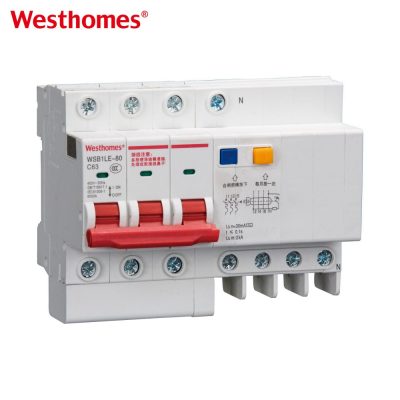
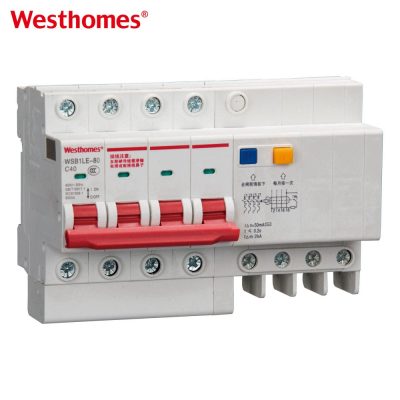
RCBO (Residual Current Circuit Breaker with Overcurrent Protection)
RCBO combines multiple protection functions into one device:
- Overload protection;
- Short-circuit protection;
- Residual current protection.
This makes RCBO an ideal solution for applications where space saving and comprehensive protection are required. Typical applications include: Residential distribution boards, Commercial buildings, Industrial control circuits, Public facilities.
AFCI and AFDD: Protecting Against Arc Faults
Arc faults are one of the most difficult electrical hazards to detect because they may occur without producing a large enough current to activate conventional breakers.
For example, a damaged cable may create intermittent arcing between conductors. The current level may remain below the trip threshold, but the generated heat can gradually damage insulation and start a fire.
What Is AFCI?
AFCI (Arc Fault Circuit Interrupter) is a protective device commonly used in North American electrical systems. It analyzes current waveform characteristics and detects abnormal patterns associated with dangerous arcing conditions.
What Is AFDD?
AFDD (Arc Fault Detection Device) performs a similar function by detecting electrical signatures caused by arc faults and disconnecting the circuit before the fault develops into a fire.
AFDD can detect different types of arc faults:
Series Arc Fault
Occurs when a loose connection or damaged conductor creates resistance and heat within a circuit.
Parallel Arc Fault
Occurs between two conductors or between a conductor and ground.
Why Traditional Circuit Breakers Cannot Replace AFDD
A standard circuit breaker operates mainly based on current magnitude. If the fault current is below the breaker trip level, the device may remain closed even though dangerous arcing is occurring.
AFDD uses advanced detection technology to identify abnormal electrical patterns rather than simply measuring current levels. This provides an additional layer of fire prevention, especially in environments where electrical wiring damage or aging is possible.
Impact of NEC 2026 on Protection Device Selection
With increasing emphasis on electrical safety, selecting protective devices based only on rated current is no longer sufficient. Engineers should evaluate:
| Factor | Importance |
|---|---|
| Rated current | Ensure normal operation |
| Breaking capacity | Safely interrupt faults |
| Residual current rating | Detect leakage conditions |
| Arc fault detection capability | Reduce fire risks |
| Coordination between devices | Improve system reliability |
Applications Requiring Advanced Fault Protection
Modern protection devices are increasingly used in:
| Application | Recommended Protection |
|---|---|
| Residential buildings | MCB + RCBO + AFDD |
| Commercial buildings | MCCB + RCBO + SPD |
| Industrial facilities | MCCB + AFDD + SPD |
| Data centers | MCCB + SPD + monitoring systems |
| Renewable energy systems | DC breaker + SPD + leakage protection |
WESTHOMES Ground Fault and Arc Fault Protection Solutions
WESTHOMES provides a range of low-voltage protection devices designed to improve electrical safety and reliability. Solutions include:
- RCBO for combined leakage and overcurrent protection;
- AFDD solutions for arc fault detection;
- MCB and MCCB for reliable overload and short-circuit protection.
By combining different protection technologies, electrical systems can achieve multiple layers of safety protection against different fault conditions.
How NEC 2026 Changes Affect Circuit Breaker Selection and Practical Compliance Guide
How NEC 2026 Influences Modern Circuit Breaker Selection
As electrical systems become more complex, selecting a circuit breaker is no longer simply a matter of matching the rated current with the load. Modern electrical designs must consider multiple factors, including fault levels, protection coordination, installation environment, and safety requirements.
The updates introduced in NEC 2026 further emphasize the importance of selecting protective devices that can provide reliable performance under different operating conditions.
A selected circuit breaker achieve several key objectives:
- Protect electrical conductors from overheating;
- Quickly disconnect abnormal conditions;
- Reduce equipment damage;
- Minimize electrical fire risks;
- Improve overall system reliability.
Key Factors for Circuit Breaker Selection Under NEC 2026
Rated Current (Ampere Rating)
The rated current of a circuit breaker determines the maximum continuous current it can carry under specified conditions. Selecting the correct current rating is essential:
- If the rating is too low, tripping may occur.
- If the rating is too high, the circuit may not receive adequate overload protection.
Engineers should calculate the expected load current first and select a breaker that provides protection while allowing normal operation. Typical considerations include: Load type, Continuous load requirements, Starting current, Future expansion.
Voltage Rating
The circuit breaker voltage rating must match or exceed the system voltage. Using a breaker with an incorrect voltage rating may affect insulation performance and interrupting capability.
Common low-voltage applications include: 120/240V residential systems, 208/240V commercial systems, 480V industrial systems.
Interrupting Rating (Breaking Capacity)
One of the most relevant factors in circuit breaker selection is interrupting rating. The breaker must be capable of safely interrupting the maximum available fault current at the installation point.
If the available fault current exceeds the breaker’s interrupting rating, the device may not safely clear the fault. This can result in: Equipment damage, Arc flash hazards, Increased safety risks. For industrial applications, MCCBs with higher interrupting capacities are commonly used.
Trip Characteristics and Protection Settings
Modern circuit breakers provide different trip characteristics depending on application requirements. Protection settings influence: Response speed, Fault clearing time, Equipment protection, Arc flash energy level.
For example:
- Thermal Protection: Protects against long-duration overload conditions.
- Magnetic Protection: Provides rapid response during short-circuit events.
- Electronic Trip Protection: Allows more precise adjustment and better coordination.
Selective Coordination Between Protective Devices
Selective coordination is an relevant consideration in modern electrical systems. The goal is to provide that only the protective device closest to the fault operates, while other parts of the system continue operating.
For example: If a fault occurs on a branch circuit, the branch breaker should trip first instead of shutting down the entire distribution system.
coordination improves: System availability, Maintenance efficiency, Safety during fault conditions.
Circuit Breaker Types and Their Applications
Different applications require different protection solutions.
| Circuit Breaker Type | Main Function | Typical Applications |
|---|---|---|
| MCB | Basic overload and short-circuit protection | Residential, lighting circuits, small commercial loads |
| MCCB | Higher current protection with adjustable settings | Industrial systems, large distribution panels |
| RCBO | Leakage + overload + short-circuit protection | Residential and commercial final circuits |
| AFDD | Arc fault detection | Fire-sensitive areas, modern buildings |
Practical Circuit Breaker Selection Guide
When selecting circuit protection devices, engineers should follow a systematic approach:
Step 1: Identify the Load Type
Determine whether the load is a resistive load, motor load, electronic equipment, or renewable energy system.
Step 2: Calculate Load Current
Calculate expected operating current and consider continuous load requirements.
Step 3: Determine Fault Conditions
Evaluate available short-circuit current, required breaking capacity, and protection level.
Step 4: Select Additional Protection
Depending on application, additional devices may be required like SPD, RCBO, AFDD, or monitoring devices.
Common Circuit Breaker Selection Mistakes
- Selecting Only Based on Current Rating: A breaker with the correct amp rating may still be unsuitable if its breaking capacity or protection characteristics do not match the system.
- Ignoring Future Load Expansion: Electrical systems often expand over time. Selecting devices without considering future requirements may result in expensive upgrades later.
- Poor Coordination Between Devices: Incorrect coordination can cause shutdowns and reduce system reliability.
WESTHOMES Circuit Breaker Solutions
WESTHOMES provides reliable low-voltage circuit protection products designed for residential, commercial, and industrial applications.
MCCB Solutions: Designed for higher current distribution systems, providing high breaking capacity, adjustable protection settings, and reliable overload/short-circuit protection.
MCB Solutions: Suitable for final distribution circuits requiring compact and reliable protection.
By selecting the right circuit breaker according to NEC 2026 principles, engineers can improve electrical safety, reduce operational risks, and build more reliable low-voltage systems.
Practical Compliance Guide for NEC 2026
Understanding NEC 2026 requirements is only the first step. The most relevant part is applying these requirements correctly during electrical system design, installation, and maintenance.
A compliant electrical system is not achieved by selecting a single protective device. Instead, it requires a complete protection strategy that considers equipment characteristics, operating conditions, fault risks, and future system requirements.
Conduct a Complete Electrical System Assessment
Before selecting protection devices, engineers should understand the complete electrical system, including: Power supply characteristics, Load types and operating conditions, Available fault current, Distribution structure, Environmental factors.
A detailed assessment determine: Required breaker rating, Protection coordination, Need for additional protection devices, Appropriate installation methods.
Use Layered Protection Strategies
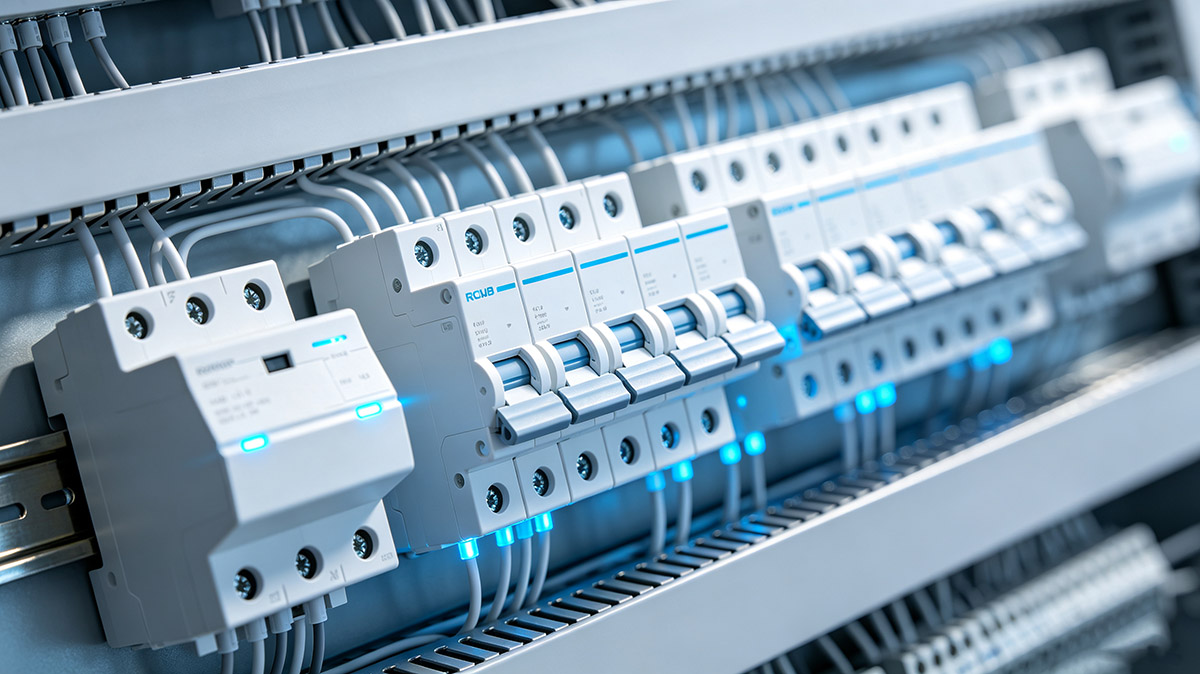
Need pricing? Click here to get a quote
Modern electrical safety relies on multiple protection layers rather than a single device. A typical low-voltage protection structure may include:
↓
Main MCCB
↓
SPD Protection
↓
Distribution Panel
↓
MCB / RCBO
↓
AFDD (where required)
↓
Final Loads
Each device performs a different protection function:
| Device | Protection Function |
|---|---|
| MCCB | Main overcurrent protection |
| SPD | Transient overvoltage protection |
| MCB | Branch circuit protection |
| RCBO | Leakage and overcurrent protection |
| AFDD | Arc fault protection |
Applications of NEC 2026-Oriented Circuit Protection
Different electrical environments have different protection requirements. The following examples show how modern protection devices can be applied.
Residential Applications
Residential electrical systems increasingly contain smart home devices, home charging equipment, entertainment electronics, and energy storage systems.
| Protection Device | Purpose |
|---|---|
| MCB | Basic circuit protection |
| RCBO | Shock and leakage protection |
| SPD | Protect electronic appliances |
| AFDD | Reduce electrical fire risks |
Commercial Building Applications
Commercial buildings often require higher reliability because electrical failures can affect business operations. Typical loads include office equipment, HVAC systems, security systems, and communication equipment.
Recommended protection:
- MCCB for main distribution;
- SPD for sensitive equipment;
- RCBO for final circuits;
- Monitoring systems for critical loads.
Industrial Applications
Industrial facilities usually have higher fault energy levels and more complex electrical networks. Common equipment includes motors, production machines, automation systems, and control panels.
| Device | Application |
|---|---|
| MCCB | Main power distribution |
| Motor protection devices | Motor circuits |
| SPD | Equipment protection |
| AFDD | Fire-risk areas |
Common Mistakes When Applying NEC 2026 Requirements
- Selecting Circuit Breakers Only Based on Current: Many users select breakers only according to load current while ignoring short-circuit level, breaking capacity, and coordination requirements.
- Ignoring Surge Protection: Circuit breakers cannot protect sensitive electronics from transient voltage spikes. Without SPD protection, equipment may experience component damage, reduced lifespan, and unexpected failures.
- Lack of Regular Inspection and Maintenance: Even selected protection devices require regular inspection including checking terminal connections, testing protection functions, inspecting aging components, and reviewing system changes.
- Using Outdated Protection Methods: Modern electrical systems require more advanced protection than traditional breakers alone. Ignoring technologies such as RCBO, AFDD, and SPD may leave electrical systems vulnerable to modern risks.
Frequently Asked Questions (FAQ)
What is the main purpose of NEC 2026 updates?
NEC 2026 updates aim to improve electrical safety by addressing new technologies, increasing protection requirements, and reducing electrical hazards.
Does NEC 2026 require replacing existing circuit breakers?
Not necessarily. Existing systems may continue operating if they meet applicable requirements. However, upgrades may be recommended when adding new equipment or improving safety levels.
Can a circuit breaker prevent all electrical fires?
No. Circuit breakers protect against overcurrent conditions but cannot detect every hazard, such as certain arc faults or transient surges.
Why is AFDD becoming more relevant?
AFDD provides additional protection by detecting dangerous arc conditions that traditional breakers may not recognize.
What protection devices should be used together?
A complete system may include: MCCB for main protection; MCB for branch circuits; RCBO for leakage protection; SPD for surge protection; AFDD for arc fault protection.
How often should electrical protection systems be inspected?
Inspection frequency depends on the application, environment, and local regulations. Industrial systems usually require more frequent inspections than residential installations.
How can businesses improve electrical safety?
Businesses can improve safety by: Selecting suitable protection devices; Performing regular maintenance; Training electrical personnel; Updating outdated systems.
Conclusion
The NEC 2026 updates reflect the changing requirements of modern electrical systems. As electrical installations become more intelligent and complex, traditional protection methods alone are no longer enough to address all potential hazards.
A reliable electrical protection strategy requires a combination of selected circuit breakers, surge protection devices, ground-fault protection, and arc fault detection technologies.
By applying a layered protection approach and following updated electrical safety practices, engineers and building owners can improve system reliability, reduce fire risks, and create safer electrical environments.
For more information on reliable circuit protection solutions, please contact us.