Get quick appointment for technical support!

How to Protect Electrical Systems in Damp Environments
Aug 01, 2026
Water and electricity do not mix. But many electrical installations must operate in damp or wet conditions by necessity: outdoor substations, water treatment plants, agricultural facilities, food processing lines, and marine environments. The challenge is not avoiding moisture entirely. It is selecting equipment and enclosures that function reliably despite it.
How Moisture Damages Electrical Equipment
Moisture causes three distinct types of damage to low voltage electrical systems. Each requires a different protective approach.
Corrosion of Contacts and Terminals
Humidity condenses on metal surfaces when the ambient temperature drops below the dew point. Over time, the combination of moisture and oxygen corrodes copper contacts and steel terminals. The corrosion layer increases contact resistance, which generates heat during normal operation. The heat accelerates further corrosion. Eventually the connection fails or the insulation at the terminal melts.
Copper busbars develop a green patina. Steel screws rust. Aluminum conductors oxidize into a white powder that acts as an electrical insulator. In each case, the connection degrades silently until it fails under load.
Tracking and Creepage
Tracking occurs when moisture combined with surface contamination creates a conductive path across insulating materials. A small leakage current flows along the damp surface, carbonizing the insulation material over time. The carbonized track becomes permanently conductive, and the leakage current grows until it reaches a level that can sustain an arc.
Creepage is the path that leakage current takes along the surface of an insulator. In dry conditions, the insulator provides adequate creepage distance. In damp conditions, condensation bridges the creepage path and reduces the effective insulation.
Reduced Dielectric Strength
Air is a natural insulator, but moist air is a much weaker insulator. When humidity saturates the air inside an enclosure, the breakdown voltage between conductors drops. Clearances that are perfectly safe in dry air suddenly become potential flashover points in saturated air. This is particularly dangerous in equipment that operates at higher voltages, such as the incoming terminals of a 690 V circuit breaker.
Enclosure Protection Ratings
The first line of defense is the enclosure. The IP (Ingress Protection) rating system defines how well an enclosure resists solid objects and water.
| IP Rating | Protection Level | Suitable For |
| IP20 | Protected against solid objects > 12.5 mm, no water protection | Indoor dry environments only |
| IP43 | Protected against solid objects > 1 mm, water spray up to 60° from vertical | Indoor areas with occasional splashing |
| IP55 | Dust protected, water jets from any direction | Outdoor installations with weather exposure |
| IP65 | Dust tight, water jets from any direction | Outdoor and washdown environments |
| IP67 | Dust tight, immersion up to 1 meter | Temporary submersion, marine environments |
Selecting the right IP rating depends entirely on your specific environment. An outdoor distribution board in a temperate climate may function perfectly at IP55. That same board installed at a coastal site with salt spray and frequent rain will need IP65. A food processing line washed down daily with high pressure hoses requires IP65 or higher, plus specialized materials that resist harsh cleaning chemicals.
Effective Condensation Management
An enclosure with a high IP rating seals moisture out, but it also seals moisture in. Every enclosure breathes as its internal components heat and cool. Warm air inside the enclosure expands and escapes through the seals. When the enclosure cools, it draws outside air back in. If that outside air is humid, condensation will form on the coldest internal surfaces.
Drainage and Ventilation
A drain hole at the lowest point of the enclosure allows accumulated water to escape. This hole must be small enough to maintain the IP rating but large enough to allow water to drain freely. Some advanced enclosures include a breather drain that opens under the weight of water and closes when dry.
Ventilation reduces internal condensation by equalizing the temperature and humidity between the inside and outside of the enclosure. However, a ventilated enclosure cannot achieve a high IP rating, so this approach is strictly limited to environments where heavy dust and water spray are not present.
Anti Condensation Heaters
A small resistive heater placed inside the enclosure raises the internal temperature a few degrees above the ambient dew point. This simple addition prevents condensation from forming on internal surfaces. The heater runs continuously and consumes only a few watts of power.
These heaters are incredibly common in outdoor enclosures where night time cooling would otherwise produce heavy condensation every single morning. A thermostat or humidistat controls the heater, activating it only when conditions approach the dew point.
Component Selection for Damp Environments
While the enclosure protects the internal components, the components themselves must be able to tolerate the conditions that the enclosure cannot fully eliminate.
Circuit Breakers and Switchgear
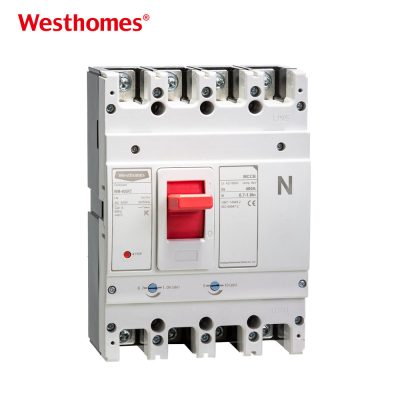
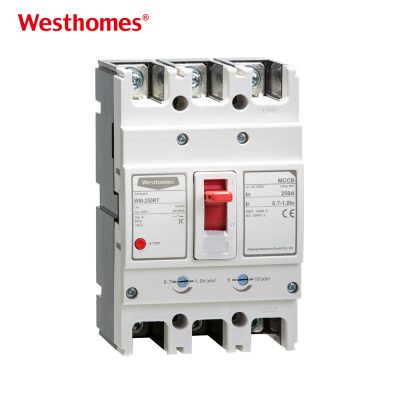
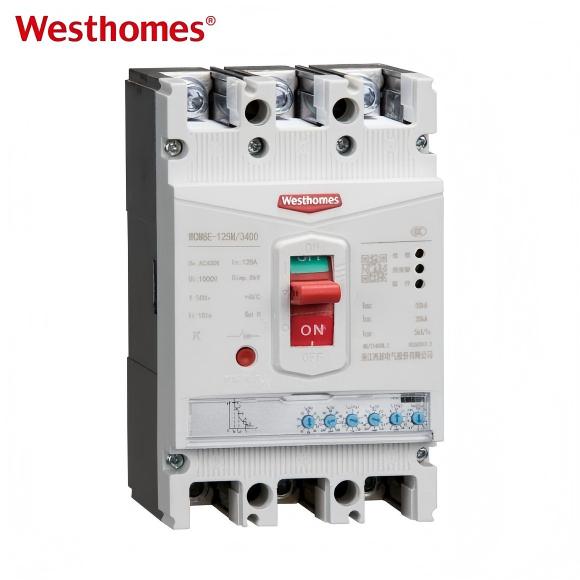
Moulded case circuit breakers designed for damp environments use highly corrosion resistant terminals, typically made of tin plated copper or stainless steel. Their operating mechanism is completely sealed against dust and moisture ingress. Additionally, the case material is flame retardant and does not absorb moisture that would otherwise reduce its dielectric strength.
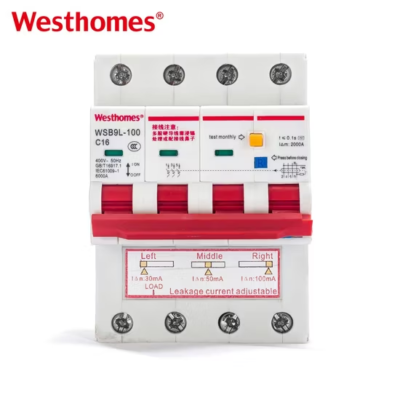
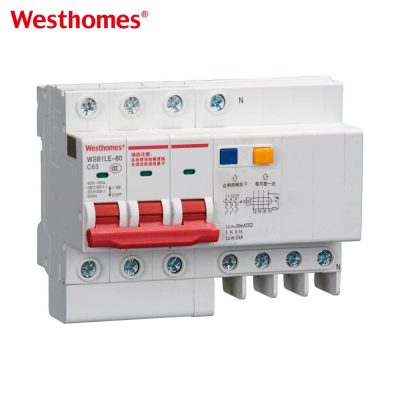
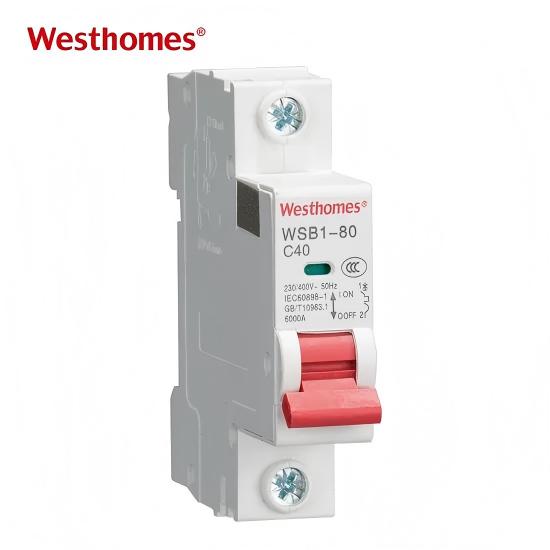
Miniature circuit breakers meant for outdoor use should always be installed in distribution boards with an adequate IP rating. Standard units are not designed for direct exposure to moisture. Because the humidity level inside an enclosure may still be elevated, selecting breakers with silver alloy contacts will resist corrosion far better than standard copper contacts.
Contactors and Relays
Contactors installed in damp environments should feature sealed coils that resist moisture absorption. A coil that absorbs moisture will develop internal shorted turns, which increases current draw and causes severe overheating. When this happens, the contactor may fail to close entirely or may hum loudly during operation.
Auxiliary contacts should be gold plated for low level switching in damp conditions. Standard silver contacts develop a restrictive sulfide layer in high humidity that increases contact resistance. Gold plating entirely prevents this layer from forming.
Cable Glands and Sealing
Every cable entry into an enclosure is a potential path for moisture. Cable glands must perfectly match the IP rating of the enclosure and must be properly tightened onto the cable sheath. Any unused gland openings must be completely blanked off with correctly rated plugs.
Cables entering from below reduce the risk of water running along the cable directly into the gland. A cable entering from above forms a natural path for water to follow. Where top entry is unavoidable, you should create a drip loop in the cable just before the gland to prevent water from reaching the seal.
The Importance of Periodic Inspection
Damp environment installations require much more frequent inspection than dry indoor setups. Conducting a thermal imaging survey every six months will detect hidden hot spots at corroded connections well before they fail.
A visual inspection of enclosure seals and gland tightness catches physical deterioration early. Finally, taking contact resistance measurements at key terminals provides a baseline that you can track over time.
Your ultimate goal is to find the problem while it is still a routine maintenance issue, rather than waiting for it to become a costly power outage.
Conclusion
Protecting your electrical systems from moisture is an ongoing process that requires the right combination of properly rated enclosures, smart condensation management, and corrosion resistant components.
By understanding how moisture attacks your equipment and implementing these proven protective strategies, you can significantly extend the lifespan of your electrical installations and prevent catastrophic failures.
Do not leave your critical systems exposed to the elements. Review your current installations, upgrade your enclosures, and source the right components for your environment.

--- END ---
In this blog
Featured Articles
Get A Free Quote