Get quick appointment for technical support!

How to Reset a Tripped Circuit Breaker Safely
May 12, 2026
Introduction
A tripped circuit breaker is something most people will experience at some point, whether at home, in an office, or in an industrial facility. Sometimes it happens suddenly after plugging in too many devices. Other times, it may be caused by a short circuit or an electrical fault somewhere in the system.
For many people, the first reaction is simply to push the breaker back on as quickly as possible. But in reality, resetting a breaker without understanding why it tripped can create bigger safety risks and even damage electrical equipment.
A circuit breaker trips for a reason. It is designed to protect the circuit, wiring, and connected devices from overloads and faults. Knowing how to reset it correctly and safely is just as important as knowing how the breaker itself works.
Why Does a Circuit Breaker Trip?
Before resetting a breaker, it is important to understand why it tripped in the first place. In most situations, the breaker is reacting to an abnormal electrical condition.
Common causes of tripping
- Circuit overload caused by too many devices running at the same time
- Short circuit caused by damaged wiring or faulty equipment
- Ground fault or leakage current
- Defective appliances connected to the circuit
- Temporary power fluctuations or electrical faults
If a breaker trips repeatedly, the issue should never be ignored. Frequent tripping is usually a warning sign that something in the electrical system needs inspection.
How to Reset a Tripped Circuit Breaker Safely
Resetting a breaker is usually a simple task, but safety should always come first. Before turning the power back on, it’s important to understand why the breaker tripped in the first place.
A breaker normally trips to protect the circuit from overloads, short circuits, or electrical faults. Ignoring these warning signs and resetting the breaker repeatedly without checking the cause may lead to equipment damage or even electrical hazards. Taking a few extra moments to reset the breaker properly can help keep both the electrical system and the people around it safe.
Step 1: Turn Off Connected Devices
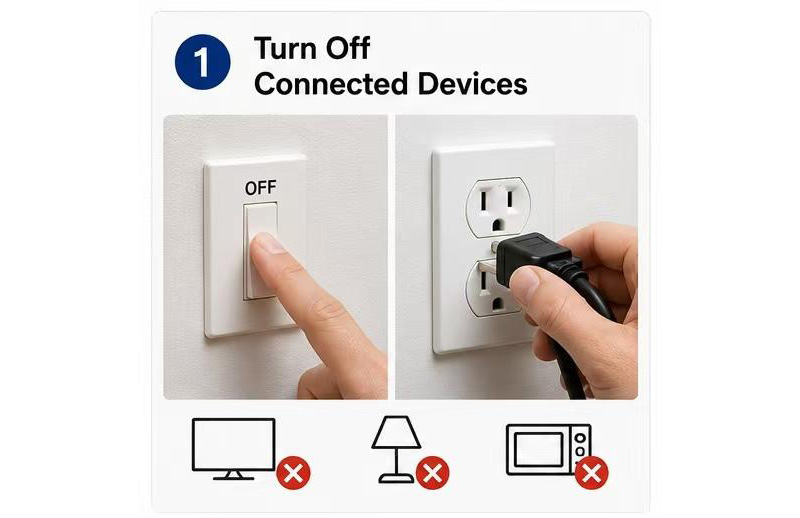
Before touching the breaker, switch off or unplug the appliances connected to the affected circuit. This helps reduce the load when power is restored and lowers the risk of immediate retripping.
Step 2: Locate the Tripped Breaker
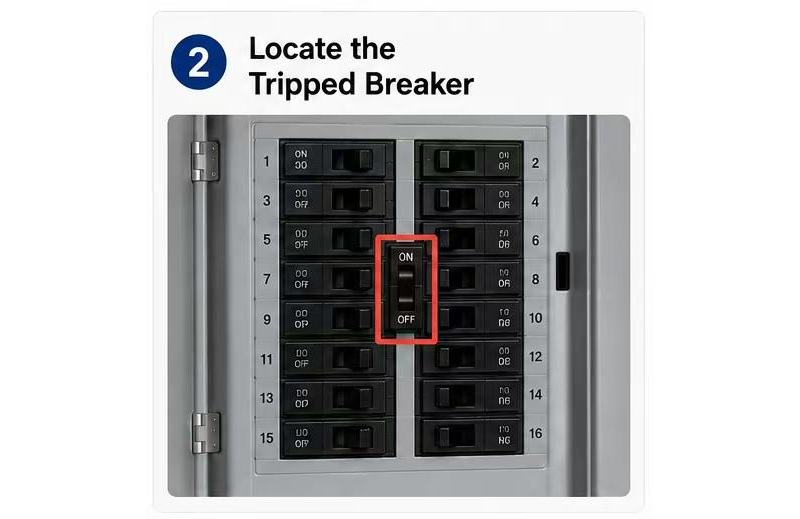
Open the distribution panel and identify the breaker that has tripped. In most panels, the breaker handle will sit between the ON and OFF positions.
Step 3: Fully Switch It OFF First
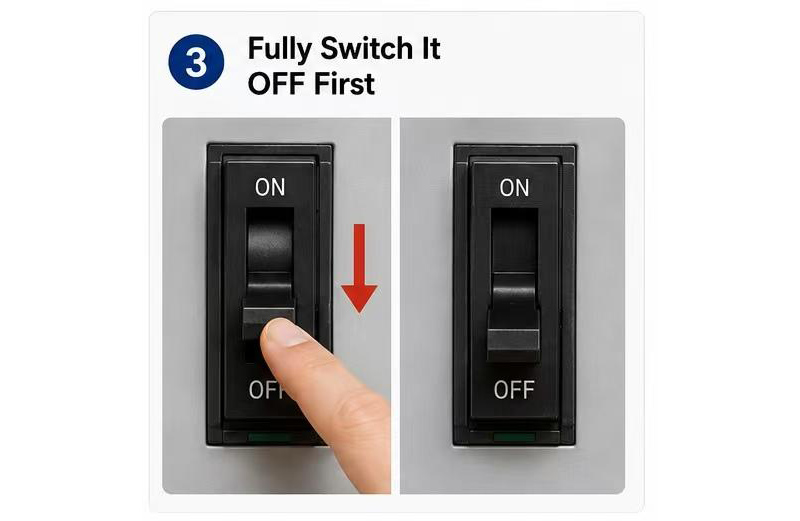
Before resetting, push the breaker fully to the OFF position. Many people skip this step, but most breakers require a complete reset before they can be switched back on properly.
Step 4: Reset the Breaker
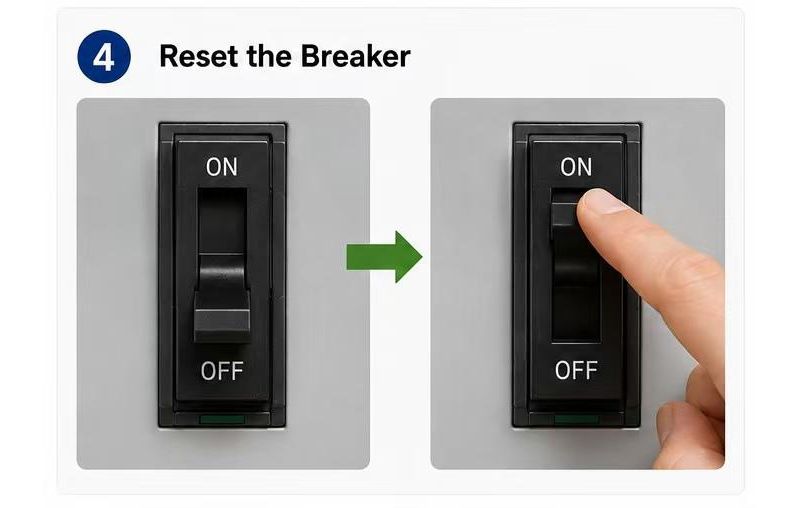
After moving it fully OFF, switch the breaker back to the ON position. If the breaker stays on normally, the power should be restored.
Step 5: Observe the System Carefully
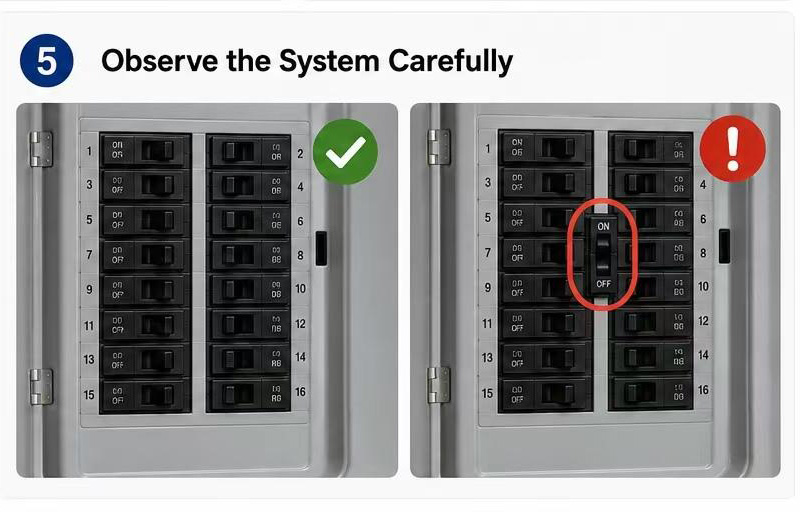
If the breaker trips again immediately, do not continue resetting it repeatedly. This usually indicates an ongoing fault that requires professional inspection.
Mistakes People Commonly Make
Many breaker problems actually become more serious because of incorrect handling after a trip. In many cases, the breaker itself is doing its job correctly by warning you that something is wrong in the circuit. The problem starts when people ignore the warning signs or try to restore power too quickly without checking the real cause.
Repeatedly Resetting Without Checking the Cause
If a breaker keeps tripping, repeatedly forcing it back on can overheat wiring, damage connected equipment, or even create a fire risk. A breaker normally trips because the circuit is overloaded or because there is an electrical fault somewhere in the system. Simply resetting it again and again does not solve the actual problem.
For example, if several high-power appliances such as heaters, microwaves, or air conditioners are running on the same circuit, the breaker may trip due to overload. If the load is not reduced before resetting, the breaker will likely trip again almost immediately. In more serious cases, hidden wiring faults or damaged appliances may be the real cause.
Ignoring Burn Smells or Heat
A burnt smell, unusual heat, buzzing sound, or discoloration around the breaker panel should never be ignored. These signs may indicate loose wiring, damaged insulation, arcing, or internal breaker failure. Continuing to reset the breaker under these conditions can be dangerous.
For instance, if the breaker panel feels unusually hot to the touch or you notice a burnt plastic smell, the safest action is to stop immediately and disconnect the power if possible. This type of issue usually requires inspection by a qualified electrician rather than a simple reset.
Using the Wrong Breaker Size
Some people try to stop nuisance tripping by replacing the original breaker with a larger one. This is extremely dangerous because the breaker is designed to match the safe current capacity of the wiring. Installing an oversized breaker may prevent normal tripping, but it also removes the protection the circuit was designed to have.
For example, replacing a 20A breaker with a 40A breaker on the same wiring may allow the cable to carry more current than it was designed for. The breaker may no longer trip in time during overload conditions, increasing the risk of overheated wires and electrical fires.
When Should You Call an Electrician?
Some breaker trips are simple overload issues, but others may indicate more serious electrical faults.
You Should Contact a Professional If:
- The breaker trips repeatedly
- There are burning smells or visible damage
- Sparks appear near the panel
- The breaker feels loose or overheated
- You are unsure about the cause of the fault
Electrical safety should never rely on guesswork.
Frequently Asked Questions (FAQ)
Q1: Is it safe to reset a tripped breaker?
Yes, but only after checking that there are no obvious faults or damaged equipment connected to the circuit.
Q2: Why does my breaker trip again immediately?
This usually indicates an ongoing overload, short circuit, or equipment fault that still exists in the system.
Q3: Can I keep resetting the breaker until it works?
No. Repeated resetting without fixing the cause can be dangerous and may damage the electrical system.
Q4: What should a tripped breaker look like?
Most breakers will stay in the middle position between ON and OFF.
Q5: When should I replace a breaker?
If the breaker cannot reset properly, overheats, feels loose, or trips without a clear reason, it may need replacement.
Conclusion
Resetting a tripped circuit breaker may seem simple, but doing it safely is extremely important. A breaker trips to protect the system, and understanding the reason behind the trip is always the first step before restoring power.
By following proper reset procedures and paying attention to warning signs, users can reduce safety risks, avoid equipment damage, and maintain a more reliable electrical system.

--- END ---
In this blog
Featured Articles
Get A Free Quote
