Get quick appointment for technical support!

How to Find an OEM Circuit Breaker Factory for Your Brand
Jun 17, 2026
If you’re asking how do I find a factory to make circuit breakers under my own brand, you’re already asking the right question, but the process trips up more buyers than it should.
Many buyers who set out to source private-label circuit breakers spend the first several weeks chasing dead ends: they find a listing on a sourcing platform, get a fast response, request a sample, and then discover the supplier is a trading company with no in-house testing capability and certifications that don’t match the actual product. By then, weeks are gone and nothing is closer to a launch-ready product.
Sourcing an OEM circuit breaker factory is a structured process, not a keyword search. You need to know where to look, what documentation proves a factory is legitimate, how OEM programs actually work, and what your obligations are once your brand name appears on the product.
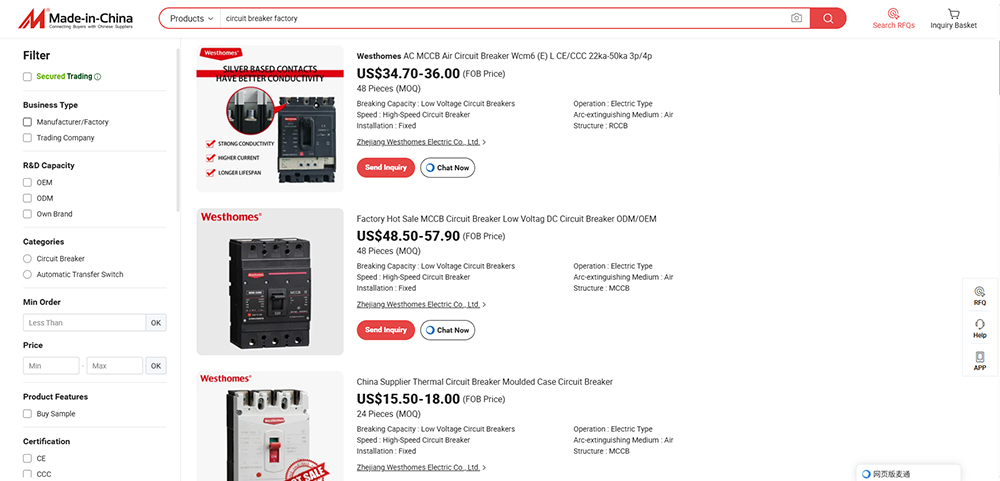
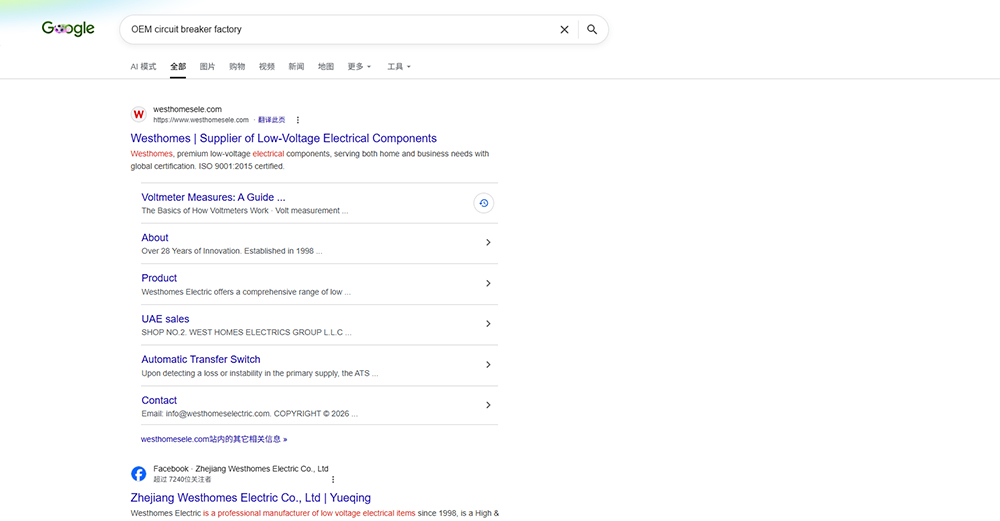
Westhomes (Zhejiang Westhomes Electric Co., Ltd., a factory-direct, multi-certified low-voltage electrical manufacturer purpose-built for private-label partnerships) is one example of the standard to look for. Use that model as your reference point throughout this process.
By the end of this guide, you’ll know exactly where to find qualified OEM factories, what to ask before signing anything, and how to protect yourself legally and contractually from day one.
How Do I Find a Factory to Make Circuit Breakers Under My Own Brand, Sourcing Platforms and Starting Points
Sourcing platforms worth your time
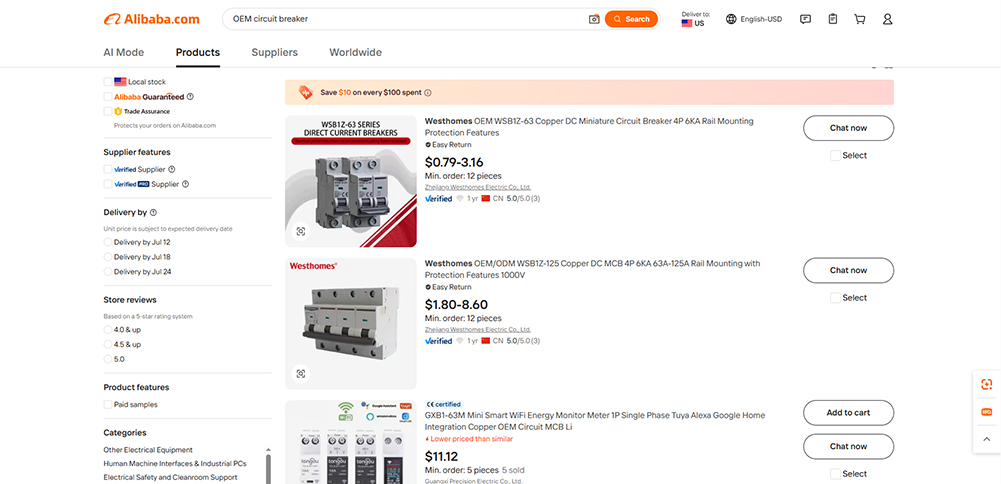
Alibaba, Made-in-China, and Global Sources are the most practical starting points for locating OEM circuit breaker factories. These platforms surface a high volume of suppliers quickly, but the critical filter is distinguishing between a factory listing and a trading company listing. Factories show manufacturing certifications, in-house testing equipment, and their own export documentation.
Trading companies repackage product from third-party manufacturers, which means they have no direct control over quality, production consistency, or certification accuracy.
“OEM/ODM” badges on a supplier profile are a starting point, not a qualification. They tell you the supplier claims the capability; your job is to verify it. Treat every initial response as the beginning of a vetting process, not a confirmation of legitimacy.
China vs. other manufacturing regions
China dominates private-label and contract manufacturing for low-voltage circuit breakers for clear structural reasons: decades of manufacturing scale and deep component supply chains translate directly into competitive factory-direct pricing. India has credible manufacturers with OEM capability.
Europe offers high-compliance, highly reputable production from established names, but typically at higher cost structures and longer lead times that can be difficult to absorb for launch-stage private-label programs.
For most US-based brand owners, China is the practical default, provided the vetting is done correctly. The risk isn’t the country of origin; it’s the shortcuts buyers take when they skip the vetting process.
How to tell a real factory from a middleman
The practical signals are straightforward: an in-house testing center, ISO 9001 certification, their own export documentation, and a clear willingness to schedule a factory audit. Vertically integrated manufacturers handle R&D, production, and compliance under one roof.
That level of integration, where a single facility manages component sourcing, production, in-house testing, and multi-market certification, is the benchmark for what a legitimate OEM partner looks like. If a prospective factory pushes back on audit requests or can’t produce its own type test certificates on short notice, that’s your answer.
Certifications Your OEM Circuit Breaker Factory Must Hold for Your Target Market
What the US market actually requires
UL 489 listing is the primary compliance standard for molded-case circuit breakers sold in the US market. For supplementary protectors, UL 1077 is the applicable standard. CE, CB, or IEC certifications alone are not substitutes for UL listing when you’re selling into the US: missing the right listing means your product will fail inspections and insurance underwriting.
If you’re distributing across the US-Canada border, CSA certification is also commonly required. Don’t treat international certifications as interchangeable with North American market-access marks; they serve different regulatory frameworks. For a helpful walkthrough of the different marks and how they compare, see the ultimate guide to circuit breaker certifications.
International certification pathways
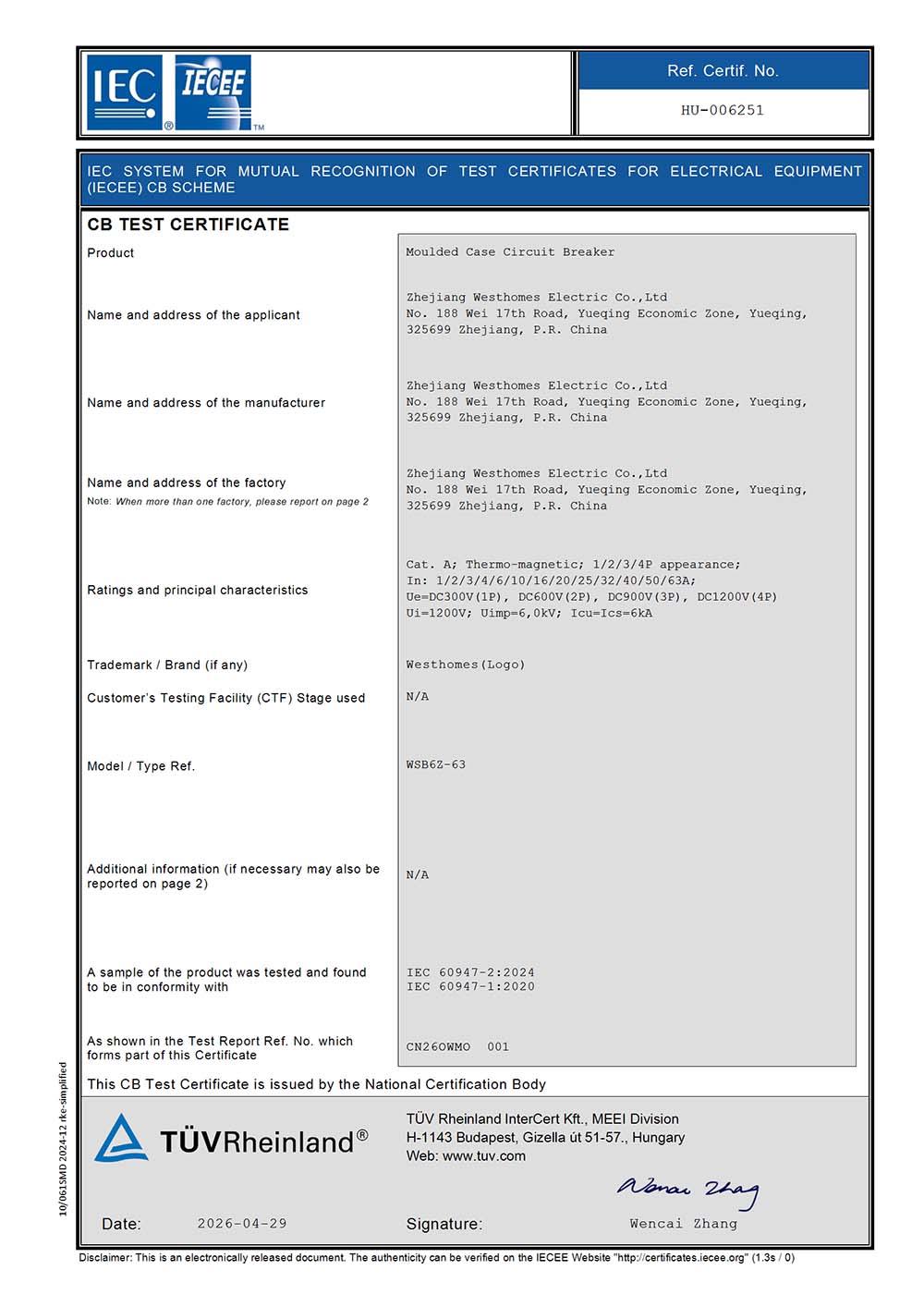
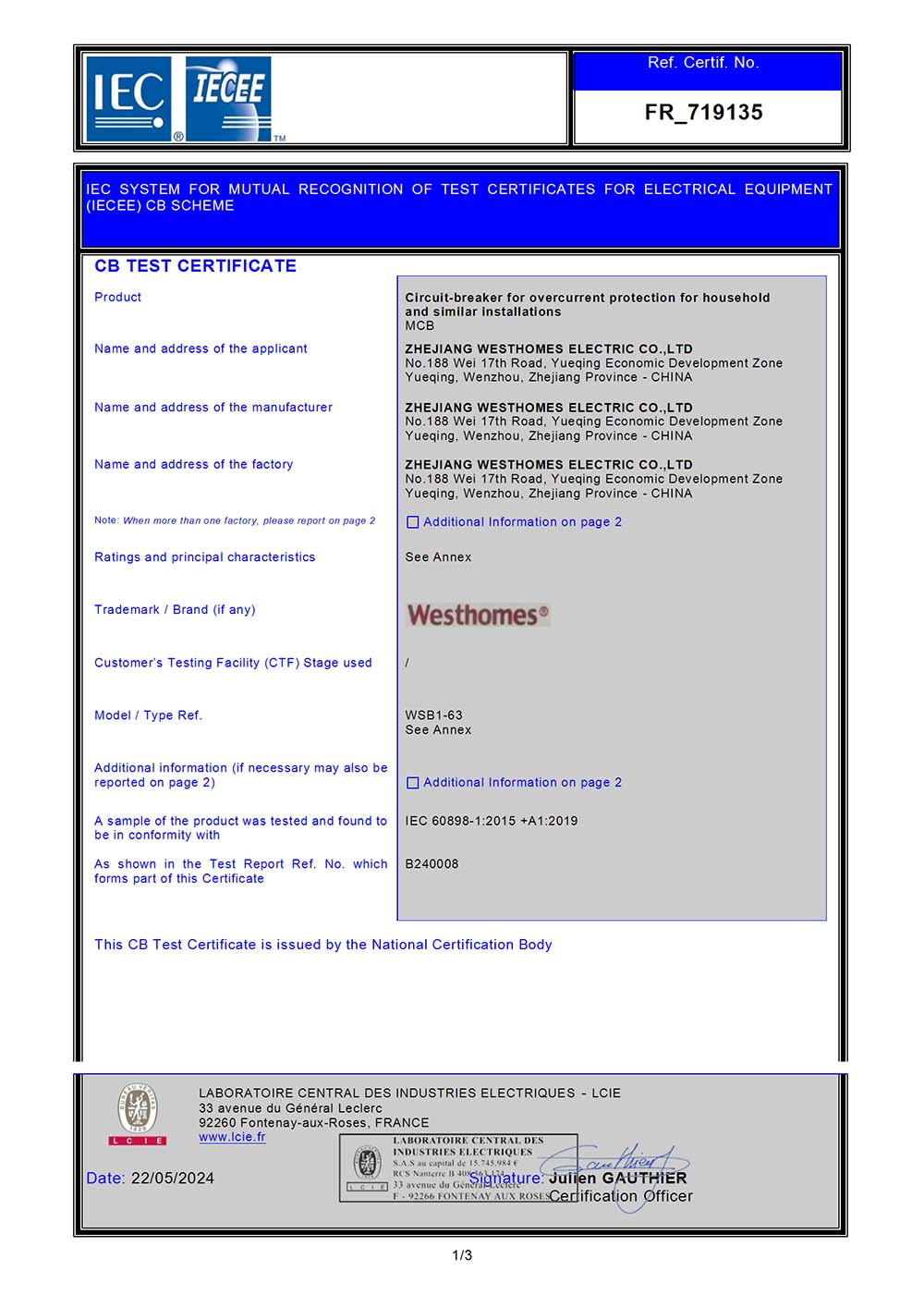
For EU and EEA markets, CE marking backed by IEC 60947-2 (industrial) or IEC 60898-1 (household) is the legal requirement. The CB Scheme is the most efficient global testing passport: a CB certificate based on IEC standards reduces duplicate testing when you’re pursuing multi-market certification. Market-specific approvals like SAA for Australia and CCC for Chinese domestic sales sit on top of this framework.
If you’re building a product for multiple export markets, start with the CB certificate and layer market-specific approvals from there. It’s the approach that saves the most time and testing budget across a multi-region rollout. For an overview of how CE/CB/CCC and UL interact in export workflows, this breaker CE/CB/CCC/UL compliance piece is a useful reference.
Quality system certifications matter too
ISO 9001 is the minimum credibility bar for any OEM factory you take seriously. A factory without it has no independently verified quality management framework, which means production consistency is entirely dependent on informal internal practices.
ISO 14001 and ISO 45001 signal a factory that manages environmental and safety processes systematically, which often correlates with stronger operational discipline across large production runs, though you should request audit evidence to confirm that discipline is reflected in actual production outcomes.
When you’re sourcing thousands of units per order, predictable defect rates and consistent repeat orders depend on that kind of documented rigor.
MOQ, Pricing, and What to Expect from a Factory’s Customization Program
Realistic MOQ and pricing benchmarks
For catalog-model private-label programs, MOQs as low as 100 units are achievable with some manufacturers, though typical OEM programs from Chinese factories often start at 500 to 1,000 units.
Deeper customization programs, those involving branded enclosures or modified trip-unit engineering, generally require higher minimums. Note that these are market-estimate ranges; actual MOQs vary by supplier, product type, and order volume.
Per-unit pricing for private-label MCBs runs roughly $5 to $25 for standard ratings; mid-range MCCBs typically land between $25 and $120, with high-current or feature-rich units going above that.
Treat these as indicative ranges; final pricing depends heavily on specs, certifications, and volume commitments. As a real-world product example, see the 63A Low Voltage 6ka Miniature Circuit Breaker for a typical catalog-model offering.
Tooling costs for branding-only changes like logo printing and packaging artwork are usually modest, often $0 to $500. Custom enclosures, modified trip-unit engineering, or entirely new mechanical designs push tooling costs into several thousand dollars or more. Know which category your project falls into before you build your pricing model.
OEM vs. ODM: knowing which one you actually need
OEM means your brand goes on an existing product design owned by the factory. ODM means the factory develops a custom product to your functional and mechanical specifications. For most private-label brand owners starting out, OEM is the faster and lower-risk path: you skip the R&D cycle, leverage an already-certified product, and get to market in weeks rather than months.
ODM becomes relevant when your target market demands specific functionality that no existing catalog product covers, or when you need full IP ownership over the design. Most first-time private-label programs should start with OEM and evaluate ODM only after the market is proven.
What a strong OEM program looks like in practice
A factory-grade OEM program should include custom logo printing and laser engraving, branded retail or project packaging, and multi-certification support across relevant marks like CE, CB, TUV, VDE, and UKCA. It should also offer low MOQ starting points for international buyers and a responsive process for ODM development inquiries.
When evaluating any factory’s OEM program, confirm each of these capabilities explicitly, not just through a supplier profile, but through documentation and direct conversation with their technical and commercial teams.
If a factory can’t match most of these capabilities, it isn’t a serious private-label partner regardless of how competitive its unit pricing looks. Westhomes structures its program around these features, including OEM support such as the OEM/ODM MCCB WCM8E-125M offering.
How to Vet a Factory Before You Commit to Production
Documents you should always request upfront
The non-negotiables are: type test certificates from accredited laboratories (with model numbers that match what you’re actually buying), routine production test records, ISO 9001 certification, Declaration of Conformity for relevant markets, product specification sheets with trip curves and ratings, and certificate of origin. The distinction between a type test certificate and a factory routine test record is where many buyers get burned.
A type test certificate comes from an independent, accredited lab and verifies the product’s design against the applicable standard. A routine test record reflects production-line testing only.
Both matter, but they are not interchangeable; presenting one as the other is a serious red flag. For a technical perspective on testing expectations, including short-circuit performance, review this short-circuit testing and certification overview.
Running a factory audit, remote or on-site
A remote document audit covers the paperwork trail: certifications, test reports, calibration records, and ISO registration. An on-site or third-party audit covers the physical production line, in-house testing equipment, AQL sampling process, and traceability between production lots and test data.
For US buyers who can’t travel to China, third-party inspection agencies can run an AQL-based production audit and independently authenticate type test certificates. This step is not optional for a serious private-label launch. The cost of a third-party audit is negligible compared to the liability exposure of discovering a compliance gap after your product is in the market under your brand name.
Red flags that should end the conversation
Treat each of these as a hard disqualifier:
- Typetest certificates that don’t match the actual product model numbers or ratings you’re buying ·
- Expired certificates or certificates from labs that aren’t in any accreditation directory
- No traceability between production lots and test data
- Undisclosed design changes made after the original type test (which invalidates the certificate)
- Routine test records presented as if they are independent type test certificates
Any one of these is reason to walk away. A factory that is sloppy about documentation is a factory that is sloppy about production.
Brand Owner Obligations When You Sell Under Your Own Label
Labeling and marking requirements you can’t skip
When your brand name is on the product, you assume manufacturer-level responsibility for compliance. Your breakers must carry required markings: your brand name or trademark, voltage and current ratings, interrupting capacity, and the applicable compliance marks for your target market. For US distribution, that means the UL listing mark.
For EU sales, that means the CE mark. All markings must be durable enough for the product’s operating environment; faded or illegible labels create inspection failures and product liability exposure.
For EU sales, labels must also include the brand owner’s name and address, and safety warnings must appear in the local language of each target market. Practical guidance on durable and compliant marking strategies can be found in this ” How to Label Circuit Breaker resource.
Declarations of conformity and technical file basics
For CE markets, you need a signed Declaration of Conformity backed by a technical file that includes the applicable product standard, test reports, and design documentation. The factory provides the underlying type test evidence; you own and sign the compliance package as the brand owner.
For US distribution, your UL listing documentation needs to reference the exact product model you’re selling. If the model number on your packaging doesn’t match the model on the UL certificate, you have a compliance gap that can surface at inspection or in a product liability claim.
Product liability exposure and insurance
When your name is on a circuit breaker, liability for defects, mislabeling, or nonconformity shifts to you as the brand owner. Product liability insurance covering bodily injury, property damage, and recall costs is a practical requirement, not optional protection.
Factor the premium into your cost model before you set retail or wholesale pricing, not after. Circuit breakers are protective devices: a failure doesn’t just damage property; it can injure people and trigger significant legal exposure.
Structuring the OEM Partnership So It Holds Up Long-Term
NDA, IP ownership, and tooling clauses
Get a signed NDA in place before sharing any brand assets, packaging designs, or product requirements with a prospective factory.
Tooling ownership is equally critical: if you paid for custom molds or dedicated packaging artwork, the contract must specify that the tooling belongs to you, not the factory.
Without that clause, switching factories or scaling with a second supplier means starting the tooling investment from scratch. A properly structured IP and tooling agreement protects your brand and your production flexibility as the business grows.
Setting quality benchmarks in the contract
Define acceptance criteria explicitly in the contract: acceptable defect rates by AQL level, tripping performance tolerances, dimensional specifications, and packaging standards. Include inspection rights, pre-shipment testing requirements, and a clear process for handling non-conforming batches, including who bears the cost of rework or replacement.
Vague contracts produce vague outcomes. The more specifically you define quality standards upfront, the less room there is for disputes when a batch falls short.
Starting with a sample run, then scaling
Order a pre-production sample batch before committing to full production volume. Test samples independently if your target market requires it, and verify that the factory’s output under real production conditions matches the specifications on the type test certificate.
Use the first production run to check lead time accuracy as much as product quality. Once quality, consistency, and lead times are proven across a real order, scaling the partnership becomes a much lower-risk decision.
Start the Right Way
Brands that build successful private-label circuit breaker programs don’t stumble into them; they build them deliberately.
The sequence matters: find a factory-direct OEM circuit breaker manufacturer rather than a trader, verify the right certifications for your target market, confirm customization capabilities and realistic MOQs, run a proper audit and document review, lock down your compliance obligations as a brand owner, and structure the contract to protect your IP and quality standards.
Private-label circuit breaker production is a proven model that established distributors across North America and Europe have built repeatable programs around. The difference between the brands that scale and the ones that stall almost always comes down to the quality of the factory partnership established at the start, and specifically, whether that partner was vetted or assumed.
Westhomes is a factory-direct low-voltage electrical manufacturer and a practical starting point for brand owners looking to find a factory to make circuit breakers under their own brand without taking on industrial-scale minimums. Contact Westhomes‘product lineup with your product specifications and apply the framework in this guide to evaluate the response.

--- END ---
In this blog
Featured Articles
Get A Free Quote
