Get quick appointment for technical support!

Troubleshooting an RCBO That Keeps Tripping
Jul 03, 2026
Introduction
An RCBO is designed to protect electrical circuits against overloads, short circuits, and earth leakage faults. When it trips repeatedly, many users assume the device is faulty. In most cases, however, the RCBO is simply operating as intended by disconnecting the power supply before an electrical fault becomes a safety risk.
Finding the real cause of repeated tripping is the key to restoring a safe and reliable electrical system. This guide explains the most common reasons an RCBO keeps tripping, how to diagnose the problem step by step, and what can be done to prevent the issue from happening again.
What Does It Mean When an RCBO Trips?
An RCBO continuously monitors the electrical circuit. Whenever it detects abnormal operating conditions that could endanger people or equipment, it automatically disconnects the power supply. The type of fault that triggers the trip determines the next troubleshooting step.
| Protection Function | What It Detects | Typical Cause |
| Overload Protection | Current exceeds the rated value for an extended period | Too many electrical loads connected |
| Short-Circuit Protection | Extremely high fault current | Damaged cables or incorrect wiring |
| Residual Current Protection | Leakage current flowing to earth | Faulty appliance, insulation failure, moisture |
Common Reasons an RCBO Keeps Tripping
Circuit Overload
Circuit overload is one of the most common causes of RCBO tripping. It occurs when the total current drawn by connected equipment exceeds the RCBO’s rated current for an extended period. As the current increases, the thermal protection inside the RCBO gradually heats up until it disconnects the circuit to prevent cable overheating.
Typical examples include operating several high-power appliances on the same circuit, such as electric heaters, air conditioners, ovens, and kettles.
Short Circuit
A short circuit occurs when live conductors come into direct contact with neutral or earth conductors, producing a very large fault current almost instantly. The magnetic trip mechanism of the RCBO reacts within milliseconds to disconnect the circuit.
Short circuits are commonly caused by damaged insulation, loose conductors, crushed cables, or wiring errors during installation.
Earth Leakage
Earth leakage is the most common reason for RCBOs to trip unexpectedly. When leakage current exceeds the RCBO’s rated residual operating current, the device disconnects the circuit to reduce the risk of electric shock and electrical fire.
Common causes include damaged cable insulation, deteriorated appliances, moisture inside electrical equipment, or incorrect earthing connections.
Faulty Electrical Appliance
Sometimes the RCBO itself is functioning correctly, but one appliance connected to the circuit develops an internal fault. Water heaters, washing machines, refrigerators, pumps, and air conditioners are among the most common sources of leakage current.
If the RCBO trips only when a particular appliance is switched on, that appliance should be inspected before replacing the RCBO.
Moisture or Water Ingress
Water significantly reduces insulation resistance and can create unwanted leakage paths. Outdoor sockets, garden lighting, basement installations, swimming pool equipment, and bathroom circuits are particularly vulnerable.
After heavy rain or cleaning, moisture inside junction boxes or appliances may cause intermittent RCBO tripping.
Incorrect Wiring
Incorrect installation is another common source of repeated tripping. Mixed neutral conductors, neutral-to-earth connections, reversed polarity, or loose terminals can all cause abnormal current flow that activates the residual current protection.
These issues often appear after panel modifications or electrical renovations.
Defective RCBO
Although uncommon, RCBOs can eventually reach the end of their service life. Mechanical wear, damaged internal contacts, or repeated fault interruptions may reduce their reliability.
Before replacing the device, however, always eliminate all possible external causes.
How to Troubleshoot an RCBO Step by Step
A systematic troubleshooting process helps identify the fault quickly while reducing unnecessary component replacement.
Step 1 — Identify the Tripped RCBO
Confirm which RCBO has tripped and determine which circuit it protects.
Step 2 — Disconnect All Appliances
Unplug or switch off every appliance connected to the circuit before attempting to reset the RCBO.
Step 3 — Reset the RCBO
If the RCBO resets successfully, the fault is likely connected to one of the appliances. If it cannot be reset, the fault may exist within the wiring or the RCBO itself.
Step 4 — Reconnect Equipment One at a Time
Reconnect each appliance individually until the RCBO trips again. The last connected device is usually the source of the problem.
Step 5 — Inspect Wiring
Check terminals, cable insulation, junction boxes, and connections for signs of overheating, looseness, or physical damage.
Step 6 — Perform Electrical Testing
Use an insulation resistance tester or other appropriate test equipment to verify insulation condition and continuity.
Step 7 — Replace the RCBO if Necessary
Only replace the RCBO after all external faults have been eliminated.
Troubleshooting Guide by Symptom
In many cases, the way an RCBO trips can provide valuable clues about the underlying fault. For example, a breaker that trips immediately after being reset often indicates a wiring fault or short circuit, while one that trips only after equipment has been running for some time is more likely experiencing an overload.
Observing when and how the RCBO trips can significantly narrow down the possible causes and make troubleshooting more efficient.
The table below summarizes some of the most common RCBO tripping symptoms, their likely causes, and the recommended first steps for diagnosis.
| Symptom | Possible Cause | Recommended Action |
| Trips immediately after reset | Short circuit or wiring fault | Inspect wiring, terminals, and cable insulation. |
| Trips after several minutes of operation | Circuit overload | Reduce the connected load and verify the RCBO current rating. |
| Trips when a specific appliance is switched on | Faulty appliance or excessive leakage current | Disconnect the appliance and test it separately. |
| Trips randomly or intermittently | Moisture, insulation deterioration, or unstable leakage current | Check for damp conditions and perform insulation resistance testing. |
| Cannot be reset | Severe wiring fault or defective RCBO | Disconnect the circuit, inspect the installation, and replace the RCBO only after confirming it is faulty. |
How to Prevent RCBO Nuisance Tripping
While an RCBO is designed to trip whenever it detects an unsafe electrical condition, not every trip is caused by a serious fault. Incorrect product selection, poor installation practices, or inadequate maintenance can all lead to nuisance tripping, disrupting normal operation and reducing system reliability.
By following a few good engineering practices, most unnecessary trips can be avoided while maintaining the intended level of electrical protection.
Choose the Correct RCBO Rating
Select an RCBO with an appropriate rated current, residual current sensitivity, and breaking capacity. Oversizing or undersizing the device may reduce protection effectiveness or increase the likelihood of nuisance tripping.
Avoid Circuit Overloading
Do not connect more equipment than the circuit is designed to supply. If the total load frequently approaches the RCBO’s rated current, consider redistributing the load or installing additional circuits.
Check Wiring and Terminal Connections
Loose terminals, damaged insulation, or incorrect neutral connections are common causes of repeated tripping. Regular inspection helps identify these problems before they lead to unexpected shutdowns.
Protect Electrical Equipment from Moisture
Water and condensation can significantly reduce insulation resistance and create leakage currents. Outdoor installations, damp environments, and exposed electrical enclosures should be adequately protected.
Inspect Electrical Equipment Regularly
Electrical appliances naturally age over time. Damaged insulation, worn cables, or internal component failures may generate leakage currents that repeatedly trip the RCBO. Routine inspections help identify faulty equipment before it causes interruptions.
Test the RCBO Periodically
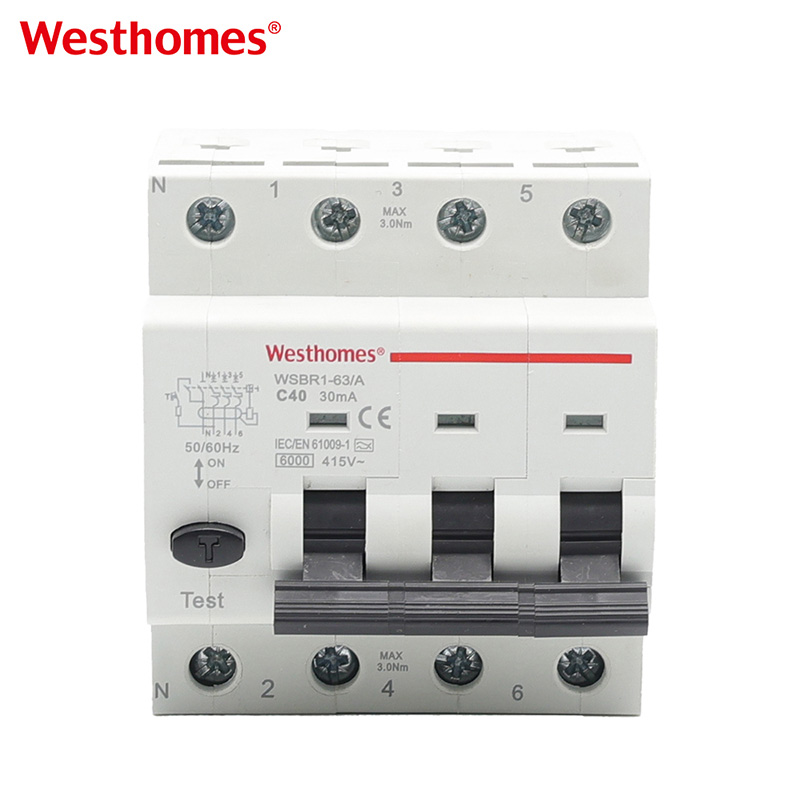
Press the built-in TEST button at the interval recommended by the manufacturer—typically once a month—to verify that the residual current protection mechanism is operating correctly.
When Should You Call a Qualified Electrician?
Basic troubleshooting, such as unplugging appliances or checking for obvious signs of damage, can often be performed safely by the user. However, if the RCBO continues to trip after these simple checks, the fault may involve the fixed wiring, insulation system, or other electrical components that require specialized testing equipment and professional expertise.
Continuing to reset a tripping RCBO without identifying the root cause may increase the risk of electric shock, equipment damage, or electrical fire. In these situations, the safest approach is to disconnect the affected circuit and have it inspected by a qualified electrician.
Professional assistance is recommended if:
- The RCBO cannot be resetafter all connected appliances have been disconnected.
- The RCBO trips immediately every time it is reset, indicating a possible short circuit or serious wiring fault.
- Visible signs of damagesuch as burnt insulation, melted terminals, damaged cables, or unusual burning smells are present.
- The source of earth leakage cannot be identified, even after disconnecting all appliances.
- Insulation resistance, continuity, or earth fault testing is required, as these tests require specialized instruments and should only be carried out by qualified personnel.
- The electrical installation has recently been modified or expanded, and the RCBO began tripping afterward, suggesting a possible wiring or installation error.
Safety Tip
Never bypass or replace an RCBO with a higher-rated device simply to stop nuisance tripping. Doing so may disable critical protection functions and expose people and equipment to unnecessary electrical hazards. Identifying and correcting the underlying fault is always the safest and most effective solution.
Preventive Maintenance Checklist
Routine maintenance is one of the most effective ways to improve the reliability of an RCBO and reduce unexpected trips. Regular inspections help identify loose connections, insulation deterioration, moisture ingress, and other potential issues before they develop into electrical faults. A simple maintenance schedule can also extend the service life of both the RCBO and the entire electrical distribution system.
The following checklist provides a general maintenance guideline that can be incorporated into routine electrical inspections.
| Inspection Item | Recommended Frequency | Purpose |
| Test the TEST button | Monthly | Verify that the residual current protection operates correctly. |
| Inspect terminal connections | Every 6–12 months | Prevent overheating caused by loose terminals. |
| Check cable insulation | Annually | Identify insulation deterioration or mechanical damage. |
| Inspect for moisture or contamination | Regularly | Reduce leakage current caused by damp or dirty environments. |
| Review circuit loading | When adding new equipment | Ensure the RCBO rating remains suitable for the connected load. |
| Perform a functional inspection | Periodically | Confirm that the RCBO operates normally under service conditions. |
Maintenance Tip
Preventive maintenance should always be carried out with the circuit safely isolated and in accordance with local electrical safety regulations. Recording inspection results and any corrective actions can help identify recurring issues, simplify future troubleshooting, and improve the long-term reliability of the electrical system.
Frequently Asked Questions (FAQ)
Q1 Why does my RCBO trip immediately after I reset it?
This usually indicates a short circuit, severe earth leakage, or a wiring fault that still exists.
Q2 Can a faulty appliance cause an RCBO to trip?
Yes. Appliances with damaged insulation or internal faults are one of the most common causes of RCBO tripping.
Q3 Is it safe to keep resetting a tripping RCBO?
No. Repeatedly resetting the RCBO without identifying the cause may increase the risk of equipment damage or electrical hazards.
Q4 How often should I test my RCBO?
Most manufacturers recommend pressing the TEST button once every month to verify proper operation.
Q5 Does frequent tripping mean the RCBO is faulty?
Not necessarily. In most cases, frequent tripping indicates that the RCBO is correctly responding to an electrical fault rather than malfunctioning itself.
Conclusion
A tripping RCBO should never be ignored or treated as an inconvenience. It is an indication that the protection system has detected an abnormal electrical condition requiring attention. By understanding the difference between overloads, short circuits, and earth leakage faults, and by following a structured troubleshooting process, most issues can be identified efficiently and resolved safely.

--- END ---
In this blog
Featured Articles
Get A Free Quote
