Get quick appointment for technical support!

Selective Coordination in Circuit Breaker Systems — What Every Engineer Should Know
Jul 12, 2026
Introduction
Modern electrical distribution systems are expected to deliver continuous and reliable power, even when electrical faults occur. If a short circuit or overload causes multiple circuit breakers to trip, the resulting outage can affect far more equipment than necessary, leading to production interruptions, increased maintenance costs, and unnecessary downtime.
Selective coordination is designed to prevent this situation by ensuring that only the circuit breaker closest to the fault disconnects the affected circuit, while the rest of the electrical system continues operating normally. This guide explains how selective coordination works, the factors that influence its performance, common design considerations, and practical methods engineers can use to improve the reliability and safety of low-voltage circuit breaker systems.
What Is Selective Coordination?
Selective coordination is a protection strategy used in electrical distribution systems to ensure that only the circuit breaker closest to a fault disconnects the affected circuit. Instead of shutting down an entire distribution system, selective coordination limits the interruption to the smallest possible section, allowing the remaining circuits to continue operating normally.
In a properly coordinated system, upstream and downstream circuit breakers are selected and adjusted so that they operate in a predetermined sequence. When an overload or short circuit occurs, the downstream breaker clears the fault first, while upstream breakers remain closed unless the downstream device fails to operate or the fault exceeds its interruption capability. Coordination depends on the upstream device holding long enough for the downstream one to clear the fault before it reacts.
Basic Principle of Selective Coordination
The principle of selective coordination is straightforward: the protective device nearest to the fault should interrupt the fault before upstream devices respond. Achieving this requires proper coordination of breaker ratings, trip characteristics, and operating times throughout the distribution system.
Without selective coordination, multiple circuit breakers may trip simultaneously during a fault. This can interrupt power to healthy circuits, increase downtime, and make fault location more difficult. By coordinating protective devices correctly, electrical faults can be isolated quickly while minimizing their impact on the rest of the installation.
Why Selective Coordination Matters
In many electrical installations, a fault on one branch circuit should not interrupt power to the entire facility. However, without proper coordination, multiple circuit breakers may trip at the same time because their protection characteristics overlap. As a result, a relatively small fault can shut down large sections of a distribution system, increasing downtime and making fault recovery more complicated.
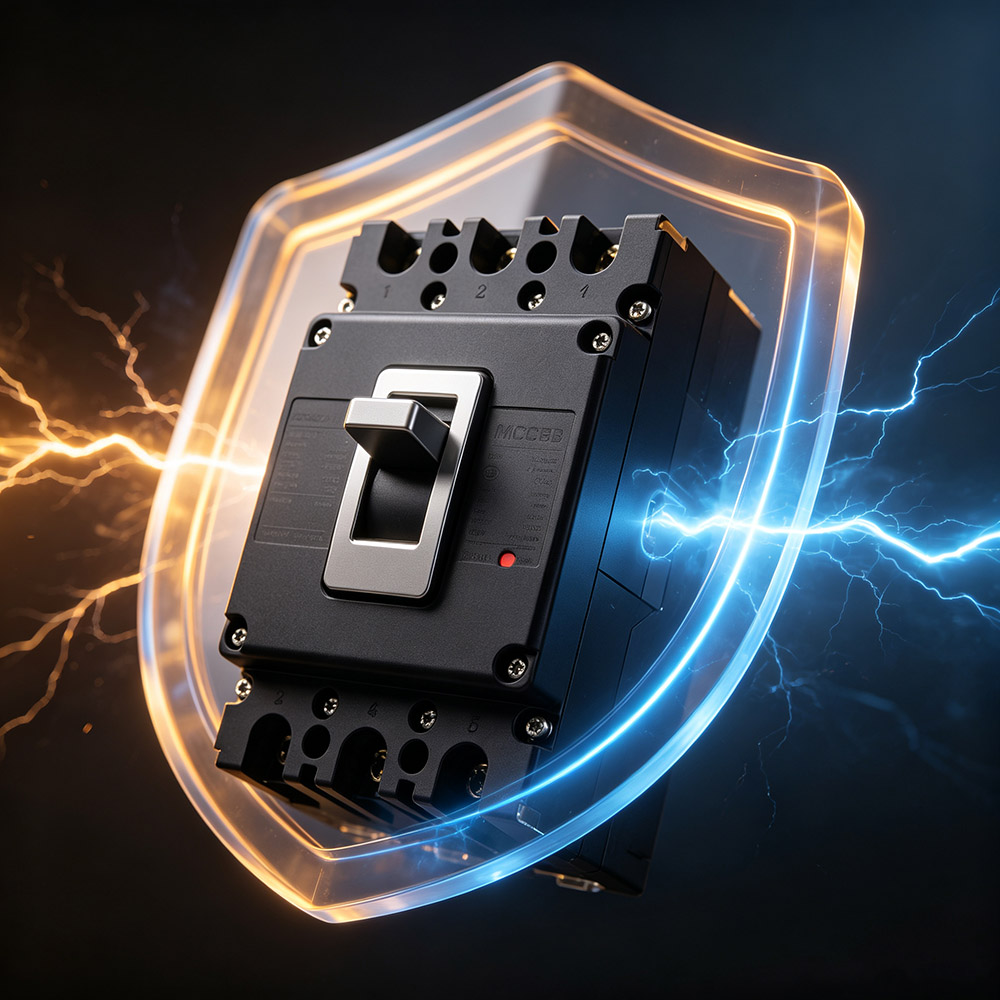
Selective coordination minimizes these unnecessary interruptions by allowing only the protective device closest to the fault to operate. The unaffected circuits remain energized, helping maintain normal operation while maintenance personnel identify and correct the problem.
Beyond improving system availability, selective coordination also reduces the impact of electrical faults on equipment and production processes. It allows maintenance teams to isolate faults more efficiently, shortens recovery time, and supports a more reliable power distribution system throughout its service life.
| Benefit | Description |
|---|---|
| Improved Power Continuity | Limits outages to the affected circuit only. |
| Faster Fault Isolation | Makes fault location and troubleshooting more efficient. |
| Reduced Equipment Downtime | Keeps unaffected equipment operating normally. |
| Better Protection Coordination | Prevents unnecessary operation of upstream breakers. |
| Lower Maintenance Costs | Reduces production losses and unnecessary service interruptions. |
How Selective Coordination Works
Selective coordination is achieved by arranging protective devices so that each circuit breaker responds only to faults within its designated protection zone. This requires coordination of breaker ratings, trip characteristics, available fault current, and operating times throughout the distribution system.
Under normal operating conditions, every circuit breaker carries its rated load current without interruption. When an overload develops on a branch circuit, the downstream breaker detects the increased current and trips according to its thermal protection characteristics. Since the upstream breaker experiences the same current but has a higher pickup setting or longer operating delay, it remains closed and continues supplying power to the rest of the system.
During a short-circuit fault, the available fault current rises rapidly. A properly coordinated downstream breaker interrupts the fault before upstream protection reaches its operating threshold. Only if the downstream breaker cannot clear the fault, or if the fault current exceeds its interrupting capability, will the upstream breaker operate as a backup device.
This coordinated operating sequence confines electrical faults to the smallest practical section of the installation, reducing unnecessary outages while maintaining protection for both equipment and personnel.
Types of Selective Coordination
Selective coordination can be achieved using different methods depending on the electrical system, fault current level, and the capabilities of the protective devices. In practical applications, engineers often combine multiple coordination methods to achieve better system performance rather than relying on a single approach.
The most common coordination methods include current selectivity, time selectivity, energy selectivity, and zone selective interlocking (ZSI). Each method offers different advantages and is suitable for different types of electrical installations.
Comparison of Coordination Methods
| Method | Operating Principle | Typical Applications |
|---|---|---|
| Current Selectivity | Different pickup current settings | Small and medium distribution systems |
| Time Selectivity | Different operating delays | Multi-level distribution systems |
| Energy Selectivity | Fault energy discrimination | High fault current installations |
| Zone Selective Interlocking (ZSI) | Communication between electronic breakers | Critical power distribution systems |
Key Factors Affecting Selective Coordination
Achieving reliable selective coordination involves more than selecting circuit breakers with different current ratings. The overall performance depends on how the protective devices interact under both overload and short-circuit conditions. Engineers should evaluate the complete distribution system rather than considering each breaker individually.
Several technical factors directly influence whether selective coordination can be achieved.
| Factor | Influence on Coordination |
|---|---|
| Circuit breaker ratings | Determines the available coordination margin between devices. |
| Time-current characteristics | Controls the operating sequence during overloads and short circuits. |
| Available fault current | Influences whether downstream breakers can interrupt the fault independently. |
| Trip unit technology | Thermal-magnetic and electronic trip units provide different adjustment capabilities. |
| Protection settings | Pickup current and time-delay settings affect coordination performance. |
| System impedance | Changes fault current levels throughout the electrical network. |
| Cable length | Longer cables may reduce fault current and alter breaker response. |
How to Achieve Proper Selective Coordination
Designing a selectively coordinated system requires a systematic approach that begins during the early stages of electrical system design. Engineers should evaluate system parameters, protective device characteristics, and expected fault conditions before selecting circuit breakers.
The following process is widely used in engineering practice.
- Calculate available short-circuit current to understand the maximum fault level at each installation point.
- Determine load characteristics including continuous current, motor starting current, and possible overload conditions.
- Select appropriate circuit breaker ratings for both upstream and downstream protection.
- Compare Time-Current Curves (TCC) to verify that the operating characteristics do not overlap unnecessarily.
- Review manufacturer coordination tables whenever available to confirm tested coordination performance.
- Adjust electronic trip settings such as long-time delay, short-time delay, and instantaneous pickup where applicable.
- Verify coordination through system studies before the installation is commissioned.
Time-Current Curves (TCC) Explained
Time-Current Curves (TCC) are one of the most useful tools for evaluating selective coordination. A TCC graph illustrates how long a circuit breaker takes to trip under different levels of fault current. By comparing the curves of upstream and downstream breakers, engineers can determine whether the devices will operate in the intended sequence.
Ideally, the downstream breaker curve should remain to the left of the upstream breaker curve throughout the operating range. If the curves overlap significantly, both breakers may trip simultaneously under certain fault conditions, reducing the effectiveness of selective coordination.
Modern software tools and manufacturer coordination studies make TCC analysis more efficient, especially in complex distribution systems with multiple levels of protection.
Common Coordination Challenges
Although the concept of selective coordination is straightforward, implementing it in real electrical systems can be challenging. Variations in fault current levels, different protective device technologies, and changing system configurations may all affect coordination performance. Engineers often need to balance system reliability, equipment protection, and installation cost while maintaining proper coordination throughout the distribution network.
Understanding these challenges during the design stage helps reduce commissioning issues and improves long-term system performance.
High Available Fault Current
High fault current may cause both upstream and downstream circuit breakers to operate almost simultaneously, particularly when instantaneous protection settings overlap. This reduces the selectivity of the protection system and increases the possibility of unnecessary outages.
Similar Circuit Breaker Ratings
When circuit breakers have similar current ratings or similar trip characteristics, the coordination margin becomes smaller. Proper separation of protection settings is necessary to maintain the intended operating sequence.
Different Breaker Technologies
Thermal-magnetic and electronic trip circuit breakers have different operating characteristics. Mixing different technologies within the same distribution system requires additional coordination analysis.
System Expansion
As new loads, transformers, or distribution panels are added, available fault current and load distribution may change. Existing coordination studies should be reviewed whenever significant modifications are made.
Generator or Backup Power Systems
Backup generators usually provide lower fault current than utility supplies. Protection settings that work under normal operating conditions may respond differently when the system is supplied by a generator.
Common Mistakes in Selective Coordination
Many coordination problems are not caused by the circuit breakers themselves but by incorrect design assumptions or incomplete system analysis. Avoiding these common mistakes can significantly improve coordination performance and reduce unnecessary system outages.
- Selecting Breakers Only by Current Rating: Choosing circuit breakers solely according to load current without considering trip characteristics or coordination studies often leads to overlapping protection curves.
- Ignoring Available Fault Current: Fault current directly affects breaker operation. Without an accurate short-circuit study, proper selective coordination cannot be verified.
- Not Comparing Time-Current Curves: Time-current curves provide one of the clearest ways to evaluate coordination. Skipping this step increases the possibility of simultaneous breaker operation.
- Mixing Incompatible Breakers: Using protective devices from different product series or manufacturers without verifying compatibility may reduce coordination performance.
- Neglecting Future Expansion: Protection coordination should consider future system growth rather than only current operating conditions.
Applications
Selective coordination is widely used in electrical systems where maintaining power continuity is a design objective. By limiting outages to the faulted circuit, coordinated protection helps improve operational efficiency and reduces interruptions across a wide range of industries.
The following applications commonly benefit from selective coordination.
| Application | Why Selective Coordination Is Used |
|---|---|
| Hospitals | Maintain power to medical equipment and emergency systems. |
| Data Centers | Reduce service interruptions and protect IT infrastructure. |
| Manufacturing Plants | Keep production lines operating during localized faults. |
| Commercial Buildings | Minimize power interruptions for tenants and business operations. |
| Airports | Improve power reliability for operational facilities. |
| Water Treatment Plants | Maintain continuous operation of pumps and control systems. |
| Renewable Energy Systems | Improve coordination between inverters, switchgear, and distribution equipment. |
Standards and Compliance
Selective coordination is addressed by several international standards and electrical codes. While each standard has a different focus, together they provide guidance for equipment selection, protection coordination, and electrical system design.
Understanding these standards helps engineers design systems that meet both technical and regulatory requirements.
| Standard | Scope |
|---|---|
| IEC 60947-2 | Performance requirements for low-voltage circuit breakers, including protection characteristics. |
| IEC 60364 | Design principles for low-voltage electrical installations. |
| NEC (NFPA 70) | Electrical installation code including selective coordination requirements for specific systems. |
| IEEE 242 (Buff Book) | Guidance on protection and coordination for industrial power systems. |
| IEEE 3004 Series | Recommended practices for protective device coordination studies. |
Summary
Electrical standards do not simply specify circuit breaker ratings; they also emphasize proper coordination of protective devices to improve system reliability and safety. Applying these standards during system design helps engineers verify coordination performance, support code compliance, and build electrical distribution systems that operate more reliably under both normal and fault conditions.
WESTHOMES Circuit Breaker Solutions
Reliable selective coordination begins with selecting circuit breakers that provide consistent protection characteristics and flexible protection settings. In modern low-voltage distribution systems, circuit breakers with adjustable trip units and high breaking capacity make it easier to achieve effective coordination across multiple levels of protection.
WESTHOMES offers a range of low-voltage circuit breakers designed for commercial, industrial, and infrastructure applications. Depending on system requirements, thermal-magnetic and electronic trip circuit breakers can be selected to support overload protection, short-circuit protection, and selective coordination studies in accordance with modern distribution system design practices.
Typical Features
- Wide current rating range for various distribution applications
- High breaking capacity for demanding electrical environments
- Thermal-magnetic and electronic trip unit options
- Adjustable protection settings on selected models
- Compliant with IEC 60947-2
- Suitable for low-voltage power distribution systems
Frequently Asked Questions (FAQ)
Conclusion
Selective coordination is an effective approach to improving the reliability of low-voltage electrical distribution systems. By ensuring that only the protective device nearest to a fault operates, it limits unnecessary power interruptions, simplifies fault isolation, and helps keep unaffected parts of the system in service. Achieving this level of performance requires more than selecting circuit breakers with suitable current ratings—it also depends on proper coordination studies, appropriate protection settings, and a clear understanding of system fault characteristics.
As electrical distribution systems continue to become more complex, selective coordination is increasingly considered during the design stage of commercial, industrial, and infrastructure projects. Evaluating Time-Current Curves, reviewing manufacturer coordination data, and verifying system performance after modifications all contribute to a more reliable and easier-to-maintain power distribution system.

--- END ---
In this blog
Featured Articles
Get A Free Quote
