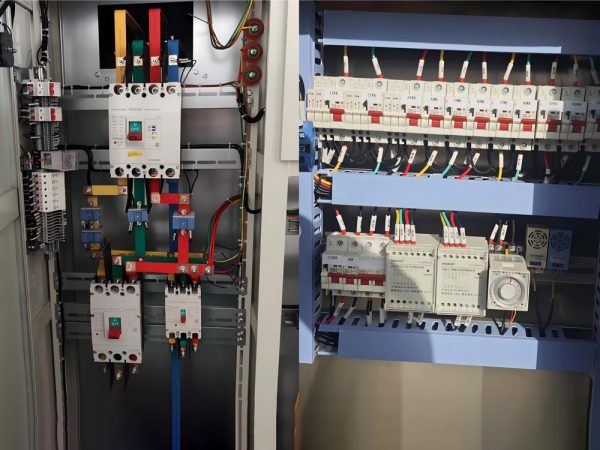
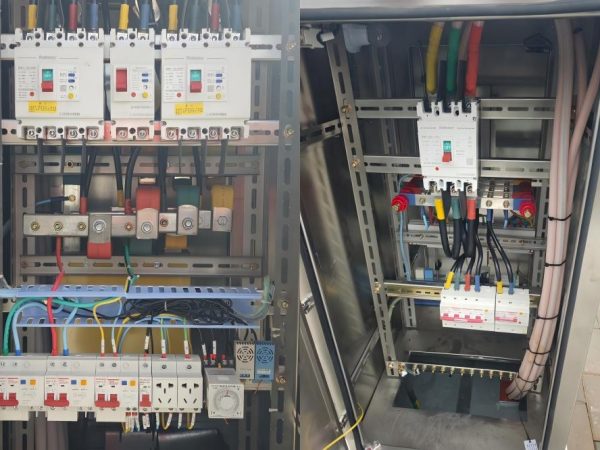
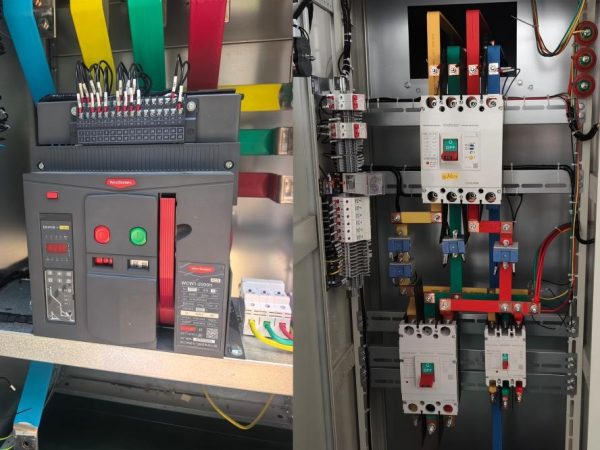
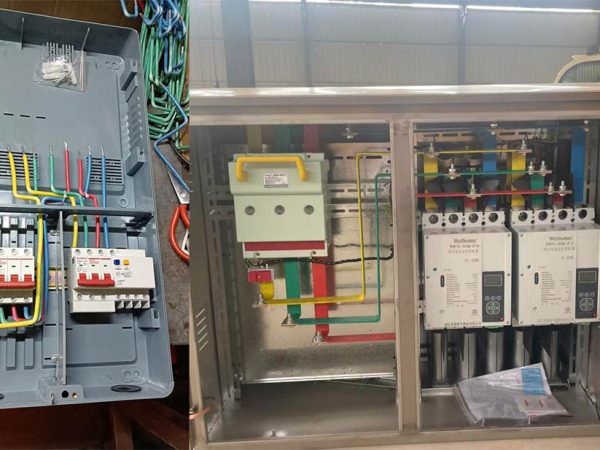
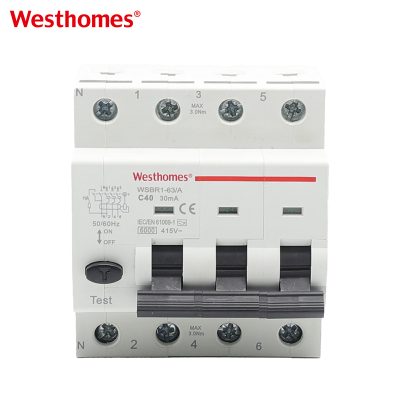
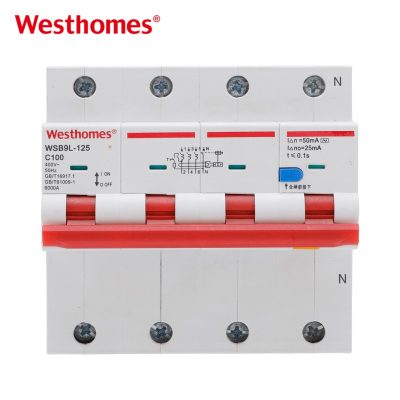
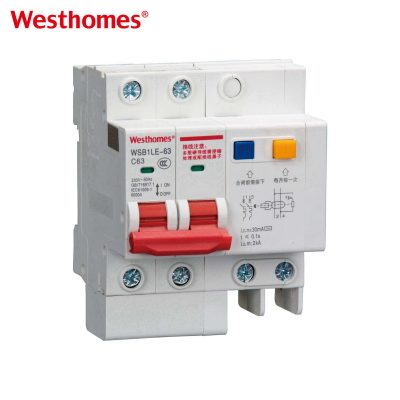
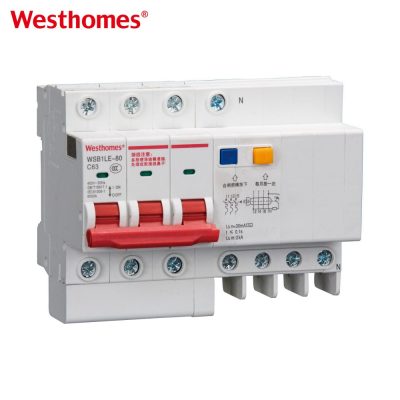
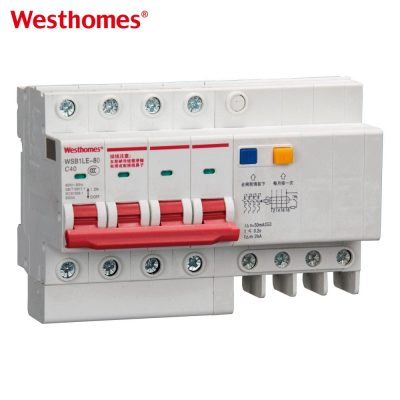
WSB1-80 Moulded case circuit breaker
WSB1-80 series MCB is one of updated type MCCBs researched and developed by the company by using advanced design and manufacture technology internationally.
Get quick appointment for technical support!

WSB1-80 series MCB is one of updated type MCCBs researched and developed by the company by using advanced design and manufacture technology internationally.



WSB1-80 series MCB is one of updated type MCCBs researched and developed by the company by using advanced design and manufacture technology internationally.
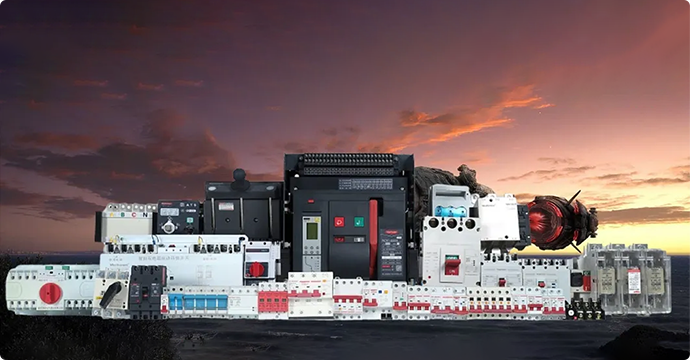
WSB1-80 series MCBs are mainly applied at lines of AC 50Hz or 60Hz, rated operation voltage AC230/400V, rated current upto 80A, for overload and short circuit protection to the lines, also for changeover of infrequent operation to the lines. The MCBs are used at places of commercial office building, residential and similar building etc.
The product meets standards of GB 10963.1 and IEC 60898-1, at international advanced level.

| Frequency | 50Hz/60Hz |
| Pole | 1, 2, 3, 4 |
| Voltage | AC230V/400V |
| kA | 6kA, 10kA |
| Amps | 6, 10, 16, 20, 25, 32, 40, 50, 63,80 |
| Width | 18, 36, 54, 72mm |
| Mounting | Din rail |
| Standard | IEC/EN 60898 |
| Item No. | WSB1-80 |
| Rated current In(A) | 6, 10, 16, 20, 25, 32, 40, 50, 63,80 |
| Pole number | 1P, 2P, 3P, 4P |
| Trip characteristics | C type(5-10In); D type(10-20In) |
| Rated insulating voltage Ui(V) | 690 |
| Rated operating voltage Ue(V) | AC230V/AC400V |
| Rated impulse voltage Uimp(kV) | 4 |
| Breaking capacity Icu(kA) | 6 |
| Mechanical life(times) | 20000 |
| Electrical life(times) | 4000 |
| No. | Rated current | Initial state | Test current | Time limit | Expected result |
| 1 | In≤63 | Cold state | 1.13In | t≤1h | Not tripping |
| In>63 | t≤2h | ||||
| 2 | In≤63 | Just followed the last test item | 1.45In | t<1h | Tripping |
| In>63 | t<2h | ||||
| 3 | In≤32 | Cold state | 2.55In | 1s | Tripping |
| In>32 | 1s | ||||
| 4 | Type C | Cold state | 5In | t≤0.1s | Not tripping |
| 10In | t<0.1s | Tripping |

A 4P (four-pole) MCB switches and protects all four conductors of a three-phase four-wire system — L1, L2, L3 and the neutral (N) — in a single DIN-rail unit. It is typically used as the incomer or main switch in a three-phase distribution board, or wherever full galvanic isolation of all poles (including neutral) is required for safety or maintenance.
It combines two protection principles in one unit: a thermal bimetallic strip that bends gradually under sustained overcurrent to give inverse-time overload protection, and a magnetic solenoid that trips instantaneously on high-magnitude short-circuit currents. In a 4P version the trip mechanism acts on all poles simultaneously so no phase remains energized after a fault.
The breaking (ultimate) short-circuit capacity is the maximum prospective short-circuit current the breaker can safely interrupt at rated voltage without damage — 6 kA or 10 kA RMS. If the available fault current at the board exceeds this value, the breaker may not clear the fault safely, so you must calculate the prospective short-circuit level (PSCC) upstream and select a rating at or above it.
Connect the supply L1, L2, L3 and incoming neutral to the line terminals (usually marked "IN" / "LINE" at the top), and the corresponding load-side L1, L2, L3 and N to the "LOAD" terminals at the bottom. Observe the marked torque on the terminals (typically 2.0–2.5 N·mm for small copper conductors) and never reverse line and load, because the internal arc chute is oriented for supply-in-from-top.
The WSB1-80 4P series is offered in standard MCB ratings from 6 A up to 80 A (e.g. 6, 10, 16, 20, 25, 32, 40, 50, 63, 80 A). Selection follows the rule Ib ≤ In ≤ Iz, where Ib is the design current of the load, In is the breaker nominal current, and Iz is the current-carrying capacity of the cable. If you oversize In, the cable can overheat before the breaker trips.
Curve B trips magnetically at 3–5 In and suits domestic, lighting and purely resistive loads. Curve C (5–10 In) is the default for commercial and general mixed loads with moderate inrush. Curve D (10–20 In) is for high inrush loads such as transformers, welding equipment or large motor banks. For a 4P main incomer feeding a mix of circuits, C-curve is usually the safest all-round choice.
Yes, the WSB1-80 series is designed and tested to IEC 60898-1 (the product standard for miniature circuit-breakers for overcurrent protection in household and similar installations) and carries CE marking for sale in the EU/EEA. This guarantees defined trip characteristics, clearances, temperature rise and short-circuit endurance under standardized test conditions.
230 V is the phase-to-neutral voltage and 400 V is the phase-to-phase voltage in a standard three-phase TN system. A 4P MCB rated 230/400 V AC can therefore be connected either as a three-phase four-wire incomer (400 V between phases) or, on a pole-by-pole basis, across a 230 V phase-to-neutral circuit.
Common uses include the main incomer of a three-phase residential or light commercial distribution board, protection of three-phase sub-main cables to kitchens, offices or workshops, isolation of three-phase air-conditioning, pump or elevator loads, and building-services switchboards where neutral switching is required. It is not intended for motor-only protection — a motor-protective circuit-breaker (MPCB) should be used instead.
It snaps onto a standard 35 mm DIN rail inside an enclosure. Maintenance is minimal: keep the enclosure dust-free, check terminal tightness at the recommended torque every 2–3 years, and operate the manual test/trip lever a few times annually to prevent contact seizing. Because the breaker is a sealed, non-user-serviceable device, any visible burning, overheating, repeated nuisance tripping or internal cracking means it must be replaced in full.
* indicates a required field

 2 MB