Get quick appointment for technical support!

How Do I Manually Operate an Automatic Transfer Switch?
May 08, 2026
A sudden power outage can disrupt daily life at home and pose serious risks, such as interrupting the power supply to medical devices or causing loss of critical business data. Automatic Transfer Switches (ATS) are widely used to ensure that when the main power fails, critical equipment can quickly switch to a backup source.
However, some users may wonder: if the automatic system fails, is it possible to operate the ATS manually? Can homeowners install such equipment themselves? This article explains the correct procedures for manual operation and important safety considerations.
Manual Operation and Installation Feasibility of ATS for Home Users
Automatic Transfer Switches (ATS) generally include a manual operation function, allowing power transfer when the automatic system fails or during special maintenance. Most mainstream devices use a successful manual transfer mode to ensure continuous power under different conditions and allow operator intervention if necessary.
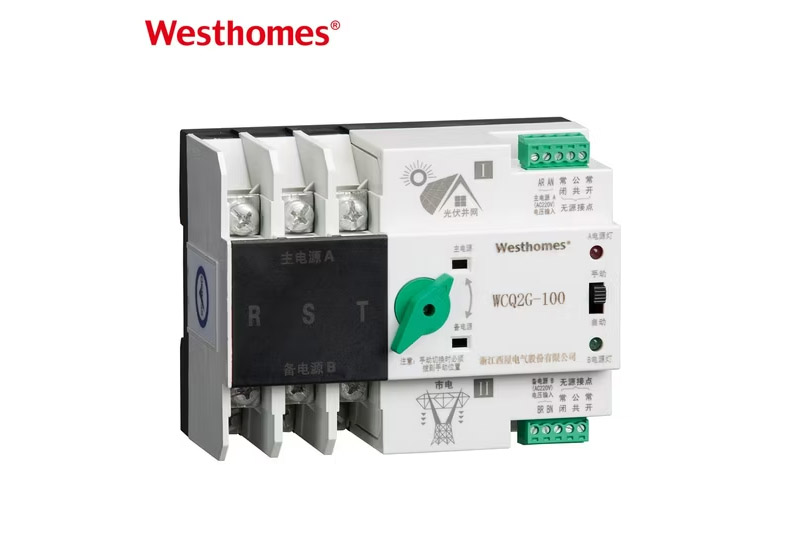
For homeowners with basic electrical knowledge, it is possible to use or install an ATS while following safety guidelines and local regulations. However, it is generally recommended to consult relevant authorities or qualified professionals before installation to ensure safe operation and reliable system performance.
Before Manual Transfer: Safety First
Before performing any manual transfer, always isolate the relevant power sources and ensure manual transfer is not performed under load. Verify the status of both the primary and backup sources, confirm that the system is fully isolated, and follow the manufacturer’s instructions step by step. Improper operation can cause equipment damage, arc hazards, or personal injury.
Additionally, check that all safety interlocks are functioning correctly, wear appropriate personal protective equipment (PPE), and ensure that no untrained personnel are present in the vicinity.
Never bypass safety mechanisms, and avoid rushing the operation — careful verification at each step is essential. Maintaining a controlled environment and proper lighting can further reduce the risk of mistakes during manual transfer.
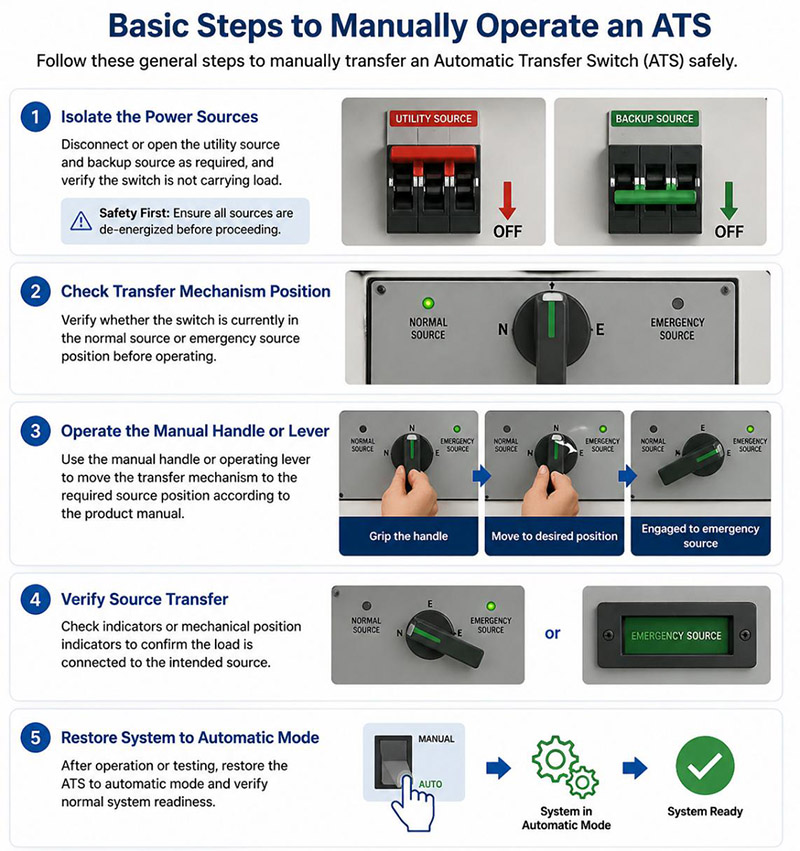
Basic Steps to Manually Operate an ATS
Step 1: Isolate the Power Sources
Before any manual operation, disconnect the utility (primary) power source and open the backup (secondary) source breaker or isolator as required. Confirm that the ATS is not under load before beginning — use appropriate voltage meters to verify both sources are de energized. This prevents arc flash hazards and equipment damage.
Step 2: Check Transfer Mechanism Position
Before moving any handles, inspect the current position of the transfer mechanism. Determine whether the ATS is connected to the utility source or the backup source by observing the mechanical indicators or display. Knowing the starting position helps you avoid incorrect operations.
Step 3: Operate the Manual Handle or Lever
Following the product manual, use the designated manual handle, lever or gearbox to move the transfer mechanism to the desired source. Apply smooth, controlled force — avoid sudden jerks. Some ATS designs include a lock out or safety latch that must be released before movement.
Step 4: Verify Source Transfer
After completing the manual transfer, verify that the ATS transfer was successful. Check mechanical position indicators, panel LEDs, or multimeter readings to ensure the load is connected to the intended power source. Do not proceed if there are conflicting status signals.
Step 5: Restore System to Automatic Mode
After testing or maintenance is complete, return the ATS to its automatic mode according to the manufacturer instructions. Re enable automatic transfer logic, close appropriate breakers, and verify that both normal and backup sources are ready. Confirm the system stands by for future automatic switching.
Step 6: Document and Log the Operation
Always document the manual transfer operation — record date/time, reasons for manual intervention, source voltages, and any anomalies. This practice supports future troubleshooting and compliance.
Safety Reminder (Always)
Never perform manual transfer while under load. Always wear proper PPE (insulated gloves, safety glasses, etc.), follow lockout/tagout (LOTO) procedures, and ensure only qualified personnel perform the operation.
Common Safety Considerations
- Never perform manual transfer under load.
- Follow the manufacturer’s manual and lockout/tagout procedures.
- Verify electrical and mechanical interlocks are functioning.
- Manual operation should be performed by qualified personnel.
Expected Lifespan of an Automatic Transfer Switch
The expected lifespan of an Automatic Transfer Switch (ATS) typically ranges from 15 to 25 years, depending on the quality of components, frequency of operation, and environmental conditions.
Mechanical wear of contacts, exposure to dust or humidity, and the number of load transfers can all affect longevity. Regular maintenance, proper installation, and adherence to operational guidelines can significantly extend service life and ensure reliable performance throughout its operational period.
WESTHOMES ATS Solution
Chinese Supplier OEM WCQ2G-100 3P Dual Power Automatic Transfer Switch
The WESTHOMES WCQ2G-100 Series Dual Power Automatic Transfer Switch is designed for residential and small emergency power supply systems. Key features include:
- Frequency Compatibility:50Hz / 60Hz
- Rated Voltage: Up to AC 400V
- Construction: Solid mechanical design for long-lasting durability
- Transfer Performance: Reliable automatic and manual switching
- Installation & Maintenance: Easy to install and maintain, suitable for home users and small businesses
- Service Life: Long operational lifespan under proper usage
- Compliance: IEC 60947-6-1 standard
Additional Benefits:
- Supports manual operationduring system testing or emergency intervention
- Ensures safe switchingeven under abnormal conditions
- Ideal for residential, small commercial, and emergency power systems
- Provides reliable support for both routine source transfer and critical load applications
Frequently Asked Questions (FAQ)
Q1: Can I manually operate an ATS during a power outage?
Yes, but only according to proper procedures and safety requirements.
Q2: Can manual operation damage the ATS?
Not if performed correctly. Improper or forced operation may damage the mechanism.
Q3: Should ATS be returned to AUTO mode afterward?
Yes. After testing or manual transfer, the switch should normally be returned to automatic mode.
Q4: Can manual transfer be performed under load?
No. Manual transfer under load is generally not recommended unless specifically permitted by the manufacturer, as it may cause equipment damage or safety hazards.
Q5: Do all automatic transfer switches have manual operation?
Not all ATS models have the same manual operating method. Some use a manual handle or lever, while others may require a dedicated operating tool. Always refer to the product manual.
Conclusion
Although an ATS is designed for automatic operation, understanding manual transfer procedures is equally important for maintenance, testing, and emergency situations. Safe and correct manual operation can help prevent unnecessary downtime, reduce operational risks, and ensure reliable power restoration when automatic control is unavailable.
The key principles remain clear: ensure safety first, follow the correct transfer sequence, avoid improper operation under load, and restore the system to automatic mode afterward. Ultimately, combining proper operating practices with a reliable transfer switch design is essential to achieving both system safety and long-term power continuity.
This topic is covered in more detail in How an Automatic Transfer Switch (ATS) Works with a Generator.
This topic is covered in more detail in ATS vs STS: Key Differences & How to Choose.
This topic is covered in more detail in Automatic Transfer Switch Comprehensive Guide.

--- END ---
In this blog
Featured Articles
Get A Free Quote
