Get quick appointment for technical support!

Electrical Fire Prevention — How Modern Circuit Protection Saves Lives
Jul 13, 2026
Introduction
Electrical fires remain one of the leading causes of property damage and electrical accidents in residential, commercial, and industrial buildings. Many of these fires originate from overloaded circuits, deteriorated wiring, loose electrical connections, or undetected arc faults that develop over time.
Modern circuit protection devices have evolved far beyond traditional overload protection. Today’s technologies can detect overloads, short circuits, earth leakage, and dangerous arc faults before they develop into electrical fires. This article explains the common causes of electrical fires and how modern protection devices help improve electrical safety.
Why Do Electrical Fires Occur?
Electrical fires rarely happen without warning. In most cases, they develop gradually as electrical faults generate excessive heat over time. Problems such as overloaded circuits, damaged insulation, loose connections, or undetected arc faults can remain unnoticed for months or even years before eventually igniting nearby combustible materials.
Modern electrical systems are designed with multiple layers of protection to interrupt dangerous conditions before they become a fire hazard. Understanding the most common causes of electrical fires is the first step toward selecting the right protective devices and improving overall electrical safety.
Overloaded Circuits
An overloaded circuit occurs when the connected electrical load exceeds the circuit’s designed current capacity. As current continues to increase, conductors and terminals generate additional heat. If the overload persists, insulation may deteriorate, eventually increasing the likelihood of overheating and fire.
Proper circuit design, appropriate conductor sizing, and correctly rated circuit breakers help prevent overload conditions from developing into serious safety hazards.
Short Circuits
A short circuit happens when electrical current flows through an unintended low-resistance path. This can produce extremely high fault currents within milliseconds, generating intense heat and potentially damaging conductors, electrical equipment, and surrounding materials.
Modern circuit breakers are designed to disconnect the circuit rapidly once a short circuit is detected, limiting both equipment damage and fire risk.
Loose Electrical Connections
Loose terminals, improperly tightened cable lugs, and worn contacts create high-resistance connection points. Although the circuit may continue operating normally for some time, localized heating gradually increases at these poor connections.
Over time, repeated heating and cooling cycles can further loosen the connection, increasing the possibility of insulation damage or ignition.
Aging or Damaged Insulation
Electrical insulation naturally deteriorates as equipment ages. Exposure to heat, moisture, vibration, chemicals, or ultraviolet radiation can accelerate this process. Cracked or damaged insulation may allow leakage current or electrical arcing, increasing the likelihood of fire.
Routine inspection and timely replacement of aging cables help maintain safe system operation.
Arc Faults
An arc fault occurs when electrical current jumps through the air instead of flowing along its intended conductive path. Unlike overloads or short circuits, arc faults may generate enough heat to ignite combustible materials while producing relatively low current levels that traditional circuit breakers may not immediately detect.
Arc Fault Detection Devices (AFDDs) are specifically designed to identify these hazardous arc patterns and disconnect the circuit before the fault develops further.
Earth Leakage Faults
Earth leakage occurs when electrical current escapes from the intended circuit and flows to ground through damaged insulation or unintended conductive paths. Although leakage current may not always cause immediate overheating, it can increase electrical hazards and contribute to equipment damage or fire under certain conditions.
Residual current protection devices such as RCCBs and RCBOs are designed to detect leakage current and disconnect the circuit quickly.
Summary
Electrical fires are usually the result of faults that develop gradually rather than sudden events. Overloads, short circuits, loose connections, insulation deterioration, arc faults, and earth leakage all have the potential to generate excessive heat if left unaddressed. Identifying these hazards early and installing suitable circuit protection devices can significantly reduce the risk of electrical fires.
Common Fire Risks in Low-Voltage Electrical Systems
Although low-voltage electrical systems generally operate below 1000V AC, they can still present significant fire hazards if faults are not detected and cleared promptly. Electrical fires often begin with localized overheating, deteriorated insulation, or poor electrical connections rather than a single catastrophic event.
Understanding where these risks commonly occur helps engineers, contractors, and facility managers select appropriate protective devices and develop more effective maintenance strategies.
Distribution Boards
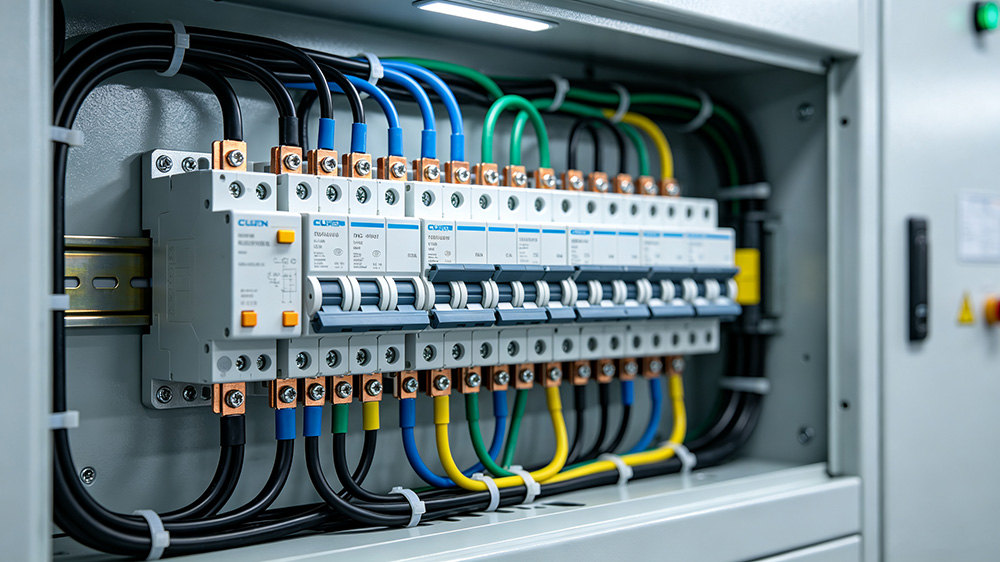
Distribution boards serve as the central point for power distribution throughout a building. Because multiple circuits converge inside the enclosure, loose terminals, overloaded outgoing circuits, or aging protective devices can generate excessive heat over time.
Routine inspection of cable connections, protective devices, and busbars helps reduce the likelihood of overheating inside the panel.
Residential Electrical Wiring
Older residential installations often contain aging cables, insufficient circuit capacity, or electrical panels that no longer match today’s household power demand. The increasing use of air conditioners, electric heaters, and kitchen appliances places additional stress on existing wiring.
Upgrading outdated circuits and installing modern protective devices can significantly improve electrical safety in residential buildings.
Industrial Equipment and Motor Circuits
Industrial electrical systems frequently operate under high load conditions for extended periods. Motors, control panels, and production equipment may experience overloads, insulation deterioration, or loose power connections caused by vibration and continuous operation.
Proper coordination of circuit protection devices and preventive maintenance helps reduce fire risks in industrial facilities.
Commercial Buildings
Office buildings, shopping malls, hotels, and other commercial facilities rely on extensive electrical distribution networks to supply lighting, HVAC systems, elevators, and information technology equipment. Continuous operation and changing load conditions require reliable circuit protection throughout the distribution system.
Regular inspection and testing help identify developing electrical faults before they affect building operation.
Extension Cords and Temporary Power Connections
Temporary wiring and extension cords are often used during construction, maintenance, or when permanent outlets are unavailable. Improper cable sizing, damaged insulation, or connecting multiple high-power loads to one extension cord can create excessive heat and increase fire risk.
Temporary power installations should be inspected regularly and used only within their rated capacity.
Battery Energy Storage and Renewable Energy Systems
Battery energy storage systems (BESS) and solar PV installations introduce additional DC circuits, power conversion equipment, and battery interfaces. These systems require appropriate protection against overloads, short circuits, earth leakage, and transient overvoltages to maintain safe operation.
Selecting protection devices that match the system design helps improve both equipment protection and operational reliability.
Summary
Fire hazards in low-voltage electrical systems can exist in residential, commercial, industrial, and renewable energy applications. Many of these risks develop gradually through overloaded circuits, deteriorating insulation, loose connections, or inadequate maintenance. Combining suitable circuit protection devices with regular inspections and preventive maintenance helps reduce fire risks and supports safer electrical system operation.
How Modern Circuit Protection Prevents Electrical Fires
Modern electrical protection has evolved far beyond simply disconnecting overloaded circuits. Today’s low-voltage electrical systems use multiple protective devices that work together to detect different types of faults before excessive heat, electrical arcing, or insulation failure develops into a fire.
Each protection device is designed to respond to a specific electrical hazard. When properly selected and coordinated, these devices reduce equipment damage, improve system reliability, and help minimize the risk of electrical fires in residential, commercial, and industrial installations.
Overload Protection
Overload protection is the first line of defense against overheating caused by excessive current. When electrical equipment draws more current than the circuit is designed to carry for an extended period, conductors gradually heat up. If this condition continues, cable insulation may deteriorate and nearby combustible materials may eventually ignite.
Miniature Circuit Breakers (MCBs) and Molded Case Circuit Breakers (MCCBs) use thermal trip mechanisms to monitor current continuously. Once the overload exceeds the allowable limit for a specified time, the breaker automatically disconnects the circuit before excessive temperatures develop.
Proper overload protection not only protects cables and electrical equipment but also helps extend the service life of the entire electrical installation.
Short-Circuit Protection
Short circuits create extremely high fault currents within milliseconds. These currents generate intense thermal and mechanical stress that can rapidly damage conductors, busbars, and electrical equipment.
Modern MCBs and MCCBs incorporate magnetic trip mechanisms that react almost instantly to high fault currents. Fast interruption limits the amount of energy released during the fault, reducing cable damage and lowering the possibility of surrounding materials catching fire.
Current-limiting circuit breakers further reduce thermal stress by minimizing the peak fault current that passes through the circuit.
Earth Leakage Protection
Not every dangerous electrical fault produces enough current to trip a conventional circuit breaker. Leakage current caused by damaged insulation, moisture, or accidental contact with grounded metal parts may continue unnoticed while creating unsafe operating conditions.
Residual Current Devices (RCDs), Residual Current Circuit Breakers (RCCBs), and Residual Current Breakers with Overcurrent Protection (RCBOs) continuously compare the current flowing through the live and neutral conductors. When an imbalance is detected, indicating current is flowing to earth, the device disconnects the circuit within a very short time.
Although leakage protection is primarily intended to reduce the risk of electric shock, it also helps identify insulation faults that could contribute to overheating and electrical fires.
Arc Fault Detection
Arc faults are one of the most difficult electrical hazards to detect using traditional circuit breakers. Loose terminals, damaged cables, aging insulation, or crushed conductors can produce intermittent electrical arcs that generate extremely high temperatures without creating a large overcurrent.
Arc Fault Detection Devices (AFDDs) monitor the electrical waveform continuously and analyze the unique characteristics of arc faults. They can identify both series arc faults, which occur along a damaged conductor, and parallel arc faults, which occur between conductors or between a conductor and earth.
By disconnecting the circuit before prolonged arcing causes ignition, AFDDs provide an additional layer of protection in locations where fire safety is a primary concern.
Surge Protection
Electrical systems are regularly exposed to transient overvoltages caused by lightning activity and switching operations within the power network. Although these surge events last only microseconds, repeated exposure can gradually weaken insulation and shorten the service life of electrical equipment.
Surge Protective Devices (SPDs) divert transient overvoltages safely to the grounding system before they reach sensitive equipment. This helps reduce insulation stress, protects electronic devices, and lowers the possibility of faults developing after repeated surge exposure.
Coordinated Protection
No single protective device can address every electrical fault. Modern electrical installations rely on coordinated protection, where multiple devices work together to respond to different fault conditions throughout the distribution system.
For example, an MCCB may protect the main incoming circuit, MCBs protect branch circuits, RCBOs provide earth leakage protection for individual loads, AFDDs detect hazardous arc faults, and SPDs reduce transient overvoltage. When properly coordinated, each device performs its own function without unnecessarily interrupting unaffected circuits.
This layered protection strategy improves both electrical safety and overall system reliability.
Summary
Modern circuit protection combines multiple technologies to address different electrical hazards before they develop into fire incidents. Overload protection, short-circuit protection, earth leakage protection, arc fault detection, and surge protection each serve a different purpose, but together they create a more comprehensive safety strategy. Selecting the right combination of protective devices and ensuring they are correctly installed and maintained can significantly reduce fire risks while improving the long-term performance of low-voltage electrical systems.
Typical Protection Devices Used in Fire Prevention
No single protective device can prevent every type of electrical fault. Modern low-voltage electrical systems use multiple protection devices, each designed to address a specific hazard such as overloads, short circuits, earth leakage, arc faults, or transient overvoltages. When these devices are properly selected and coordinated, they provide comprehensive protection for electrical equipment, wiring, and building occupants.
The following table summarizes the most common circuit protection devices used to reduce electrical fire risks and improve overall electrical safety.
| Protection Device | Primary Function | Typical Applications |
|---|---|---|
| MCB (Miniature Circuit Breaker) | Protects against overload and short-circuit faults in low-current circuits. | Residential distribution boards, lighting circuits, socket outlets. |
| MCCB (Molded Case Circuit Breaker) | Provides overload and short-circuit protection for higher-current circuits with adjustable trip settings. | Commercial buildings, industrial equipment, main distribution panels. |
| RCCB (Residual Current Circuit Breaker) | Detects earth leakage current and disconnects the circuit to reduce electric shock hazards. | Residential, commercial, and public buildings requiring leakage protection. |
| RCBO (Residual Current Breaker with Overcurrent Protection) | Combines overload, short-circuit, and earth leakage protection in a single device. | Final distribution circuits, offices, hotels, hospitals, and residential installations. |
| AFDD (Arc Fault Detection Device) | Detects hazardous series and parallel arc faults that may lead to electrical fires. | Bedrooms, wooden buildings, schools, hotels, and locations with increased fire risk. |
| SPD (Surge Protective Device) | Limits transient overvoltages caused by lightning or switching operations. | Main distribution boards, industrial facilities, commercial buildings, and renewable energy systems. |
Working Together for Better Protection
Each protection device is designed to address a different type of electrical fault. In a typical low-voltage distribution system, these devices are often installed together rather than used independently. For example, an MCCB may protect the main incoming circuit, MCBs protect branch circuits, RCBOs provide additional protection for final circuits, AFDDs monitor dangerous arc faults, and SPDs reduce the impact of transient overvoltages. This layered approach helps improve overall system safety while reducing the likelihood of electrical fires.
WESTHOMES Circuit Protection Solutions
Electrical fire prevention depends not only on proper system design but also on selecting protection devices that match the operating conditions of the installation. A well-coordinated protection system helps detect electrical faults early, limits equipment damage, and supports the reliable operation of low-voltage distribution systems.
WESTHOMES offers a comprehensive range of low-voltage circuit protection products designed for residential, commercial, industrial, and renewable energy applications. From branch circuit protection to advanced fault detection and surge protection, our solutions are developed to address different electrical hazards while complying with internationally recognized standards.
Our product portfolio includes:
- MCB: Reliable overload and short-circuit protection for residential and commercial branch circuits.
- MCCB: High-performance protection for higher-current distribution systems with adjustable trip characteristics.
- RCBO: Combined overload, short-circuit, and earth leakage protection in one compact device for enhanced circuit safety.
- AFDD: Intelligent arc fault detection designed to identify hazardous series and parallel arc faults before they can develop into electrical fires.
- SPD: Protection against transient overvoltages caused by lightning strikes and switching operations, helping safeguard sensitive electrical equipment.
By combining these protection devices into a coordinated electrical distribution system, WESTHOMES solutions help improve system reliability, reduce maintenance requirements, and support safer electrical installations across a wide range of applications.
How Different Protection Devices Work Together
Modern electrical installations rarely rely on a single protective device. Instead, different circuit protection devices are coordinated throughout the distribution system, with each one responsible for detecting and clearing a specific type of electrical fault. This layered protection strategy improves system safety, reduces unnecessary power interruptions, and helps limit the impact of faults to the affected circuit.
A typical low-voltage distribution system may be arranged as follows:
Surge Protective Device (SPD)
Installed near the incoming power supply, the SPD is the first line of defense against transient overvoltages caused by lightning strikes or switching operations. It diverts surge energy safely to earth before it reaches downstream equipment, helping protect insulation and sensitive electronic devices.
Main Circuit Protection (MCCB)
The MCCB protects the main incoming circuit against overloads and high fault currents. It is commonly installed at the main distribution board and provides protection for the entire electrical installation while coordinating with downstream protective devices.
Branch Circuit Protection (MCB)
MCBs protect individual branch circuits such as lighting, socket outlets, air-conditioning units, and small electrical equipment. By isolating only the affected circuit during an overload or short circuit, they help maintain power supply to the rest of the installation.
Earth Leakage Protection (RCBO)
RCBOs combine overload, short-circuit, and earth leakage protection in a single device. They are typically installed on circuits where personnel protection and equipment safety are both required, disconnecting the circuit immediately when leakage current exceeds the preset threshold.
Arc Fault Detection (AFDD)
AFDDs provide an additional layer of protection by monitoring electrical waveforms for hazardous arc signatures. They can identify series and parallel arc faults that conventional circuit breakers may not detect, reducing the possibility of fire caused by damaged cables or loose electrical connections.
Layered Protection Improves Electrical Safety
Each protective device performs a different function within the electrical distribution system. Rather than replacing one another, they complement each other to address a wider range of electrical hazards. When properly selected and coordinated, this layered protection approach helps improve equipment protection, reduces downtime, and enhances the overall safety and reliability of low-voltage electrical installations.
Best Practices for Electrical Fire Prevention
Preventing electrical fires requires more than installing circuit breakers. A comprehensive fire prevention strategy combines proper electrical design, suitable protection devices, routine inspections, and regular maintenance. Many electrical faults develop gradually over time, making early detection and preventive measures just as important as the protective devices themselves.
The following practices can help improve electrical safety and reduce the likelihood of fire-related incidents in residential, commercial, and industrial installations.
- Perform Regular Electrical Inspections: Routine inspections help identify loose terminals, damaged insulation, overheating, corrosion, or other conditions that may develop into electrical faults. Periodic testing of distribution boards and electrical equipment allows potential problems to be corrected before they become safety hazards.
- Avoid Circuit Overloading: Every electrical circuit is designed to carry a specific amount of current. Connecting too many high-power appliances to a single circuit increases conductor temperature and places additional stress on cables and protective devices. Proper load distribution helps maintain safe operating conditions.
- Replace Aging Wiring: Electrical insulation naturally deteriorates over time due to heat, moisture, and environmental exposure. Replacing aging cables before insulation failure occurs helps reduce the possibility of leakage currents, arc faults, and overheating.
- Tighten Electrical Connections: Loose terminals and poorly secured conductors create high-resistance connections that generate localized heating. Regularly checking and tightening cable connections helps maintain stable electrical performance and reduces unnecessary heat buildup.
- Test RCCBs and RCBOs Periodically: Residual current protection devices should be tested according to the manufacturer’s recommendations. Routine testing verifies that the trip mechanism continues to operate correctly and that leakage protection remains effective throughout the service life of the device.
- Upgrade Outdated Distribution Panels: Older distribution boards may no longer meet today’s electrical demand or safety requirements. Replacing obsolete panels with modern equipment improves protection coordination and allows advanced devices such as RCBOs, AFDDs, and SPDs to be incorporated into the system.
- Install Surge Protection: Lightning strikes and switching operations can introduce transient overvoltages into electrical systems. Installing Surge Protective Devices (SPDs) helps reduce voltage stress on electrical equipment and minimizes insulation damage caused by repeated surge events.
- Consider Arc Fault Detection: Conventional circuit breakers may not detect all hazardous arc faults. In locations where damaged wiring or combustible building materials increase fire risk, Arc Fault Detection Devices (AFDDs) provide an additional layer of protection by identifying dangerous arcing conditions before ignition occurs.
Summary
Electrical fire prevention is most effective when proper protection devices are combined with good installation practices and regular maintenance. Routine inspections, appropriate load management, timely equipment upgrades, and the use of modern protection technologies all contribute to safer and more reliable low-voltage electrical systems.
Choosing the Right Circuit Protection Devices
Selecting the appropriate circuit protection device involves more than matching the rated current of the electrical load. Every electrical installation has its own operating characteristics, environmental conditions, and protection requirements. Choosing the right device helps improve system performance, reduces unnecessary tripping, and provides more effective protection against electrical faults that could lead to overheating or fire.
When evaluating circuit protection devices, the following factors should be considered together rather than individually.
Load Characteristics
The type of electrical load directly influences the selection of a protection device. Resistive loads such as lighting or electric heaters generally operate with stable current, while motors, pumps, compressors, and transformers may generate high inrush currents during startup. Electronic equipment and variable frequency drives may also introduce additional operating characteristics that should be considered.
Selecting a device that matches the actual load behavior helps maintain stable operation while reducing unnecessary tripping.
Rated Current
The rated current of the protective device should be selected according to the calculated load current and the current-carrying capacity of the conductors. Choosing a breaker with a rating that is too low may result in frequent tripping, while an excessively oversized device may not provide adequate protection for the connected cables.
Proper current selection should always be based on electrical calculations rather than estimates.
Rated Voltage and Breaking Capacity
The protection device must be suitable for the system operating voltage and capable of interrupting the highest prospective fault current at its installation location. In installations where fault current levels are relatively high, selecting sufficient breaking capacity helps ensure the device can safely interrupt fault conditions without sustaining damage.
Leakage and Arc Fault Protection
Some circuits require additional protection beyond overload and short-circuit protection. Residential socket circuits, wet locations, healthcare facilities, and many public buildings often require earth leakage protection through RCCBs or RCBOs. In locations where damaged wiring or combustible building materials increase fire risk, AFDDs can provide additional protection by detecting hazardous arc faults.
The protection method should be selected according to the application and applicable electrical regulations.
Installation Environment
Environmental conditions can influence the long-term performance of electrical protection devices. High ambient temperatures, dust, humidity, vibration, and corrosive atmospheres may affect device operation or shorten service life. Selecting products with appropriate enclosure ratings and environmental suitability helps improve reliability under demanding conditions.
Protection Coordination
A modern electrical distribution system usually contains multiple protective devices arranged at different levels. Proper coordination between upstream and downstream breakers allows the device closest to the fault to disconnect first, minimizing the impact on the rest of the electrical installation.
Well-designed protection coordination also simplifies maintenance and improves system availability.
Summary
Choosing the right circuit protection device requires evaluating electrical load characteristics, rated current, system voltage, breaking capacity, additional protection requirements, installation conditions, and protection coordination as a whole. A well-matched protection scheme not only improves equipment safety but also helps reduce downtime, supports reliable operation, and lowers the likelihood of electrical faults developing into fire hazards.
Applications
Electrical fire prevention is important across a wide range of low-voltage electrical installations. Different environments have different power distribution requirements and fire risks, so the combination of circuit protection devices should be selected according to the application. By using appropriate protective devices and coordinating them properly, electrical systems can achieve safer operation and better reliability.
The following examples show typical applications and the recommended protection devices commonly used in each environment.
| Application | Typical Fire Risks | Recommended Protection |
|---|---|---|
| Residential Buildings | Overloaded socket circuits, aging wiring, damaged appliances | MCB + RCBO + SPD |
| Commercial Buildings | High equipment density, continuously changing electrical loads | MCCB + RCBO + SPD |
| Industrial Facilities | Motor starting currents, heavy-duty machinery, cable overheating | MCCB + RCBO + AFDD + SPD |
| Hospitals & Healthcare Facilities | High reliability requirements, sensitive medical equipment | MCCB + RCBO + AFDD + SPD |
| Data Centers | Continuous operation, surge-sensitive electronic equipment | MCCB + SPD + RCBO |
| Schools & Public Buildings | High occupancy, extensive branch circuits | MCB + RCBO + AFDD |
| Hotels & Residential Apartments | Guest room appliances, hidden wiring, high fire safety requirements | MCB + RCBO + AFDD + SPD |
| Solar PV & Renewable Energy Systems | DC circuits, transient overvoltages, inverter protection | DC Circuit Breaker + SPD |
Selecting Protection Based on the Application
Although many electrical installations share similar protection requirements, the recommended combination of protective devices may vary depending on the load characteristics, operating environment, and applicable electrical standards. Evaluating the specific conditions of each installation helps ensure that the protection system provides effective fault detection while maintaining reliable operation.
Common Mistakes That Increase Fire Risk
Many electrical fires are not caused by defective protection devices but by incorrect installation, improper equipment selection, or inadequate maintenance. Small issues that are overlooked during daily operation can gradually develop into overheating, insulation damage, or electrical faults. Understanding these common mistakes helps reduce fire risks and improve the long-term safety of electrical systems.
- Using Oversized Circuit Breakers: Selecting a circuit breaker with a rating that is much higher than the circuit requires may prevent the breaker from disconnecting the circuit when conductors begin to overheat. Circuit protection devices should always be matched to the cable capacity and calculated load current.
- Ignoring Frequent Tripping: Repeated tripping is often an indication of an underlying electrical problem rather than a faulty circuit breaker. Simply resetting the breaker without identifying the cause may allow hidden faults to worsen over time.
- Loose Electrical Connections: Loose terminals and poorly secured conductors create high-resistance contact points that generate localized heat. Without regular inspection, this heat can damage insulation and increase the likelihood of electrical fires.
- Continuing to Use Aging Distribution Panels: Older electrical panels may no longer provide the level of protection required for today’s electrical loads. Aging components, worn contacts, and outdated protection technology can reduce overall system reliability.
- Operating Without Surge Protection: Lightning strikes and switching surges can damage insulation and sensitive electrical equipment. Installing appropriate Surge Protective Devices (SPDs) helps reduce the effects of transient overvoltages and improves overall system protection.
- Lack of Earth Leakage Protection: Circuits without RCCBs or RCBOs may not disconnect quickly when earth leakage faults occur. Installing leakage protection devices helps improve both personnel safety and electrical system protection.
- Mixing Different Cable Sizes: Using conductors with different current-carrying capacities on the same protected circuit may result in smaller cables being exposed to currents beyond their design limits. Proper cable sizing should always be coordinated with the selected protective device.
- Skipping Routine Maintenance: Electrical protection devices and distribution equipment should be inspected and tested periodically throughout their service life. Routine maintenance helps identify developing problems early and keeps the protection system operating as intended.
Summary
Many electrical fire hazards can be avoided through proper equipment selection, correct installation, and regular maintenance. Paying attention to these common mistakes and correcting them promptly helps improve electrical safety, extends equipment service life, and reduces the possibility of fire-related incidents in low-voltage electrical systems.
Standards and Electrical Fire Safety
Electrical fire prevention is supported by a range of international standards that govern electrical installations, circuit protection devices, and workplace safety. These standards provide guidance on equipment design, installation practices, testing procedures, and maintenance requirements, helping engineers and contractors build safer and more reliable low-voltage electrical systems.
While local regulations may differ from one country to another, many electrical products and installations are designed according to internationally recognized IEC and NFPA standards.
| Standard | Scope |
|---|---|
| IEC 60898-1 | Specifies requirements for Miniature Circuit Breakers (MCBs) used in residential and similar applications. |
| IEC 60947-2 | Covers Molded Case Circuit Breakers (MCCBs) and other low-voltage industrial circuit breakers. |
| IEC 61008-1 | Defines performance requirements for RCCBs providing earth leakage protection without overcurrent protection. |
| IEC 61009-1 | Covers RCBOs that combine earth leakage, overload, and short-circuit protection. |
| IEC 62606 | Specifies requirements for Arc Fault Detection Devices (AFDDs) used to reduce fire risks caused by electrical arc faults. |
| IEC 61643 Series | Covers Surge Protective Devices (SPDs) used to protect electrical systems against transient overvoltages. |
| NFPA 70 (National Electrical Code) | Provides electrical installation requirements widely adopted in the United States to improve electrical safety. |
| NFPA 70E | Focuses on electrical safety in the workplace, including safe work practices and hazard reduction. |
Following Recognized Standards
Selecting certified protection devices is only part of an effective electrical fire prevention strategy. Proper installation, coordination, inspection, and maintenance should also follow the applicable standards and local electrical regulations. Compliance with these requirements helps improve system reliability, supports safe operation, and reduces the likelihood of electrical faults developing into fire hazards throughout the service life of the installation.
Frequently Asked Questions (FAQ)
Conclusion
Electrical fires often begin with small faults that develop gradually over time. Overloaded circuits, loose electrical connections, aging insulation, earth leakage, and arc faults can all increase the risk of overheating if they are not identified and corrected early. Understanding these risks and applying appropriate protective measures helps improve the safety and reliability of low-voltage electrical systems.
Modern circuit protection technologies—including MCBs, MCCBs, RCCBs, RCBOs, AFDDs, and SPDs—each address different types of electrical hazards. When these devices are properly selected, coordinated, and maintained, they work together to reduce the likelihood of electrical fires, protect valuable equipment, and support the long-term, reliable operation of residential, commercial, and industrial electrical installations.

--- END ---
In this blog
Featured Articles
Get A Free Quote