Introduction
Imagine you are standing in front of a panel, looking at a row of circuit breakers. Two types catch your eye: MCCB and MPCB. They look similar, and both promise to “protect” your system. But which one should you pick?
The truth is, the difference is not in their appearance—it’s in what each device is actually protecting. MCCB is designed to safeguard electrical circuits, keeping the distribution system stable. The device built to ride through motor starting current handles high startup current, overloads, and phase imbalance.
It sounds simple, but in real-life installations, choosing the wrong one can lead to motor overheating, unexpected shutdowns, or expensive repairs.
What is MCCB?
An MCCB, or molded case device for distribution feeders, is a versatile device used in electrical distribution systems. It interrupts current when abnormal conditions such as overload or short circuit occur, protecting cables, feeders, and connected equipment. MCCBs operate at the distribution level, and they do not care whether the load is a motor, lighting, or machinery—they simply keep the circuit within safe limits.
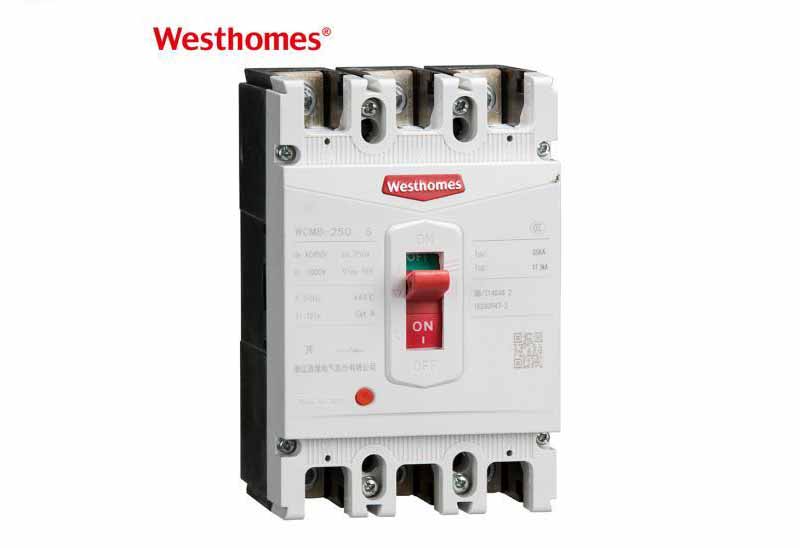
The WESTHOMES WCM8 series MCCB is a practical example of this type. It supports AC 50Hz circuits up to 400V and current ranges from 6A to 2000A. It provides reliable protection against overload, short circuit, and under voltage, and it can handle infrequent motor starts.
WCM8 can be installed vertically or horizontally and complies with IEC 60947-2 standards. Using a breaker like this helps maintain stability across distribution panels and connected equipment, while indirectly supporting motor protection through upstream safeguarding.
What is MPCB?
An MPCB, or Motor Protection Circuit Breaker, is designed to address the unique needs of motors. Motors are not ordinary loads—they draw high starting currents, operate under varying mechanical loads, and are sensitive to phase loss or imbalance. A standard MCCB is not optimized for these conditions.
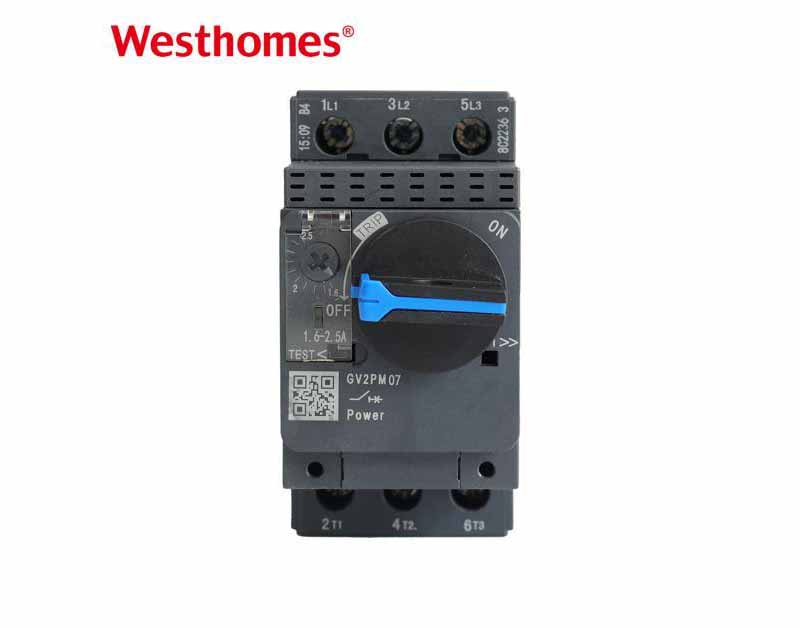
The WESTHOMES GV2 Motor Protection Circuit Breaker is tailored for these challenges. It supports AC voltages up to 690V and currents from 0.1A to 80A. It protects motors against overload, phase failure, and short circuits and can handle infrequent motor starts for three-phase squirrel cage asynchronous motors. GV2 can also serve as line protection or as an isolator.
Unlike MCCB, MPCB are selected based on the motor’s full-load current and tuned to its operating characteristics. In practice, they act as dedicated protection for the motor itself.
MCCB vs MPCB: The Real Difference
| Aspect | MCCB | MPCB |
| Protection Target | Electrical circuits | Electric motors |
| Design Purpose | General protection | Motor-specific protection |
| Protection Functions | Overload, short circuit | Overload, short circuit, phase loss |
| Application Level | Distribution / feeder | Motor branch |
| Setting Basis | Circuit capacity | Motor full-load current |
| Behavior | Standard tripping | Motor-adapted tripping |
The real difference is in philosophy. MCCB protects the overall system, while MPCB focuses on the motor itself. This is why an MPCB can tolerate motor startup currents without tripping, whereas an MCCB needs careful selection to avoid nuisance trips.
Are They Interchangeable?
Technically an MCCB can sit in the motor circuit, but it will not offer complete protection on its own. It cannot detect phase loss, which is one of the most common causes of motor failure. In practice, MCCBs and MPCBs are often used together. A typical configuration places the MCCB upstream and the MPCB closer to the motor, ensuring protection at both system and motor levels.