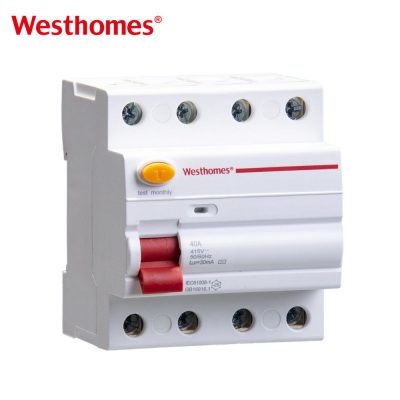
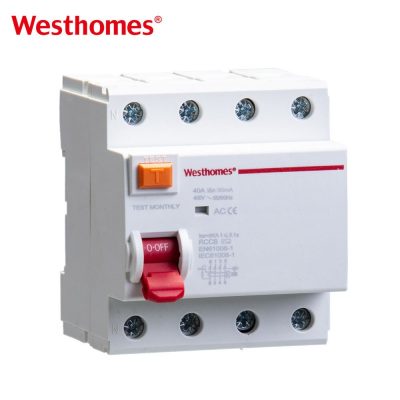
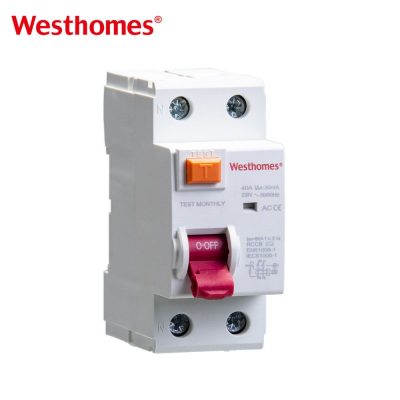
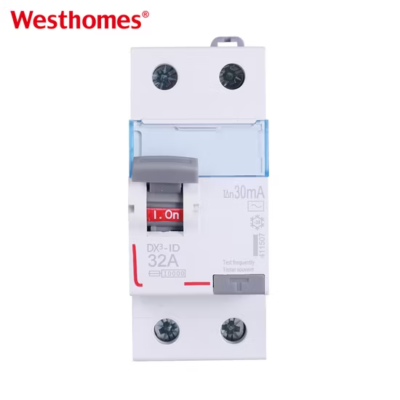
DX3-ID 3P+N RCCB | 63A Mini Circuit Breaker | 230V/400V
The DX3-ID 3P+N RCCB is ideal for professionals seeking a versatile and efficient residual current solution in multi-phase low-voltage electrical systems.
Get quick appointment for technical support!

Shop the DX3-ID 3P+N Residual Current Circuit Breaker, ideal for AC 230V/400V systems with 63A protection against leakage, overload, and short circuits.
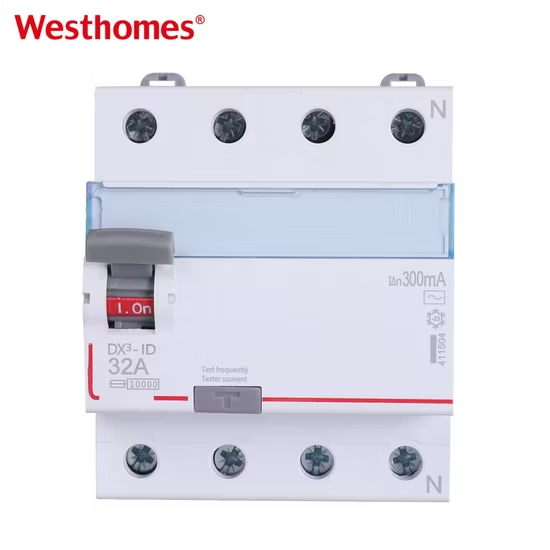
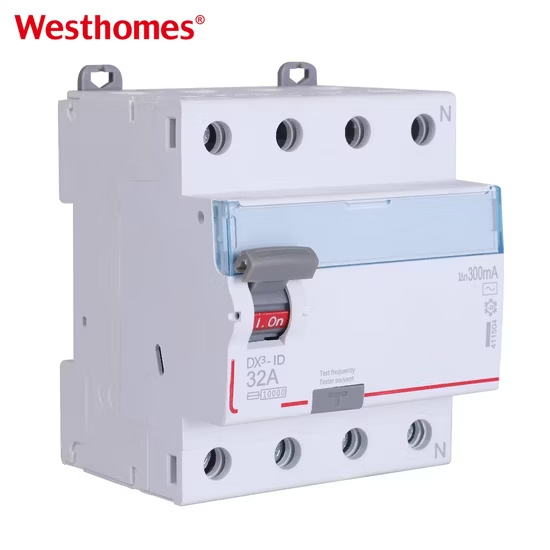
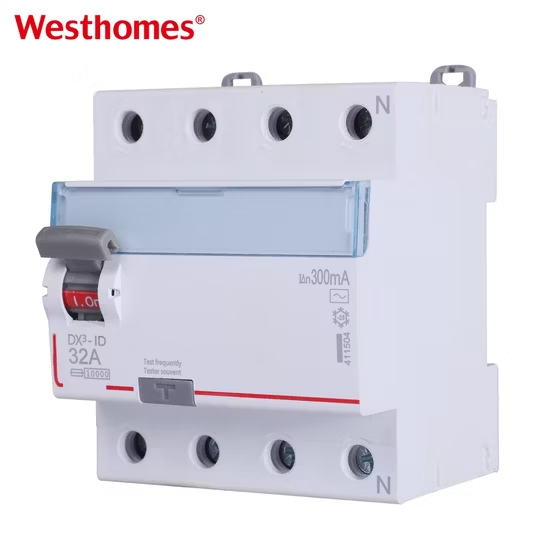
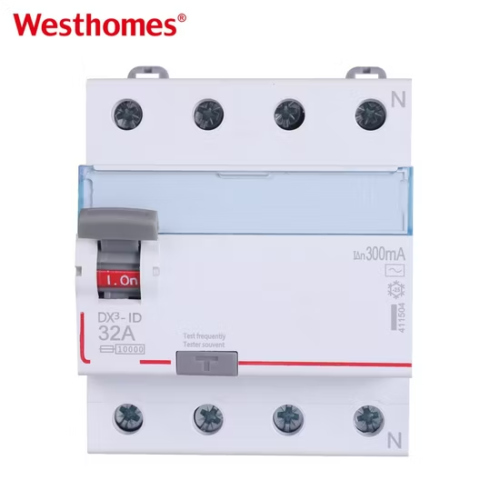
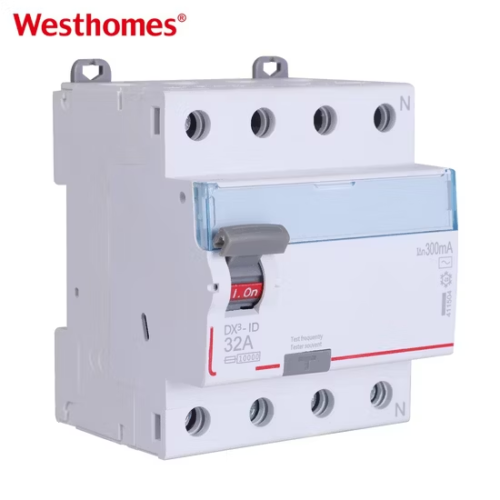
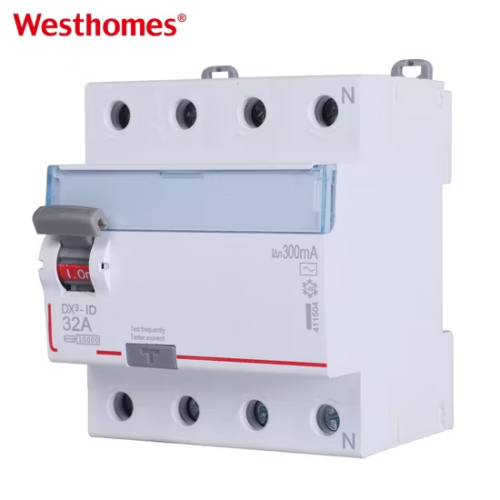
The DX3-ID 3P+N RCCB is ideal for professionals seeking a versatile and efficient residual current solution in multi-phase low-voltage electrical systems.
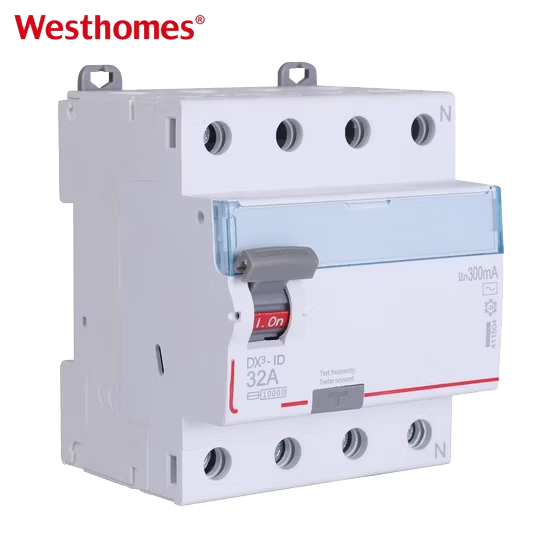
It ensures reliable safety and performance in environments where precise power protection is critical. This advanced Miniature Circuit Breaker (MCB) with 3P+N configuration offers comprehensive four-wire protection, making it ideal for three-phase systems requiring high levels of safety and operational reliability.
When the residual current in the circuit exceeds the predetermined threshold or if a human body is exposed to electric shock, the RCCB rapidly disconnects the power supply to ensure protection of both personnel and connected equipment. Its compact structure, stable performance, and high-impact, flame-retardant housing make it a dependable solution for a wide range of electrical protection applications.
Key Features:
Model Number: DX3-ID
Configuration: 3P+N (Three Pole + Neutral)
Rated Voltage: AC 230V/400V
Rated Frequency: 50Hz
Rated Current: Up to 63A
Breaking Capacity: 6kA
Protection Functions:
Residual current (earth leakage) protection
Overload protection
Short circuit protection
Material: Flame-retardant and impact-resistant housing
Structure: Compact design for easy installation in distribution boxes
Applications:
Commercial buildings
Industrial workshops
Residential apartment complexes
Equipment rooms
Power distribution panels
Standards Compliance: IEC/EN 61008-1
| Rated current | 10, 16, 20, 25, 32, 40, 50, 63A |
| Rated voltage Ue | AC240V (1P+N, 2P); AC400V (3P+N, 4P) |
| Rated insulation voltage Ui | AC415 |
| Rated impulse withstand voltage Uimp | 4kV |
| Rated frequency | 50/60Hz |
| Number of poles | 1P+N, 3P+N |
| Module size | 36mm, 72mm |
| Circuit type | AC type, A type, B type |
| Breaking capacity | 6000A, 10000A |
| Rated residual current I△n | 10mA, 30mA, 100mA, 300mA |
| Rated residual operation current | 10, 30, 100, 300mA |
| Optimum operation temperature | -5ºC to 40ºC |
| Terminal tightening torque | 2.5-4N/m |
| Terminal capacity (top) | 25mm² |
| Terminal capacity (bottom) | 25mm² |
| Electro-mechanical endurance | 4000 cycles |
| Mounting | 35mm DIN rail |
| The very new tripping structure makes more in safety | |
| Suitable busbar | PIN busbar |
| Standard | IEC61008-1 |
| Model NO. | DX3-ID |
| Arc-extinguishing Medium | Air |
| Structure | MCB |
| Type | Circuit Breaker |
| Certification | ISO9001-2000, CE, CB, CCC |
| Ka | 6ka, 10ka |
| Voltage | AC240V/AC400V |
| Specification | 10A-63A |
| Origin | China |
| Production Capacity | 365000 |
| Speed | Normal Type Circuit Breaker |
| Installation | Fixed |
| Poles Number | 3p+N |
| Function | Conventional Circuit Breaker, Circuit-Breaker Failure Protection, Overcurrent Protection, OVP(Overvoltage Protection) |
| Production Line | 100% Automic |
| Cooperation Type | OEM ODM |
| Transport Package | Standard |
| Trademark | Westhomes |
| HS Code | 8536300000 |
The DX3-ID is a DIN-rail mounted Residual Current Circuit Breaker (RCCB, also called an RCD) that protects people and installations against earth-leakage faults. Its 3P+N configuration switches three phase conductors (L1, L2, L3) plus the neutral, making it suited to three-phase four-wire systems. It detects current imbalance between the phases and neutral and cuts the circuit when leakage exceeds its rated sensitivity.
Inside, a toroidal zero-sequence current transformer (core-balance CT) passes all live conductors (L1, L2, L3 and N) through its window. Under healthy conditions the vector sum of the currents is zero, so the CT outputs nothing. When insulation fails or someone touches a live part, some current flows to earth, creating an imbalance; the CT signal energizes the trip mechanism, opening all poles typically within milliseconds.
The 3P+N construction is intended for three-phase four-wire distribution, typically 400V (line-line) / 230V (line-neutral) at 50/60 Hz, common in residential, commercial and light industrial panels. It breaks all three phases together with the neutral, ensuring safe isolation of the downstream three-phase and single-phase branch circuits. Always confirm the rated voltage (Ue) printed on the product nameplate for the exact variant.
"3P+N" means the device has four terminals on each side for L1, L2, L3 and N, and it opens all four conductors when it trips. This is important because in three-phase systems a leakage can occur on any phase, and switching the neutral together with the phases prevents the downstream load from being left with a floating or undesired neutral reference.
No. An RCCB provides residual-current (earth-leakage) protection only; it has no thermal or magnetic overcurrent trip. It must always be installed downstream of — or in series with — an upstream MCB or MCCB that protects the cables and load against overload and short-circuit faults. Using it without overcurrent protection is unsafe and can damage the device during a short circuit.
RCCBs in this class are commonly offered in 30 mA, 100 mA and 300 mA sensitivities (IΔn). The 30 mA version is the standard for personal shock protection on socket outlets and final circuits, while 100–300 mA versions are used upstream for fire protection and discrimination. The exact rating for a given DX3-ID unit must be read from the nameplate label before selection.
Type AC RCCBs only respond to smooth sinusoidal alternating residual currents. Type A devices additionally detect pulsating DC residual currents, which are produced by modern electronics such as variable-speed drives, washing machines, inverters and LED drivers. For installations with electronic loads, Type A is generally recommended; legacy purely resistive circuits may use Type AC.
Mount it on a standard 35 mm DIN rail in the distribution board, connect the supply (incoming L1/L2/L3 and N) to the line-side terminals marked on the top, and the load (outgoing) to the lower load-side terminals. Ensure every conductor belonging to the protected circuit passes through the device — never bypass the neutral — and torque conductors to the manufacturer's specified value. Mixed or shared neutrals between RCCBs are a leading cause of nuisance tripping.
Common causes include damp or degraded insulation, a faulty appliance leaking to earth, neutral-to-earth faults, mixed or crossed neutrals between RCCBs, and lightning-induced surges. A good diagnostic sequence is: disconnect all loads and try to reclose; if it stays on, reconnect loads one by one to identify the faulty circuit or appliance. Use an RCD tester and insulation-resistance tester to confirm the fault; do not simply bypass or oversize the RCCB.
Press the integrated "T" (test) button monthly while the circuit is energized; the device must trip immediately, which verifies the internal trip mechanism. During periodic electrical inspection (e.g. EICR-type checks), an electrician should measure the actual tripping current and time with a specialist RCD tester. If the device fails to trip on the test button, trips spontaneously without a clear cause, or shows visible damage, replace it rather than leaving it in service.
* indicates a required field


 155 MB