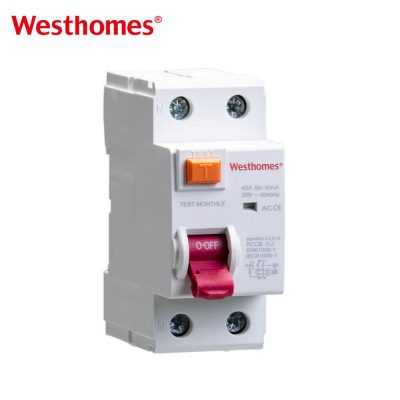
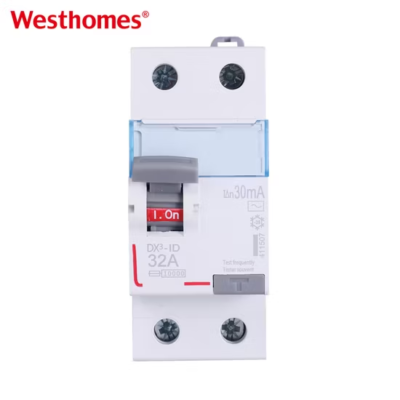
WSB5L Series 1P+N RCCB Residual Current Circuit Breaker | Overvoltage Protection
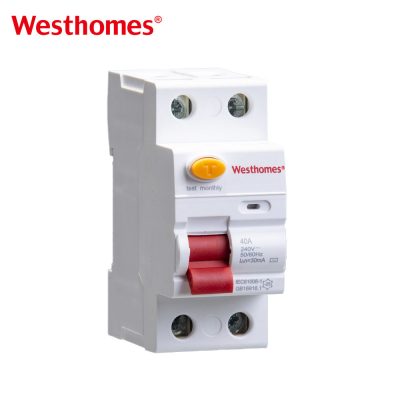
Engineered with a 1 Pole + Neutral configuration, this RCCB offers enhanced circuit separation and precise protection for residential and light commercial applications.
Get quick appointment for technical support!

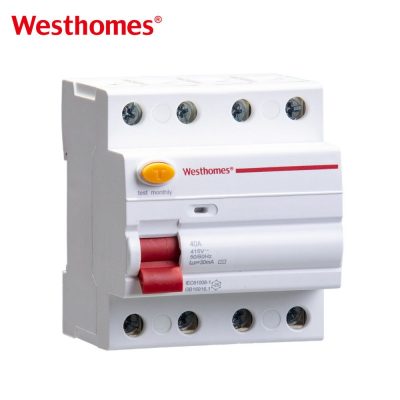
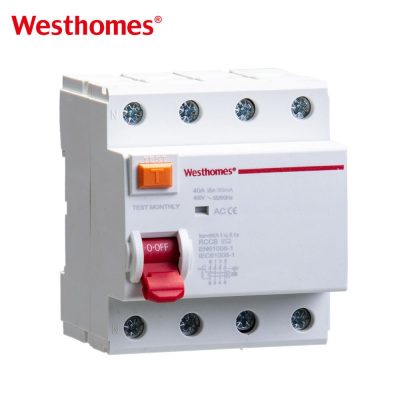
The WSB5L Series 1P+N RCCB (Residual Current Circuit Breaker) is a new-generation protective device designed for AC 50Hz distribution lines with a rated voltage of 240V/400V and rated current up to 63A.


Engineered with a 1 Pole + Neutral configuration, this RCCB offers enhanced circuit separation and precise protection for residential and light commercial applications.

When leakage current exceeds the preset threshold or in the event of an electric shock, the device automatically disconnects power within milliseconds, effectively preventing injury and equipment damage. In addition to earth leakage protection, it also features built-in overload, short circuit, and overvoltage protection, ensuring total system safety.
Constructed from high-impact resistant and flame-retardant materials, the compact RCCB unit is ideal for installation in distribution boxes, control cabinets, and consumer units. Its advanced internal structure guarantees stable performance, long service life, and reliable operation under normal and fault conditions.
Whether used in modern housing developments, industrial control panels, or energy management systems, the WSB5L 1P+N RCCB delivers efficient and safe power distribution protection in a compact, easy-to-install design.
| Rated Current | 16, 20, 25, 32, 40, 50, 63A |
| Rated Voltage Ue | AC240V (1P+N, 2P); AC400V (3P+N, 4P) |
| Rated Insulation Voltage Ui | AC415 |
| Rated Impulse Withstand Voltage Uimp | 4kV |
| Rated Frequency | 50/60Hz |
| Number of Poles | 1P+N, 3P+N |
| Module Size | 36mm, 72mm |
| Circuit Type | AC type, A type, B type |
| Breaking Capacity | 6000A, 10000A |
| Rated Residual Current I△n | 10mA, 30mA, 100mA, 300mA |
| Rated Residual Operation Current | 10, 30, 100, 300mA |
| Optimum Operation Temperature | -5ºC to 40ºC |
| Terminal Tightening Torque | 2.5-4N/m |
| Terminal Capacity (top) | 25mm² |
| Terminal Capacity (bottom) | 25mm² |
| Electro-mechanical Endurance | 4000 cycles |
| Mounting | 35mm DIN rail |
| The very new tripping structure makes more in safety | |
| Suitable Busbar | PIN busbar |
| Standard | IEC61008-1 |
| Model NO. | WSB5L |
| Arc-extinguishing Medium | Air |
| Structure | MCB |
| Type | Circuit Breaker |
| Certification | ISO9001-2000, CE, CB, CCC |
| Ka | 6ka, 10ka |
| Voltage | AC240V/AC400V |
| Specification | 10A-63A |
| Origin | China |
| Production Capacity | 365000 |
| Speed | Normal Type Circuit Breaker |
| Installation | Fixed |
| Poles Number | 1p+N, 3p+N |
| Function | Conventional Circuit Breaker, Circuit-Breaker Failure Protection, Overcurrent Protection, OVP(Overvoltage Protection) |
| Production Line | 100% Automic |
| Cooperation Type | OEM ODM |
| Transport Package | Standard |
| Trademark | Westhomes |
| HS Code | 8536300000 |
A Residual Current Circuit Breaker (RCCB) is a safety device that trips when current leakage to earth is detected, protecting people from electric shock and reducing fire risk. It uses a zero-sequence current transformer that sums the currents in the live and neutral conductors; under normal conditions they cancel, but any imbalance (leakage to earth) creates a residual current that the CT senses and triggers the trip mechanism. The WSB5L does not provide over-current or short-circuit protection on its own.
A 1P+N RCCB switches the live (phase) pole and also connects the neutral pole, but only the phase pole has over-current or residual-current sensing contacts that open on fault. The neutral is normally linked through so it can be disconnected for isolation, but it does not independently trip. This configuration is common in single-phase domestic and light-commercial final distribution boards.
Sensitivity is the residual current threshold at which the RCCB will trip; 30mA is the standard value for personal protection because a current above roughly 30mA through a human body can cause dangerous ventricular fibrillation. A 30mA RCCB trips quickly enough to save life on direct contact, while higher sensitivities (10mA) are used in special locations such as bathrooms. Lower sensitivities (100mA/300mA) are used for fire protection and discrimination.
Type AC RCCBs detect only sinusoidal alternating residual currents, while Type A also detects pulsating DC residual currents that can arise with electronic equipment such as variable-speed drives, LED drivers, and computers. In modern installations with lots of electronics, Type A is strongly recommended; Type AC is being phased out in many regions. Check the wiring standard applicable to your country to confirm the required type.
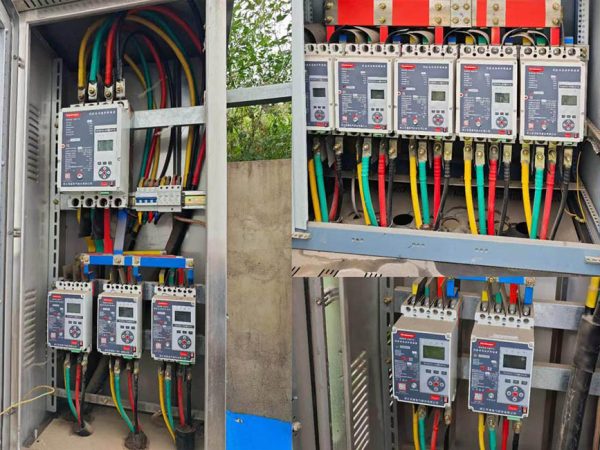
It mounts on a standard DIN rail inside a distribution board, with the live and neutral incoming and outgoing conductors connected to the marked terminals. Both live and neutral must pass through the RCCB's internal CT—never route the neutral around the device. Install it upright with adequate wiring space, and pair it with a separate MCB or fuse on the same outgoing circuit for over-current and short-circuit protection.
The test ("T") button simulates a residual current to verify the trip mechanism and internal electronics are still functional. It should be pressed monthly to confirm the breaker trips reliably. Pressing it after installation and after any maintenance is also good practice. If the breaker does not trip when the test button is pressed, it must be replaced immediately.
Nuisance tripping usually comes from transient leakage such as capacitor charging of surge protective devices, long cable runs to earth, electronic equipment generating pulsating DC leakage (which a Type AC may not even see correctly), or simultaneous leakage from several small loads adding up. Try disconnecting loads one by one to locate the source, and consider Type A, a higher sensitivity rating where appropriate, or an S (selective/delayed) type for upstream discrimination.
The RCCB is built and tested to IEC 61008 (residual current operated circuit-breakers without integral over-current protection for household and similar uses). CE marking indicates conformity to the Low Voltage Directive and EMC requirements. Model-specific certification (e.g., KEMA, SEMKO, INMETRO) may be available depending on market; verify with the supplier before ordering.
An RCCB only protects against residual (earth-leakage) currents and must be paired with a separate MCB for overload and short-circuit protection. An RCBO combines both functions in one DIN module: it provides over-current/short-circuit protection (like an MCB) and residual-current protection (like an RCCB). Use an RCCB where one device protects several downstream MCBs, or an RCBO where a single final circuit needs combined protection.
It is typically used as a main earth-leakage protection device in single-phase residential, office, and light-industrial distribution boards. It protects sockets, lighting, and fixed circuits against indirect and direct contact, reducing the risk of electric shock and earth-leakage fires. It is also commonly installed at the supply entrance or sub-board for outdoor circuits, bathrooms, and garden equipment where shock risk is higher.
* indicates a required field


 155 MB