Get quick appointment for technical support!

Get in Touch

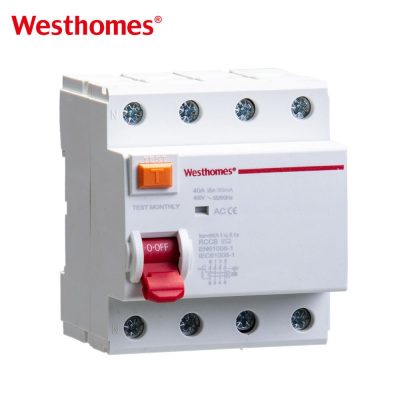
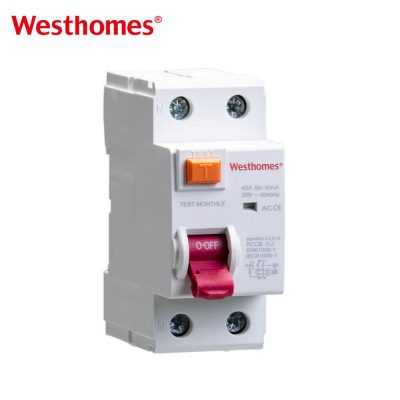
WSB5L Series RCCB | 6kA/10kA Residual Current Circuit Breaker

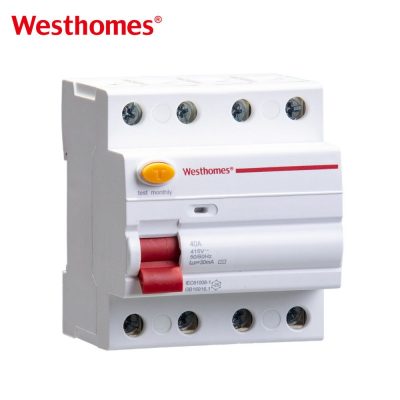
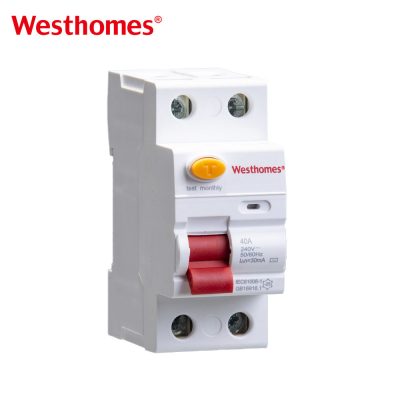
The Westhomes WSB5L Series RCCB is a high-performance residual current circuit breaker designed for use in low-voltage electrical distribution systems.

Social focus:

WSB5L Series RCCB | 6kA/10kA Residual Current Circuit Breaker

With advanced safety features, durable construction, and 6kA/10kA fault handling capability, the WSB5L RCCB is the ideal choice for dependable circuit protection in demanding environments.

WSB5L Series RCCB

With a rated breaking capacity of 6kA or 10kA, this RCCB provides superior short-circuit protection for critical infrastructure and high-load environments. It is CE and CB certified, ensuring compliance with international safety and performance standards.

Suitable for AC 240V/400V, 50Hz systems, and available in rated current options up to 63A, the WSB5L RCCB provides comprehensive protection against earth leakage, overload, and short circuit faults. When the residual current exceeds a specified threshold, the device responds instantly to disconnect the power supply, ensuring the safety of people and equipment.

Built with high-impact, flame-retardant materials, this RCCB offers compact design, long service life, and stable performance, making it ideal for applications in residential buildings, commercial offices, distribution networks, and industrial facilities. It also supports manual switching under normal conditions, meeting the needs of daily circuit operations.

KEY INFORMATION

Rated Current 16, 20, 25, 32, 40, 50, 63A
Rated Voltage Ue AC240V (1P+N, 2P); AC400V (3P+N, 4P)
Rated Insulation Voltage Ui AC415
Rated Impulse Withstand Voltage Uimp 4kV
Rated Frequency 50/60Hz
Number of Poles 1P+N, 3P+N
Module Size 36mm, 72mm
Circuit Type AC type, A type, B type
Breaking Capacity 6000A, 10000A
Rated Residual Current I△n 10mA, 30mA, 100mA, 300mA
Rated Residual Operation Current 10, 30, 100, 300mA
Optimum Operation Temperature -5ºC to 40ºC
Terminal Tightening Torque 2.5-4N/m
Terminal Capacity (top) 25mm²
Terminal Capacity (bottom) 25mm²
Electro-mechanical Endurance 4000 cycles
Mounting 35mm DIN rail
The very new tripping structure makes more in safety
Suitable Busbar PIN busbar
Standard IEC61008-1

Basic Info.

Model NO. WSB5L
Arc-extinguishing Medium Air
Structure MCB
Type Circuit Breaker
Certification ISO9001-2000, CE, CB, CCC
Ka 6ka, 10ka
Voltage AC240V/AC400V
Specification 10A-63A
Origin China
Production Capacity 365000
Speed Normal Type Circuit Breaker
Installation Fixed
Poles Number 1p+N, 3p+N
Function Conventional Circuit Breaker,
Circuit-Breaker Failure Protection,
Overcurrent Protection,
OVP(Overvoltage Protection)
Production Line 100% Automic
Cooperation Type OEM ODM
Transport Package Standard
Trademark Westhomes
HS Code 8536300000

FREQUENTLY ASKED QUESTION (FAQ)

What does "6kA/10kA" mean for an RCCB? plus-square Created with Sketch Beta. minus-square Created with Sketch Beta.

The 6kA or 10kA figure is the rated short-circuit making and breaking capacity of the RCCB itself—the maximum prospective fault current it can safely withstand and clear without being destroyed. Although RCCBs are primarily residual-current devices, they must still survive short circuits on their terminals, which is why this rating is specified. In practice they are almost always backed up by an upstream or in-series MCB/breaker.

Why does an RCCB need a breaking capacity at all? plus-square Created with Sketch Beta. minus-square Created with Sketch Beta.

During a short circuit, extremely high current flows through the RCCB's terminals and conductors before the upstream protection operates; the RCCB must be able to carry and interrupt this without rupture, fire, or failure. A 6kA/10kA rating ensures the device can survive fault currents typical in domestic and light-commercial boards. If the available short-circuit current exceeds the device's rating, it must be backed by a suitably rated upstream breaker.

How does the WSB5L detect earth leakage? plus-square Created with Sketch Beta. minus-square Created with Sketch Beta.

All live and neutral conductors pass through a toroidal zero-sequence current transformer. In a healthy circuit the vector sum of the currents is zero, so no flux is induced. If current leaks to earth (or through a person), the incoming and outgoing currents no longer balance, producing a residual flux that the CT senses and triggers the internal trip mechanism within milliseconds.

Is it Type AC or Type A, and does that matter? plus-square Created with Sketch Beta. minus-square Created with Sketch Beta.

The WSB5L series is typically available in Type AC (sinusoidal AC residual currents) and Type A (also pulsating DC residual currents) versions. In modern installations with LED lighting, drives, chargers, and IT equipment, Type A is strongly recommended because such loads can produce pulsating DC leakage that Type AC devices may not detect correctly. Confirm the required type with the local wiring rules.

How is it mounted and wired? plus-square Created with Sketch Beta. minus-square Created with Sketch Beta.

The WSB5L clips onto a standard 35mm DIN rail inside a distribution board. Connect the incoming live and neutral to the marked line terminals and the outgoing circuits to the load terminals; both conductors must pass through the internal CT. Do not share or bypass the neutral, and use the correct torque for each terminal. Pair it with an upstream or series MCB rated within the RCCB's conditional short-circuit rating.

What is the role of the test button? plus-square Created with Sketch Beta. minus-square Created with Sketch Beta.

The "T" button manually injects a known residual current to verify the trip coil and electronics respond correctly. Press it monthly and after any maintenance; if the device fails to trip, replace it immediately. The test button does not test the wiring or earth electrode itself—only that the RCCB is functional.

How do I stop nuisance tripping? plus-square Created with Sketch Beta. minus-square Created with Sketch Beta.

First isolate loads one at a time to find the leaking circuit, remembering that small leakage from many devices can accumulate. Long cable runs, surge protective devices, and damp environments also contribute. Switching from Type AC to Type A, using a higher rated sensitivity (e.g., 100mA) upstream, or choosing an S (delayed/selective) type can resolve repeated unwanted trips while still protecting downstream 30mA devices.

What standards govern this device? plus-square Created with Sketch Beta. minus-square Created with Sketch Beta.

It is manufactured and type-tested to IEC 61008-1 for household and similar residual current circuit-breakers without integral over-current protection. CE marking shows conformity to applicable EU directives, with additional regional certifications available per market. The standard defines the residual operating values, time delays, and short-circuit endurance tests.

RCCB vs RCBO—when do I use which? plus-square Created with Sketch Beta. minus-square Created with Sketch Beta.

Use the WSB5L RCCB when one device needs to protect a group of downstream MCBs (common in mains or sub-mains distribution), because it has no built-in overload protection. Use an RCBO when a single final circuit (e.g., a cooker or shower) needs both earth-leakage and over-current protection in one module. An RCBO also provides selective tripping so one faulty circuit doesn't cut out an entire board.

What are typical applications for a 6kA/10kA WSB5L? plus-square Created with Sketch Beta. minus-square Created with Sketch Beta.

It is used in residential distribution boards, commercial sub-boards, and light industrial panels as the main earth-leakage protection. The 6kA version suits smaller, lower-fault-level supplies, while 10kA is chosen where the upstream transformer can deliver higher fault current or where future-proofing is desired. It is well suited to protecting socket circuits, outdoor circuits, and equipment in damp or high-risk locations.

RELATED PROJECTS

REQUEST
YOUR FREE QUOTE

* indicates a required field