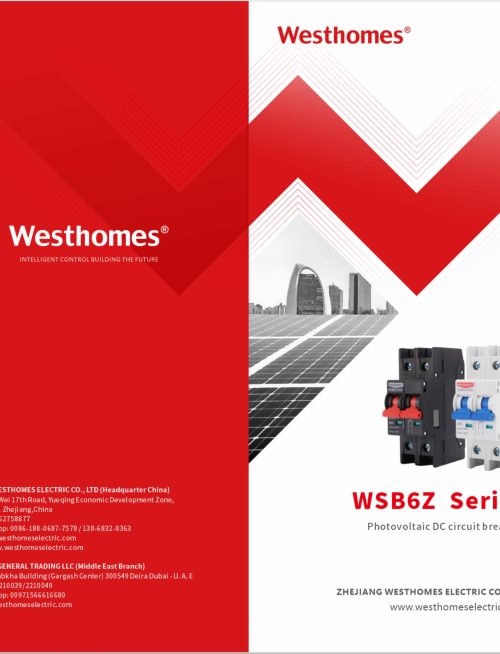
WSB6Z-63DC Normal Type Circuit Breaker
WSB6Z-63DC series photovoltaic DC circuit breakers are designed for DC systems. It is suitable for DC systems with
rated currents up to 63A and rated voltages up to 1200V.
Get quick appointment for technical support!

WSB6Z-63DC series photovoltaic DC circuit breakers are designed for DC systems. It is suitable for DC systems with rated currents up to 63A and rated voltages up to 1200V.

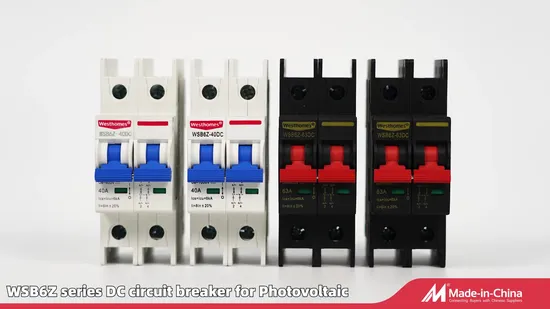
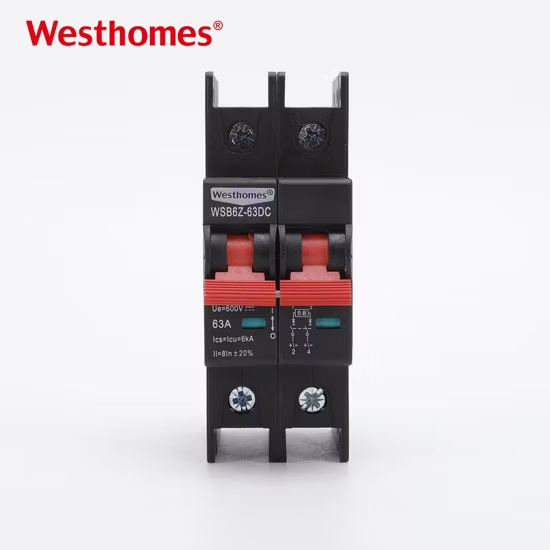
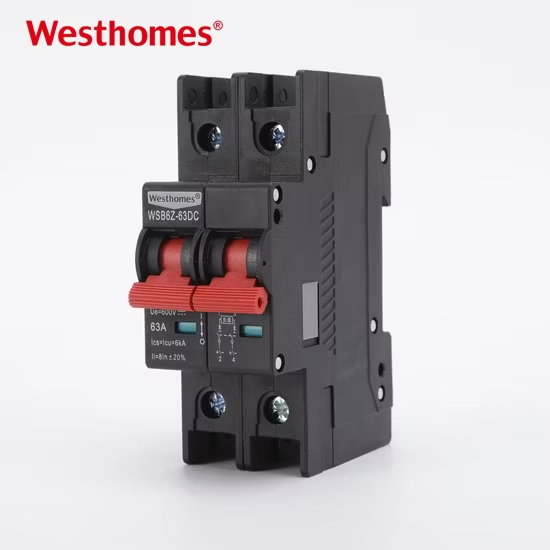
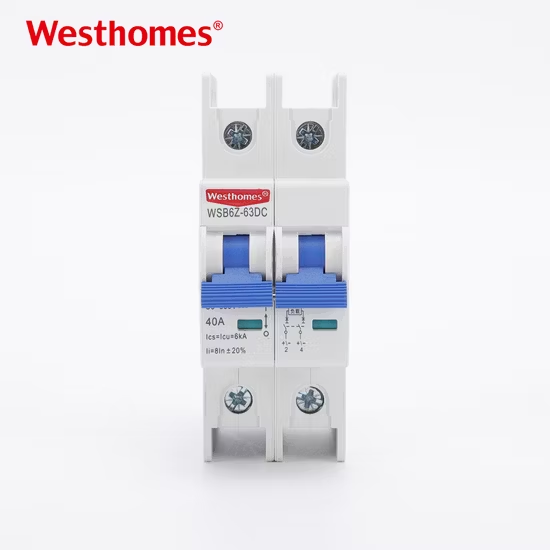
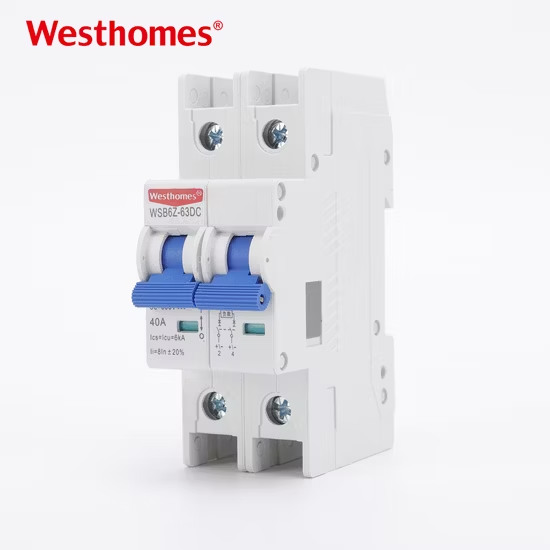
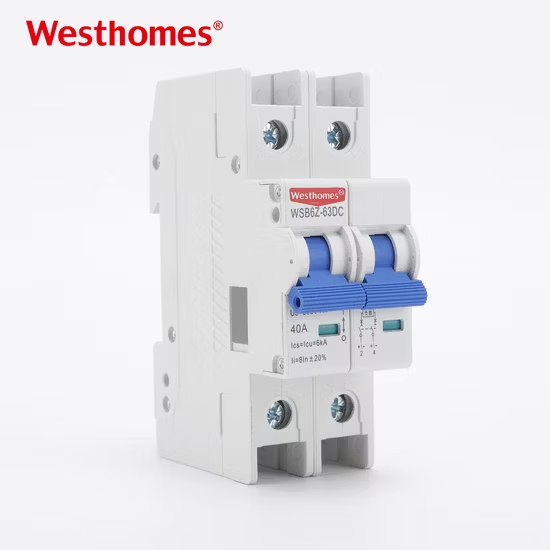
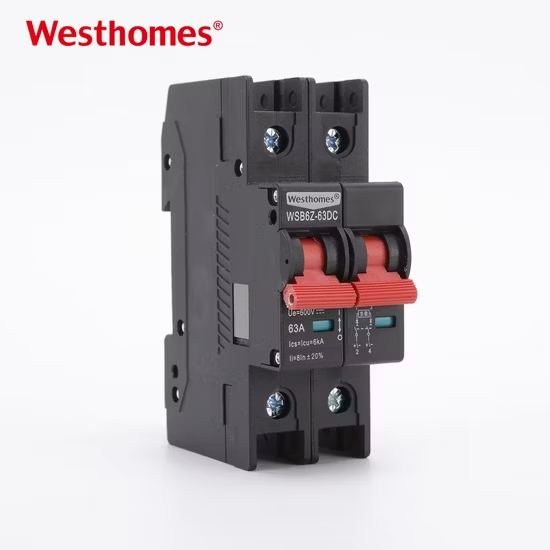
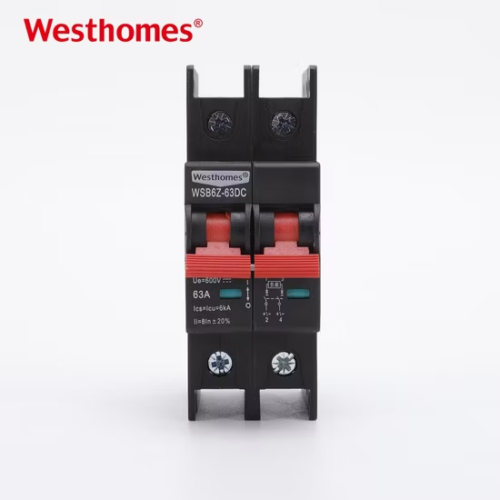
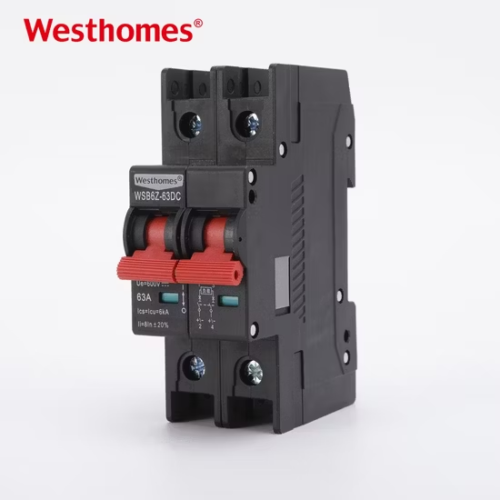
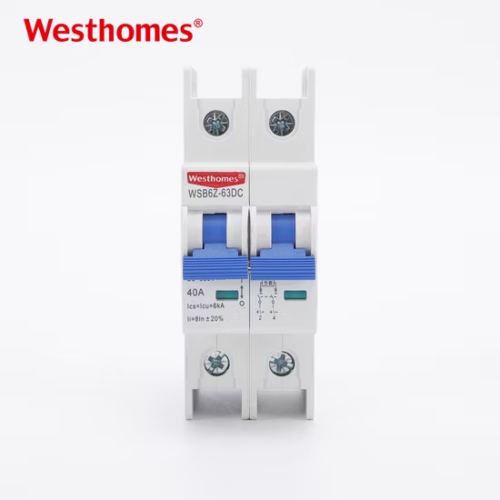
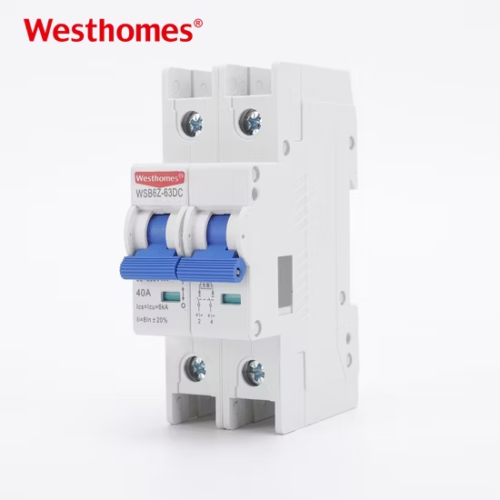
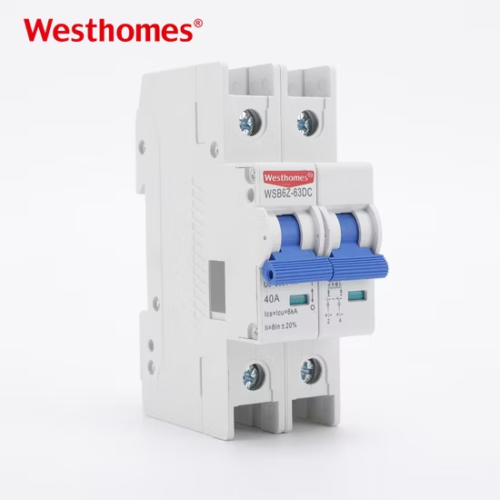
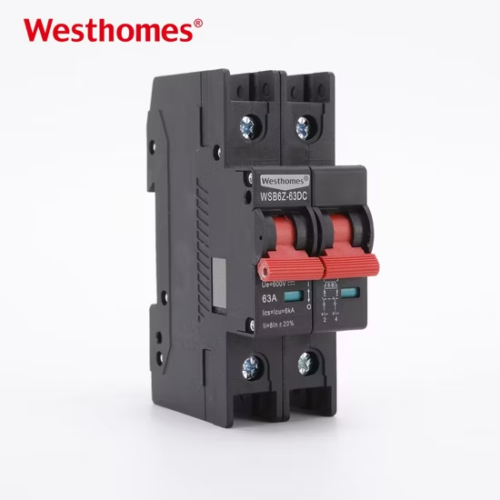
WSB6Z-63DC series photovoltaic DC circuit breakers are designed for DC systems. It is suitable for DC systems with
rated currents up to 63A and rated voltages up to 1200V.
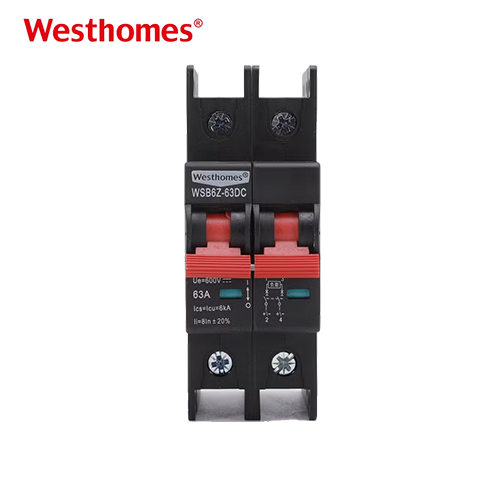
They provide overload and short-circuit protection and can also be used for infrequent on-off switching of lines under normal circumstances.
The circuit breaker has advantages of beautiful and compact appearance, excellent and reliable performance, high breaking capacity, quick tripping, and is installed using TH35 standard rails. The body shell is made of highly flame-retardant and impact-resistant plastic, making it easy to install and have a long service life.
The product has a position indicator for contact opening and closing. The DC circuit breaker complies with GB/T14048.2 standards and IEC/EN60947-2.
| Frequency | 50Hz/60Hz |
| Pole | 1, 2, 3, 4 |
| Voltage | DC300V/600V/750V/900V/1000V/1200V |
| kA | 6kA |
| Amps | 1-63A |
| Width | 18, 36, 54, 72mm |
| Mounting | Din rail |
| Item No. | WSB6Z-63DC |
| Rated current In(A) | 1, 2, 3, 4, 5, 6, 10, 16, 20, 25, 32, 40, 50, 63A |
| Pole number | 1P, 2P, 3P, 4P |
| Trip characteristics | C type |
| Rated insulating voltage Ui(V) | 1000 |
| Rated operating voltage Ue(V) | DC300V/600V/750V/900V/1000V/1200V |
| Breaking capacity Icu/Ics(kA) | 6 |
| Package Size | 24.00cm * 12.00cm * 10.00cm |
| Package Gross Weight | 2.000kg |
The WSB6Z-63DC is a normal-type DC miniature circuit breaker rated around 63 A, purpose-built for photovoltaic DC circuits. It protects and isolates solar PV strings or small combiner outputs from the inverter, combining overload and short-circuit protection in one DIN-rail device.
It confirms the breaker is designed, tested, and rated for direct current rather than AC. DC breakers use specialized arc-quenching chambers and magnetic blowout to extinguish the sustained DC arc that an ordinary AC MCB cannot handle.
A 63 A rating comfortably covers typical residential PV strings (which often run well below 30–40 A operating current) with margin for Isc derating and inverter inrush. It is a popular choice where the string current is moderate and the installer wants headroom without oversizing.
Alternating current passes through zero 100–120 times per second, letting the arc cool and restrike predictably; DC never crosses zero. The WSB6Z-63DC therefore uses an arc chute and magnetic blowout to actively stretch, divide, and cool the arc until it can no longer sustain itself, preventing contact welding and fire.
As a solar DC breaker it is rated for common PV system voltages up to 1000 V DC (and higher with series-connected poles). Its rated voltage must exceed the string's open-circuit voltage (Voc) corrected for the lowest design temperature, because Voc rises when it is cold.
A 1-pole breaker switches only the positive leg; a 2-pole unit switches both positive and negative simultaneously. For PV isolation, a 2-pole (or 2P) configuration is preferred so the entire string is disconnected from the inverter, reducing shock risk during maintenance.
Clip it onto a standard 35 mm DIN rail in a DC combiner box. Connect the PV positive and negative to the "line" terminals and the inverter input to the "load" terminals, following the +/- markings. Incorrect polarity can defeat the breaker's magnetic blowout and compromise safe interruption.
Yes — these breakers are tested to IEC 60947-2 for low-voltage circuit breakers, and PV installation practices follow IEC 60364-7-712. Look for the DC voltage and breaking-capacity marking on the label to confirm it is certified for the DC application rather than merely an AC-rated unit.
Nuisance trips usually come from a breaker sized too close to Isc, loose connections, a faulty or partially shaded panel, or an inverter surge at startup. Confirm the continuous current is below In, re-torque all terminals, and isolate the failing string before replacing any parts.
Inspect annually for overheating, terminal tightness, and arc pitting, and cycle the handle manually to keep the mechanism free. Any breaker that has cleared a significant short circuit should be replaced, because internal arc damage may not be visible externally but will reduce its next-fault performance.
* indicates a required field

 2 MB
2 MB