Get quick appointment for technical support!

Get in Touch

Low voltage Moulded case circuit breakers with Factory Price

The low voltage moulded case circuit breakers is a 6kA molded case circuit breaker rated up to 63A at 400V AC. Used in low-voltage distribution systems for overload and short-circuit protection, it serves as a main or branch circuit protective device in residential, commercial, and light industrial installations.

Social focus:

6kA Molded Case Circuit Breaker for Low-Voltage Distribution

The low voltage moulded case circuit breakers is a 6kA molded case circuit breaker rated up to 63A at 400V AC. Used in low-voltage distribution systems for overload and short-circuit protection, it serves as a main or branch circuit protective device in residential, commercial, and light industrial installations.

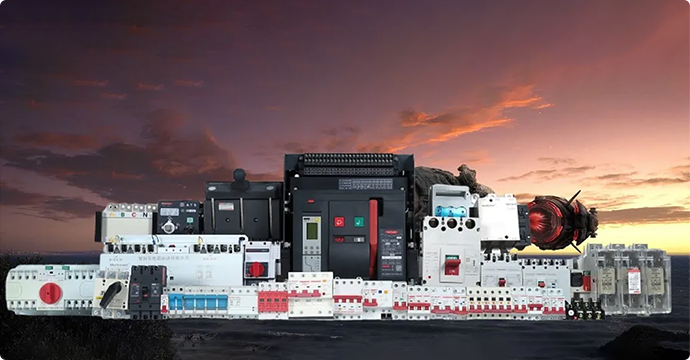
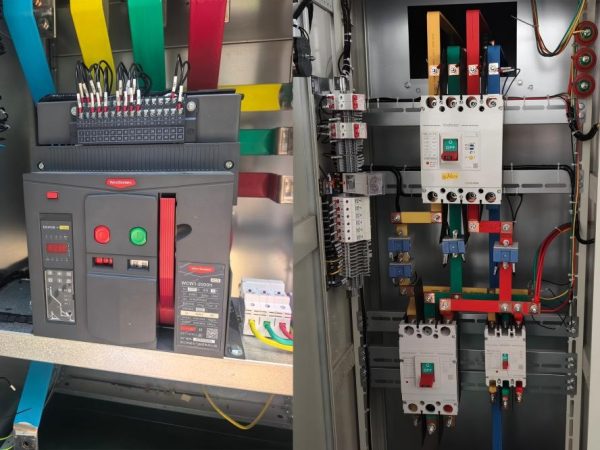
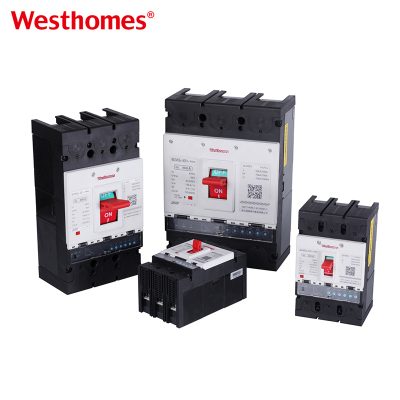
Westhomes ACB and MCCB circuit breaker product series overview

The low voltage moulded case circuit breakers combines a thermal trip element for overload protection and a magnetic trip element for short-circuit protection in a single compact housing. The thermal mechanism responds to prolonged overcurrent conditions, while the magnetic mechanism provides instant trip response to short-circuit faults. This dual-action design protects downstream equipment and wiring without unnecessary tripping during normal inrush conditions.

Rated for AC 400V operation at 50/60Hz, the breaker delivers a 6kA breaking capacity suitable for typical low-voltage distribution applications. Standard DIN rail mounting on a 35mm profile allows quick installation in distribution boards and control panels. Screw-clamp terminals accept copper or aluminum conductors.

Common applications include residential distribution boards, commercial lighting panels, HVAC control circuits, and light industrial power distribution. Available current ratings range from 6A to 63A, with 1P, 2P, 3P, and 4P pole configurations to match system requirements.

The low voltage moulded case circuit breakers is tested and certified to IEC 60947-2 for low-voltage switchgear and controlgear. Each unit undergoes routine verification for dielectric strength, trip calibration, and mechanical endurance before shipment. The breaker maintains its rated performance across an operating temperature range of -5°C to +40°C, with storage tolerance from -25°C to +70°C, making it suitable for indoor installations in most climate zones.

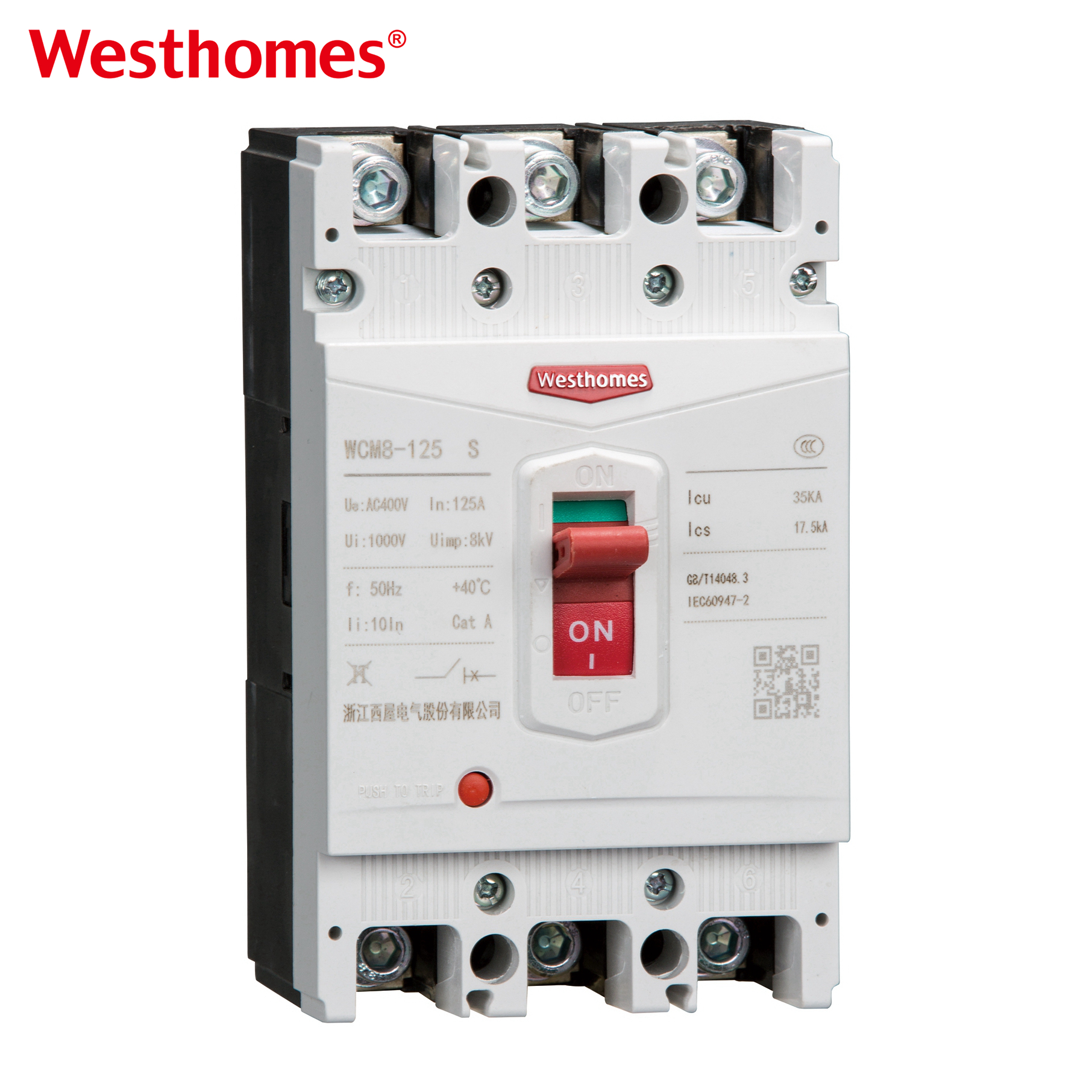
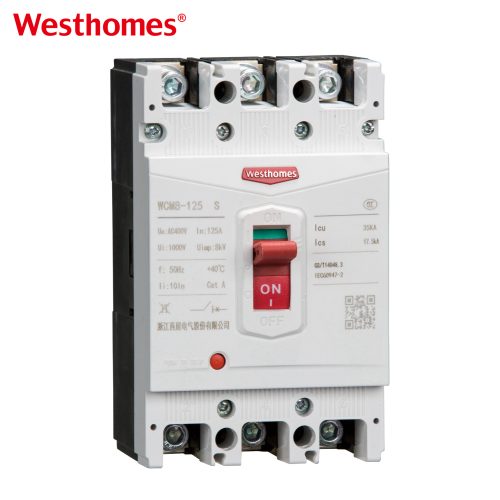
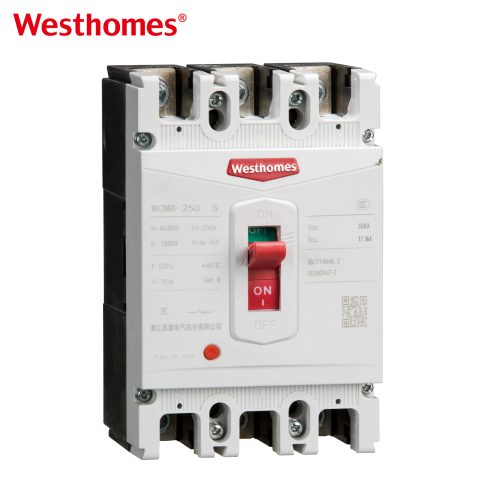
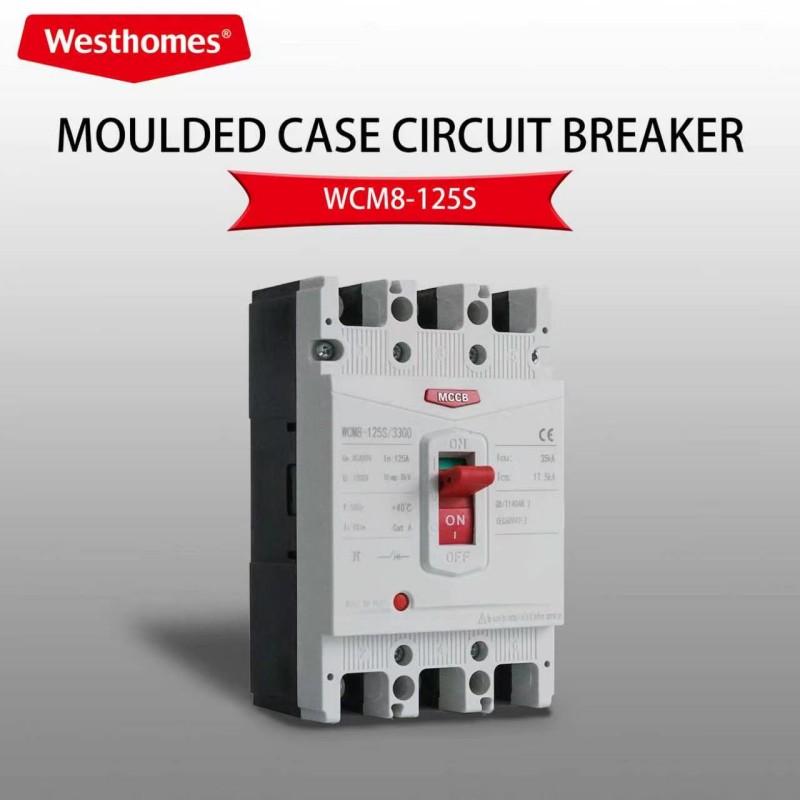
WCM8-125S moulded case circuit breaker
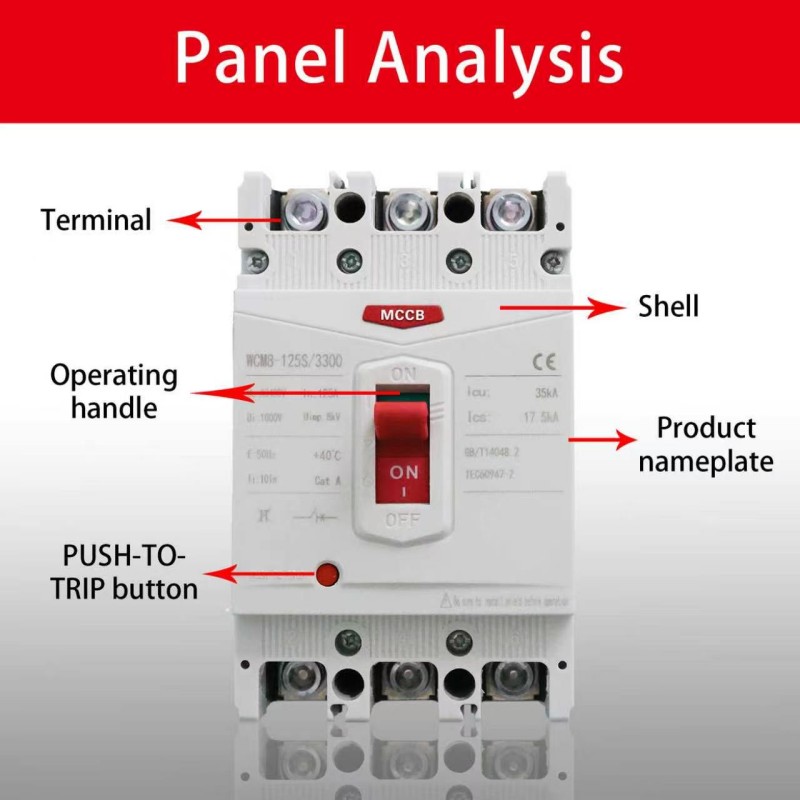
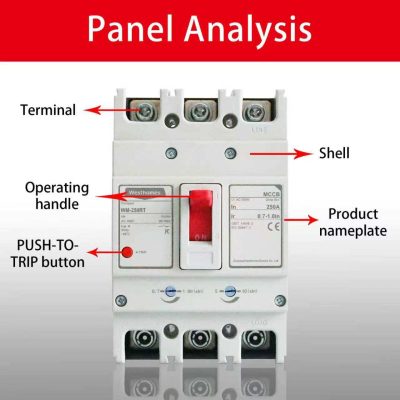
WCM8-125S panel analysis
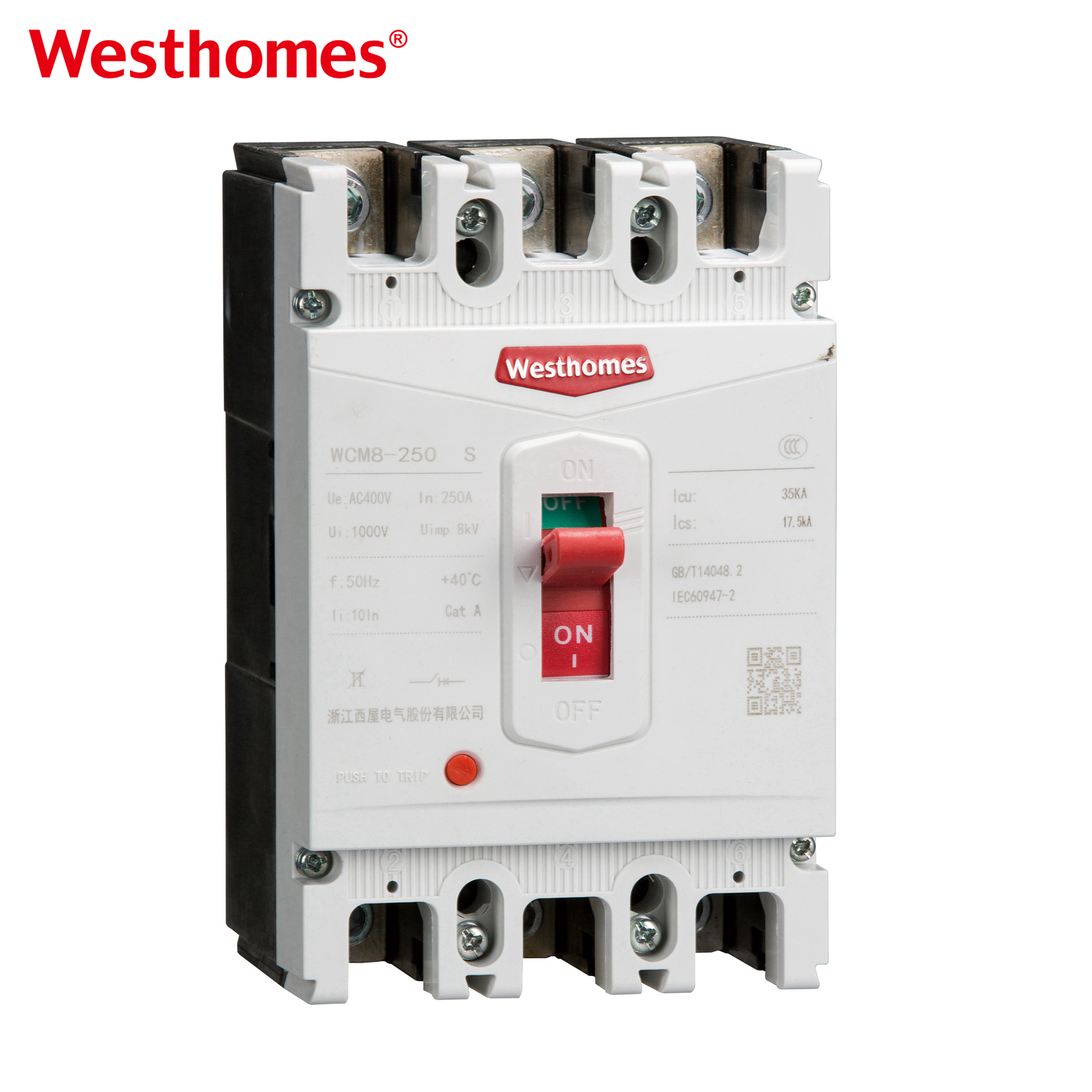
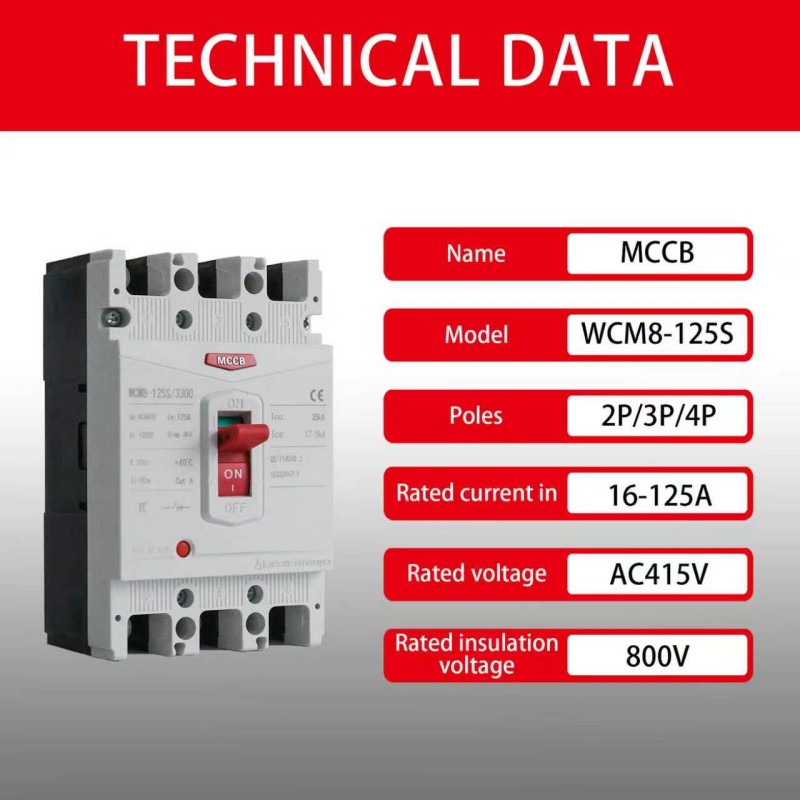
WCM8-125S technical data
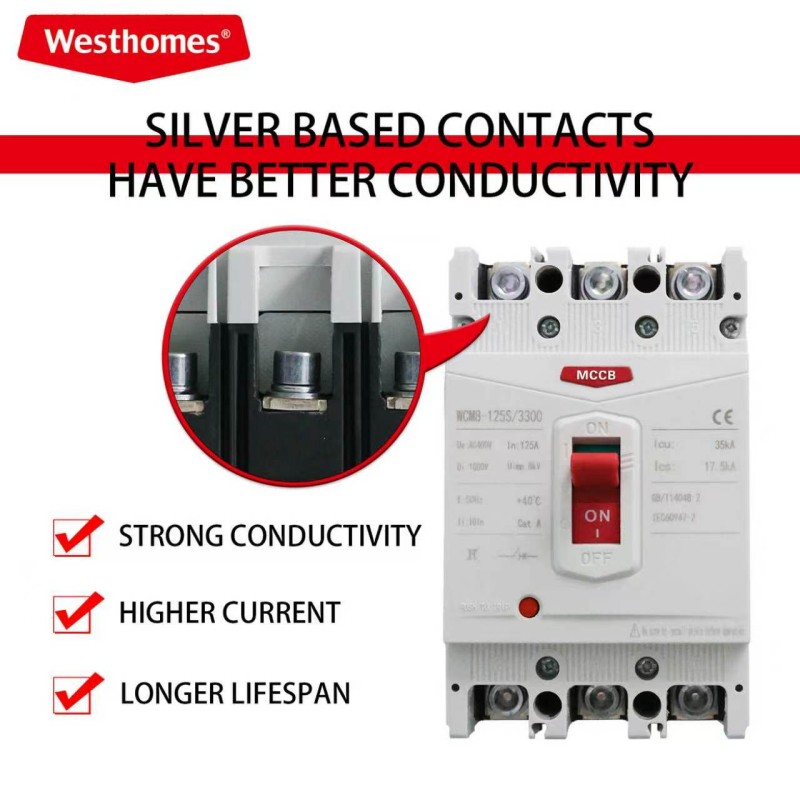
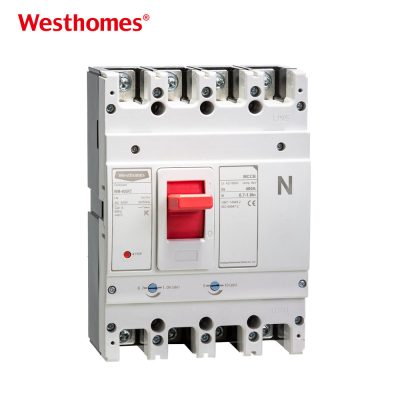
WCM8-125S have better conductivity

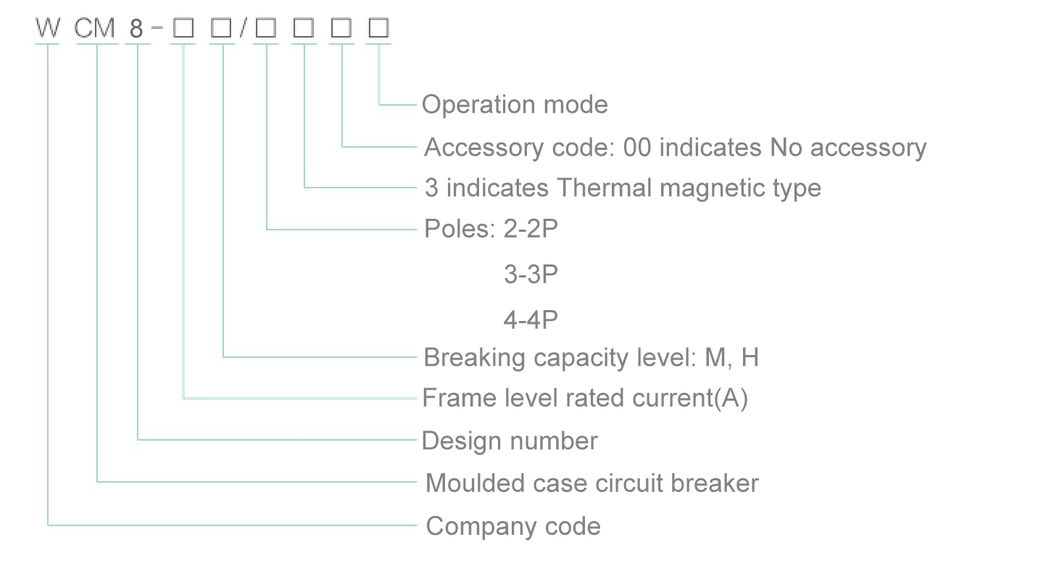
Model and meaning

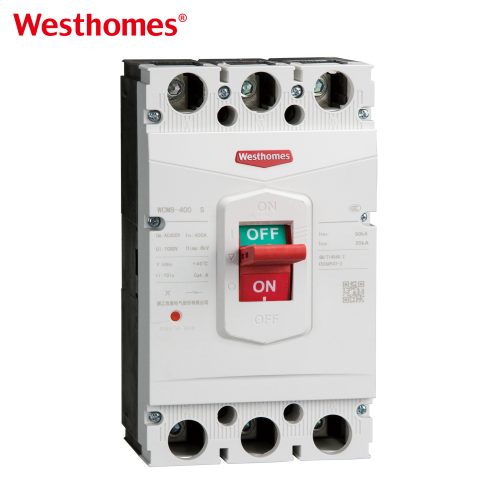
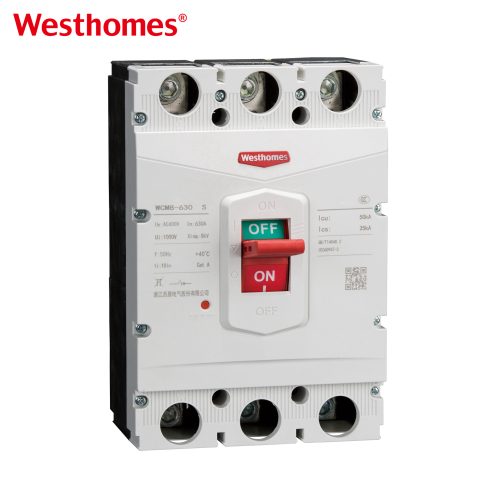
WCM8-63 63A low-voltage MCCB product photo with rating detail

KEY INFORMATION

WCM8

Pole   3P, 4P
          Voltage  AC400V/690V
          kA  20-100
          Inm(A)  63, 100, 225, 400, 630, 800, 1250, 2000(only with 3P)
          In(A)  10, 16, 20, 25, 32, 40, 50, 63, 100, 225, 400, 630, 800, 1250, 1400, 1600, 1800, 2000

MAIN TECHNICAL DATA

Model Frame level rated current (A) Current Rating (A) Rated operation voltage (V) Rated insulation voltage (V) Rated ultimate short circuit breaking capacity (kA) 400V Rated operation short circuit breaking capacity (kA) 400V
WCM8-63L 63 (6), 10, 16, 20, 25, 32, 40, 50, 63 AC400 AC500 25 18
WCM8-63M 50 35
WCM8-125C 100 (10), 16, 20, 25, 32, 40, 50, 63, 80, 100 AC690 AC800 20 10
WCM8-125L 35 17.5
WCM8-125M 50 35
WCM8-125H 85 50
WCM8-250L 225 100, 125, 140, 160, 180, 200, 225 AC690 AC800 35 18
WCM8-250M 50 35
WCM8-250H 85 50
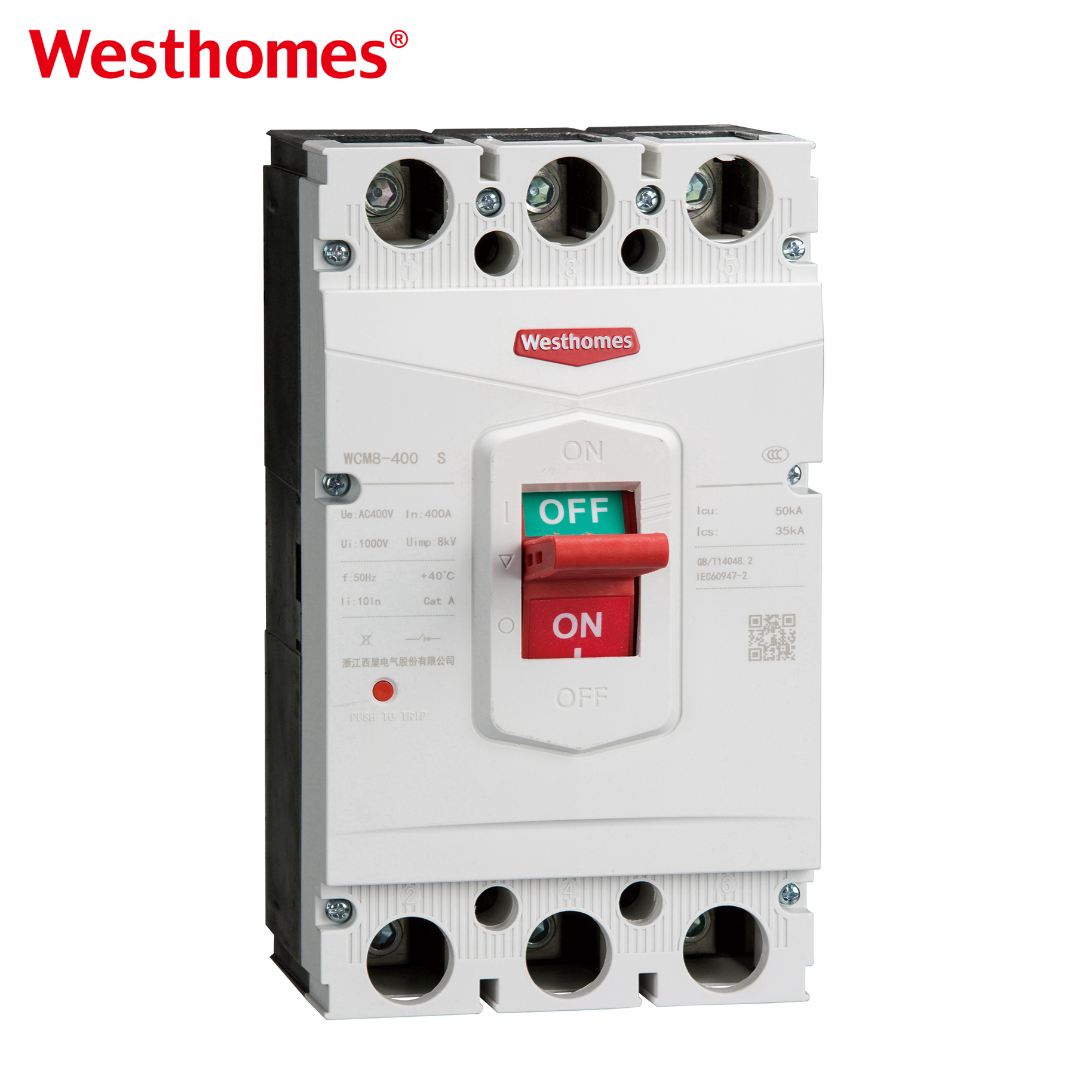
WCM8-400L 400 225, 250, 315, 350, 400 AC690 AC800 50 25
WCM8-400M 65 42
WCM8-400H 100 65
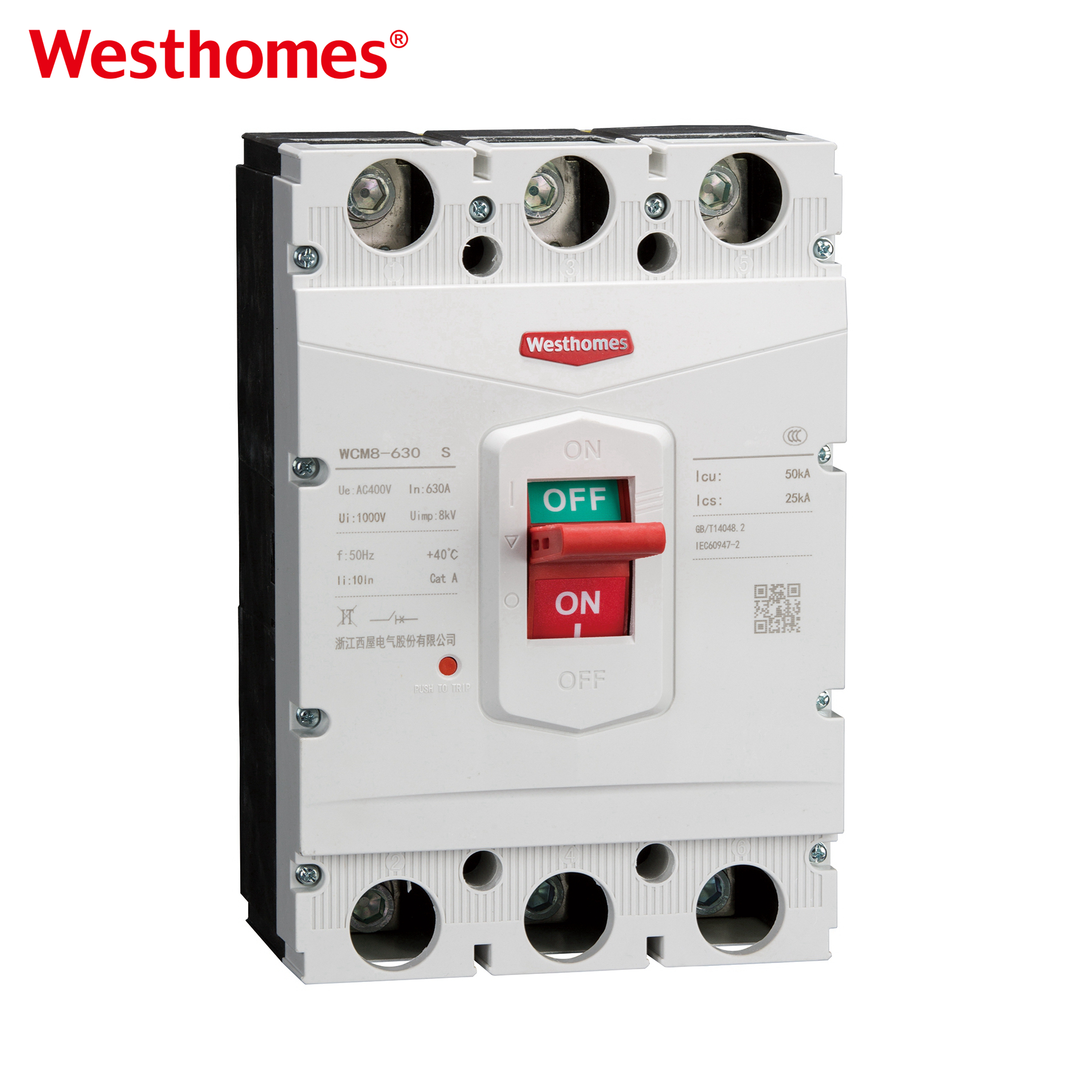
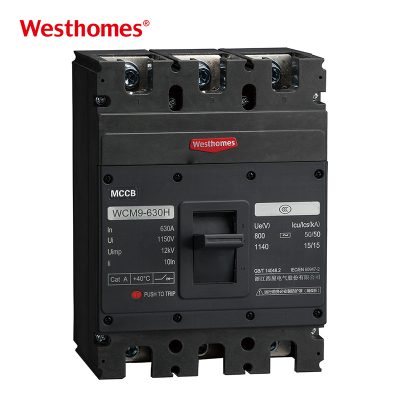
WCM8-630L 630 400, 500, 630 AC690 AC800 50 25
WCM8-630M 65 42
WCM8-630H 100 65
WCM8-800M 800 630, 700, 800 AC690 AC800 75 50
WCM1-800H 100 65
WCM8-1250 800 1000, 1250 AC690 AC800 65 40
WCM8-2000 1250 1400, 1600, 1800, 2000 AC690 AC800 65 40

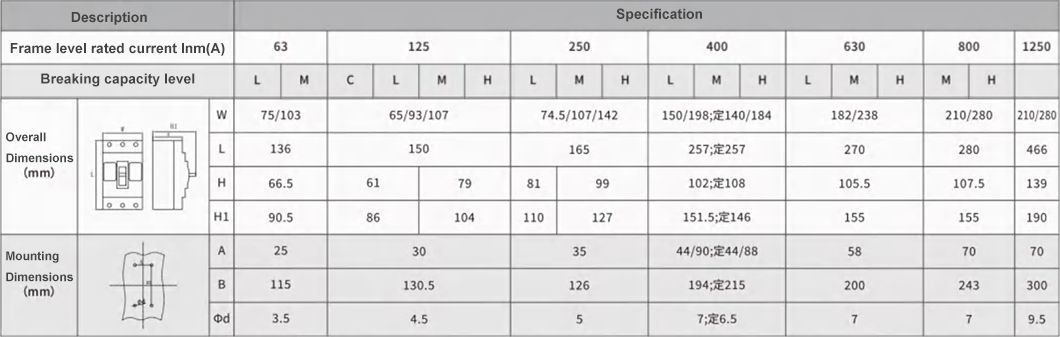
OVERALL AND MOUNTING DIMENSION(MM)

WCM8-63 6kA molded case circuit breaker front view with product label

This topic is covered in more detail in Latest Innovations in Miniature Circuit Breaker Technology.

This topic is covered in more detail in MCB vs Fuse: Which Is Better for Electrical Safety?.

FREQUENTLY ASKED QUESTION (FAQ)

What is a low-voltage moulded case circuit breaker (MCCB)? plus-square Created with Sketch Beta. minus-square Created with Sketch Beta.

An MCCB is a low-voltage protective device whose current-interruption components are housed in a solid moulded plastic case. It provides overload and short-circuit protection for higher-current circuits than an MCB can handle, typically from 16 A up to several hundred or even thousands of amps.

How does an MCCB work? plus-square Created with Sketch Beta. minus-square Created with Sketch Beta.

It uses a thermal-magnetic trip (or an electronic trip unit): a bimetal strip bends slowly under sustained overload (inverse-time delay), while a magnetic solenoid or electronic sensor trips instantly on a short circuit. When tripped, the contacts open and an arc chute splits and cools the arc until the fault current is safely interrupted.

How is an MCCB different from an MCB? plus-square Created with Sketch Beta. minus-square Created with Sketch Beta.

An MCB is small, DIN-rail mountable, up to about 63–125 A, with fixed trip curves and limited breaking capacity. An MCCB handles much higher currents (often 100–1600 A+), offers higher breaking capacity, and commonly provides adjustable trip settings and field interchangeable accessories, making it suitable for main switchgear and feeders.

What does "adjustable trip" mean on an MCCB? plus-square Created with Sketch Beta. minus-square Created with Sketch Beta.

Adjustable trip lets the installer set the overload (long-time) and short-circuit (short-time/instantaneous) thresholds to match the load and to coordinate with downstream devices. MCBs have fixed factory trip curves, while adjustable MCCBs allow engineers to tune protection selectivity across a distribution system.

What current ratings are available? plus-square Created with Sketch Beta. minus-square Created with Sketch Beta.

Low-voltage MCCBs are offered in a wide range — commonly 16 A, 32 A, 63 A, 100 A, 160 A, 250 A, 400 A, 630 A, 800 A, 1000 A, and up to 1600–2500 A for larger frames. The frame size and the rated current (In) are chosen together so the breaker can carry the load and coordinate with cables and downstream breakers.

How are MCCBs installed? plus-square Created with Sketch Beta. minus-square Created with Sketch Beta.

They are typically mounted in a distribution board or switchgear enclosure, either by bolts to a mounting plate or on a DIN rail for smaller frames. Busbars or rated cables connect line and load terminals, and accessories such as shunt trips, undervoltage releases, and auxiliary contacts can be field-fitted for remote tripping and status signaling.

Which standard governs MCCBs? plus-square Created with Sketch Beta. minus-square Created with Sketch Beta.

Low-voltage MCCBs are built and tested to IEC 60947-2 (low-voltage switchgear and controlgear — circuit breakers). This standard defines rated operational voltage (Ue), rated current (In), ultimate breaking capacity (Icu), service short-circuit breaking capacity (Ics), and the trip characteristics that define protection performance.

Where are low-voltage MCCBs typically used? plus-square Created with Sketch Beta. minus-square Created with Sketch Beta.

MCCBs are used as main breakers and feeder protection in industrial panels, commercial buildings, machine centers, generator and capacitor banks, HVAC and pump installations, and as incoming protection for distribution boards. They sit upstream of MCB branch circuits, forming a coordinated protection chain.

How do I select the right MCCB for a load? plus-square Created with Sketch Beta. minus-square Created with Sketch Beta.

Choose In to be equal to or just above the full-load current, with a breaking capacity (Icu/Ics) greater than the prospective short-circuit current at that point in the system. Select the trip type (thermal-magnetic vs. electronic) and adjustability based on coordination requirements, and verify the number of poles (2P/3P/4P) matches the system.

What maintenance does an MCCB require? plus-square Created with Sketch Beta. minus-square Created with Sketch Beta.

Inspect connections and busbar torque periodically, check for overheating or arc marks, and exercise the operating handle to keep the mechanism free. Electronic trip units should be tested with primary-current injection where required by maintenance schedules. A breaker that has interrupted a major fault should be inspected or replaced by a qualified electrician before returning to service.

RELATED PROJECTS

REQUEST
YOUR FREE QUOTE

* indicates a required field