Get quick appointment for technical support!

MCB, MCCB & ACB Price Guide: What to Expect in 2026
May 25, 2026
Two procurement managers spec the same 400A, 3-pole breaker for a commercial panel. One gets a quote for $45. The other gets a quote for $420. Both units carry CE certification. Neither manager is wrong, that spread is entirely normal once you understand how breaker pricing works across types, tiers, and sourcing channels.
This cost comparison of different types of circuit breakers, MCBs, MCCBs, and ACBs, breaks down what you should expect to pay in 2026: part-price ranges by amperage, installation and panel-upgrade cost realities, the specific factors that create price gaps, and which breaker type makes financial sense for common residential, commercial, and industrial scenarios.
No filler. Just the numbers and the reasoning behind them.
What standard MCBs actually cost in 2026
Miniature circuit breakers are the most purchased breaker type globally, and their price range serves as the baseline against which every other breaker gets measured. For residential branch circuits, the part cost itself is rarely the budget problem. The code-mandated variants, however, are a different conversation entirely.
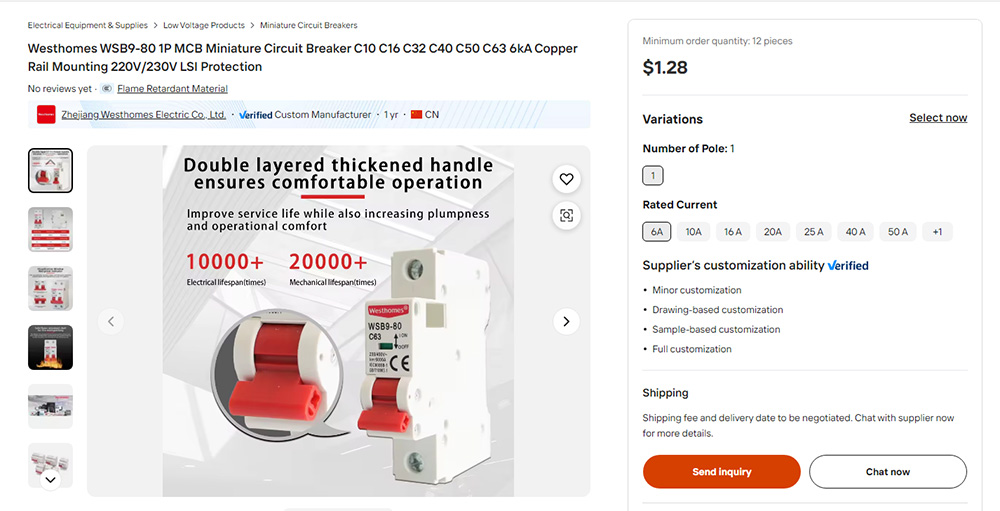
Thermal-magnetic single-pole breakers: the floor price of breaker buying
Standard single-pole thermal-magnetic breakers from Square D Homeline, Eaton CH, and Leviton run $6 to $12 at retail for 15A units, $7 to $14 at 20A, and $10 to $18 at 30A depending on brand and features. Bulk packs drop the per-unit cost to $4 to $8, which matters when you’re stocking a panel room or replenishing distributor inventory.
The 30A unit costs more than the 15A despite identical physical housing for a real engineering reason: thicker bimetal elements and higher interrupt testing at the factory. The breaker has to prove it can handle the current safely, and that costs money to certify. For most procurement purposes, this tier represents the floor price of the entire breaker market.
AFCI, GFCI, and combination breakers: the code-mandated cost jump
NEC 2023 significantly expanded AFCI and GFCI requirements for US residential applications, under sections 210.12 and 210.8 respectively, covering bedrooms and many living areas for AFCI, and kitchens, bathrooms, garages, and outdoor receptacles for GFCI.
AFCI units run $30 to $80 per breaker across the 15A to 30A range, with Square D and Eaton dominating the segment. Combination AFCI/GFCI breakers, which provide both arc-fault and ground-fault protection, hit $50 to $100 or more per unit.
To illustrate the premium: a basic 20A thermal-magnetic breaker at $6 to $12 versus a combination AFCI/ GFCI unit at $50 to $100 represents roughly a 5x to 8x cost multiplier. The technology difference justifies it, these breakers contain microprocessors, sensors, and dual-interrupt circuitry that a standard bimetal unit simply doesn’t carry.
For a 2,000 square foot home with 15 or more protected circuits, the AFCI/GFCI parts bill alone lands between $500 and $1,200 before a single hour of labor is billed. Budget that line item early.
MCCB pricing across the full amperage spectrum
Once you move past residential branch circuits into commercial panels, distribution boards, or industrial switchgear, MCBs give way to MCCBs. The price jump is significant, and the variables multiply fast.
Ampacity, trip unit type, source channel, and pole configuration all move the number in meaningful ways.
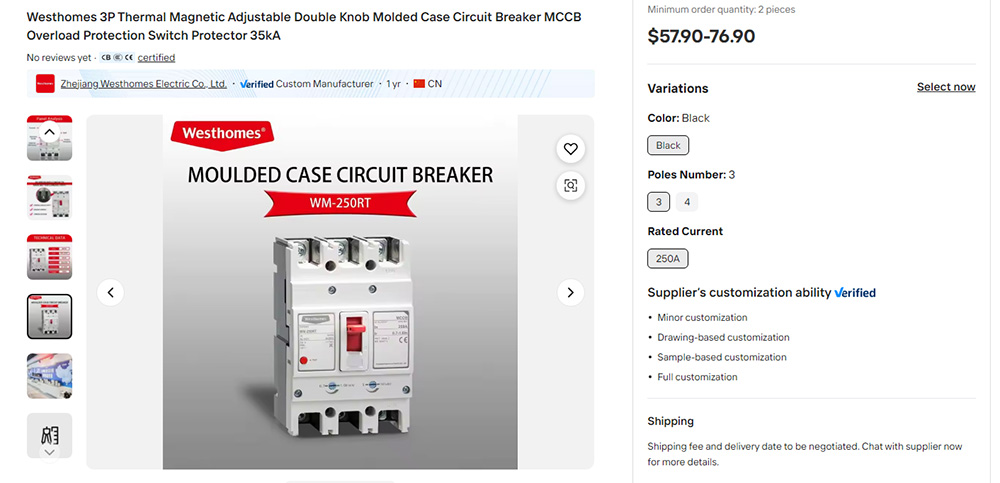
Cost comparison of different types of circuit breakers by amperage: 100A to 400A
At 100A, generic 3-pole MCCBs from Chinese manufacturers wholesale at $13 to $25, while branded options like Schneider EasyPact reach $123 or more through domestic distributors. At 160A to 250A, the spread runs from $25 to $189 depending on source and pole configuration.
At 400A, DC-rated variants for PV applications start at roughly $26 to $45 in bulk wholesale, with premium ready-ship units pushing $400 to $500.
This is the ampacity band where sourcing strategy begins to matter as much as spec selection. A 400A 4-pole MCCB that costs $38 to $45 direct from a CE/CB-certified factory often lands at $120 to $200 or more through US distribution channels. For a project requiring 200 units, that channel delta alone can represent significant savings with no change to the product specification.
400A to 1200A: where electronic trip units reshape the price curve
Above 400A, thermal-magnetic trip units lose ground to electronic trip units. Electronic MCCBs in the 400A to 800A band run $150 to $800 per unit from distributors, depending on programmability: adjustable overload, short-circuit delay, and I²t settings all add cost. At 800A to 1,250A, expect $200 to $1,000 or more for electronic units.
The premium is justified in systems with complex load profiles or selective coordination requirements. A standard thermal-magnetic unit in that ampacity range can’t provide the trip precision needed for tiered protection design. Electronic trip units also typically carry a 2x to 5x cost premium over thermal-magnetic equivalents at the same frame size, so plan for that when building out commercial distribution budgets.
Where air circuit breakers sit on the cost scale
ACBs occupy the top tier of the circuit breaker pricing hierarchy. They’re the standard for main distribution panels, large industrial facilities, data centers, and infrastructure projects where breaking capacities and fault-current demands exceed what MCCBs handle reliably.
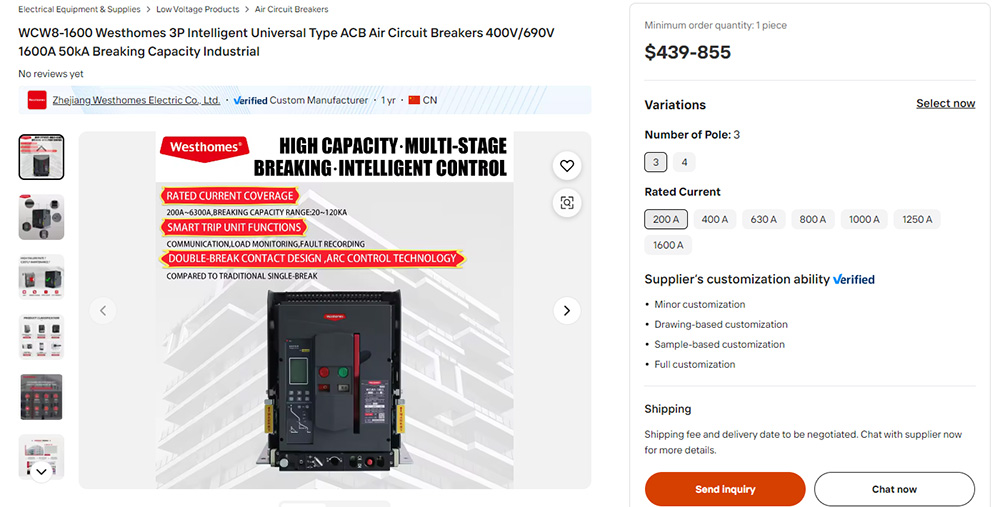
ACB pricing by frame size and trip unit configuration
ACBs start around $500 to $1,500 for 630A frames from wholesale sources, though some factory-direct offers on the low end of that range are available through platforms like Alibaba 400A MCCB prices and TradeIndia. Prices scale to $3,000 to $8,000 or more for 4,000A to 6,300A units from tier-one brands.
Chinese-manufactured ACBs with IEC certification typically run 50 to 70 percent below equivalent branded units, making factory-direct sourcing particularly impactful at this product tier.
Electronic trip units are standard on ACBs, there is no analog equivalent at this market level. Draw-out (withdrawable) versions command a meaningful premium over fixed-mount pricing, often in the range of tens of percent higher; obtain firm quotes from suppliers before budgeting this line item, as the actual figure varies by frame size and manufacturer.
See an example product on our Popular Intelligent Air Circuit Breaker up to 690V 3p/4p ODM/OEM page for a sense of factory-direct offerings and typical feature sets.
MCCB vs ACB: when the higher upfront cost makes financial sense
MCCBs are appropriate for most installations up to 1,250A. Beyond that threshold, ACBs offer superior arc quenching, easier maintenance through draw-out design, and longer service life, typically 20 to 30 years with annual servicing per manufacturer lifecycle data, versus 15 to 20 years for MCCBs in comparable industrial environments.
The total cost of ownership argument is worth modeling explicitly. Consider a scenario where a $4,000 ACB runs 20 years with regular servicing against two MCCB replacements at $800 each, even before factoring in unplanned downtime costs and labor between failures, the ACB can represent the lower long- run cost.
For procurement teams building 15 to 20 year cost models on industrial installations, adding estimated replacement intervals and downtime cost assumptions to that comparison often shifts the selection calculus significantly. The breaker with the lower purchase price isn’t always the cheaper asset over its operational life.
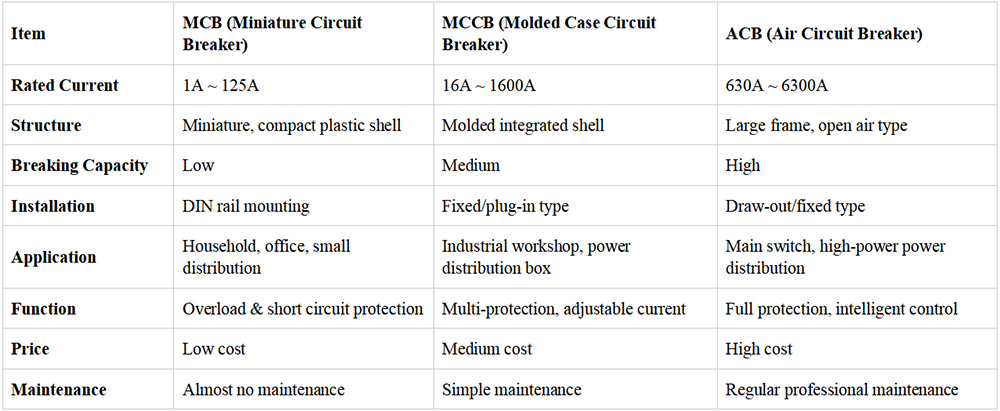
The factors behind every pricing gap you encounter
Two breakers. Same ampere rating. One costs $6. The other costs $15. Both are 20A single-pole units from recognized brands. Here’s what the price difference is actually buying.
Brand tier and AIC rating: the two biggest line-item drivers
Budget product lines like Square D Homeline and Eaton BR run $5 to $9 for a 20A single-pole at 10kA AIC. Premium lines from the same manufacturers, Square D QO, Eaton CH, hit $10 to $15 for the same amperage. The AIC upgrade from 10kA to 22kA adds $5 to $10 per breaker.
At commercial and industrial scale, 42kA or higher ratings push per-unit costs up by $15 to $50 above the thermal-magnetic baseline.
AIC rating is not a spec footnote. An undersized AIC in a high-fault environment is a fire risk and a failure waiting to happen. Near large transformer services or high-capacity utility feeds, the 22kA or higher requirement isn’t optional, and the cost to spec it correctly is far lower than the cost of an incident caused by a breaker that couldn’t interrupt the fault current it encountered.
Electronic trip units, smart features, and the innovation premium
Smart circuit breakers with IoT capability, remote monitoring, load measurement, and trip-cause logging carry a 30 to 80 percent premium over standard electronic trip units. Residential smart breakers start around $150 per unit; industrial smart MCCBs scale to $500 or more. For large commercial buildings or data centers, that premium frequently pays back through reduced diagnostic labor and faster fault.
response: knowing why a breaker tripped, remotely, before dispatching a technician, has real operational value. Frame the smart breaker decision as a feature decision with a cost justification, not simply a more expensive version of a standard unit.
For help choosing trip characteristics and curve types, see our Type A B C D MCB Guide: Choose the Right Miniature Circuit Breaker, which breaks down the common time-current curves and their typical applications.
Installation and panel-upgrade costs to budget alongside parts
Part cost is rarely the full story. Installation labor and code-required panel work routinely double or triple the total project cost. Engineers and procurement teams who only budget the breaker often get a surprise at the invoice stage.
Per-breaker electrician labor: what to expect by job type
Standard single-pole breaker replacement by a licensed electrician runs $100 to $300 total (parts and labor combined), with the national average landing around $200 to $250. Labor rates range from $50 to $150 per hour in the US. Single-pole residential swaps sit at the low end; double-pole and main breaker replacements push to $180 to $600 depending on complexity and panel access.
Homewyse’s January 2026 estimate puts renovation and retrofit replacement at $319 to $382 per breaker, a useful upper-range benchmark for site planning alongside the broader national averages.
When a breaker replacement triggers a full panel upgrade
Older panels, including pre-1990 fuse-based systems, Federal Pacific equipment, or undersized 60A and 100A services, often can’t accommodate modern breakers without a full retrofit. Panel upgrades run $850 to $2,500 for 100A to 200A replacements and $2,000 to $4,000 or more for 400A services. Permits and inspections add $100 to $300 on top of that.
For procurement teams scoping projects that involve older infrastructure, always factor panel assessment into the budget before finalizing the breaker specification. A breaker selection that saves $20 per unit means nothing if the panel can’t accept it without a $3,000 upgrade. (See typical estimates for the cost to replace a circuit breaker box.)
How factory-direct sourcing changes the per-unit math for bulk buyers
At the residential scale, the cost difference between sourcing channels is minor. At commercial and industrial scale, where MCCB and ACB purchases run into hundreds of units, the sourcing channel becomes as important as the specification itself. This is the lever most procurement teams haven’t pulled yet.
Domestic electrical distributors typically mark up certified MCCB and ACB products 40 to 120 percent above the factory price for an equivalent IEC-certified unit. That gap is pure channel margin. On large orders, closing that gap through factory-direct procurement can represent tens of thousands of dollars in savings with no change to product specification or certification level.
Factory-direct manufacturers certified to IEC standards (CE, CB, TUV) supply the same product tier at a fraction of domestic distributor pricing, particularly on bulk orders.
Westhomes (Zhejiang Westhomes Electric Co., Ltd.) operates in this space as a vertically integrated manufacturer with 25 years of production experience, in-house testing, and multi-certification compliance across MCB, MCCB, and ACB product lines, supplying directly to international distributors, EPC firms, and private-label buyers.
With flexible MOQ thresholds and factory-direct pricing, the landed-cost economics are worth running on any order above a meaningful volume. On a 100-unit MCCB order, the per-unit delta between factory-direct and domestic distribution often covers freight costs entirely and still delivers measurable savings.
The numbers to take into every budget conversation
Standard residential MCBs run $6 to $18 at retail, with AFCI and GFCI variants jumping to $30 to $100 or more per unit. MCCBs span $13 to $1,000 or more depending on ampacity, trip unit type, and source channel. ACBs start at $500 for 630A frames and scale to $8,000 and beyond for high-frame industrial units.
Installation labor adds $100 to $375 per breaker, and panel upgrades introduce $850 to $4,000 or more in project cost when older infrastructure is involved.
Use this cost comparison of different types of circuit breakers as a starting point, not a final answer. A thermal-magnetic MCCB at $25 factory-direct and a branded equivalent at $200 through domestic distribution are not the same procurement decision, even when the spec sheet looks identical.
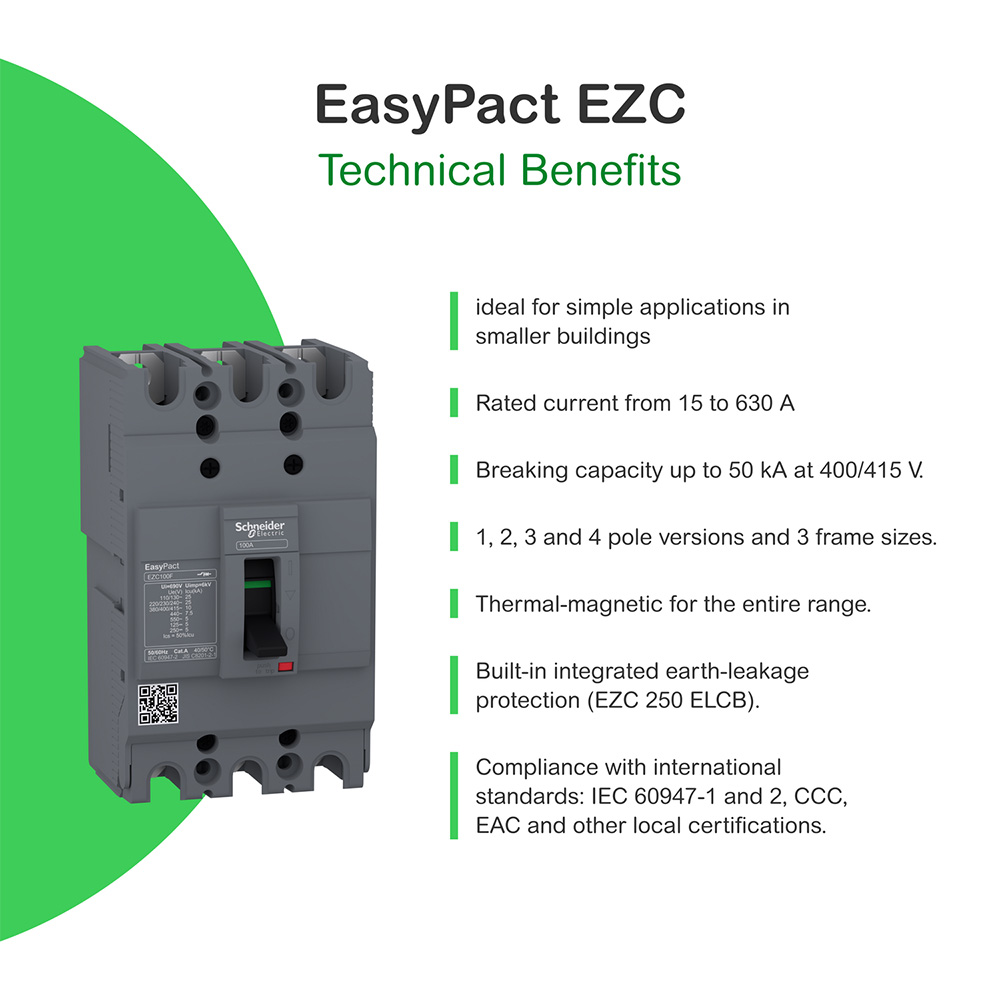
Once volume and certification requirements are defined, the sourcing channel is the final cost lever, and in a full breaker brand price comparison across channels, it’s consistently the one teams waited too long to pull. For additional reference on common sizes and ampacity, see our Standard Circuit Breaker Sizes & Amperage Ratings Guide.

--- END ---
In this blog
Featured Articles
Get A Free Quote
