Get quick appointment for technical support!

IP Ratings and NEMA Enclosure Types – A Practical Selection Guide
Jul 21, 2026
Introduction
Electrical equipment is installed in environments where dust, moisture, water exposure, chemicals, and mechanical impacts can affect its performance and service life. Without suitable enclosure protection, internal components such as circuit breakers, terminals, control devices, and electrical connections may suffer from corrosion, insulation deterioration, or unexpected failures.
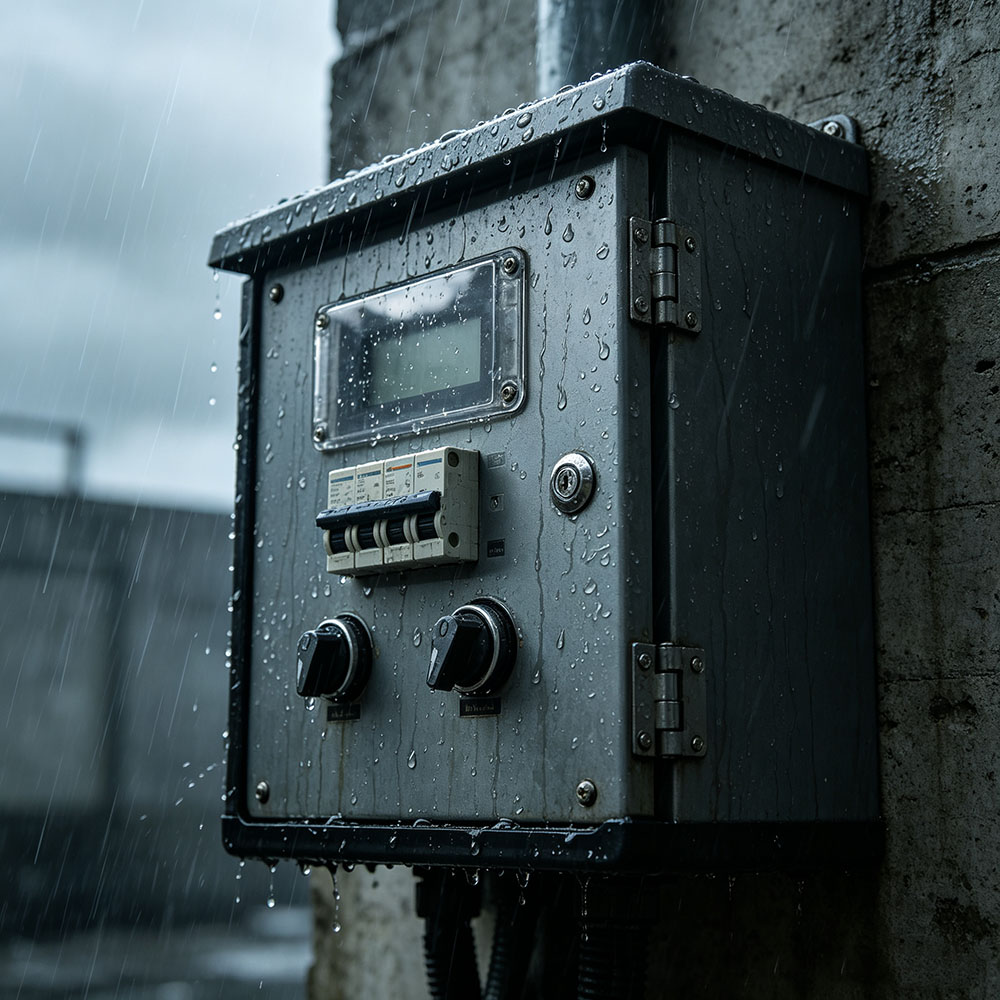
In low-voltage electrical systems, choosing the right enclosure protects equipment from external conditions and maintains long-term reliability and safe operation. Different installation environments require different levels of protection, from indoor distribution applications to outdoor industrial systems exposed to harsh conditions.
Two enclosure classification systems are widely used in electrical engineering: IP ratings defined by IEC 60529 and NEMA enclosure types developed according to NEMA 250 standards. Both systems describe the protection capability of electrical enclosures, but they focus on different aspects and are used in different regions and applications.
Understanding the differences between IP ratings and NEMA enclosure types helps engineers, electricians, and system designers select the most suitable enclosure according to installation conditions, environmental risks, and project requirements.
What Is an IP Rating?
The IP rating, also known as the Ingress Protection rating, is an international classification system defined by IEC 60529. It indicates how effectively an electrical enclosure protects internal components from the entry of solid objects and water.
The IP code is usually written in the format: IPXX
The first number represents protection against solid objects, while the second number represents protection against water ingress.
IP First Digit – Protection Against Solid Objects
The first digit of an IP rating indicates the level of protection provided against solid objects, including accidental contact with internal components and dust particles. A higher number means a higher level of protection.
| First Digit | Protection Level | Description |
|---|---|---|
| 0 | No protection | No special protection against solid objects |
| 1 | Protection against objects larger than 50mm | Prevents accidental contact with large objects |
| 2 | Protection against objects larger than 12.5mm | Protects against fingers or similar objects |
| 3 | Protection against objects larger than 2.5mm | Prevents entry of small tools or wires |
| 4 | Protection against objects larger than 1mm | Protects against most wires and small particles |
| 5 | Dust protected | Limited dust ingress without affecting operation |
| 6 | Dust tight | Complete protection against dust entering the enclosure |
IP Second Digit – Protection Against Water
The second digit defines the enclosure’s protection level against water. This factor is especially important for outdoor installations, industrial environments, and locations where electrical equipment may be exposed to moisture or cleaning processes.
| Second Digit | Protection Level | Description |
|---|---|---|
| 0 | No protection | No protection against water |
| 1 | Dripping water protection | Protects against vertically falling water drops |
| 3 | Water spray protection | Protects against sprayed water |
| 4 | Splash protection | Protects against water splashing from different directions |
| 5 | Water jet protection | Protects against low-pressure water jets |
| 6 | Powerful water jet protection | Protects against stronger water jets |
| 7 | Temporary immersion protection | Protection against short-term immersion |
| 8 | Continuous immersion protection | Protection during continuous underwater operation |
Common IP Ratings Used in Electrical Applications
Different electrical applications require different levels of enclosure protection. Selecting an appropriate IP rating depends on installation location, environmental exposure, and equipment requirements.
Indoor Electrical Protection
Used for indoor electrical equipment inside distribution cabinets or electrical panels. It provides basic protection against accidental contact with hazardous parts and larger solid objects but does not provide water protection.
General Industrial Protection
Protects against limited dust ingress and water splashes from different directions. It is used in commercial buildings, workshops, and general industrial environments.
Outdoor and Industrial Applications
One of the most widely used ratings for outdoor electrical enclosures. It provides complete dust protection and protection against water jets, making it suitable for distribution boxes, control boxes, and outdoor electrical installations.
Harsh Environment Protection
Provides enhanced protection against powerful water jets while maintaining complete dust protection. It is suitable for applications requiring frequent cleaning or exposure to harsh outdoor conditions.
What Are NEMA Enclosure Types?
The NEMA enclosure rating is a classification system developed by the National Electrical Manufacturers Association (NEMA) in North America. It defines the level of protection provided by electrical enclosures against environmental conditions such as dust, water, corrosion, oil, and accidental contact.
Unlike IP ratings, which mainly focus on protection against solid objects and water ingress, NEMA enclosure types consider a wider range of environmental factors, including corrosion resistance, outdoor exposure, and specific industrial conditions.
NEMA enclosure ratings are standard in industrial, commercial, and infrastructure projects, especially in North American markets. Engineers select suitable enclosures based on the actual installation environment and potential risks. For example, an enclosure installed in a factory with dust and oil exposure may require a different NEMA rating compared with an outdoor enclosure exposed to rain and sunlight.
Common NEMA Enclosure Types
NEMA defines many enclosure categories, but several types are widely used in low-voltage electrical applications. The most common ones include NEMA Type 1, Type 3, Type 3R, Type 4, Type 4X, and Type 12.
NEMA Type 1 – General Indoor Protection
Designed for indoor applications where protection against accidental contact with electrical components and basic environmental contamination is required.
Provides protection against:
- Accidental contact with internal components
- Falling dirt
- Basic indoor contaminants
Typical Applications: Indoor electrical panels, control cabinets, building distribution equipment.
NEMA Type 3 / 3R – Outdoor Protection
Designed for outdoor applications where equipment may be exposed to weather conditions.
Provides protection against:
- Rain and Snow
- External ice formation
- Falling dirt
Typical Applications: Outdoor distribution boxes, utility equipment, meter enclosures.
NEMA Type 4 – Industrial and Outdoor Protection
One of the most commonly selected enclosure ratings for industrial applications exposed to frequent water or harsh conditions.
Protects against:
- Dust and Rain
- Splashing and hose-directed water
- External ice formation
Typical Applications: Industrial control panels, manufacturing equipment, outdoor electrical cabinets.
NEMA Type 4X – Corrosion Resistant Protection
Provides similar protection to Type 4 but adds corrosion resistance. Suitable for environments where chemical exposure, salt air, or corrosive substances are present.
Typical Applications:
- Food processing facilities
- Chemical plants
- Coastal installations
- Water treatment systems
NEMA Type 12 – Industrial Indoor Protection
Designed for indoor industrial environments where protection against dust, dirt, and dripping liquids is required.
Provides protection against:
- Dust and Dirt
- Oil dripping
- Non-corrosive liquids
Typical Applications: Factory control cabinets, machine tools, industrial automation systems.
Need Expert Advice?
Not sure which NEMA or IP rating fits your specific application? Our electrical engineers are here to help you select the perfect enclosure solution.
IP Ratings vs NEMA Enclosure Types
Although IP ratings and NEMA enclosure types are often compared together, they are not exactly equivalent systems.
IP ratings mainly describe protection against: Solid object entry and Water ingress.
NEMA ratings cover additional environmental requirements, such as: Corrosion resistance, Oil resistance, Outdoor exposure, and Mechanical protection.
| Feature | IP Rating | NEMA Type |
|---|---|---|
| Standard | IEC 60529 | NEMA 250 |
| Main Purpose | Protection against dust and water | Environmental enclosure protection |
| Common Market | Global | North America |
| Corrosion Protection | Limited | Available in specific types |
| Industrial Environment | Basic evaluation | More detailed classification |
IP65 vs NEMA 4 – Are They the Same?
This is one of the most common questions when selecting electrical enclosures.
IP65 provides: Complete dust protection and Protection against water jets.
NEMA 4 provides: Dust protection, Rain protection, Splash protection, Hose-directed water protection, and Additional enclosure construction requirements.
Therefore, IP65 and NEMA 4 are similar in some areas, but they are not identical.
How to Choose the Right Enclosure Rating?
Selecting the correct enclosure rating is an important step in electrical system design. The enclosure must provide enough protection against environmental conditions while also allowing installation, maintenance, and heat dissipation.
Choosing a rating that is too low may expose electrical components to dust, moisture, or mechanical damage. However, selecting a high protection level may increase cost and create additional challenges, such as heat accumulation inside the enclosure. Therefore, the right enclosure selection should be based on the actual installation environment, operating conditions, and equipment requirements.
Identify the Installation Environment
The first step is to understand where the equipment will be installed. Indoor electrical rooms usually require basic protection against accidental contact and dust. Outdoor installations require protection against rain, sunlight, and temperature changes. Industrial environments may require protection against dust, oil, chemicals, and cleaning processes.
Evaluate Dust and Solid Particle Exposure
Fine dust particles can enter electrical enclosures, accumulate on terminals, reduce insulation performance, and increase the possibility of overheating or failure. Environments such as factories, construction sites, and workshops require a higher dust protection level.
- Clean indoor area: IP20-IP40
- Commercial building: IP40-IP54
- Factory environment: IP54-IP65
- Dust-heavy environment: IP65-IP66
Consider Water Exposure
The required protection level depends on how the equipment may come into contact with water (occasional water drops, rain, water splash, high-pressure cleaning, temporary immersion). An indoor control cabinet may only require basic water protection, while outdoor distribution boxes need IP65 or higher.
Evaluate Chemical and Corrosion Risks
Chemical gases, salt air, and corrosive substances can damage enclosure materials and internal components. Applications like chemical factories, coastal areas, wastewater treatment plants, and food processing facilities require additional corrosion resistance (e.g., NEMA Type 4X).
Consider Mechanical Impact Protection
Enclosures face mechanical damage from tools, equipment movement, or accidental collisions. For applications with higher impact risks, select enclosures made from durable materials with suitable impact resistance.
Consider Heat Dissipation and Ventilation
Higher protection levels usually mean better sealing, which may reduce natural ventilation and increase internal temperature, affecting circuit breaker performance and service life. Enclosure selection should balance protection level and thermal management through enclosure size selection, ventilation accessories, or cooling systems.
Match the Enclosure Rating With Equipment Requirements
The enclosure rating must match the protection requirements of the installed equipment:
- Indoor MCB distribution box: IP40-IP54
- Outdoor distribution box: IP65
- Industrial control cabinet: IP54-IP65
- Solar PV enclosure: IP65-IP66
- Chemical environment enclosure: IP66 / NEMA 4X
Common Mistakes When Selecting Enclosures
Choosing the Highest Rating Without Considering Actual Needs
Some users believe that a higher IP or NEMA rating always means better performance. However, unnecessarily high protection levels may increase costs and create heat dissipation problems.
Ignoring Cable Entry Protection
The enclosure rating depends not only on the enclosure itself but also on installation details. Poor sealing at cable glands, cable entries, or door seals may significantly reduce the overall protection level.
Selecting Based Only on Indoor or Outdoor Location
Outdoor equipment does not always require the same protection level. A covered outdoor installation and an exposed coastal installation have completely different environmental requirements.
WESTHOMES Enclosure Solutions
Selecting the correct enclosure rating is only one part of electrical protection. The enclosure design, material quality, installation structure, and compatibility with internal components also directly affect the reliability of the entire electrical system.
WESTHOMES provides a range of low-voltage electrical enclosure solutions designed for different application environments, helping protect circuit breakers, distribution components, and control equipment from external environmental influences.
ABS Waterproof Distribution Box
ABS waterproof distribution boxes are designed for applications requiring reliable protection against dust, moisture, and outdoor environmental conditions. The enclosure uses durable insulating material with good impact resistance and weather resistance, making it suitable for residential, commercial, and industrial electrical installations.
- Lightweight and durable ABS material
- Good insulation performance
- Resistance to moisture and corrosion
- Suitable for indoor and outdoor installation
- Easy installation and maintenance
Electrical Distribution Enclosures
Electrical distribution enclosures provide a protected installation space for circuit breakers and electrical protection devices. A suitable enclosure maintains stable operation by protecting internal components from environmental influences while providing convenient access for inspection and maintenance.
- Required IP protection level
- Number of installed devices
- Installation environment
- Cable entry requirements
- Future expansion requirements
Standards Related to Enclosure Protection
Electrical enclosure selection should follow applicable international standards to provide consistent protection performance and compatibility with electrical systems. The commonly referenced standards include:
| Standard | Description |
|---|---|
| IEC 60529 | Degrees of protection provided by enclosures (IP Code) |
| NEMA 250 | Enclosures for electrical equipment |
| IEC 62208 | Empty enclosures for low-voltage switchgear assemblies |
| IEC 61439 | Low-voltage switchgear and controlgear assemblies |
| IEC 60947 | Low-voltage switchgear and controlgear |
Frequently Asked Questions (FAQ)
1. What does IP65 mean?
IP65 means the enclosure is completely protected against dust and can withstand water jets from different directions. It is used for outdoor electrical boxes, industrial equipment, and electrical installations exposed to weather conditions.
2. Is IP66 better than IP65?
IP66 provides a higher level of water protection than IP65. Both ratings provide complete dust protection, but IP66 offers stronger resistance against powerful water jets. However, the higher rating is not always necessary. The selection should depend on the actual installation environment.
3. Is NEMA 4 the same as IP65?
No. Although they provide similar protection in some areas, they are based on different standards. NEMA 4 includes additional requirements related to enclosure construction and environmental protection.
4. Which IP rating is suitable for outdoor electrical boxes?
For general outdoor applications, IP65 is commonly selected because it provides complete dust protection and water jet resistance. For harsher environments, such as coastal areas or industrial sites, IP66 or corrosion-resistant solutions may be more suitable.
5. Can a higher IP rating prevent overheating?
Not always. Higher protection levels usually mean better sealing, but they may reduce natural ventilation. Enclosure sizing and thermal management should be considered to maintain suitable internal temperature.
6. What enclosure rating is suitable for industrial environments?
The suitable rating depends on the specific environment. Typical choices: IP54 for general industrial areas; IP65 for dusty or outdoor environments; IP66 or NEMA 4X for harsh environments.
7. How do I choose between IP and NEMA ratings?
Choose according to project requirements, regional standards, and installation conditions. IP ratings are widely used globally, while NEMA ratings are more common in North American industrial projects.
Conclusion
Selecting the correct enclosure protection level is an important part of designing a safe and reliable low-voltage electrical system. IP ratings and NEMA enclosure types provide useful methods for evaluating how well an enclosure can protect internal components from environmental conditions.
However, enclosure selection should not rely only on the protection rating. Factors such as installation environment, temperature control, material selection, maintenance requirements, and equipment compatibility should also be considered.
By understanding the differences between IP ratings and NEMA enclosure types, engineers and electrical professionals can select the right enclosure solution for each application. Whether used in residential distribution, commercial buildings, industrial facilities, or renewable energy systems, a properly selected enclosure improves equipment reliability and extends service life. Need professional advice? Contact Westhomes today.

--- END ---
In this blog
Featured Articles
Get A Free Quote