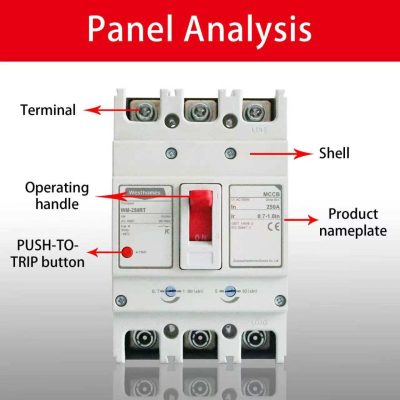
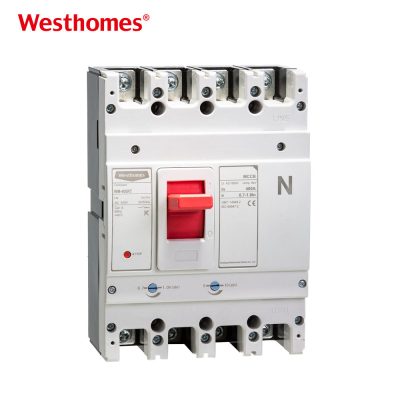
WCM1 Moulded case circuit breaker
WCM1 is one of updated type MCCBs researched and developed by the company by using advanced design and manufacture technology internationally.
Get quick appointment for technical support!

WCM1 series MCB is one of updated type MCCBs researched and developed by the company by using advanced design and manufacture technology internationally.



WCM1 is one of updated type MCCBs researched and developed by the company by using advanced design and manufacture technology internationally.
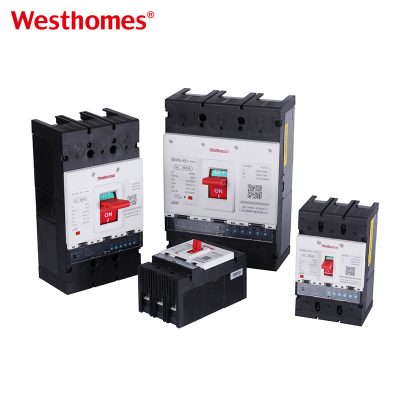
The WCM1 series MCCB is a new type developed using advanced technology. It has 800V (WCM1-63 500V) rated insulation voltage, suitable for 50Hz AC, ≤690V (WCM1-63 ≤400V) operation, and infrequent motor starting. With overload, short-circuit, and undervoltage protection, it classifies as C, L, M, or H type based on Icu. Compact, high breaking capacity, short flashover, and vibration-resistant, it is ideal for land and ship use, supporting vertical and horizontal mounting.
Our factory has over 20 years of expertise in circuit breaker production, with annual domestic and international sales exceeding 500 million RMB. Leveraging automated production lines, we ensure stable product quality. Our high-performance circuit breakers are backed by comprehensive certifications, delivered by our dedicated R&D and sales teams committed to meeting your requirements.

| Pole | 2P(only for 125A and 250A), 3P, 4P |
| Voltage | AC400V/690V |
| kA | 20-100kA |
| Inm(A) | 63, 100, 225, 400, 630, 800, 1250, 2000(only with 3P) |
| In(A) | 10, 16, 20, 25, 32, 40, 50, 63, 100, 225, 400, 630, 800, 1250, 1400, 1600, 1800, 2000 |
| Model | Frame level rated current (A) | Current Rating (A) | Rated operation voltage (V) | Rated insulation voltage (V) | Rated ultimate short circuit breaking capacity (kA) 400V | Rated operation short circuit breaking capacity (kA) 400V |
| WCM1-63L | 63 | (6), 10, 16, 20, 25, 32, 40, 50, 63 | AC400 | AC500 | 25 | 18 |
| WCM1-63M | 50 | 35 | ||||
| WCM1-125C | 100 | (10), 16, 20, 25, 32, 40, 50, 63, 80, 100 | AC690 | AC800 | 20 | 10 |
| WCM1-125L | 35 | 17.5 | ||||
| WCM1-125M | 50 | 35 | ||||
| WCM1-125H | 85 | 50 | ||||
| WCM1-250L | 225 | 100, 125, 140, 160, 180, 200, 225 | AC690 | AC800 | 35 | 18 |
| WCM1-250M | 50 | 35 | ||||
| WCM1-250H | 85 | 50 | ||||
| WCM1-400L | 400 | 225, 250, 315, 350, 400 | AC690 | AC800 | 50 | 25 |
| WCM1-400M | 65 | 42 | ||||
| WCM1-400H | 100 | 65 | ||||
| WCM1-630L | 630 | 400, 500, 630 | AC690 | AC800 | 50 | 25 |
| WCM1-630M | 65 | 42 | ||||
| WCM1-630H | 100 | 65 | ||||
| WCM1-800M | 800 | 630, 700, 800 | AC690 | AC800 | 75 | 50 |
| WCM1-800H | 100 | 65 | ||||
| WCM1-1250 | 800 | 1000, 1250 | AC690 | AC800 | 65 | 40 |
| WCM1-2000 | 1250 | 1400, 1600, 1800, 2000 | AC690 | AC800 | 65 | 40 |

"Fixed type" means the breaker is permanently bolted onto its mounting plate and connected directly to busbars or cables; it cannot be plugged in or withdrawn while the panel is energised. In contrast, plug-in and withdrawable MCCBs allow the unit to be removed for maintenance with the rest of the panel live. Fixed construction is simpler, cheaper, and fully adequate for most feeder applications where the breaker rarely needs to be removed.
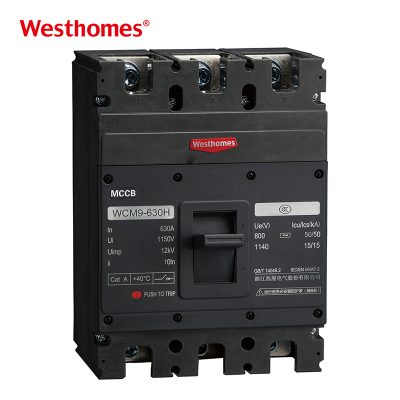
630A is the rated current (In) the breaker can carry continuously, and 3P indicates it switches all three phases in a three-phase, three-wire (or with a separate neutral bar) system. A 630A frame is a heavy-duty MCCB typically chosen as a main switch or large feeder protection in industrial panels. The connected cables and busbar must be sized to safely carry 630A with appropriate derating.
Inside the case are arc-split plates (arc chutes) that draw the fault arc upward, cut it into small series arcs, and cool it as the contacts open under high speed. The electromagnetic force also speeds contact opening to limit the let-through energy. Combined with a high-rated breaking capacity (commonly 35–50 kA or more), this allows the breaker to clear a severe bolted fault within a few cycles.
At 630A, trip units are almost always adjustable: the long-time pickup (Ir) is commonly set from 0.8 to 1.0 × In, the short-time pickup (Isd) and delay (tsd) provide selectivity, and the instantaneous magnetic trip (Ii) can often be switched off for selectivity with downstream MCCBs. These adjustments let the breaker coordinate with upstream and downstream protective devices so only the nearest breaker to a fault trips.
Breaking capacity for a 630A frame is typically in the range of 35 kA to 50 kA at 415V, depending on the model. Icu (ultimate) is the highest fault current it can clear once without destruction; Ics (service) is the value it can clear repeatedly. Because a 630A breaker is usually installed near the transformer, the prospective fault current is high, so the kA rating must be verified against the calculated short-circuit level.
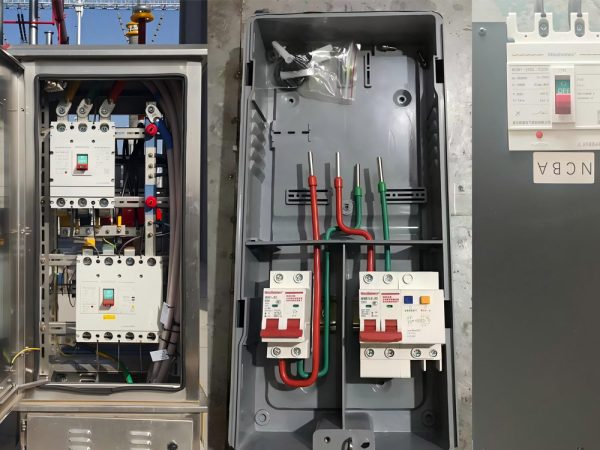
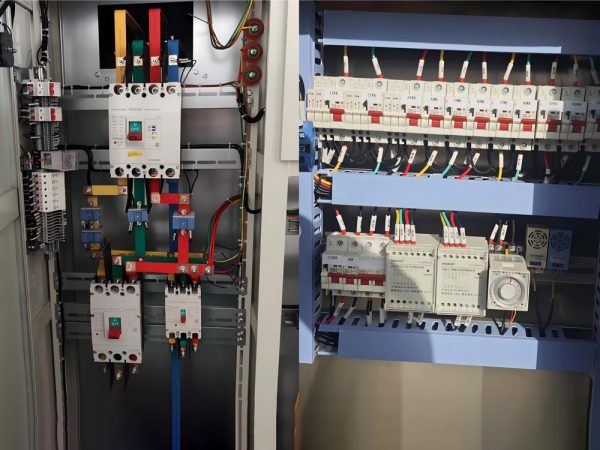
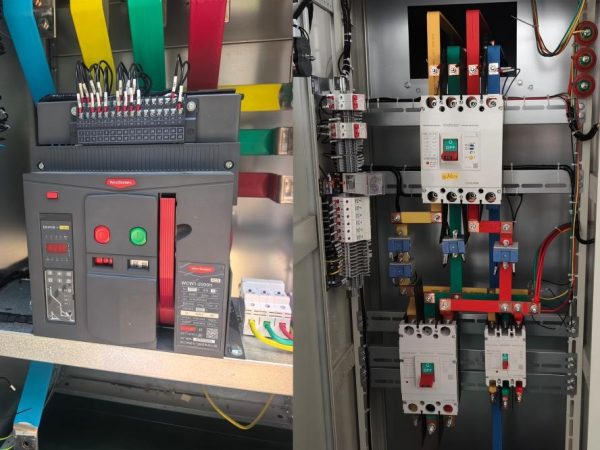
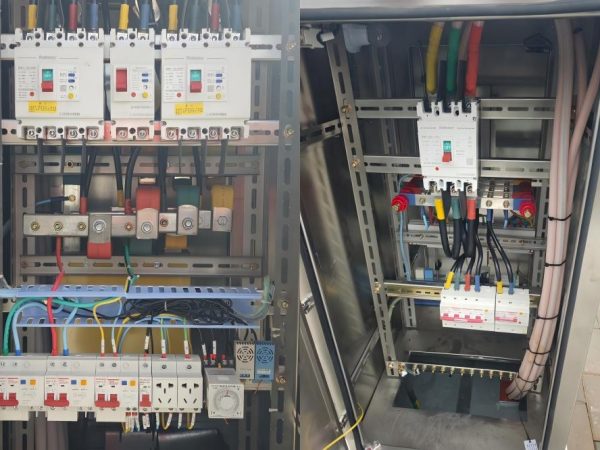
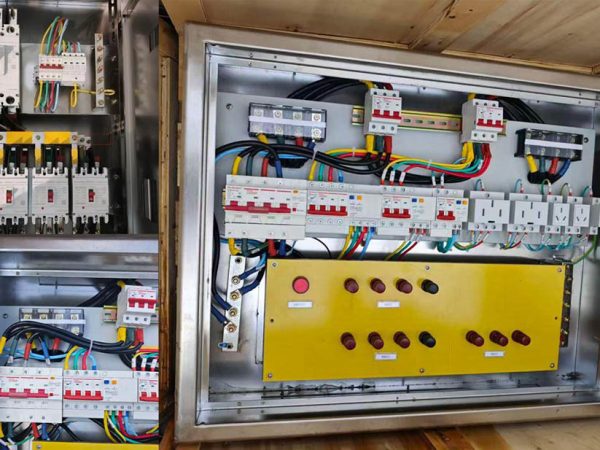
It is bolted to a mounting plate within a sheet-steel distribution board or MCC cubicle, with rigid busbars or large multi-strand cables landed on the line and load terminals using specified torque. Mains or generator supply enters the line side and the protected feeder leaves on the load side. Because of the high current, adequate phase-to-phase clearance, busbar support insulators, and suitable cable lugs are essential, and the work must be done by a licensed electrician.
It is manufactured and tested to IEC 60947-2, the same low-voltage circuit-breaker standard that governs lower-current MCCBs. The standard defines the thermal and electromagnetic trip tests, breaking capacity, impulse withstand, and operation under abnormal voltage. A CB test certificate and CE marking confirm it has been type-tested to these requirements and is acceptable for international tenders.
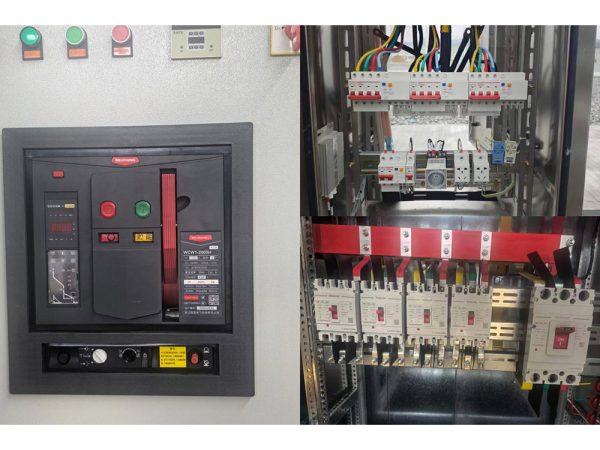
It is used as the main breaker in a three-phase industrial distribution board, as protection for large motors, transformers, welding sets, UPS systems, and main feeders to multiple sub-panels. It is commonly found in factories, commercial buildings, shopping centres, and infrastructure installations where a three-phase load of several hundred amps must be protected. Its adjustable trip also makes it suitable for selective coordination studies.
Fixed MCCBs are permanently mounted and wired, lowest cost, and used where breaker removal is rare. Plug-in MCCBs sit on a base that disconnects the main contacts, allowing the unit to be swapped with insulated tools. Withdrawable units slide on a chassis with an isolated test position, used in high-availability installations where maintenance must be live. For most ordinary feeder duties, fixed construction is sufficient and most cost-effective.
Yes, a 630A 3P fixed MCCB is frequently used as the main incoming breaker, provided its rated current, breaking capacity, and trip settings match the installation. It must be installed on the load side of any required isolator or transformer protection, and its auxiliary contacts (shunt undervoltage release, alarm contacts) can be wired to alarms or shutdown interlocks. Always confirm discrimination with upstream and downstream devices before finalising the one-line diagram.
* indicates a required field

 2 MB