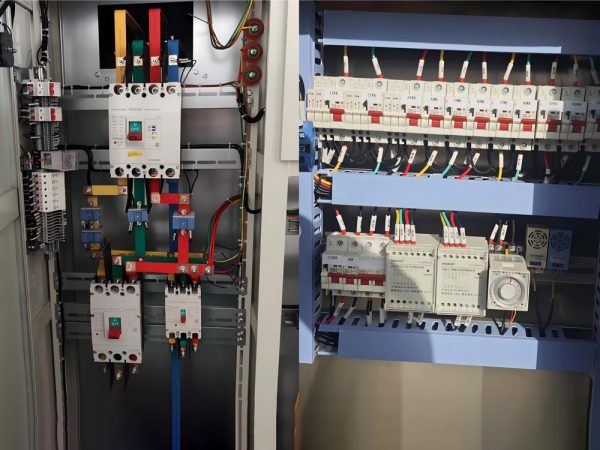
WSB7GQ Moulded case circuit breaker
WSB7GQ series MCB is one of updated type MCCBs researched and developed by the company by using advanced design and manufacture technology internationally.
Get quick appointment for technical support!

WSB7GQ series MCB is one of updated type MCCBs researched and developed by the company by using advanced design and manufacture technology internationally.


WSB7GQ series MCB is one of updated type MCCBs researched and developed by the company by using advanced design and manufacture technology internationally.
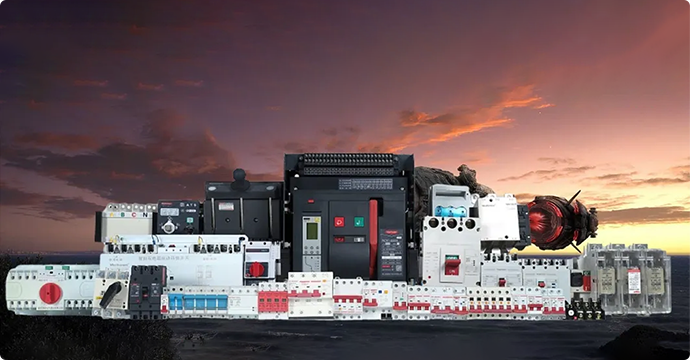
WSB7GQ Miniature circuit breaker (with overvoltage / undervoltage protection) is a derivative product of WSB7-63 Miniature circuit breaker equipped with overvoltage and undervoltage modules. It has the advantages of advanced structure, reliable performance, high breaking capacity, beautiful and compact appearance. It is suitable for residential buildings, office buildings and similar buildings with AC 50Hz, rated voltage up to 400V, overvoltage protection setting value of 280V±5%; undervoltage protection can be added with a setting value of 160V±5%, and rated current below 63A. Overload, short circuit and overvoltage protection for lighting, distribution lines and equipment, and can also be used for infrequent switching of lines and infrequent starting of motors under normal circumstances. This product complies with the requirements of GB10963.1 and IEC60898-1 standards.

| Model | WSB7G | WSB7GQ | ||
| Rated voltage Ue(v) | 230V | 230V | ||
| Rated current In(A) | 20, 25, 32, 40, 50, 63A | 20, 25, 32, 40, 50, 63A | ||
| Breaking capacity lcn (A) | 6000A(6~40A), 4500A(50~63) | 6000A(6~40A), 4500A(50~63) | ||
| Over and under voltage protection setting value (V) | 280±5% | 160±5% | ||
| Action time(S) | 0.1s | 0.1s | ||
| Number of poles (P) | 1P+N | 3P+N | 1P+N | 3P+N |
| Width(mm) | 36 | 72 | 36 | 72 |
For a closer look at mccb, read Wsb1-63 10ka 6-80A 230V/400V/AC 6ka MCB with CE.
It is a DIN-rail voltage-monitoring relay with an integrated switching contact that disconnects the load when supply voltage goes outside preset limits and then automatically reconnects it after a fixed delay once voltage returns to normal. Unlike a simple manual-reconnect protector, it rides through short, temporary voltage dips or surges without requiring someone to reset the panel. It is widely used where unattended operation is required.
When voltage exceeds the overvoltage limit or drops below the undervoltage limit, the internal contactor opens. The device then waits through an adjustable reconnection delay—commonly 5 seconds to 5 minutes—while continuously monitoring the supply. If the voltage has returned to the acceptable band and stayed there through the delay, it automatically re-energises the load; if the fault persists, it stays off. A manual button or display lets the user force a trip or reset.
A voltage-sensing circuit measures the RMS value of the incoming AC, typically sampled continuously. The internal microprocessor compares the live reading against the programmed upper and lower thresholds. It can distinguish momentary transients (which are ignored) from sustained out-of-range conditions (which trigger a trip), thanks to on-delay and off-delay timers. An LED or small screen usually shows the actual voltage and current trip state.
On a 230V single-phase supply, the undervoltage trip is commonly set between 170V and 190V (often 180V) and the overvoltage trip between 250V and 280V (often 260V). On three-phase versions, phase-loss and phase-sequence detection can also trigger tripping. Thresholds are field-adjustable via dials, DIP switches, or buttons so they can be matched to the nominal voltage of the protected equipment.
Voltage dips and brief surges are common on weak grids, during motor start-up, or after utility switching. An immediate trip would cause nuisance shutdowns. The off-delay (e.g., 0.5–5 seconds) ignores short glitches, while the on-delay (e.g., tens of seconds to several minutes) ensures the supply is truly stable before reconnecting sensitive loads. This sequencing prevents equipment cycling damage from repeated re-energisation.
It mounts on a 35mm DIN rail inside a distribution board and is wired in series with the load: the supply L/N feeds the input terminals and the output terminals go to the protected circuit. On three-phase models, all three phases (and neutral where applicable) are connected to the sensing terminals. A qualified electrician should carry out the work with the supply isolated, respecting the input/output markings and conductor cross-section.
Choose auto-reclosing when the installation is unattended (remote sites, holiday homes, street-side cabinets) or when momentary grid faults are frequent, because it restores power without a service call. Choose manual reset when the load must not be re-energised without a human check—for example, on industrial machinery or where reconnection could create a hazard. Many models offer both modes via a switch.
No. It monitors voltage only and does not provide true overload or short-circuit breaking in the MCB sense; it should be backed by an upstream MCB or MCCB rated for the prospective fault current. It also does not detect earth leakage, so an RCCB/RCD remains necessary for shock protection. Treat it as an additional layer: MCB/MCCB for overcurrent, RCCB for earth fault, and this device for voltage-quality protection.
It is used in homes, shops, offices, and telecom cabinets where unreliable mains cause frequent undervoltage or overvoltage events. Common protected loads include air conditioners, refrigerators, pumps, ATMs, security and CCTV systems, traffic signals, and telecommunication cabinets. It is also popular on generator-fed sites where voltage regulation drifts. Auto-reclosing reduces call-out costs and downtime.
Most devices include a lockout or limited-retry logic: after repeated auto-reclosures within a set window, they stop reclosing and require a manual reset, preventing the load from being repeatedly switched on a faulty supply. The on-delay ensures each retry only happens after the supply has been stable for the programmed time. If cycling continues, the installation should be inspected for a faulty neutral, unstable transformer, or a wiring fault rather than relying on repeated auto-reclosures.
* indicates a required field

 2 MB