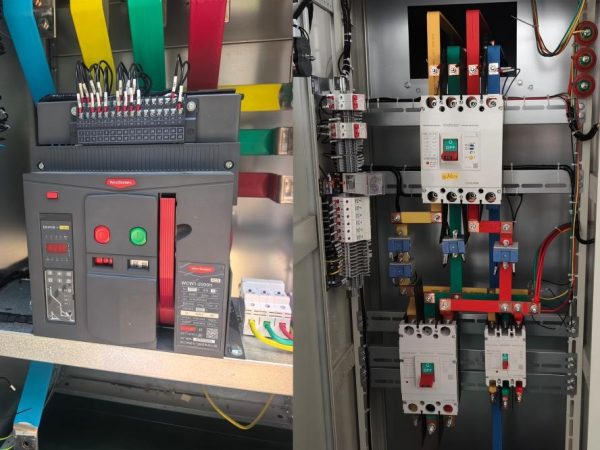
WSB7GQ Moulded case circuit breaker
WSB7GQ series MCB is one of updated type MCCBs researched and developed by the company by using advanced design and manufacture technology internationally.
Get quick appointment for technical support!

WSB7GQ series MCB is one of updated type MCCBs researched and developed by the company by using advanced design and manufacture technology internationally.


WSB7GQ series MCB is one of updated type MCCBs researched and developed by the company by using advanced design and manufacture technology internationally.
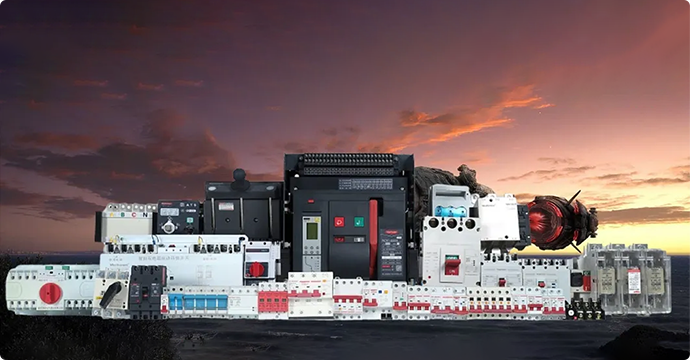
WSB7GQ Miniature circuit breaker (with overvoltage / undervoltage protection) is a derivative product of WSB7-63 Miniature circuit breaker equipped with overvoltage and undervoltage modules. It has the advantages of advanced structure, reliable performance, high breaking capacity, beautiful and compact appearance. It is suitable for residential buildings, office buildings and similar buildings with AC 50Hz, rated voltage up to 400V, overvoltage protection setting value of 280V±5%; undervoltage protection can be added with a setting value of 160V±5%, and rated current below 63A. Overload, short circuit and overvoltage protection for lighting, distribution lines and equipment, and can also be used for infrequent switching of lines and infrequent starting of motors under normal circumstances. This product complies with the requirements of GB10963.1 and IEC60898-1 standards.

| Model | WSB7G | WSB7GQ | ||
| Rated voltage Ue(v) | 230V | 230V | ||
| Rated current In(A) | 20, 25, 32, 40, 50, 63A | 20, 25, 32, 40, 50, 63A | ||
| Breaking capacity lcn (A) | 6000A(6~40A), 4500A(50~63) | 6000A(6~40A), 4500A(50~63) | ||
| Over and under voltage protection setting value (V) | 280±5% | 160±5% | ||
| Action time(S) | 0.1s | 0.1s | ||
| Number of poles (P) | 1P+N | 3P+N | 1P+N | 3P+N |
| Width(mm) | 36 | 72 | 36 | 72 |
See How to Properly Install a Main Service Circuit Breaker for a deeper dive into circuit breaker.
It is a combined miniature circuit breaker and voltage-monitoring relay housed in a DIN-rail module. The MCB part protects the circuit against overload and short-circuit, while the voltage-protection part monitors the supply voltage and opens the contacts when voltage falls below or rises above preset limits. It is designed to protect single-phase loads sensitive to voltage deviations, such as refrigerators, TVs, and computers.
An electronic control circuit continuously measures the RMS voltage across L and N, compares it with the preset upper and lower thresholds, and energises or de-energises an internal solenoid/contactor mechanism. When the voltage leaves the allowed band, the mechanism trips the contacts after an intentional delay. A light indicator or display shows the current voltage and whether the device is in normal, undervoltage, or overvoltage state.
For a 230V system, the undervoltage trip is commonly set around 170–190V (often 180V) and the overvoltage trip around 260–280V (often 260V). Many units allow these limits to be adjusted via dials or buttons. The trip points are chosen so that equipment is protected from extended undervoltage (which overheats motors) and sustained overvoltage (which burns out electronics).
It is connected in series with the protected load: supply L and N enter the input terminals, and the output terminals feed the load. Because it is a 1P+N (or 2P) device, the neutral is connected straight through or switched depending on the model. The wiring must follow the input/output markings; reversing them usually disables protection. A qualified electrician should make the connection with the supply isolated.
Yes, like an MCB it clips onto a 35mm DIN rail inside a consumer unit or distribution box. Its width is typically a few modular poles (e.g., 36mm or two-module width). It fits alongside ordinary MCBs and RCCBs in the same panel, which makes it easy to add voltage protection to an existing board without extra cabinet space.
A standard MCB only reacts to current—overload and short circuit—via its thermal-magnetic trip. This device adds voltage monitoring and disconnects based on RMS voltage, even when current is normal. It therefore protects loads from supply faults that an MCB would ignore, such as a floating neutral or transformer tap error that lifts voltage to 270V while current stays normal.
An RCCB trips on earth-leakage current (difference between L and N), protecting against shock and insulation faults. This protector trips on absolute voltage level, protecting against supply under/over-voltage events. The two address different failure modes and are complementary; a complete installation may use an RCCB for shock protection, an MCB-style protector for voltage protection, and a separate MCB for overload.
It is used on circuits feeding sensitive or voltage-sensitive equipment: home appliances (refrigerators, washing machines, air conditioners), TVs and audio systems, personal computers and routers, LED lighting, and control panels. Motors suffer overheating on undervoltage, and electronic power supplies fail on overvoltage, so protecting these circuits directly extends equipment life and reduces warranty claims.
CE marking confirms the product satisfies the EU Low Voltage Directive and EMC Directive requirements. A CB test certificate means an accredited laboratory has type-tested it to the relevant IEC standard and that the test report is recognised across the CB scheme member countries. These marks are important for exporters and for tenders that require certified, compliant protection devices.
Maintenance is minimal: visually inspect the status indicator monthly, press any test button provided to confirm the trip mechanism works, and check the display for correct voltage readings annually. Because it contains electronic parts, it should be replaced if the display behaves erratically or it fails to trip during a test. No calibration is normally needed in the field.
* indicates a required field


 2 MB