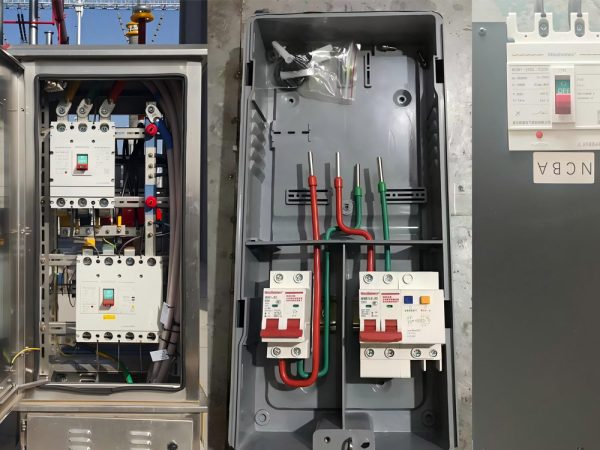
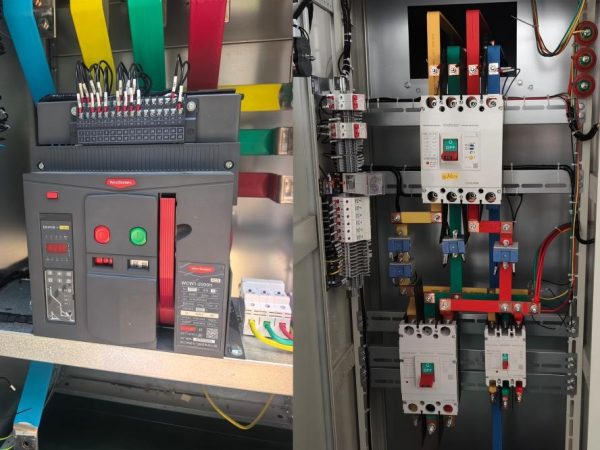
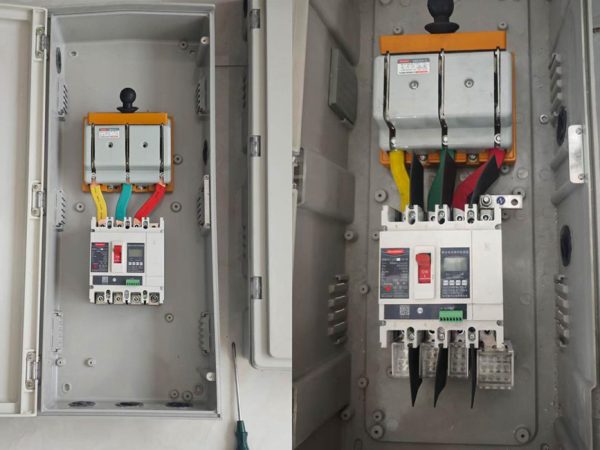
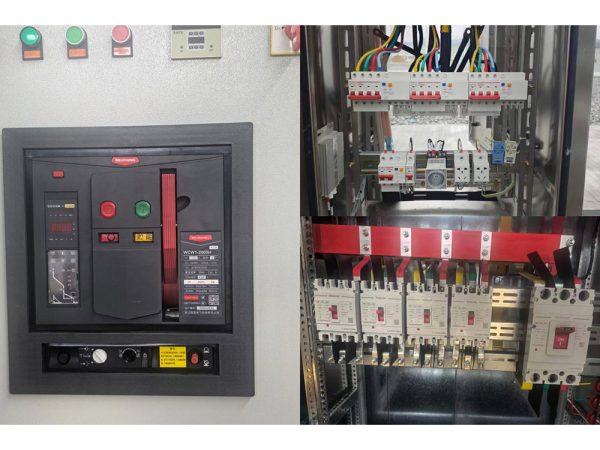
WSB7GQ Moulded case circuit breaker
WSB7GQ series MCB is one of updated type MCCBs researched and developed by the company by using advanced design and manufacture technology internationally.
Get quick appointment for technical support!

WSB7GQ series MCB is one of updated type MCCBs researched and developed by the company by using advanced design and manufacture technology internationally.


WSB7GQ series MCB is one of updated type MCCBs researched and developed by the company by using advanced design and manufacture technology internationally.
WSB7GQ Miniature circuit breaker (with overvoltage / undervoltage protection) is a derivative product of WSB7-63 Miniature circuit breaker equipped with overvoltage and undervoltage modules. It has the advantages of advanced structure, reliable performance, high breaking capacity, beautiful and compact appearance. It is suitable for residential buildings, office buildings and similar buildings with AC 50Hz, rated voltage up to 400V, overvoltage protection setting value of 280V±5%; undervoltage protection can be added with a setting value of 160V±5%, and rated current below 63A. Overload, short circuit and overvoltage protection for lighting, distribution lines and equipment, and can also be used for infrequent switching of lines and infrequent starting of motors under normal circumstances. This product complies with the requirements of GB10963.1 and IEC60898-1 standards.

| Model | WSB7G | WSB7GQ | ||
| Rated voltage Ue(v) | 230V | 230V | ||
| Rated current In(A) | 20, 25, 32, 40, 50, 63A | 20, 25, 32, 40, 50, 63A | ||
| Breaking capacity lcn (A) | 6000A(6~40A), 4500A(50~63) | 6000A(6~40A), 4500A(50~63) | ||
| Over and under voltage protection setting value (V) | 280±5% | 160±5% | ||
| Action time(S) | 0.1s | 0.1s | ||
| Number of poles (P) | 1P+N | 3P+N | 1P+N | 3P+N |
| Width(mm) | 36 | 72 | 36 | 72 |
An overvoltage protector (also called an over/under-voltage protection relay device) continuously monitors the RMS voltage of the incoming mains supply and automatically disconnects the load when the voltage drifts outside a safe band. It protects appliances and wiring from sustained voltage faults such as a broken neutral, a faulty distribution transformer, or a loose connection that can push mains voltage well above the rated value. Unlike a fuse, it reacts to voltage level rather than overcurrent, so it trips on abnormal voltage even when the current is within normal limits.
The device samples the live-to-neutral voltage through an internal sensing circuit and compares it against factory-set thresholds. When the measured RMS voltage exceeds the overvoltage trip level (commonly around 260 V on a 230 V system), the internal relay opens and breaks the circuit to the load. The same sensing circuit also monitors the lower limit, so it disconnects on undervoltage conditions as well, and it waits a set time delay before reconnecting to avoid nuisance trips from brief fluctuations.
The AC230V rating identifies the nominal single-phase mains voltage the WSB7GQ is designed for — the standard 230 V AC supply used in most of Europe, Asia, Africa and parts of Latin America. It means the device senses and trips correctly around that nominal level, with its overvoltage and undervoltage thresholds referenced to 230 V. It is not a universal rating: on a 120 V or 277 V mains system you must select a device calibrated for that nominal voltage instead.
CE marking indicates the product conforms to the applicable European health, safety and environmental protection directives and can be sold in the EEA. The CB mark refers to the IECEE CB Scheme, meaning the device has been tested to the relevant IEC standard by a certified laboratory and the test certificate is accepted for national certification in many countries worldwide. Together they give installers and distributors confidence that the protection performance and dielectric/construction safety have been independently verified.
It mounts on a standard 35 mm DIN rail (TS35), the same rail used for miniature circuit breakers and residual-current devices in a consumer unit or distribution box. The housing snaps onto the rail, so it can be installed side-by-side with MCBs and RCDs in the same enclosure. This rail-mounted form factor keeps the installation neat and allows the device to be added or removed without drilling or fixing screws.
The device is wired in series with the load: the supply live (L) and neutral (N) come into the input/line terminals, and the protected load is connected to the output/load terminals, following the marked L and N indications. It should be installed downstream of the main breaker and before the protected circuits, with the conductors sized to the device's rated current and torque. Polarity and phase must match the markings, and the wiring must be in an enclosure with the cover closed per local electrical code.
Auto-reclosing models keep the trip contacts open while the supply is abnormal and automatically re-energize the load after the voltage returns to the safe range and a built-in time delay has elapsed. Manual-reset models require a button press or lever operation to restore power, which is useful when you want the fault investigated before reconnecting. The WSB7GQ is typically offered as an auto-reclosing device, and the delay (often tens of seconds) prevents rapid repeated switching during unstable supply conditions.
An overvoltage protector responds to sustained, low-frequency RMS overvoltage lasting cycles to seconds and physically disconnects the circuit to remove the abnormal voltage from the load. An SPD (surge protective device) responds to very short, high-energy transient spikes — lightning induced surges or switching pulses measured in microseconds — and clamps/diverts that spike to earth through components such as metal oxide varistors without disconnecting the mains. They address different events and are often used together: the SPD handles impulses while the overvoltage protector handles long-duration voltage faults.
Overvoltage protection trips when the supply rises above the upper threshold (for example above ~260 V on a 230 V system), guarding against insulation stress and overheating of electronics and motors caused by excessive voltage. Undervoltage protection trips when the supply falls below the lower threshold (for example below ~170 V), protecting motors and compressors that draw higher current and overheat when fed insufficient voltage. A combined over/under-voltage device like the WSB7GQ monitors both directions and disconnects if either limit is breached.
Common applications include protecting home appliances, refrigerators and air-conditioning (AC) units, televisions, computers, vending machines and distribution boards in areas with unstable mains or transformer faults. Maintenance is light: periodically verify the trip function by testing the device, check terminal tightness, and keep the vents and DIN-rail enclosure clean and dry. Because the internal relay contacts wear over many operations, it is good practice to inspect and replace the unit if it fails to trip or shows overheating, and to keep a time delay configured so brief dips do not repeatedly power-cycle sensitive loads.
* indicates a required field

 2 MB