Get quick appointment for technical support!

Selecting an Auto-Resetting Voltage Protector
Aug 30, 2026
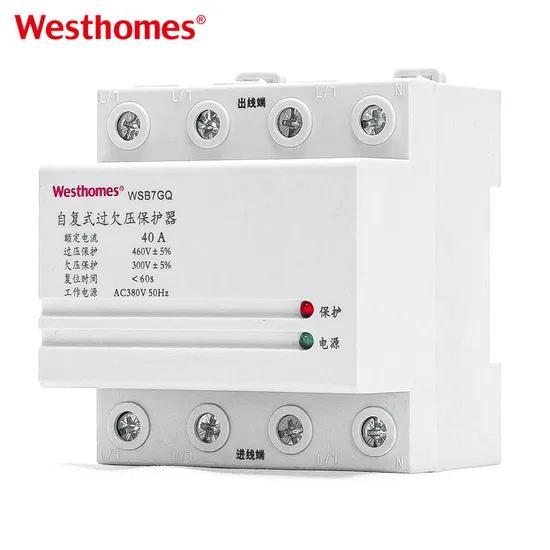
What the Device Protects and What It Leaves Alone
The protector responds to supply voltage and nothing else. It does not respond to a short circuit, to an earth fault or to an overload. Those remain the job of the devices beside it.
What it does protect is equipment that is sensitive to voltage rather than to current. A motor running on a low supply draws a higher current for the same output, and a compressor that sees the supply fall may stall rather than run. Disconnecting on a voltage excursion removes that condition.
The distinction counts at the specification stage. A board that needs voltage protection and nothing else takes one device. A board that needs voltage, overload and earth fault protection takes three, and the protector is one of them.
Parameter One, the Voltage Window
The device has an upper threshold and a lower threshold, and either one causes a disconnection. The window between them is set to suit the supply and the equipment rather than to a single figure.
A narrow window protects sensitive equipment and produces more disconnections. A wide window reduces nuisance disconnections and lets more variation through. The choice is a judgment about which failure is more expensive on that particular supply.
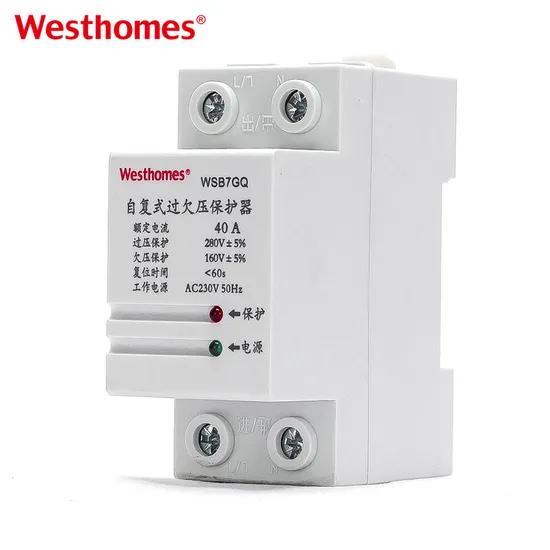
The range includes devices published for different supply voltages, and the voltage version is selected before any other parameter. Each version is listed under auto-resetting over and under voltage protector with the range it covers.
Parameter Two, the Delay Before It Cuts
A short voltage dip that lasts a few cycles is a normal event on a supply with large motors on it. A device that disconnected on every dip would be useless. The delay is the time the voltage has to be outside the window before the device acts.
The delay is what separates a genuine excursion from a transient. Setting it too short produces a board that drops out when a neighboring motor starts. Setting it too long leaves equipment exposed to a voltage that has gone wrong and stayed wrong.
Parameter Three, the Recovery Time
After the voltage returns inside the window, the device waits before reconnecting. That wait serves two purposes. It confirms that the voltage is stable rather than flickering across the threshold, and it staggers the reconnection of equipment that would otherwise all start together.
The second purpose is the one that is easy to miss on a large board. Several devices that reconnect at the same instant produce an inrush that can pull the voltage back down, and the board cycles. A recovery time that varies between devices prevents the simultaneous restart.
Parameter Four, the Current Rating
The current rating of the protector has to cover everything downstream of it, which on a main incoming position is the whole installation. It is read after the voltage version and the delays are settled, because the current rating only decides which size of the chosen device is ordered.
The rating is not the same as the rating of the device upstream. A protector that disconnects the supply carries the full load current while it is closed, and that figure comes from the load calculation rather than from the board label.
The way the load figure is produced is set out in the guide on electrical load calculation and total connected load, and the same figure is used for the incoming device and the cable.
Parameter Five, What Happens After a Trip
An auto-resetting device has to decide what to do when the voltage it is protecting against does not improve. Some reconnect repeatedly and some lock out after a number of attempts. The behavior counts where the fault is in the supply rather than in the equipment.
A device that keeps trying will reconnect the load into a condition that has not been fixed, which can restart a machine into a fault. A device that locks out leaves the installation dead until somebody attends, which is the safer outcome but not the more convenient one.
The version to specify depends on what is downstream. Equipment that restarts safely takes the auto-resetting behavior. Equipment that has to be started in sequence takes a device whose reconnection can be delayed to suit that sequence.
Reading the Range Against Your Supply
| Parameter | What it decides | What to check first |
| Voltage version | The supply it can be fitted to | The nominal supply voltage |
| Upper and lower thresholds | How much variation is allowed | What the equipment tolerates |
| Pickup delay | What counts as a transient | Whether large motors share the supply |
| Recovery time | When the load comes back | Whether several loads restart together |
| Current rating | The size of the device ordered | The total load downstream |
| Reset behavior | What happens if the fault persists | Whether equipment restarts safely |
The sequence in that table is the order the parameters are settled. A selection made in a different order, such as starting from the current rating, produces a device that fits the board and not the supply.
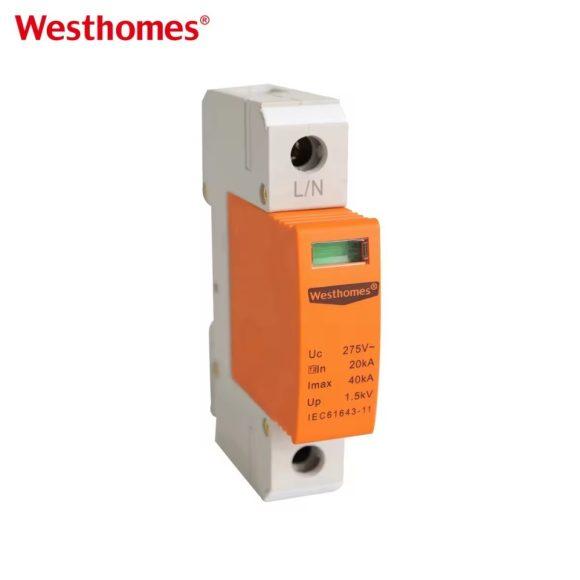
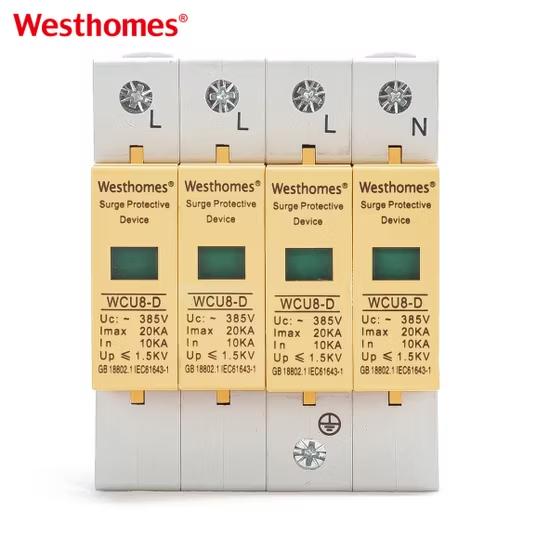
Where the board already has a surge protection device fitted, the two devices do different jobs and both are needed. A protector responds to sustained voltage variation, and a surge device responds to a transient.

--- END ---
In this blog
Featured Articles
Get A Free Quote
