Get quick appointment for technical support!

Why Motors Burn Out and How to Prevent It
Aug 16, 2026
Electric motors are durable machines, but they fail when the protection scheme does not match the application. A motor that burns out is rarely a manufacturing defect. In most cases, the root cause is an electrical or mechanical condition that the protective devices either missed or responded to too late.
Understanding why motors fail allows you to select the right protection before the damage happens.
Common Causes of Motor Burnout
Motor windings fail when insulation breaks down under stress. The stress comes from one of several sources, and identifying which one applies determines the correct protective strategy.
Overload
An overload occurs when a motor draws more current than its rated full load amperage for an extended period. This excess current generates heat in the windings much faster than the motor frame can dissipate it, causing the insulation to degrade gradually. As a result, the motor might run hot for weeks or months before failing without any obvious warning.
It is important to note that an overload is not a short circuit. The current is elevated but not immediately catastrophic. A standard circuit breaker sized only for short circuit protection will not trip during an overload condition because the current never reaches the instantaneous trip threshold. Instead, the motor continues to run until the insulation completely fails and the windings short together.
Common overload causes:
- Mechanical binding in the driven equipment
- Excessive load on conveyor or pump
- Undersized motor for the application
- Voltage drop causing increased current draw
- Frequent starting and stopping without adequate cooling time
Phase Loss
Three phase motors can technically continue to run on just two phases, but the current in the remaining windings will increase significantly. When this happens, the motor sounds different, runs much hotter, and loses torque. If this condition persists, the windings will inevitably overheat and fail.
Phase loss occurs when a fuse blows on one phase, or when the contactor contact that fails to close on one phase leaves the motor running on two. A standard three phase circuit breaker might not detect this issue, as the current on the operating phases can remain below the trip threshold while still dangerously exceeding the thermal capacity of the motor.
Short Circuit and Ground Fault
A short circuit between windings or between a winding and the motor frame produces a sudden and massive current spike. To prevent severe winding damage or a fire, the protective device must interrupt this fault within milliseconds. While standard circuit breakers are explicitly designed to handle this exact condition, the breaker must be correctly sized for the specific characteristics of the motor.
Conversely, a ground fault produces a much lower fault current than a phase to phase short circuit, especially in high resistance grounded systems. A standard breaker may fail to detect this fault entirely, allowing the current leaking to ground to persist indefinitely and cause gradual, irreversible insulation damage.
Voltage Imbalance
A voltage imbalance as small as two percent between phases can increase the motor operating temperature by ten percent or more. This imbalance forces the motor to produce a negative sequence torque, which effectively acts as a brake on the rotor. To overcome this braking effect, the motor draws additional current, and that extra current translates directly into damaging heat.
These electrical imbalances usually originate in the power supply, from unbalanced single phase loads on the same distribution system, or due to poor connections at the motor terminals.
Protection Devices That Prevent Burnout
The right combination of devices addresses each failure mode without nuisance tripping.
| Device | Protects Against | Limitation |
| Thermal overload relay | Sustained overload, phase loss | Does not protect against short circuit |
| MPCB (Motor Protection Circuit Breaker) | Overload, phase loss, short circuit | Limited adjustment range per frame size |
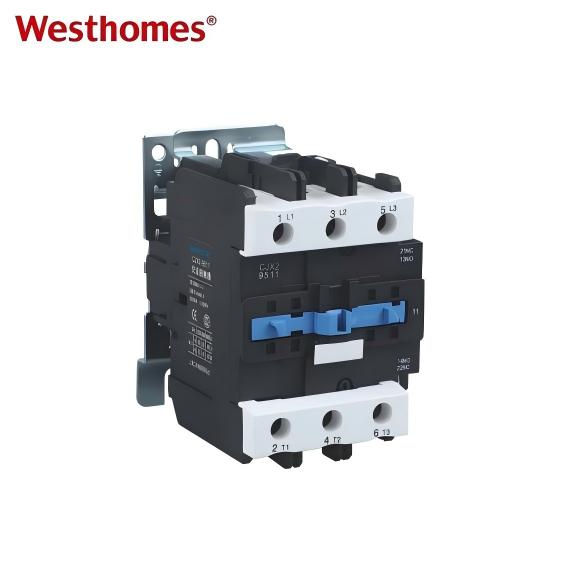
| Contactor + overload relay | Overload, phase loss (when paired with correct relay) | Requires separate short circuit protection |
| Electronic motor protection relay | Overload, phase loss, phase imbalance, ground fault | Higher cost, requires setup |
Thermal Overload Relays
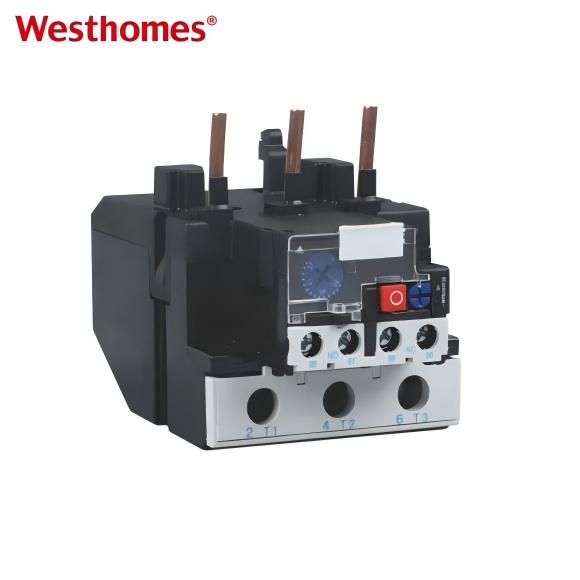
The bimetallic strip that mirrors winding temperature is what makes the device follow the motor rather than the fault current. When this strip bends far enough, it opens a control contact that deactivates the contactor coil.
You should set this relay to the motor full load current. While it is designed primarily to respond to prolonged overloads, it also provides a helpful degree of phase loss protection. In a three phase relay, losing a single phase causes unequal heating across the three bimetal elements. The differential trip mechanism quickly detects this dangerous imbalance and opens the control circuit.
- The Advantage: These relays are highly reliable and inexpensive.
- The Limitation: They cannot detect short circuits. You must install a separate circuit breaker or fuse to handle instantaneous fault protection.
Motor Protection Circuit Breakers (MPCB)
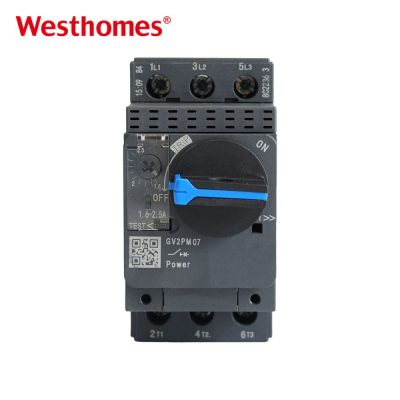
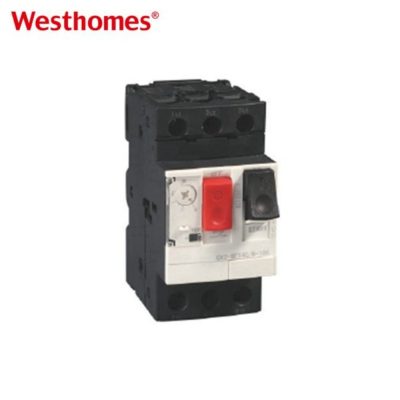
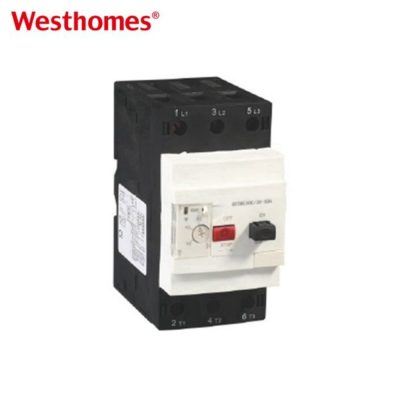
An MPCB combines overload protection, phase loss protection, and short circuit protection into a single convenient device. To achieve this, a thermal element handles the overloads, a magnetic element addresses short circuits, and a phase failure sensitivity feature detects any current imbalances.
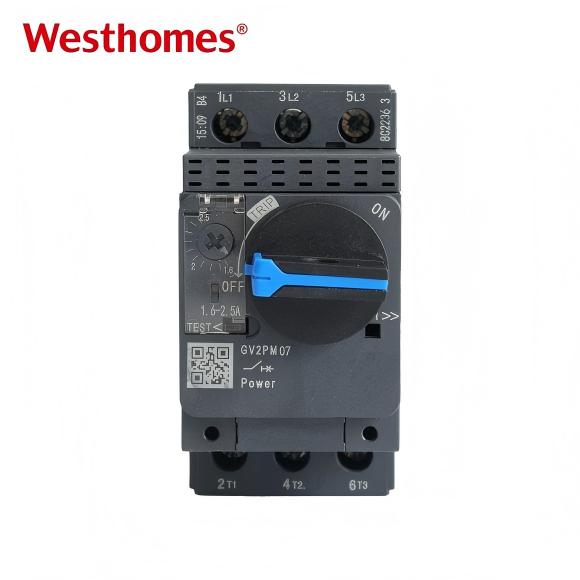
The current range is wide but not infinite, which is why the frame size that brackets the motor current has to be chosen before the dial is touched. Each frame size covers a specific current range. For the best and safest results, you should select a frame size that places the motor full load current directly in the middle of the adjustment range rather than at either extreme edge.
- The Advantage: These devices greatly simplify your overall electrical design because one unit replaces the traditional combination of a circuit breaker and an overload relay.
- The Limitation: A separate contactor is still strictly required for control switching. Additionally, you must be careful to select the exact right frame size, as the current adjustment range is limited.
Electronic Motor Protection Relays
Electronic relays monitor the electrical current through current transformers and use advanced microprocessor algorithms to continuously model the thermal state of the motor. Because of this technology, they can easily detect overloads, phase loss, phase imbalances, ground faults, and even undercurrent conditions from a continuously running pump or fan.
- The Advantage: These devices offer unmatched accuracy and range. Instead of relying on a physical bimetal strip that is subject to ambient temperature changes and mechanical tolerances, an electronic relay trips based on a highly precise calculated thermal model.
- The Limitation: The primary drawbacks are higher upfront costs and added system complexity. Because of this, these advanced relays are typically justified only for critical motors where unexpected downtime would be extremely expensive.
Matching Protection to the Motor Application
The ideal protection scheme heavily depends on the specific role the motor plays within your overall process. You should tailor your approach based on how critical the equipment is to your operations.
Small Intermittent Motors
For a small pump motor running occasionally, a thermal overload relay paired with a contactor and a standard circuit breaker provides adequate protection at a very low cost. Because the motor is not critical and the operating hours are limited, the consequence of a failure remains highly manageable.
Continuous Production Motors
For a production motor running continuously, an MPCB offers superior protection while using fewer components. Its integrated short circuit protection greatly simplifies the electrical panel layout and significantly reduces overall wiring.
Critical Process Motors
For a highly critical motor whose failure would immediately stop production, an electronic protection relay equipped with phase imbalance and ground fault detection provides the most complete coverage available. The higher upfront component cost is easily offset by the drastically reduced risk of expensive unplanned downtime.
The Importance of Regular Maintenance
Even the best protection devices require periodic verification to ensure they perform correctly during a fault. You should test your thermal overload relays annually, manually exercise your MPCB mechanisms every few months, and regularly verify that your electronic relays have the correct parameter settings. This routine upkeep guarantees your safety systems are always ready to act when you need them most.
Conclusion
A properly protected motor will reliably run for its entire designed service life. While these protective devices are often the least expensive components in your electrical system, they prevent the absolute most expensive catastrophic failures. Do not wait for a sudden breakdown to test your defenses. Review your motor protection strategy today and upgrade your equipment to keep your operations running safely and smoothly.

--- END ---
In this blog
Featured Articles
Get A Free Quote