Get quick appointment for technical support!

Get in Touch

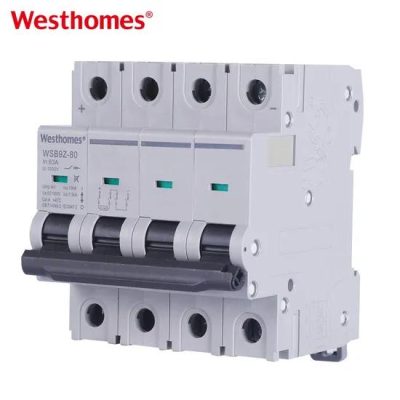
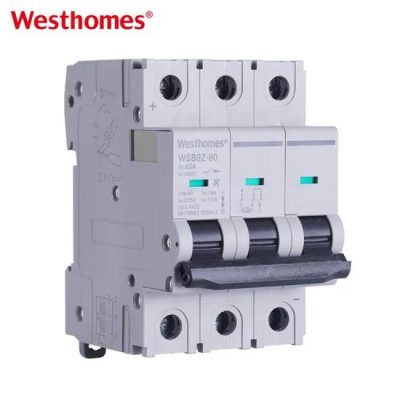
High Quality DC Mini Circuit Breaker DC 40A DC 3p 1500V Miniature Circuit Breaker

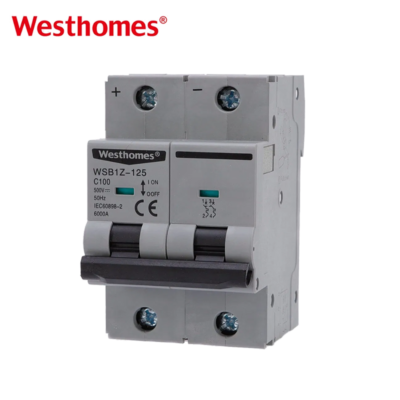
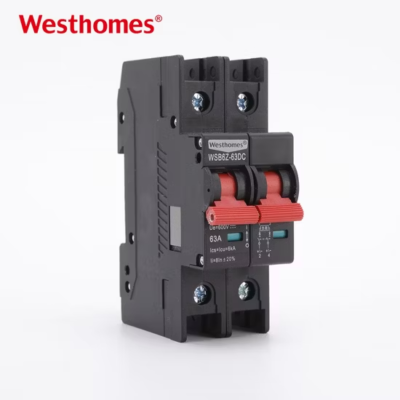
The WSB6Z-40DC is a 3-pole DC miniature circuit breaker rated 40A at 1500V DC. Built for photovoltaic systems, it provides overcurrent and short-circuit protection on DC circuits up to 1500V, the standard voltage for modern utility-scale and commercial solar arrays.

Social focus:

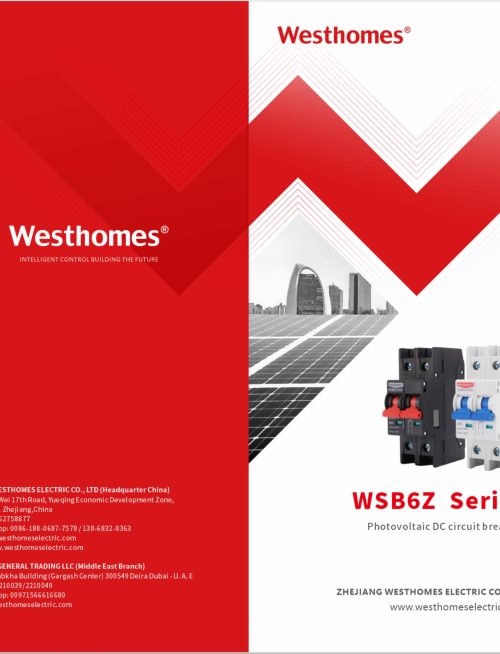
WSB6Z-40DC 3P 40A 1500V DC Miniature Circuit Breaker for Solar PV Systems

The WSB6Z-40DC is a 1500V DC 3-pole miniature circuit breaker rated 40A. Designed for DC circuit protection in utility-scale solar installations, commercial rooftop PV, and solar combiner boxes, it isolates and protects DC circuits where high voltage and reliable breaking capacity are required.

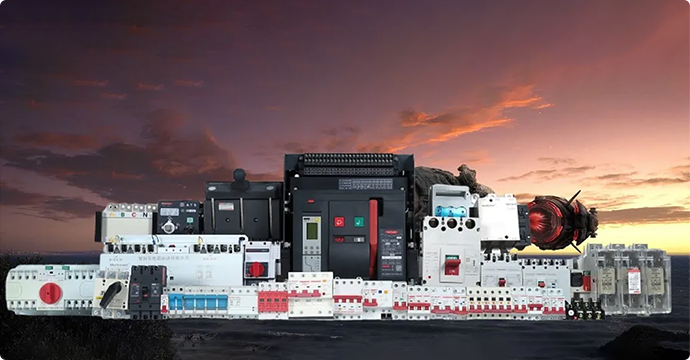
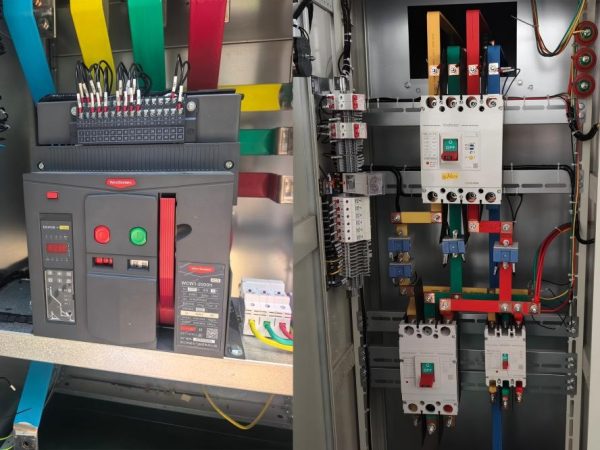
Westhomes ACB and MCCB circuit breaker product series overview

The WSB6Z-40DC operates at a rated voltage of 1500V DC, the maximum standard voltage for modern PV string circuits. Rated at 40A with a 6kA breaking capacity, it handles overload and short-circuit faults on the DC side of photovoltaic installations.

A 3-pole design allows simultaneous isolation of three DC conductors, meeting the requirements of ungrounded and bipolar PV array configurations common in large-scale solar projects. Each pole provides independent arc extinguishing for reliable DC fault interruption.

Typical applications include DC combiner boxes, inverter DC inputs, PV string protection, and DC recombiner panels. It is suitable for both central inverter and string inverter architectures in ground-mount, rooftop, and floating solar installations.

The breaker supports infrequent manual switching for maintenance and circuit isolation. DIN rail mounting on standard 35mm profile allows quick integration into existing DC distribution enclosures. Available current ratings range from 6A to 63A.

KEY INFORMATION

WSB6Z-40DC

Pole  1, 2, 3
          Voltage  DC500V/600V/1000V/1500V
          kA  6kA
          Amps  1-40A
          Width  18, 36, 54mm
          Mounting  Din rail

MAIN TECHNICAL DATA

Item No. WSB6Z-40DC
Rated current In(A) 1, 2, 3, 4, 5, 6, 10, 16, 20, 25, 32, 40A
Pole number 1P, 2P, 3P
Trip characteristics C type
Rated insulating voltage Ui(V) 1000
Rated operating voltage Ue(V) DC500V/600V/1000V/1500V
Breaking capacity Icu/Ics(kA) 6

Related: Solar PV DC Breaker Sizing Guide, which covers circuit breaker step by step.

FREQUENTLY ASKED QUESTION (FAQ)

What is the DC 40 A 3-pole 1500 V miniature circuit breaker? plus-square Created with Sketch Beta. minus-square Created with Sketch Beta.

It is a 3-pole DC miniature circuit breaker rated 40 A and 1500 V DC, engineered for high-voltage photovoltaic arrays. Its 1500 V rating targets large commercial and utility-scale PV plants that use higher system voltages to reduce current and cable losses.

Why is 1500 V DC important in modern solar plants? plus-square Created with Sketch Beta. minus-square Created with Sketch Beta.

Raising the system voltage from 1000 V to 1500 V allows longer strings and fewer combiners, lowering cable current, conduction losses, and balance-of-system cost. A 1500 V-rated breaker is required because the string Voc can approach that level on cold days; a 1000 V breaker cannot safely interrupt it.

What does the 3-pole (3P) configuration do at 1500 V? plus-square Created with Sketch Beta. minus-square Created with Sketch Beta.

Three poles connected in series share and divide the 1500 V across multiple contact gaps, making it possible for an MCB-sized device to safely interrupt such a high DC voltage. This series-stacked pole arrangement is how small breakers achieve high DC voltage ratings without needing a much larger enclosure.

What does the 40 A rating suit in a 1500 V array? plus-square Created with Sketch Beta. minus-square Created with Sketch Beta.

At 1500 V, a 40 A breaker handles relatively long, high-voltage strings or small combiner outputs where power (V × I) is delivered at lower current. It is selected so that 40 A exceeds 1.25 × the string Isc while remaining below the cable ampacity and inverter input current.

How does it extinguish a 1500 V DC arc? plus-square Created with Sketch Beta. minus-square Created with Sketch Beta.

High-voltage DC arcs are far harder to quench, so this breaker uses a multi-gap arc chute with magnetic blowout across all three poles. The magnetic field forces the arc into segmented plates that split, cool, and de-ionize it rapidly, preventing restrike at the elevated system voltage.

Can I use a 1500 V 3P breaker on a 1000 V system? plus-square Created with Sketch Beta. minus-square Created with Sketch Beta.

Yes — a device rated for a higher voltage can be used on a lower-voltage system as long as its current rating (40 A) and breaking capacity are appropriate. Using a 1500 V breaker on a 1000 V array is safe and gives margin; the reverse (1000 V breaker on a 1500 V array) is not permitted.

How is it mounted and wired? plus-square Created with Sketch Beta. minus-square Created with Sketch Beta.

It clips onto a standard 35 mm DIN rail inside a DC combiner box rated for 1500 V. Connect the PV string positive (+) and negative (-) to the line terminals and the inverter/monitoring feed to the load terminals, strictly observing polarity. Use 1500 V-rated PV cabling and lugs rated for the voltage.

What breaking capacity and standards apply? plus-square Created with Sketch Beta. minus-square Created with Sketch Beta.

These breakers are tested to IEC 60947-2 for circuit breakers, with DC rated voltages up to 1500 V and typical breaking capacities in the 6–10 kA class. Installation and selection follow IEC 60364-7-712, and the unit must carry clear 1500 V DC marking to be used on such arrays.

Why is pole arrangement polarity-sensitive in a 1500 V breaker? plus-square Created with Sketch Beta. minus-square Created with Sketch Beta.

In a series-pole 1500 V breaker, the arc-quenching magnetic blowout and contact gaps are designed around a specific current direction. Reversed polarity can misdirect the arc and reduce interrupting performance, so always connect source (+/-) and load sides exactly as labeled.

What maintenance and troubleshooting apply to this breaker? plus-square Created with Sketch Beta. minus-square Created with Sketch Beta.

Inspect terminals annually for torque and discoloration, and keep the enclosure sealed because 1500 V DC arcs are particularly hazardous. If it trips, verify the string isn't over-currented by shading or a fault, and remember that any breaker which has cleared a major 1500 V fault should be replaced, as internal arc damage compromises future operation.

RELATED PROJECTS

REQUEST
YOUR FREE QUOTE

* indicates a required field